
Cornrow hairstyles for men have roots that go back thousands of years — literally. This is one of the oldest and most culturally significant protective styles in human history, originating across West and Central Africa and carrying deep meaning through generations of identity, community, and artistic expression. Yet here is what makes cornrows genuinely extraordinary in a modern context: they have never been more stylistically relevant than they are right now. From NBA courts to fashion runways, from music videos to barbershop chairs in every major city, cornrows are simultaneously honoring their heritage and breaking every contemporary men’s style boundary with complete, unapologetic confidence.
What makes cornrow hairstyles so enduringly excellent is their specific combination of protective function and genuine aesthetic versatility. They protect natural hair from environmental damage and manipulation while creating an almost infinite range of pattern possibilities — straight back, curved, geometric, with fades, with braids of varying thickness, with added length through extensions, or combined with freeform locs and twists. Every version tells a different story. Whether you are maintaining an existing natural hair journey or genuinely exploring cornrows for the first time, the twenty-four ideas in this guide represent the most compelling, the most wearable, and the most genuinely timeless interpretations available in contemporary men’s cornrow styling. The one that surprises you most might be exactly the one you have been looking for.
1. The Classic Straight-Back Cornrows That Started Everything
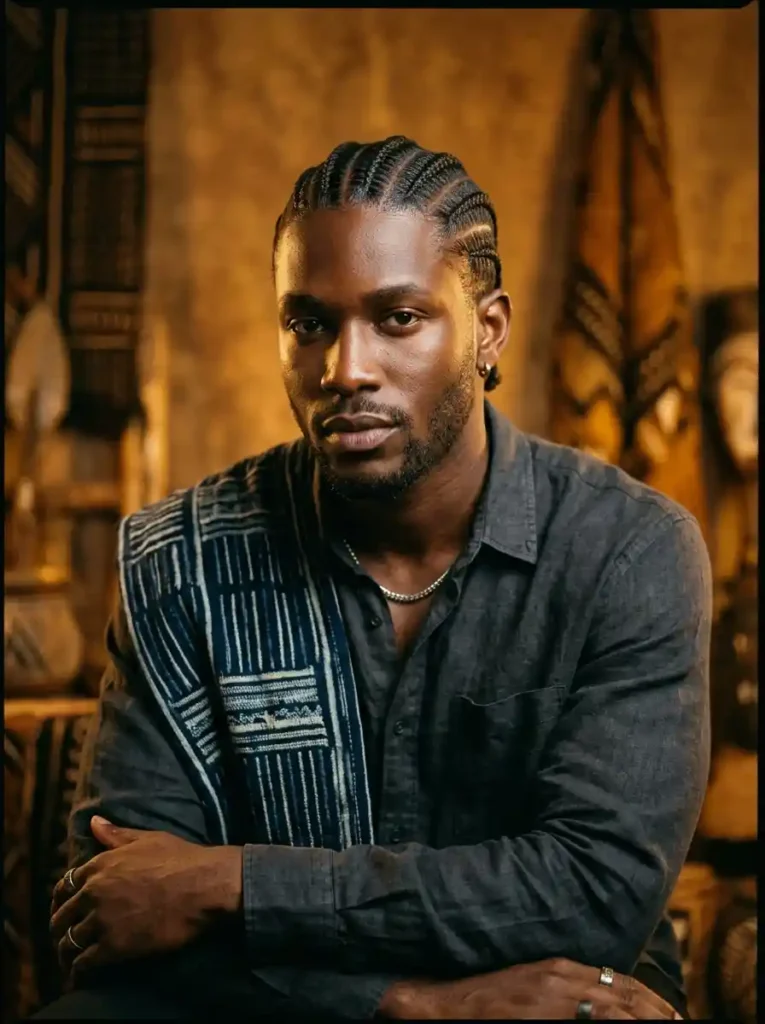
The straight-back cornrow is the foundational pattern that everything else in this list builds from — eight to twelve parallel rows running from the front hairline directly to the nape of the neck in clean, consistent lines. This pattern has been worn by warriors, kings, musicians, athletes, and everyday people across centuries of African and African diaspora culture, and it remains the most versatile and the most broadly recognized cornrow style available. The technique is pure: the braid is formed by underhand braiding directly against the scalp, creating a flat, woven track that lies smooth and defined.
The practical beauty of straight-back cornrows is their adaptability to every hair length, every hair density, and every lifestyle context. They keep natural hair protected and moisturized while presenting a consistently clean, intentional appearance. Before installation, ensure your hair is detangled, freshly washed, and treated with a leave-in conditioner — this creates the most comfortable install and the cleanest braid tracks. Apply a light braid gel or edge control to each section as you work for maximum definition and smoothness at the scalp. Straight-back cornrows typically last four to eight weeks with proper nighttime maintenance using a silk scarf or bonnet.
2. The High Skin Fade Cornrows That Define Modern Barbershop Culture
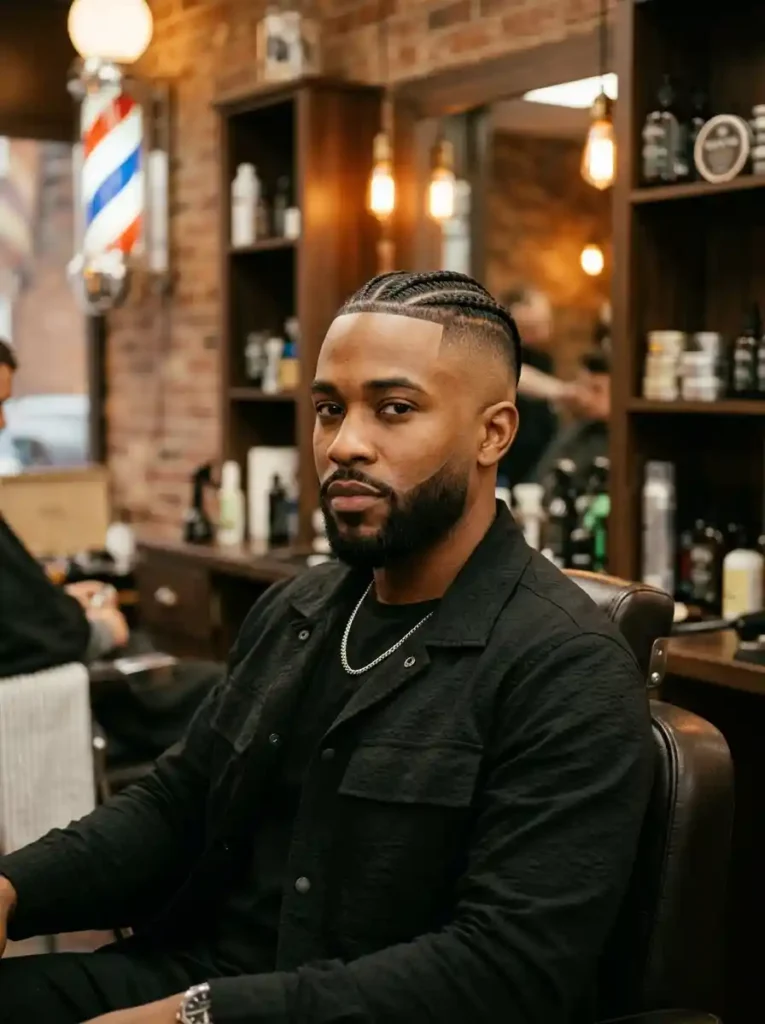
Combining cornrows with a high skin fade is one of the most impactful creative decisions available in contemporary men’s barbering — the fade’s technical precision creates a dramatically clean canvas that makes the braided top section appear even more intentionally designed and even more visually impressive by contrast. The fade should rise to at least the temple level for maximum dramatic effect. This pairing has become a defining aesthetic of contemporary Black barbershop culture and represents the most sophisticated intersection of traditional braiding and modern precision cutting available today.
The skin fade beneath cornrows requires a barber who understands how to blend from skin-close at the sides through the natural hair at the crown junction without disrupting the scalp’s braiding surface. Communicate with both your braider and your barber about which service comes first — generally the fade is completed before the cornrows are installed so the braider works on a clean, freshly faded canvas. Edge control along the hairline and at the fade transition creates the most polished integration of the two techniques. Maintain the fade every two to three weeks to keep the combination at its most impressive and most specifically sharp.
3. The Geometric Pattern Cornrows for the Visually Bold
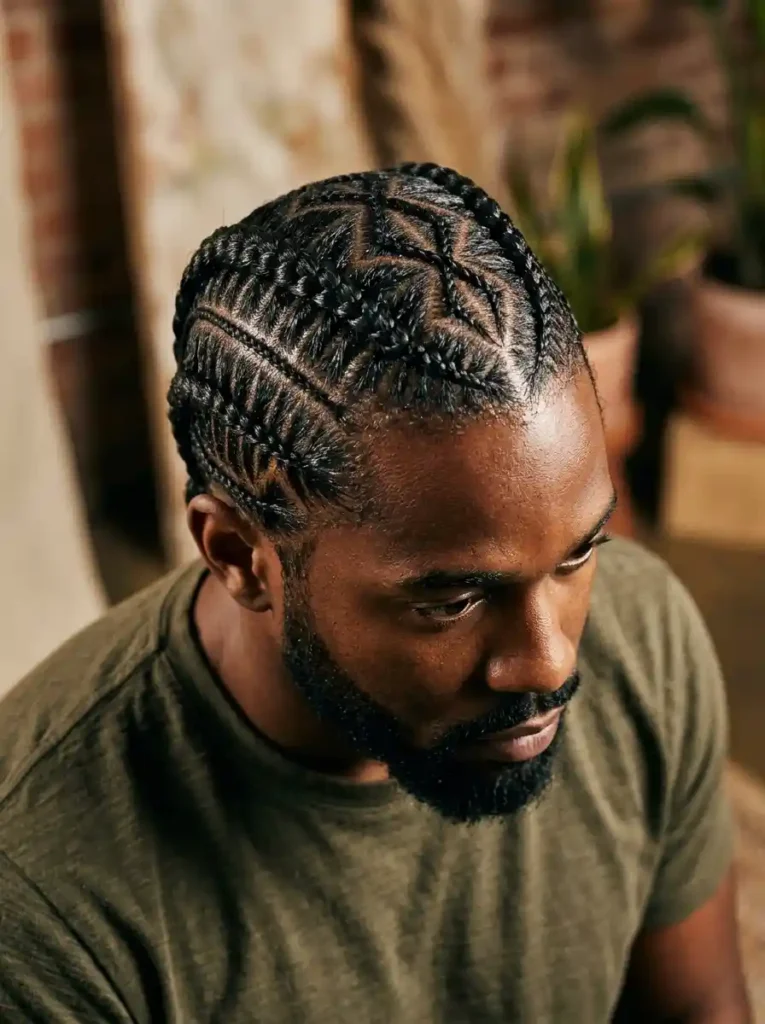
Geometric cornrow patterns move the hairstyle from conventional braiding into something closer to scalp art — the braid tracks are deliberately arranged to create diamonds, hexagons, sharp angles, zigzag formations, or other specifically designed pattern configurations that reveal the full artistic range of what skilled cornrow technique can achieve. This requires a braider with significant technical precision and artistic experience, but the result is a hairstyle that communicates a completely unique personal aesthetic and genuine appreciation for the craft as an art form.
Finding the right braider for geometric patterned cornrows requires reviewing portfolio work specifically for pattern complexity and scalp-level cleanliness — the quality of a geometric cornrow install is entirely determined by the precision of the partings, which must be mathematically clean for the pattern to read correctly as a whole. Discuss your desired configuration in advance and bring reference images. The install time for geometric patterns is significantly longer than standard straight-back cornrows, so plan for four to six hours for a complex pattern. The aesthetic reward for that investment is extraordinary and genuinely unlike anything else available in men’s protective styling.
4. The Cornrows With Fade and Hard Part Combination
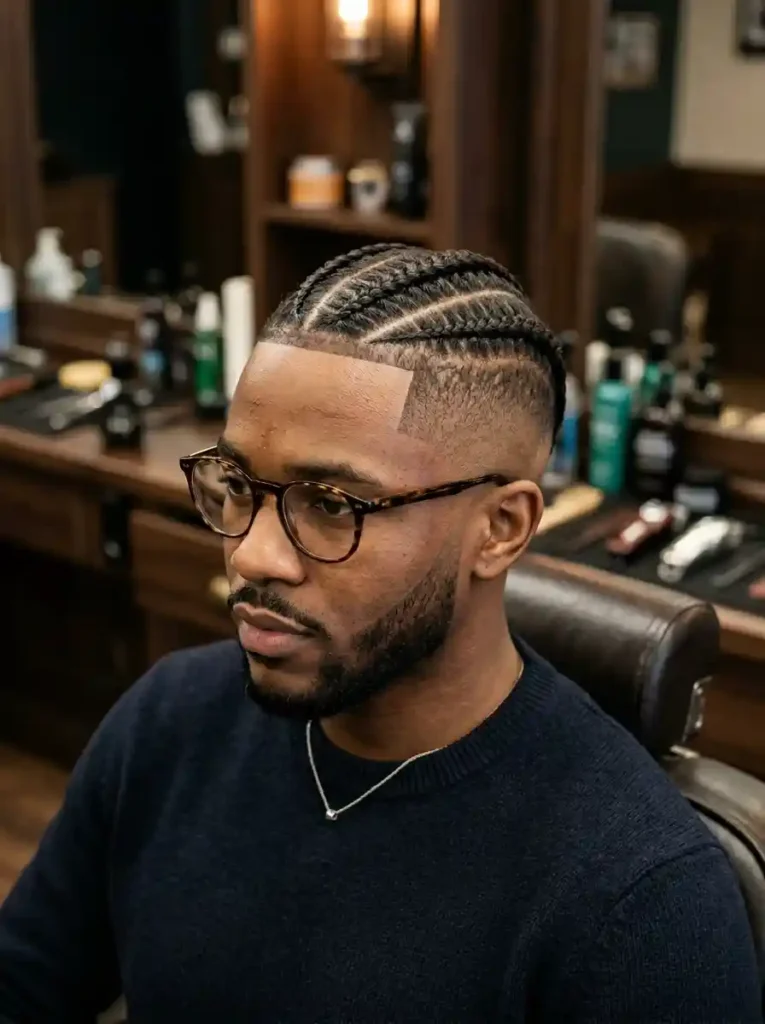
The hard part within a cornrow installation is one of the most distinctively architectural details available in men’s braided styling — a razor-precise, skin-visible line that creates a clean geometric separation between two groups of cornrow tracks, dividing the braided sections into a deliberate compositional framework that reads as specifically designed rather than simply installed. The hard part’s geometric precision adds a level of barbering sophistication to the cornrow look that elevates the complete hairstyle into something that communicates multiple layers of craft simultaneously.
Creating the hard part within a cornrow style requires coordination between your braider and your barber — the razor line should be created before braiding begins so that the part’s clean edge serves as the compositional boundary for the braid pattern. Position the hard part at the natural growth direction for the most sustainably maintained result between appointments. Edge control applied precisely along the hard part’s edge after braiding is complete creates the most polished and the most architecturally defined integration of the razor detail and the braid pattern. This is the specific combination that photographs with the highest visual impact of any cornrow and barbering hybrid available.
5. The Feed-In Cornrows for Natural Length Enhancement

Feed-in cornrows are the technique that allows men with shorter natural hair to achieve the visual impact of long, dramatic cornrow lengths without growing their hair first. Braiding hair is gradually introduced during the braiding process — starting with none at the root and slowly adding more as the braid progresses — creating a seamless transition from natural hair to extension that looks significantly more natural and more elegant than a standard extension install where the added hair is introduced all at once. The result has a tapered, natural-looking beginning at the scalp and full length through the braid body.
The quality of the braiding hair matters significantly in feed-in cornrows — choose a high-quality synthetic or human hair blend in a texture and color that matches your natural hair as closely as possible. Kanekalon braiding hair in a natural black, off-black, or dark brown is the most commonly used material and comes in a range of textures from silky to coarser. Your braider should trim the ends after installation for a clean, tapered finish that avoids the blunt-cut appearance of unedited extensions. Maintain the edges with a quality edge control and keep your scalp moisturized through the braid tracks with a lightweight oil for the most comfortable and the most beautiful long-term result.
6. The Short Cornrows for Men With Lower Natural Hair Density

Not every cornrow install requires long or dense natural hair to look genuinely excellent — and the shorter cornrow style for men with moderate natural hair density is one of the most underrepresented but genuinely beautiful variations available. Fewer tracks, shorter length, and a pattern that works proportionally with the natural density of the hair creates a cornrow look that is elegant and balanced rather than overstretched or thin. The key is having an honest conversation with your braider about how many tracks your natural density can support without the parts looking too wide or the braids looking too thin.
Cornrows on shorter natural hair typically benefit from slightly wider braids that create a more substantial and more proportionally balanced visual impression. The practical advantage of shorter cornrows is that they are significantly faster to install — typically two to three hours rather than four to six — and they are gentler on the scalp and hairline because there is less tension required to work with shorter lengths. For men who are new to cornrows, starting with a shorter, simpler installation is the most comfortable introduction to the protective style and its maintenance requirements before committing to longer or more complex versions.
7. The Cornrows With Beads for Cultural Celebration

Beads on cornrows are one of the oldest and most culturally significant adornments in African braiding tradition — wooden beads, metal rings, shells, and carved decorative elements have been threaded onto braids for thousands of years across numerous African cultures as markers of age, social status, spiritual practice, and personal beauty. In contemporary men’s cornrow styling, beads represent a celebration of that heritage while also creating a genuinely distinctive visual signature that no other men’s hairstyle accessory can replicate. They create sound, movement, and color that animate the hairstyle with genuine life.
Thread beads onto individual braid ends after installation by simply sliding them over the finished braid length and securing them with a knot or a small hair elastic to prevent slipping. Choose bead sizes that fit comfortably over your braid diameter — too small and they will not slide onto the braid, too large and they will slide off during movement. Wooden beads in warm earth tones create the most culturally grounded aesthetic; metallic beads in gold or bronze add contemporary sophistication; colorful resin beads create vibrant, celebratory energy. Mixing bead types and sizes along different braid sections creates the most visually interesting and the most personally expressive result.
8. The Curved Cornrows That Follow Head Contour
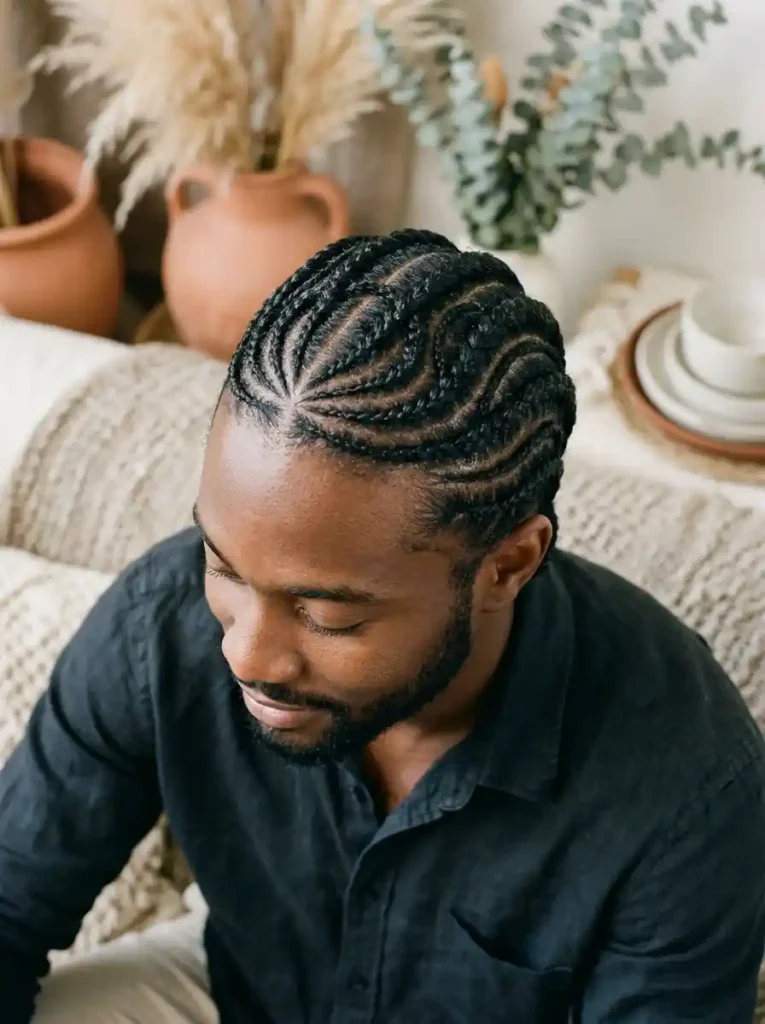
Curved cornrows follow the natural contour and shape of the head rather than running in strictly linear parallel lines, creating a flowing, organic pattern that feels almost architectural in its relationship to the skull’s own three-dimensional form. The curves follow the hairline, arc over the crown, and sweep toward the nape in compositions that feel designed specifically for the individual head rather than applied as a generic template. This style requires a braider with strong compositional intelligence and genuine artistic sensitivity to head shape and proportional balance.
The braider for curved cornrows should be chosen specifically for their portfolio work on curved and contoured patterns — look for examples that demonstrate clean track edges even on curved sections, since maintaining consistent braid width and scalp cleanliness on curves is significantly more technically demanding than on straight tracks. The spacing between tracks is especially important in curved cornrow patterns because uneven spacing disrupts the flowing visual effect that makes curved cornrows so specifically beautiful. This style is particularly excellent for men with particularly round or oval head shapes because the curves can be designed to complement and enhance the head’s own natural proportions.
9. The Two-Tone Cornrows With Color Extensions
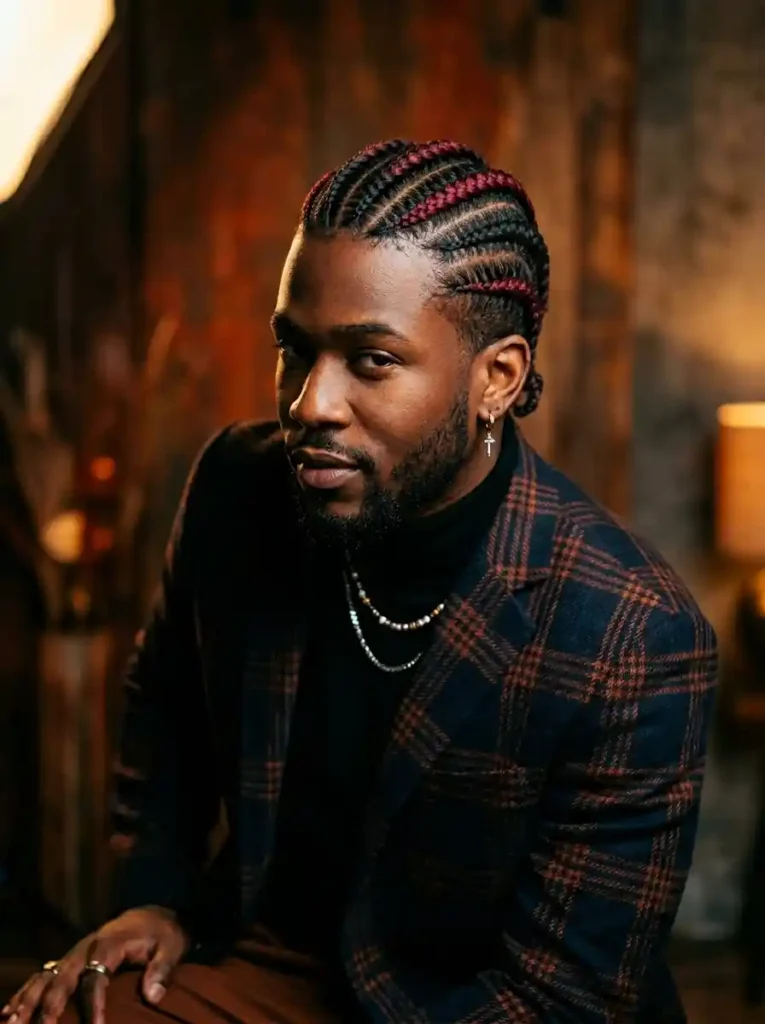
Color in cornrows transforms the hairstyle from a personal care choice into a genuinely creative artistic statement — and two-tone cornrows that alternate between natural black and a second complementary or contrasting color create one of the most visually compelling and the most immediately distinctive men’s protective styles available. Deep burgundy, rich auburn, cobalt blue, forest green, or warm honey blonde alternated with natural black creates a pattern of color that adds an entire additional visual dimension to the braiding pattern itself, making the style simultaneously about pattern and color composition.
Choose the color extension braiding hair to complement your natural skin tone in the same way you would approach any hair color decision. Deep burgundy and dark auburn are the most universally flattering color additions for most skin tones. Cobalt blue and forest green create the most dramatic color statement with the highest visual contrast. Warm honey and caramel work beautifully on warmer complexions and create a sun-kissed, naturally highlighted effect. Install alternating colored and natural tracks from the beginning of the braiding process so the color distribution is consistent throughout. This style has a lifespan of four to six weeks with proper care.
10. The Cornrows Into Man Bun for Longer Natural Hair

Men with longer natural hair who want to combine the structural precision of cornrows with the casual freedom of loose gathered length have an extraordinary option in cornrows leading to a man bun — the scalp is braided from the front hairline back, and the remaining length at the crown is left free to gather into a bun. The braided sections create a clean, intentional structure at the front and sides while the gathered natural length at the top celebrates the full length journey with genuine pride. This combination creates one of the most powerfully individual natural hair statements available.
The length at the crown left for the bun should be assessed during the installation planning process — discuss with your braider how many tracks to install and how much length to leave free for the most proportionally balanced result between the braided sections and the gathered crown. The man bun can be positioned at the very crown for maximum height or at a lower position at the back of the crown for a more relaxed impression. Moisturize the loose bun section regularly with a leave-in conditioner and seal with a natural oil to maintain the hair’s health while the braided sections are installed. This is one of the most joyful natural hair styling celebrations available.
11. The Stitch Braids for Men Who Want Linear Precision
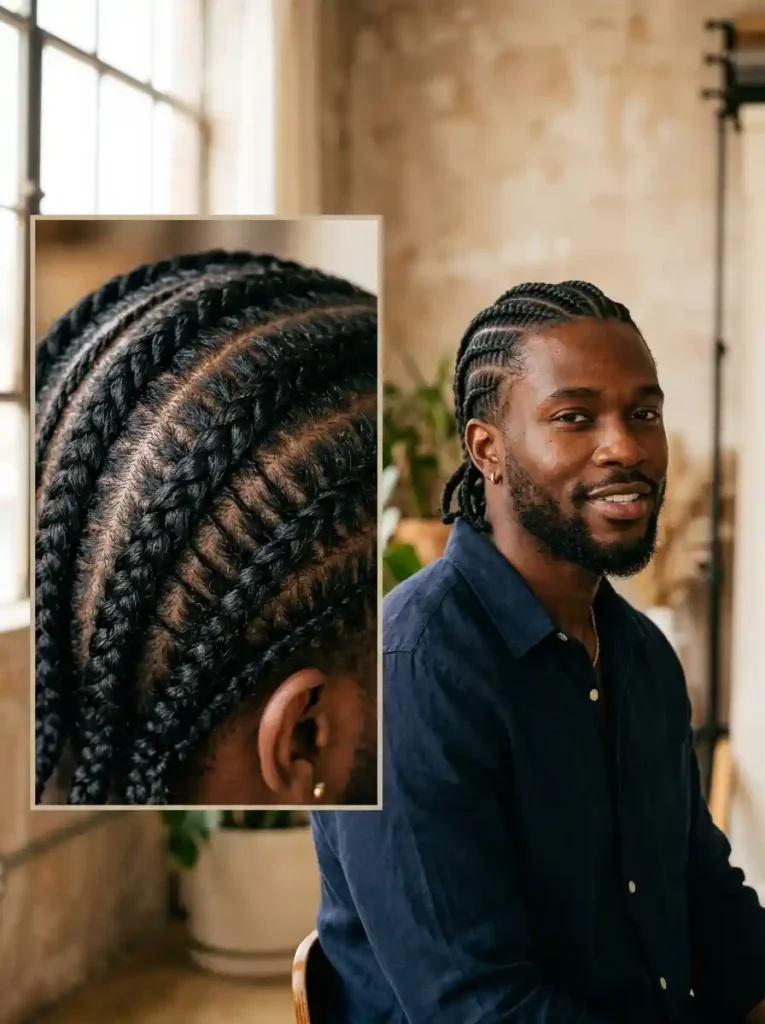
Stitch braids — also known as invisible braids or layered braids — are a variation of cornrows that add a horizontal threading detail between the tracks, creating a distinctive ladder-like visual pattern that runs perpendicular to the main braid direction. The effect is extraordinarily precise and visually complex — each horizontal stitch adds a layer of detail that makes the overall pattern appear significantly more labor-intensive and more artistically considered than standard cornrows. This is the cornrow style most likely to generate genuine inquiry and genuine admiration from every person who sees it up close.
The stitch braid technique requires a braider who has specifically practiced and mastered this variation — not every skilled cornrow braider has this particular technique in their repertoire, so specifically searching for portfolio examples of stitch or invisible braid work before booking is essential. The install time is longer than standard cornrows due to the additional threading step at each horizontal interval. Stitch braids typically last slightly longer than standard cornrows due to the additional securing created by the horizontal threading, making them an excellent choice for men who want maximum duration between maintenance appointments while maintaining maximum visual impact throughout.
12. The Cornrows With Freeform Locs for Natural Hair Fusion

The combination of cornrows and freeform locs represents one of the most genuinely organic and most culturally layered natural hair expressions available — sections of the head are braided in traditional cornrow patterns while other sections are allowed to develop into freeform locs, creating a textural composition of extraordinary depth and personal meaning. This is a natural hair styling approach for men who are actively in multiple stages of their natural hair journey simultaneously, and it creates an appearance that is simultaneously structured and wild, controlled and deeply free.
Managing the maintenance of a hybrid cornrow and loc style requires understanding the different needs of each hair section simultaneously. The cornrowed sections need regular moisturizing through the braid tracks and periodic reinstallation every four to six weeks. The freeform loc sections need less deliberate manipulation — simply keeping them moisturized and separated at the root to prevent unwanted combining is usually sufficient. As the locs mature and the cornrow sections continue to grow, the ratio and arrangement between the two can evolve organically over time. This style is specifically excellent for men who view their hair as a living, evolving reflection of their personal journey.
13. The French Cornrows for Subtle Three-Dimensional Volume
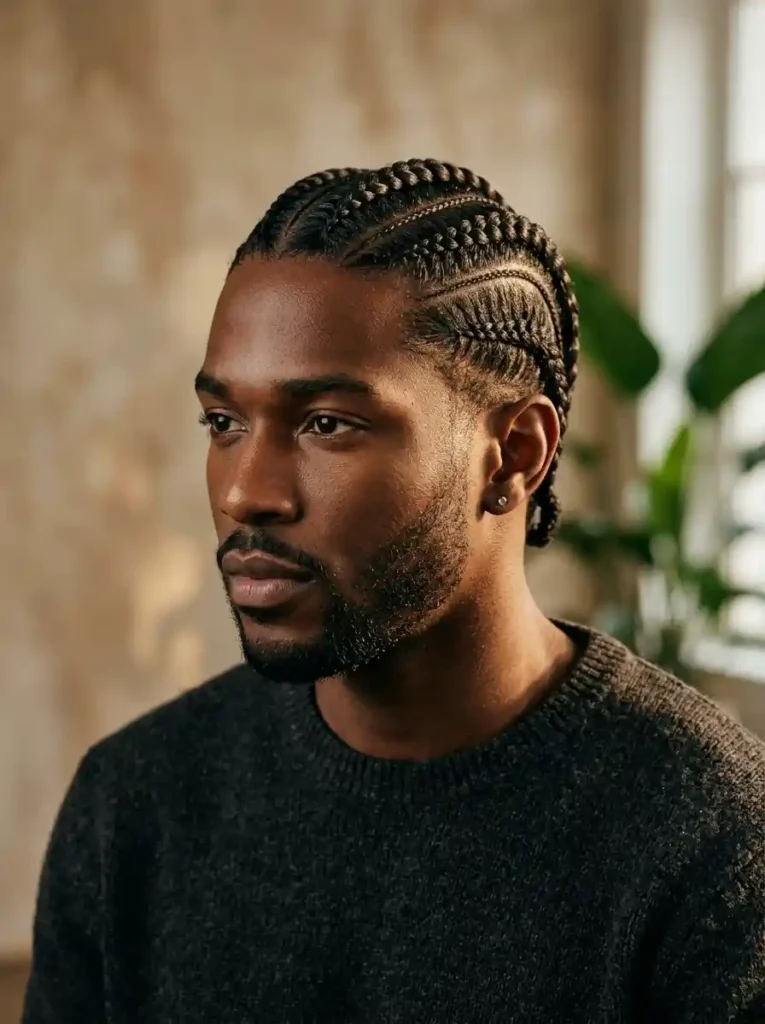
French cornrows are the same basic three-strand scalp braid as traditional cornrows but braided using an overhand rather than underhand technique — the result is a braid track that rises slightly from the scalp and creates a three-dimensional, more sculptural appearance compared to the flat, smooth-lying traditional cornrow track. The raised profile creates a different light-catching quality — each track shows a more pronounced shadow and highlight that gives the overall pattern a more visually substantial, more three-dimensionally impressive presence when viewed in directional light.
Not every braider offers French cornrows specifically, and the technique requires genuine familiarity with the overhand braiding method which creates different tension dynamics than the underhand approach most cornrow braiders work with primarily. When consulting with a braider, specifically request French cornrows or raised-braid cornrows and ask to see portfolio examples. The raised tracks are also slightly more susceptible to catching on clothing and accessories during sleep, so protective sleeping with a silk bonnet or scarf is particularly important for maintaining the track integrity in this specific style variation.
14. The Cornrows to Box Braids Transition for Protective Style Longevity

A cornrow-to-box-braid transition is exactly what it sounds like — the scalp is braided in traditional cornrow tracks from the root, and as the braid progresses past a certain length, the track opens into free-hanging box braids, creating a style that combines the scalp-structured precision of cornrows with the volume and movement of hanging individual braids. This technique gives the style extraordinary versatility — the braided scalp section lies clean and flat while the box braid sections below move freely and create dramatic length and volume.
The transition point from cornrow track to box braid section can be positioned at any length depending on the desired proportion of structured versus free sections. A transition at the nape area creates maximum scalp structure with most of the visual impact coming from the hanging braids below. A higher transition at mid-skull creates a more balanced split between the two techniques. Discuss the specific transition placement with your braider beforehand to ensure the proportions work for your specific head shape and desired overall impression. This style is particularly excellent for men who want maximum length impact with the added scalp-definition that box braids alone cannot provide.
15. The Mohawk Cornrows for Maximum Edge and Attitude
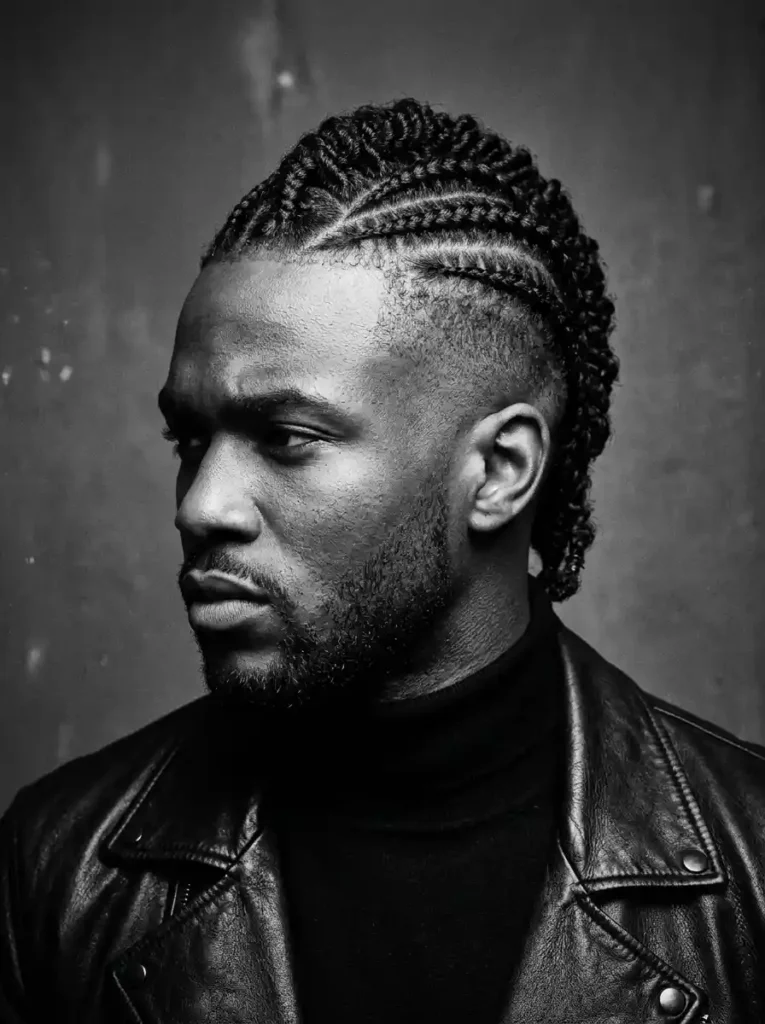
Mohawk cornrows arrange the braiding pattern to create the mohawk’s characteristic central ridge effect through the use of cornrow tracks that converge toward the center of the head, creating an elevated, architecturally dramatic silhouette when viewed from the front, side, and back simultaneously. The sides are typically faded or shaved completely to maximize the contrast between the clean side sections and the elevated central braided ridge. This is the cornrow style for men who want maximum visual impact, maximum bold character, and zero ambiguity about their personal aesthetic conviction.
The mohawk cornrow configuration requires a braider who understands how to angle the braid tracks toward the center convergence point cleanly and consistently — the tracks should all lead toward the central ridge with equal precision rather than appearing to converge haphazardly. The central ridge braids can be left lying flat or slightly elevated through technique and styling. The shaved or faded sides should be maintained every two weeks for the most dramatic and the most architecturally impactful mohawk cornrow impression. This style communicates complete personal aesthetic boldness through both the braiding pattern and the barbering precision simultaneously.
16. The Cornrow Crown for Formal and Special Occasion Styling
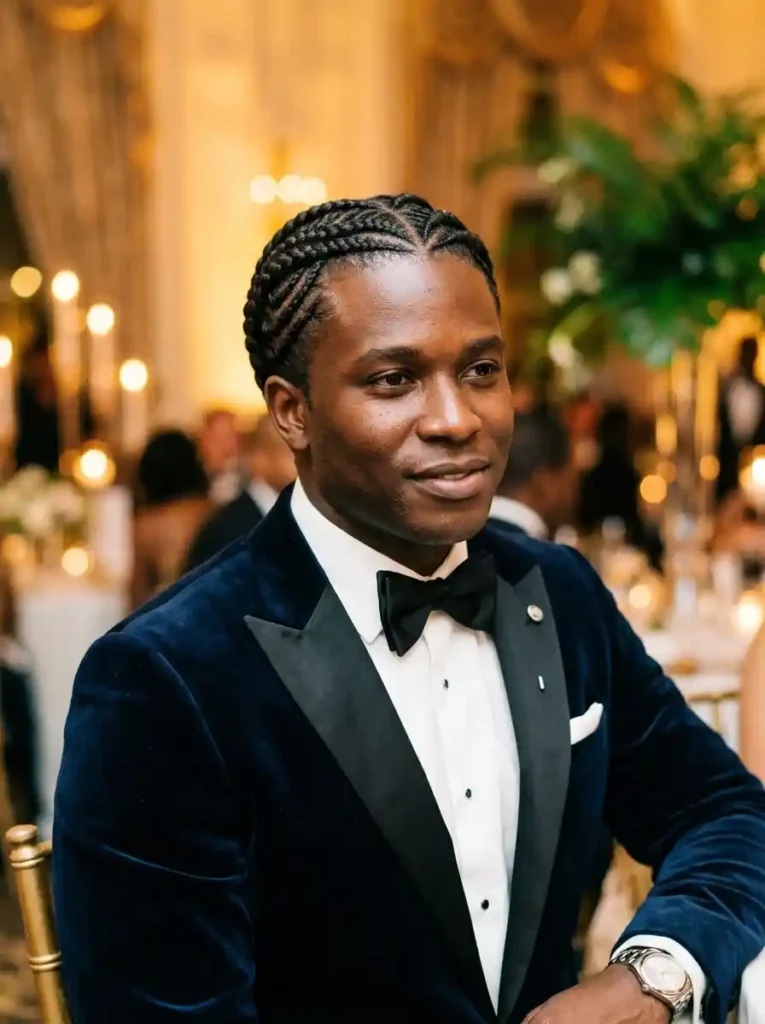
The cornrow crown — braid tracks arranged to create a circular wrapping pattern that follows the head’s perimeter in a crown-like arc — is one of the most distinctly regal and most specifically formal cornrow configurations available. The circular braiding direction creates an impression of a woven crown sitting directly on the scalp, making it particularly appropriate for formal occasions, cultural celebrations, and significant personal events where the hairstyle should communicate occasion-appropriate dignity and personal significance alongside genuine artistic beauty.
Achieving a clean cornrow crown pattern requires a braider with strong compositional skill in non-linear braid directions — the ability to maintain consistent braid width and scalp tension while navigating the curved crown path is technically demanding and not in every braider’s repertoire. Book a consultation specifically to discuss the crown pattern and review portfolio examples before committing to an appointment. The crown configuration pairs beautifully with formal attire and is an excellent choice for weddings, cultural ceremonies, graduations, or any occasion where personal presentation carries heightened significance. The braids can be finished with beads, metallic rings, or natural ends for different levels of formality.
17. The Cornrows With Shaved Designs for Contemporary Art
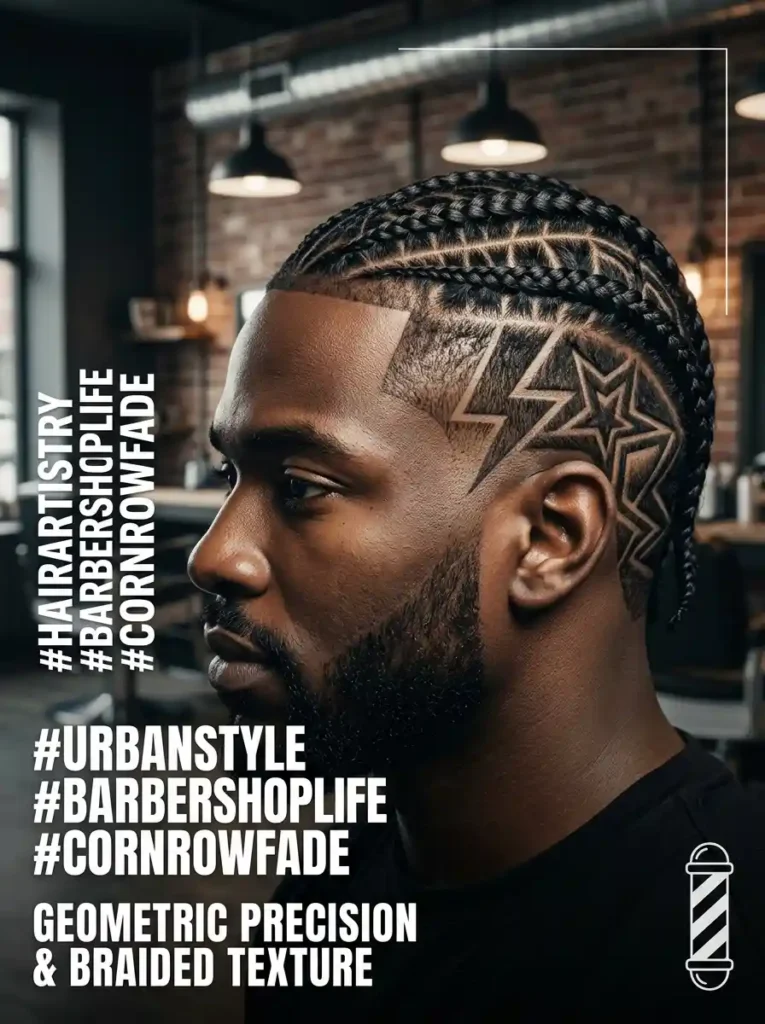
Shaved designs in the faded sections beneath cornrows represent the full creative expression available when barbering precision and braiding artistry collaborate on a single head — each art form doing what it does best in its specific zone, and the combination creating something significantly more visually complex and specifically impressive than either craft could achieve independently. Stars, lightning bolts, geometric shapes, nature motifs, or completely abstract angular designs can be etched into the faded skin beneath the braided sections with extraordinary precision using a detail trimmer or straight razor in a skilled barber’s hands.
The shaved design should be planned before either the braiding or the fade begins so both the braider and barber understand how the two elements will interact compositionally. Simple, clean geometric designs are the most durable choice because they remain legible as hair grows back between maintenance appointments, while intricate small designs can become ambiguous quickly as shadow from new growth fills in the shaved areas. Maintain the design at each fade appointment — typically every two to three weeks — to keep the combined braid-and-design artwork at its most impactful. This is the style that generates the most photographic attention of any entry in this guide.
18. The Jumbo Cornrows for Bold Visual Weight
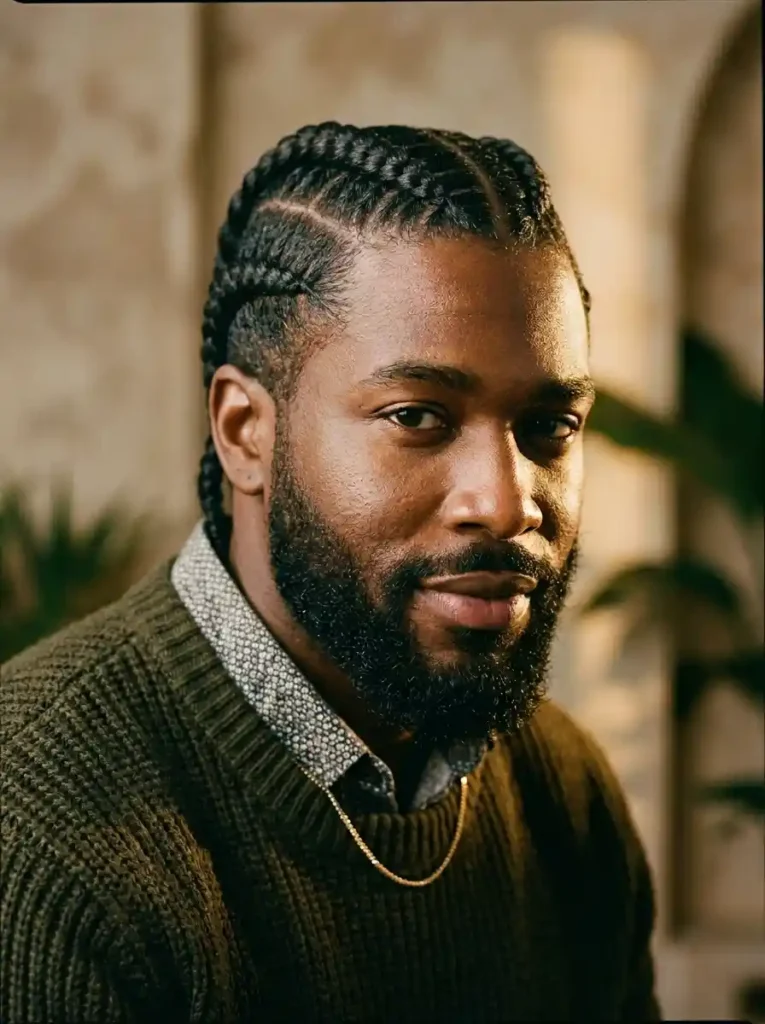
Jumbo cornrows use the same fundamental braiding technique as standard cornrows but create significantly wider, thicker individual tracks — typically six to eight tracks total compared to the ten to fourteen of standard styles — that create a bold, substantial visual impression rather than the fine, detailed appearance of smaller braids. The jumbo sizing dramatically reduces install time while creating a look with strong, confident visual weight that photographs powerfully and reads from a distance with maximum impact. This is the cornrow style for men who want strong, immediate visual presence.
The wider sections between jumbo cornrow tracks require more careful scalp moisturizing to prevent dryness and flaking in the exposed skin between the broader braid lines. Apply a lightweight natural oil directly to the scalp between tracks two to three times per week, massaging gently with the fingertips for circulation and moisture distribution. Jumbo cornrows typically have a slightly shorter style longevity than standard cornrows — approximately three to five weeks before the new growth at the root becomes visually significant — but the dramatically reduced install time and the equally strong visual impact make them an excellent rotating option in a broader natural hair styling repertoire.
19. The Knotless Cornrows for Reduced Scalp Tension

Knotless cornrows are a technique evolution that begins the braiding process without creating the traditional anchor knot at the root — instead, the braid begins with only natural hair and braiding hair is gradually fed in as the braid progresses, creating a flat, natural-feeling beginning that starts much closer to the scalp without the initial tension that the traditional knotted start requires. The result is a style that is significantly more comfortable to wear, creates less strain on the hairline and edges, and has a more natural-looking root that many people find more aesthetically appealing than the standard knot.
Knotless cornrows are specifically recommended for men whose hairlines or edges show signs of traction stress from previous braiding installations — the reduced tension at the root allows the hairline to rest and recover while still maintaining the protective benefits and visual appeal of a braided style. The technique takes slightly longer to install than traditional knotted cornrows but the comfort and hairline health benefits are generally considered worth the additional time investment. Men with particularly sensitive scalps or fine edges should specifically request knotless technique as a standard practice for all future cornrow installations to prevent long-term hairline recession.
20. The Zigzag Part Cornrows for Signature Creative Pattern
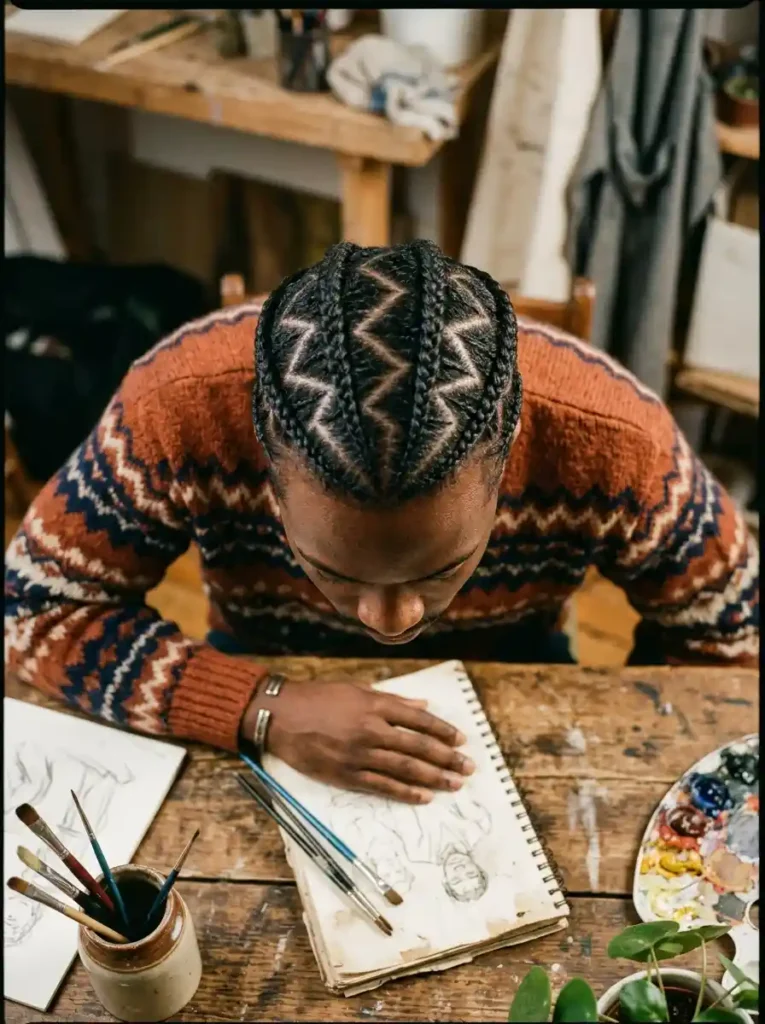
The parting pattern in a cornrow installation is usually treated as purely functional — a guide for the braid sections rather than a design element in its own right. Zigzag part cornrows challenge this assumption completely by making the part itself a deliberate artistic decision. Zigzag, curved, wave-pattern, or diagonal parts create a secondary geometric pattern at the scalp level that interacts visually with the braid tracks above them, adding an additional compositional layer that makes the complete style significantly more complex and more specifically individual than straight-part cornrows at the same overall braid scale.
Creating zigzag parts requires a braider with steady hands, precise sectioning tools, and the patience to maintain consistent zigzag spacing across the entire scalp. A rat-tail comb is used to create the zigzag line at each sectioning point, and the consistency of the zigzag angle and amplitude across all parts determines whether the overall pattern looks intentional or haphazard. Brief your braider with a clear reference image of the exact zigzag pattern you want and discuss spacing preferences before the session begins. This style is particularly excellent for men who have had straight-back cornrows multiple times and want a significant creative evolution while maintaining the familiar overall cornrow structure.
21. The Cornrows and Dreads Hybrid for the Natural Hair Explorer

Combining established dreadlocks with fresh cornrow sections creates one of the most visually rich and the most personally layered natural hair compositions available — the locs bringing their matured, deeply textured character while the cornrow sections bring the flat, precise structural quality of braiding artistry. This combination is not usually a beginning natural hair style — it typically emerges naturally over time as a man’s hair journey evolves across multiple protective styling periods. The result is hair that tells a full story of time, commitment, and personal evolution.
Maintenance of a dreadlock and cornrow hybrid requires understanding that each section has genuinely different care requirements. Locs need periodic palm rolling and retwisting at the root as new growth develops, while cornrow sections need regular reinstallation every four to six weeks and consistent scalp moisturizing between appointments. The most important maintenance consideration for the hybrid style is avoiding moisture imbalance — applying leave-in conditioner and natural oil generously through the cornrow sections without over-saturating the locs, which can develop mildew if they remain wet for extended periods. This is a style for the naturally curious and genuinely committed.
22. The Braided Line Up for Hairline Definition Within Cornrows
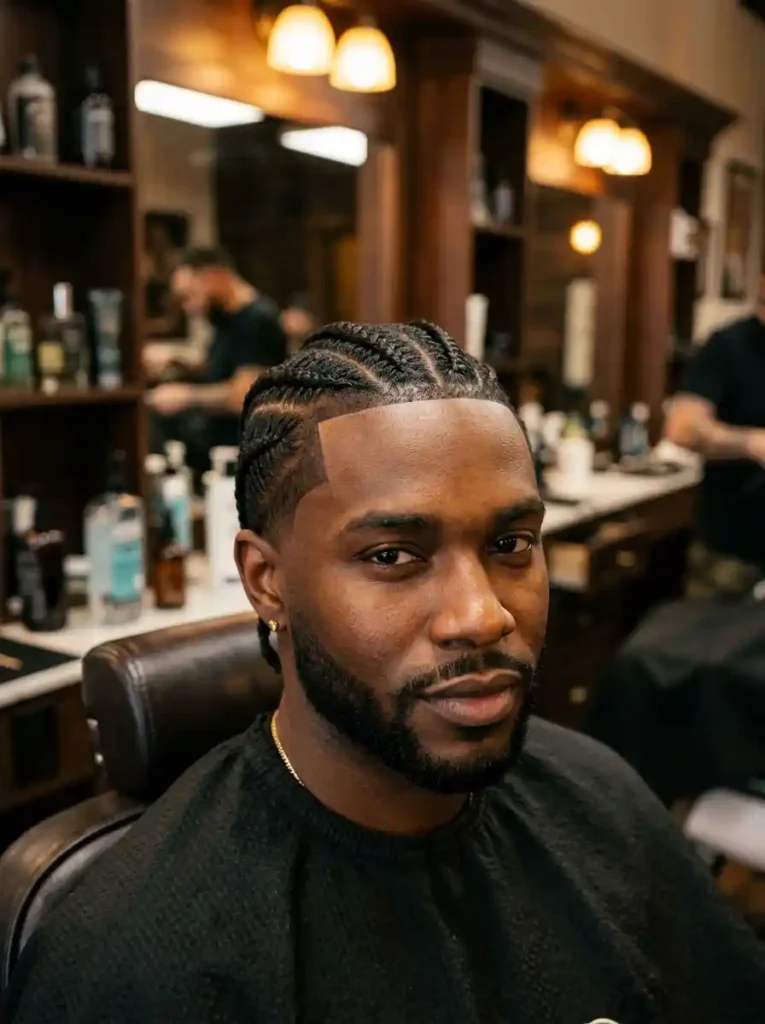
The line-up within a cornrow installation is the detail that transforms good cornrows into exceptional cornrows — the razor-precise geometric edge at the front hairline, around the temples, and along the sideburn line creates a clean architectural frame for the braid pattern that communicates the highest level of personal grooming investment. The precision of a well-done line-up specifically elevates the visual impact of any cornrow style by creating the most intentional possible boundary between the braided section and the face, making the entire composition appear more deliberately, more specifically designed.
Schedule the line-up as part of the cornrow maintenance appointment rather than as a separate afterthought — having the hairline cleaned up immediately after cornrow installation creates the most fresh and the most visually impressive first impression of a new cornrow style. The line-up should be done by a barber rather than the braider unless the braider has specific clipper and razor training. Keep the line-up tight with appointments every two to three weeks between full cornrow reinstallations — a fresh line-up refreshes the entire appearance of existing cornrows dramatically, making them look significantly newer and more maintained than the growth at the root would otherwise suggest.
23. The Cornrows in High-Top Fade Configuration
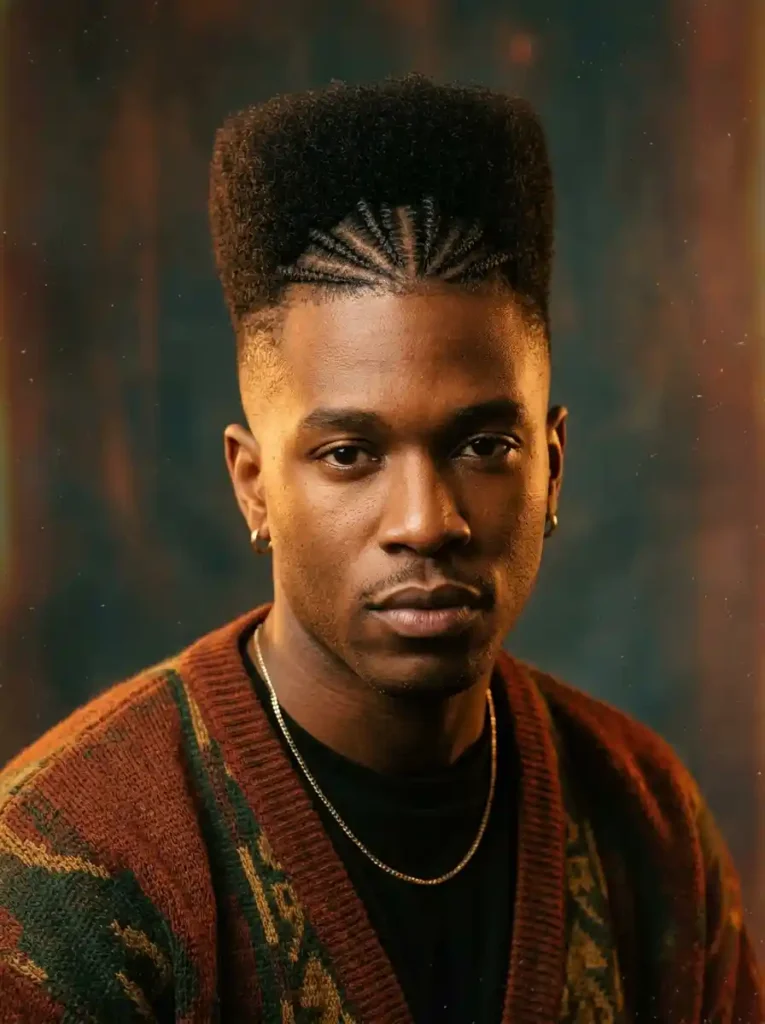
The high-top fade with cornrows installed within the elevated flat-top section is a style that specifically honors the cultural heritage of the late 1980s and early 1990s, when the high-top fade was one of the most significant aesthetic statements in Black American style culture, while updating that heritage with the cornrow braiding that transforms the elevated top section from a solid afro shape into a specifically patterned braided composition. The result is a style that is simultaneously deeply culturally referenced and specifically contemporary in its braided execution.
Achieving the high-top fade shape requires a barber with specific high-top technique experience — creating the perfectly flat, elevated platform of the high-top and the precise fade beneath it requires significant cutting skill that differs from standard fade technique. The cornrow installation on the elevated top section is then completed by the braider, who works within the shape the barber has created. Maintaining the high-top shape requires more frequent barber appointments than standard fades — typically every one to two weeks — because the flat platform’s precision diminishes rapidly as new growth rounds the edges. This is an investment in cultural heritage as much as personal style.
24. The Most Personally Excellent Cornrow Style for Your Specific Journey
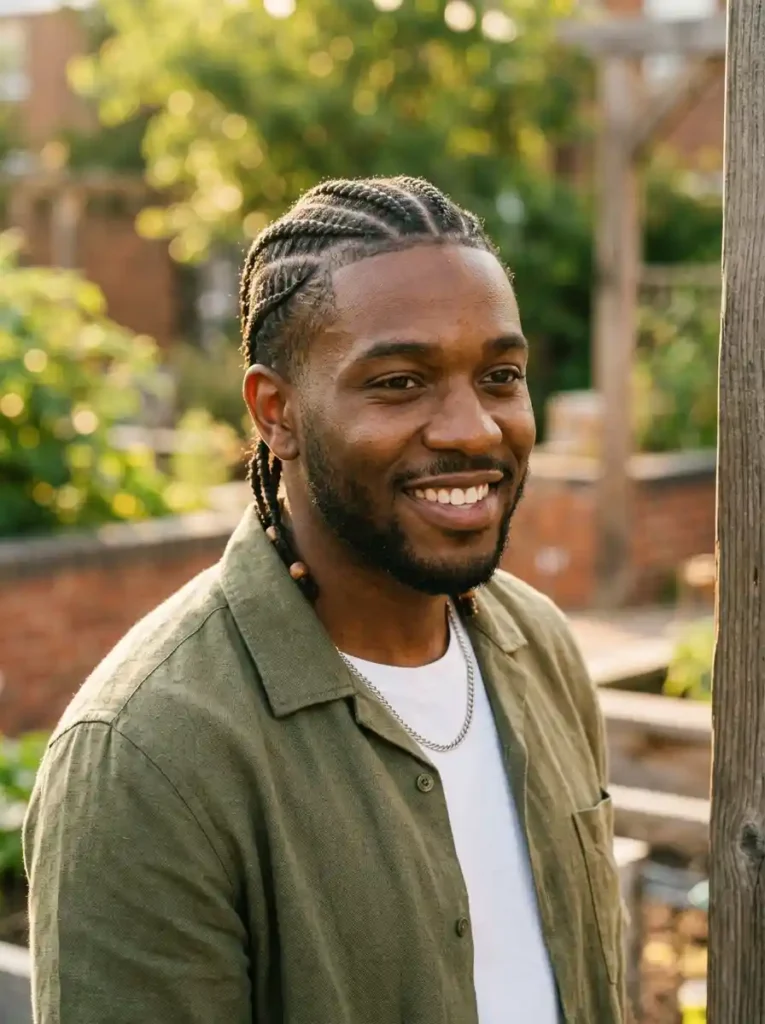
The most genuinely excellent cornrow hairstyle is never simply the most technically impressive or the most visually complex one — it is the one that most specifically honors your hair’s natural characteristics, your scalp’s health and comfort, your cultural connection to tradition, and your authentic personal aesthetic vision simultaneously. Cornrows are at their most powerful not when they are performing someone else’s reference but when they are expressing a genuinely personal relationship with a deeply significant cultural art form that belongs to a lineage of beauty and skill stretching back across millennia.
Begin your cornrow journey — or deepen your existing one — with a thorough consultation with a braider whose work you genuinely admire and whose portfolio demonstrates both technical mastery and genuine artistic sensitivity. Discuss your hair’s specific density, your scalp’s tension tolerance, your lifestyle’s practical requirements, and the aesthetic vision that most excites you from the ideas in this guide. Save the references that speak most powerfully to your personal sense of identity and bring them to the conversation with complete openness to the braider’s professional guidance. Your hair has a story to tell. A great cornrow style tells it beautifully.
Conclusion
Cornrow hairstyles for men are not simply a styling option — they are a living cultural tradition that has survived colonization, cultural suppression, global migration, and the relentless cycle of fashion trends to emerge in the present moment more celebrated, more artistically sophisticated, and more globally respected than at any previous point in their extraordinary history. Every man who chooses cornrows participates in that continuity, whether or not he is aware of the full depth of what he is engaging with. That participation is itself an act of respect and of genuine appreciation for one of humanity’s most enduring and most beautiful art forms.
The twenty-four styles in this guide represent a genuine range of what contemporary cornrow artistry makes available — from the most foundational and the most classically executed to the most creatively complex and the most personally expressive. Every variation shares the same foundational commitment to craft, to heritage, and to the specific kind of beauty that only comes from working directly with natural hair in its most honest and its most protected form. Whatever version appeals to you most strongly, approach it with appreciation for the tradition it belongs to and genuine care for the craft that makes it possible.
Save this guide before your next braiding appointment. Share it with a friend who has been curious about cornrows but unsure where to begin. And when you sit in the chair for your next installation, take a moment to appreciate what you are participating in — a tradition of beauty, community, and artistry that has been passed from hand to hand, from generation to generation, for longer than any of the other hairstyle references in the modern world can honestly claim. That heritage is part of what makes cornrows so specifically, so enduringly, and so genuinely timeless.