
Hairstyles for men with thin hair are genuinely one of the most searched grooming topics on Pinterest — and the frustration behind those searches is completely real and valid. Fine or thinning hair has a way of making even the most enthusiastic styling attempt feel futile by mid-morning, and most mainstream haircut inspiration content is photographed on men with thick, cooperative hair that behaves nothing like yours does in real life. The truth, though, is that the right cut combined with the right technique creates genuinely impressive volume from even the finest strands — and every idea on this list proves that convincingly.
1. The Textured Crop — Fine Hair’s Most Reliable Best Friend

The textured crop is the haircut that fine hair stylists recommend more than any other — and there’s real science behind that consistent recommendation that goes beyond trend following. When a skilled barber cuts choppy, uneven layers into the top section of a fine-hair crop, those varying lengths create visual shadow and depth between sections that the eye interprets as density and fullness. It’s essentially an optical illusion built directly into the geometry of the cut itself, and it works regardless of how fine individual strands actually are at the biological level underneath all the technique.
Styling the textured crop for maximum volume impact starts before the blow dryer even touches your hair — apply a thickening spray or volumizing mousse to towel-dried hair as your first product step, coating each strand with volume-building ingredients before any heat reaches them. Then blow dry upward with your fingers rather than a brush, building root lift from the very base of the top section where all real volume originates. Finish by pressing a pea-sized amount of matte texturizing paste between your fingertips and working it through dry hair with a press-and-pinch motion rather than smoothing — that pressing action separates sections and creates the dimensional, piece-y finish that makes fine hair look genuinely full and alive.
2. The Volumizing Quiff — Height Is the Greatest Illusion
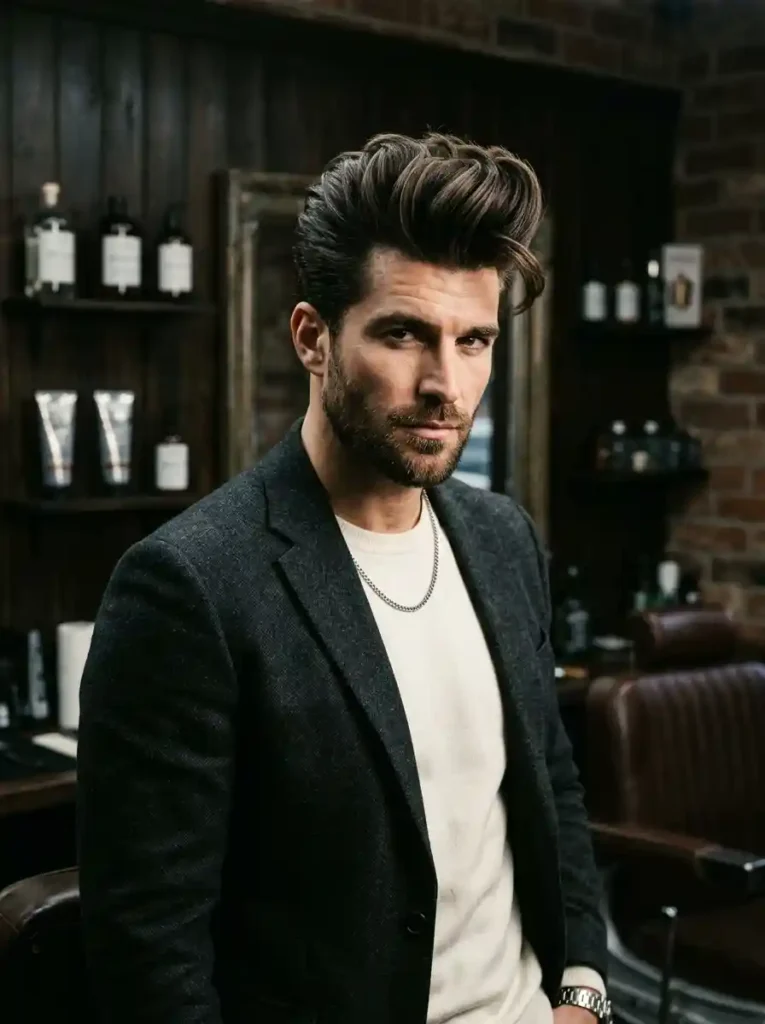
The quiff earns its place near the top of every fine hair hairstyles list because it solves thin hair’s most fundamental problem with the most direct possible solution — it moves hair upward and away from the scalp, creating vertical height and forward volume that makes the top of the head look substantially more substantial than it actually is. Where flat, gravity-surrendered fine hair reveals scalp and emphasizes thinness, a quiff creates generous air space beneath the hair and an impressive visual mass above it. The transformation between flat fine hair and a well-executed quiff on the same person is genuinely startling the first time you experience it properly.
The essential non-negotiable tool for a volumizing quiff on fine hair is a blow dryer — no air drying, no shortcuts that skip this step, no hoping something else will do the same job. Begin with a volumizing mousse applied to damp roots and lengths, then blow dry the top section vigorously upward and forward using your fingers to create root lift at every point along the crown. Once the initial volume is set by the heat and dried into position, use your lightest-hold matte clay to define the quiff shape and maintain the lift without any product weight collapsing the volume you’ve just built. Light, always light — fine hair collapses instantly under heavy products.
3. The Modern Caesar — Front Coverage That Creates Fullness

The Caesar cut — defined by its characteristic horizontal fringe worn forward across the forehead and uniform length across the top — is a genuinely underrated hairstyle for men with thinning hair because it creates front coverage and visual density at the hairline zone where fine hair is most often most visibly frustrating and most emotionally difficult to manage daily. The horizontal fringe creates a consistent, deliberate surface across the forehead that reads as full and intentional rather than fine and sparse — the uniformity itself is the illusion, and it’s a very effective one that holds throughout the entire day.
Beyond the visual benefits, the Caesar holds its shape on fine hair with remarkable consistency compared to volume-dependent styles that require gravity to cooperate all day — because the fringe lies forward rather than upward, the style isn’t fighting the very force that collapses fine hair structures by mid-afternoon. A tiny amount of lightweight styling cream worked through the fringe after drying is genuinely all the product this style requires to look intentional and maintained. The sides should be kept with a clean taper or fade that removes the sparse, scalp-revealing fine hair from the perimeter — that removal of context for thinness is what makes the top section look relatively full and deliberate.
4. The Short Disconnected Undercut — Concentration Strategy
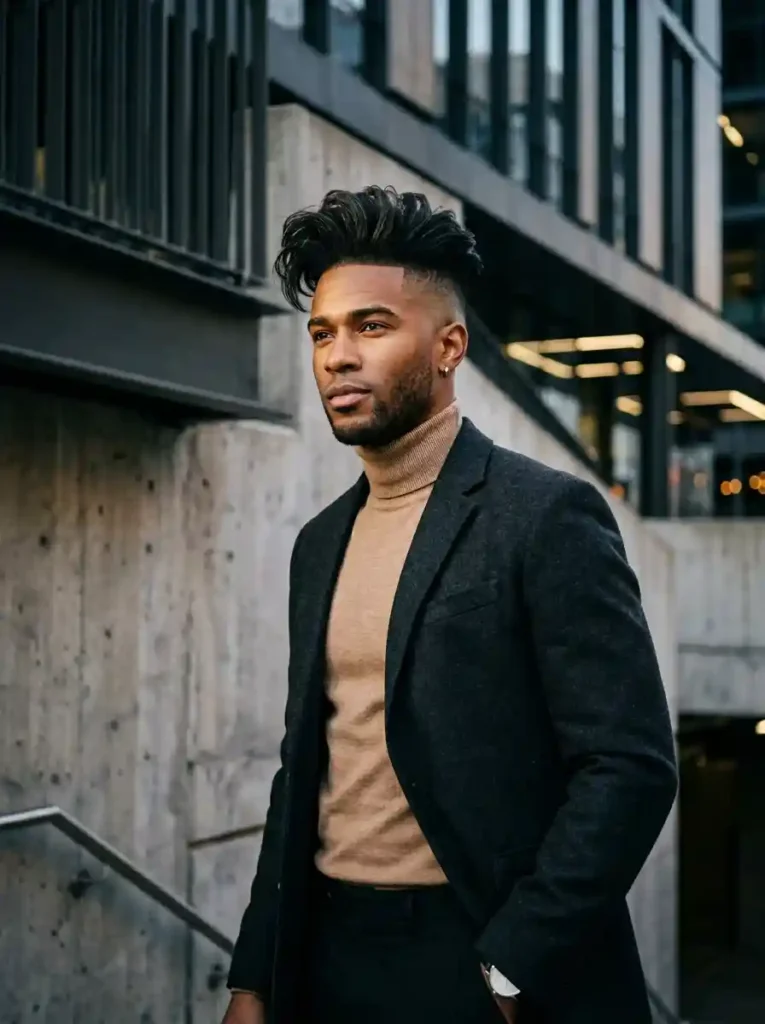
The disconnected undercut is one of the smartest geometric strategies available for fine hair — not because it creates volume through product or technique, but because it removes fine hair entirely from the sides where thinness is most unflattering, concentrating every strand the head possesses onto the top section where it can be styled and evaluated completely on its own terms without any comparative context to reveal its fineness. This concentration principle is one that no styling product or technique can replicate — you simply cannot achieve the same effect by any other method than fundamentally redesigning where hair exists on the head.
The visual contrast created by a skin or bald fade also works actively in your favor from a purely optical standpoint — the close, skin-level sides make whatever volume exists on top appear dramatically more impressive than the same volume would look against sides of similar length and density. Men who have spent years feeling self-conscious about sparse fine hair covering the sides of their head often describe getting a skin fade for the first time as a genuinely liberating experience, like the haircut solved a problem they had been managing incorrectly for years. Style the concentrated top section with any volume technique that suits your hair and the top will look impressively full by any reasonable standard of comparison.
5. The Blow-Dry Technique Itself — The Skill Worth Learning

The blow dryer is genuinely the most powerful tool fine hair has access to — more transformative than any haircut decision, more impactful than any product choice — and the overwhelming majority of men with fine hair have never been taught how to use it specifically for maximum volume creation rather than simply for drying. The fundamental principle that makes blow drying so effective for thin hair is thermoplasticity — hair is pliable and shapeable when warm and wet, and whatever position it dries in becomes its resting position once cool. If you dry it flat, it stays flat; if you dry it lifted, it stays lifted throughout the day.
Begin every blow dry session with your head tilted forward toward the floor so gravity assists rather than opposes the volume-building process — use the dryer on medium-high heat and direct the airflow from roots to ends while your fingers continuously push and separate sections upward away from the scalp. Spend the majority of your blow drying time at the roots rather than the lengths, because root lift is where all genuine volume originates and where the blow dryer’s thermoplastic effect is most powerful. Once the hair is about ninety percent dry in this lifted position, flip your head upright and use the cool shot button to lock the lifted shape in place permanently for the day — that cool air literally sets the volume into the hair shaft and it will hold significantly longer than heat-finished hair.
6. The Low-Maintenance Buzz — Confidence Through Simplicity
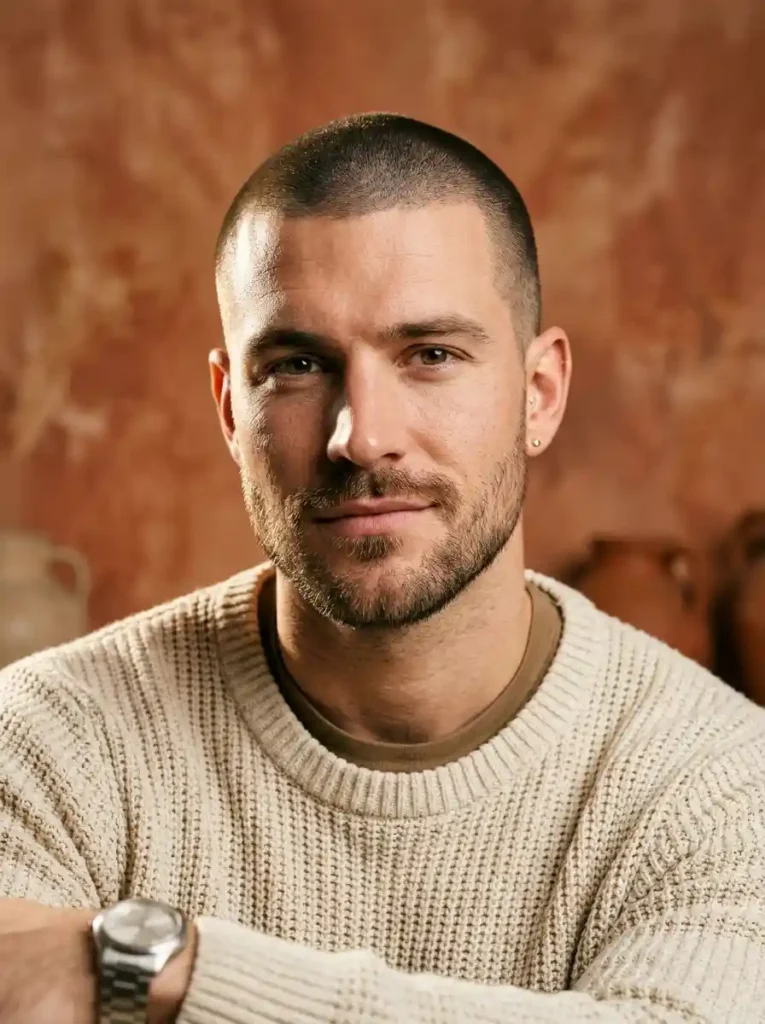
The buzz cut is the fine hair choice that gets resisted most strongly and rewarded most generously — men who finally make this decision after years of frustrated longer-hair styling almost universally describe it as one of the most liberating grooming choices of their lives, and that reaction makes complete logical sense once you understand what the buzz cut actually accomplishes for fine hair. At clipper lengths between a number 3 and number 5, the individual strand thinness becomes completely irrelevant — what the eye registers is the consistent, even surface texture of the cut rather than any quality of individual hairs, and that surface texture at these lengths reads as full, healthy, and deliberately maintained.
The deeper benefit of the buzz cut is the complete elimination of the daily negotiation with hair that refuses to perform as desired — no product, no blow dryer, no twenty-minute routine attempting to create temporary volume that collapses before lunch. What replaces all of that is the quiet, deeply satisfying confidence that comes from making a decisive, intelligent choice about your hair rather than spending energy managing a situation that resists management. Wash, towel dry, walk out — and look completely intentional and well-groomed the entire day with no further investment required. For men with fine hair, the buzz cut is not giving up. It’s making the smartest possible decision with available resources.
7. The Layered Shag — Movement as a Volume Surrogate

The shag haircut was genuinely designed for the kinds of challenges that fine hair creates — multiple layers at different lengths that remove weight while adding visual complexity, wispy ends that catch light at varying angles, and a deliberately undone quality that reads as dimensional texture rather than revealing the flatness that fine hair produces when cut bluntly. Each layer in a shag cut creates its own surface that catches light independently, and the combination of multiple differently-lit surfaces creates the visual impression of depth and richness that hair density would otherwise be required to produce. It’s clever structural design doing the work that biology declined to do.
The shag is also a genuinely practical solution for men growing out from shorter styles, because the layering makes the in-between growth phases look like intentional choices rather than awkward transitions — the growing layers simply become more pronounced and more interesting as they develop, rather than creating the heavy, shapeless mass that unglamoured fine hair produces when grown past its ideal shorter length. Ask your stylist specifically for lots of internal layers and point-cut ends — blunt cuts on fine hair emphasize the thinness of individual ends in an unflattering way, while point cutting creates the tapered, wispy quality that makes fine hair’s natural lightness look like a deliberate aesthetic feature rather than a physical limitation.
8. The Strategic Side Part — Structure Creating Depth

The textured side part is the fine hair style that finally makes sense of what side parts can be beyond the flat, scalp-revealing disappointment they become when fine hair is simply combed to one side with nothing further considered. By adding texture through deliberate product application and finger-based styling rather than smoothing and combing, the side part transforms from a revealing style into a genuinely dimensional one — the piece-y, separated sections on each side of the part catch light individually and create the visual depth that communicates fullness even when individual strand diameter tells a completely different story at the microscopic level.
Apply a lightweight mousse or sea salt spray to damp hair as the foundational product, establish a rough side part direction with your fingers rather than a comb, then blow dry with a diffuser or with fingers and directed airflow to build volume through the drying process. Once dry, press a matte texturizing paste through the top section using a deliberate pressing-and-pinching motion rather than any smoothing action — the pressing separates sections and creates visible gaps between them that read as fullness and dimension, while smoothing eliminates those gaps and returns the hair to a flat surface that reveals thinness. That single technique distinction — press rather than smooth — is genuinely transformative for what fine hair can achieve in this style.
9. The Slicked-Back Style — Fine Hair’s Surprising Strength

Recommending a slicked-back style for fine hair sounds deliberately counterintuitive — the conventional wisdom says never slick fine hair because it reveals scalp — but the right product approach transforms this from a thinness-revealing choice into an elegant, deliberate style that uses fine hair’s natural properties as genuine advantages. Fine hair accepts directional styling more readily than thick hair, lies closer to the scalp more cooperatively, and creates smoother surfaces when slicked without the bulk and rebellion that thick hair brings to the same technique. What feels like a disadvantage becomes an asset when the style is designed around the hair’s actual characteristics rather than fighting them.
The critical product distinction that makes slicked-back fine hair look elegant rather than sparse is using a water-based light-hold product — a styling cream or natural sheen lotion — rather than anything heavy, oily, or high-gloss that would make the scalp visible through the product coating the hair. Apply to slightly damp hair, comb back with a wide-tooth comb using gentle strokes that distribute the product evenly without pressing the hair against the scalp, and allow the hair to dry in this direction without touching or adjusting it. The result is a composed, refined look that feels like a considered style choice rather than a compromise — and in professional and formal settings, this quiet elegance reads with genuine distinction and confidence.
10. The Faux Hawk — Concentration Creates Impressive Volume

The faux hawk on fine hair works through the same concentration principle that makes the undercut effective — instead of spreading all available hair evenly across the top of the head where its thinness is fully visible across a large surface area, the faux hawk gathers and directs everything toward a central ridge that runs crown to forehead, creating an impressive three-dimensional structure from a volume of hair that looks disappointingly flat when distributed. Concentration is one of the most powerful volume strategies available to fine hair, and the faux hawk is its most dramatic practical application in daily styling.
A strong but lightweight volumizing product is non-negotiable for fine hair achieving and maintaining a faux hawk shape throughout the day — a thickening mousse applied to damp hair before blow drying gives each strand the grip and body it needs to hold the lifted central ridge without collapsing from its own limited weight within the first hour. Blow dry from both sides simultaneously, directing everything inward and upward toward the central ridge with your fingers, then apply a light-hold fiber paste to define and set the shape without adding any product weight that would work against the lift. Fine hair’s lightness is genuinely an advantage for the faux hawk — it lifts more easily and with less product resistance than thick hair would require.
11. The Comb Over Fade — Reinvented With Modern Dignity

The comb over has spent decades buried under the weight of cultural associations with denial and desperation — but the modern, intentional, properly executed comb over with a contemporary fade is genuinely one of the most dignified and stylistically intelligent approaches a man with thinning hair can take, completely separated from everything that old association implied. The crucial psychological shift is from concealment mentality to styling mentality — the modern comb over isn’t hiding thinness through desperate coverage, it’s creating the most effective possible use of available hair, which is an entirely different and genuinely confident framework for approaching the same physical situation.
The taper or skin fade on the shorter side does something crucial that distinguishes the modern version from its maligned predecessor — it removes the sparse, thin, scalp-revealing hair from the side where the hair is swept away from, creating a clean gradient that frames the comb over section elegantly rather than contrasting unfavorably with it. Style with a natural-movement approach — a light pomade rather than a heavy paste, fingers rather than a tight comb — so the swept section has softness and life rather than the plastered, rigid quality that old-fashioned comb overs used to create. The result reads as a genuine style choice made by a man who knows what he’s doing with his hair, which is both the goal and the complete honest truth.
12. The French Crop With Fringe — Front Density Where It Matters Most

The French crop with a textured fringe addresses fine hair’s most emotionally loaded area — the hairline and forehead zone — with a straightforward and effective design solution that creates front coverage and visual density right where it’s most needed and most noticed by the person wearing it. The forward-falling fringe creates a consistent visual layer at the forehead that prevents the hairline from being the first thing a person notices about their reflection, replacing that anxious focal point with a deliberate, styled element that reads as a fashion choice rather than a physical reality to be managed. That perceptual shift is genuinely meaningful beyond the purely aesthetic.
The French crop’s maintenance requirements are reassuringly simple compared to the volume-dependent styles that require product and blow drying discipline to function properly on fine hair — the short length and forward direction mean gravity is working with rather than against the style throughout the day, so the fringe stays in place without constant product reinforcement or midday touch-ups. A small amount of matte texturizing paste pressed through the dry fringe each morning creates the piece-y separation that adds dimension to the forward-falling section, and the low to mid fade on the sides removes the thin perimeter hair that would otherwise undermine the style’s overall impression of density. Minimal effort, maximum daily reliability.
13. The Intentionally Messy Style — Imperfection Hides Everything

The deliberately messy hairstyle is a remarkably sophisticated strategy for fine hair because it uses the visual complexity of multi-directional texture to completely override the viewer’s ability to evaluate individual strand characteristics — which is precisely the evaluation you need to prevent. When hair is piece-y, separated, and pointing in several directions simultaneously, the eye reads the overall surface texture as a rich, dimensional mass and reaches its fullness conclusions based on textural complexity rather than strand-by-strand density assessment. Refined imperfection bypasses the mechanism that reveals thinness more effectively than any neat, controlled style can manage.
Sea salt spray is the product that most honestly delivers this effect — it creates genuine texture and grip along each individual strand that gives fine hair a body and dimensional quality it simply doesn’t possess in its natural unproducts state. Apply generously to damp hair, scrunch upward from ends toward roots to encourage random multidirectional movement, and air dry completely without touching or directing the hair into any particular arrangement. The critical distinction between this and simply not styling is the intentionality of the scrunching process and the even product distribution — consistently applied chaos rather than genuine neglect creates the dimensional richness that makes this look work. Fine hair’s lightness actually helps it hold this multidirectional lift longer than heavier hair types would manage.
14. The Short Uniform Clipper Cut — Elegant Simplicity at Any Age

Keeping fine hair at a uniformly short clipper length — somewhere between a number 4 and number 6 guard — is a solution that gets significantly underrepresented in fine hair styling content despite being consistently one of the most effective and the most liberating approaches available. At these lengths, the individual strand thinness that causes so much daily frustration at longer lengths becomes completely irrelevant — the eye registers only the consistent, even surface texture of the cut, which at shorter clipper lengths creates a soft, full-looking result that has its own genuine visual appeal completely independent of the hair density underneath it.
This approach is particularly valuable for men whose fine hair is also thinning at the crown or temples, because the uniform short length makes these patterns significantly less noticeable — sparse areas at the crown are far less visible when surrounding hair is also short than when longer surrounding hair creates a stark and emotionally difficult contrast between coverage and visible scalp. Regular maintenance every three to four weeks keeps the uniformity that makes this style function, and the absence of product requirement and daily styling effort represents a genuine quality-of-life improvement that men who make this switch consistently describe as disproportionately positive relative to the simplicity of the choice itself.
15. Adding Highlights — Color That Mimics Density
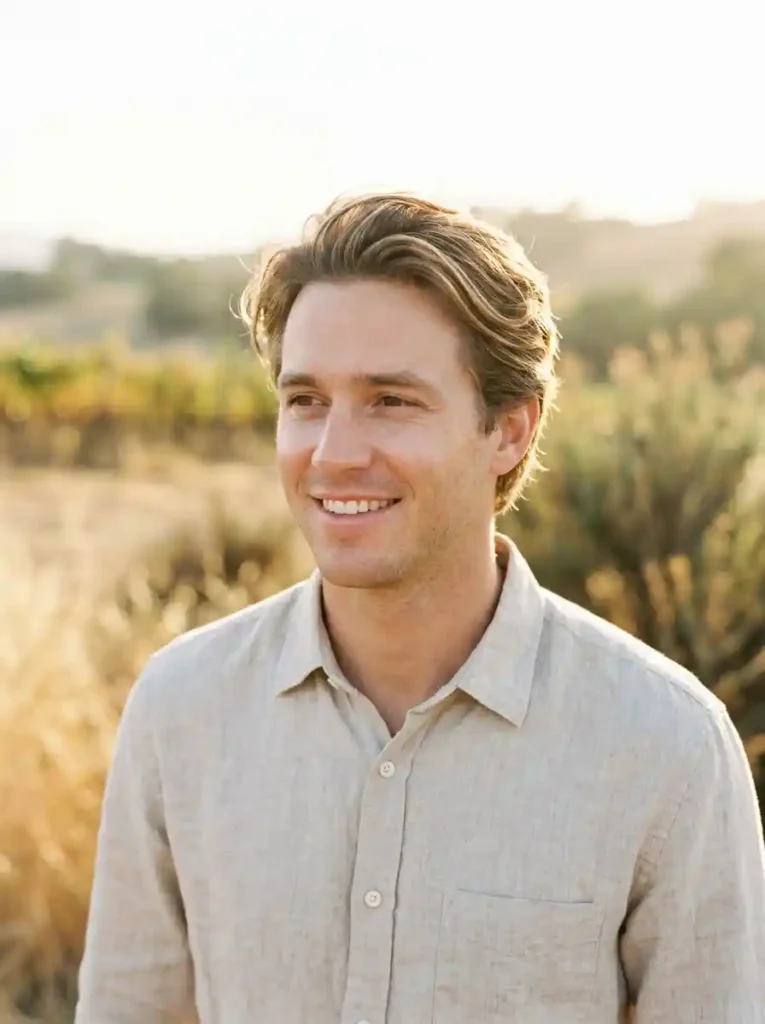
Highlights represent one of the most dramatically effective non-cut, non-styling approaches to making fine hair look visually thicker — because what color variation actually creates in fine hair is the tonal depth and shadow that hair density naturally produces in thicker hair. A single flat color in fine hair looks uniform and, when light hits it, slightly transparent — revealing the scalp through the even tone. Multiple tonal variations in highlighted hair create light reflection at different angles and depths, and that play of lighter and slightly darker tones genuinely mimics the visual effect of dense, layered hair in a way that creates a convincing impression of fullness even from close viewing distance.
Balayage and lived-in highlight techniques are the most fine-hair-appropriate approaches because they create soft, natural-looking tonal variation without the harsh regrowth lines of traditional foil highlights — the soft transition from natural root through highlighted mid-lengths and ends looks organic and intentional rather than obviously chemically created. The warm tone of the highlights matters enormously — warm golden tones reflect more light and create more visual warmth and richness in fine hair than ashy or cool tones, which can make fine hair look even more translucent rather than fuller. This is one of those changes that makes people compliment your hair without being able to articulate precisely what changed — the most gratifying kind of grooming success.
16. The Side Sweep with Root Volume — Direction Plus Lift

The side sweep appears straightforward enough that most men with fine hair attempt it and are disappointed by results that look flat and scalp-revealing rather than swept and voluminous — and the reason for that consistent disappointment is almost always the absence of root lift, which is the fundamental element that elevates a side sweep from a simple directional comb-through into a genuinely volume-creating style. Without root lift built during the blow drying process, fine hair simply lies in its new direction as flatly as it lay in its previous one, and the sweep accomplishes nothing volumetrically except moving the thinness from one side to the other.
The root lift must be built first — apply volumizing mousse to damp roots and lengths, then blow dry the roots at the crown specifically with concentrated upward airflow and your fingers pushing the hair upward while the heat sets the lift into the hair shaft permanently. Only once this root lift is established should you then direct the overall sweep to one side, using the blow dryer to set the directional shape while maintaining the volume built at the roots in the first phase. The swept section should carry height at the base that creates visual depth and three-dimensionality — that architectural quality is the difference between a side sweep that looks styled and one that looks like thin hair trying its best without much technical help.
17. The Grown-Out Crop — In-Between Length as an Asset

The grown-out crop is fine hair’s most overlooked style opportunity — the period several weeks past an ideal crop cut where the top section has grown enough to develop movement and texture that simply wasn’t available at the shorter original length. Most men with fine hair see this phase as a maintenance failure and rush back to the barber to restore the original clean crop, missing entirely that the slight overgrowth has actually created something more interesting and more forgiving than the freshly cut version. The extra length allows natural movement to develop, the slightly heavier sections create their own wave and separation, and the overall result often looks more dimensional than the precisely cut version it grew from.
Styling the grown-out crop well requires acknowledging what the extra length wants to do naturally rather than fighting it back toward the shorter style’s behavior — apply a lightweight texturizing spray to damp hair, encourage whatever wave or movement has developed with gentle scrunching, and allow it to dry naturally or with a diffuser without forcing it back into the rigid forward crop shape. The slight dishevelment that results looks intentional and deliberately casual at this length in a way that the same amount of dishevelment at the shorter original crop length would not — there’s enough hair to make relaxed styling look like a style choice rather than a styling failure.
18. The Matte Product Switch — The Change That Changes Everything
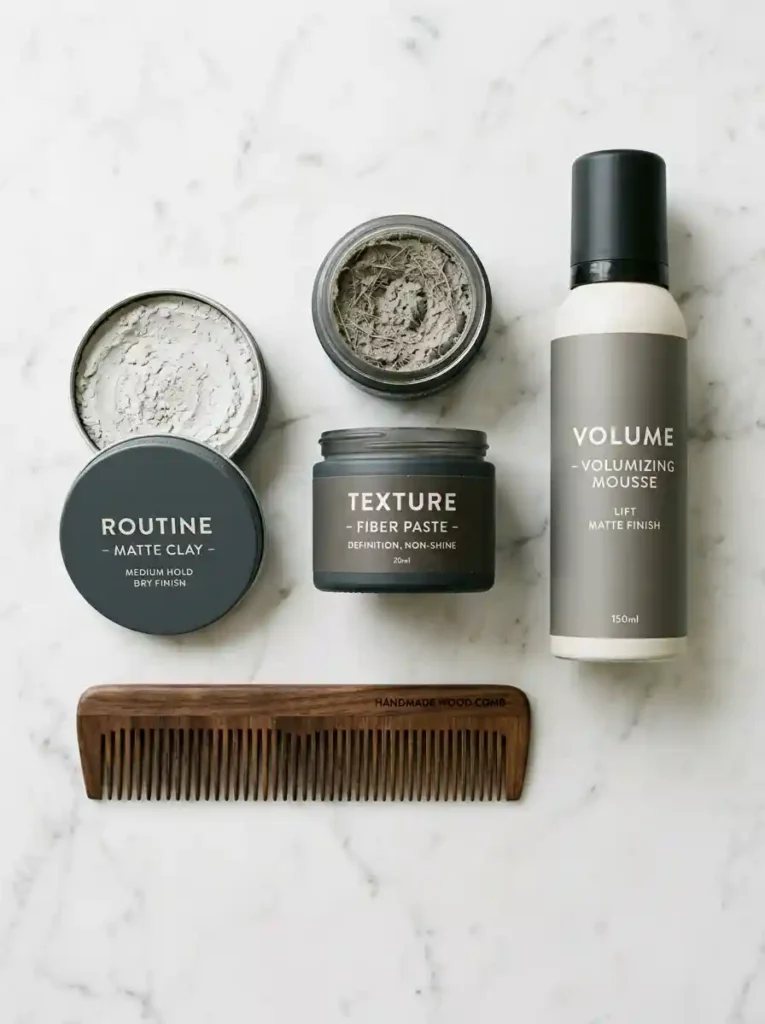
This is a product philosophy entry rather than a specific hairstyle — and it belongs in any serious fine hair guide because switching from shiny or high-gloss products to exclusively matte finish products has more impact on how thin hair looks than almost any specific style choice on this entire list. The mechanism is straightforward and important: product sheen in fine hair makes the scalp itself appear to shine visibly through the hair strands, actively emphasizing the spaces between them and making thinness significantly more visible and more pronounced than it appears in completely unproducts hair. Matte products eliminate this scalp-through-hair shimmer effect entirely, which is a transformative visual difference.
Every product decision for fine hair should be evaluated through a matte-versus-shine filter before anything else is considered — matte clays, fiber waxes, texturizing pastes, and mousse are the appropriate product categories, while pomade, wax with shine, gel, and any product that creates a wet or glossy finish should be completely eliminated from the fine hair toolkit regardless of hold level or styling benefit they might otherwise offer. Use matte products sparingly — a pea-sized amount is typically sufficient for fine hair because individual strands offer minimal resistance and product distributes easily and goes much further than it would in thick hair. Men who make this single switch frequently describe it as the most impactful grooming change they’ve ever made, producing visible improvement with zero additional technique required.
19. The Natural Wave Enhancement — Working With What Exists

Men with fine hair that also carries natural waves or slight curls are in possession of a genuinely underutilized volume asset — because the wave pattern creates height, movement, and surface texture simultaneously and naturally, without any product or technique required to generate it from scratch. When a natural wave is properly enhanced rather than suppressed, naturally wavy fine hair can look astonishingly full and rich — the wave lifts sections away from the scalp, creates the multidirectional movement that the eye reads as dimensional density, and generates the textural complexity that mimics what actual hair thickness naturally produces in straight thick hair through different mechanisms entirely.
Wave enhancement starts with application technique — a lightweight curl cream or wave-defining product applied to soaking wet hair immediately after washing, before any significant drying has occurred, allows the product to distribute through the hair while the wave pattern is still fully activated and visible. Scrunch upward gently from ends toward roots without rubbing or disrupting the forming wave structure, then allow the hair to air dry completely undisturbed or use a diffuser on the lowest heat and airflow setting possible. The golden rule of wave enhancement — never touch the hair while it’s drying, not even to adjust or position sections — is the most commonly violated and most consequential rule in the entire process. Touch it while wet and you break the wave; leave it alone and the wave sets into a fullness that fine hair alone could never achieve.
20. The Scalp Massage Routine — Building Real Volume From Within

Scalp health is the dimension of fine hair management that gets the least discussion in style and grooming content and has among the most significant long-term impact on both hair quality and hair density — and the daily scalp massage is one of the most evidence-supported and practically simple practices available for improving both. Regular scalp massage using either fingertips or a silicone scalp massager during shampooing increases blood circulation to hair follicles, which supports the delivery of the nutrients and oxygen that follicles require to produce hair at their maximum potential diameter and growth rate. Over months of consistent practice, many men report visible improvements in both hair density and individual strand thickness.
Beyond the scalp massage itself, the foundation of all fine hair styling success is genuinely healthy hair that has been grown from a well-maintained scalp environment — fine hair that is well-moisturized, regularly trimmed to prevent split ends, protected from heat damage with a thermal protectant spray, and washed with a sulfate-free volumizing shampoo that doesn’t strip natural oils performs meaningfully better under every styling technique than the same fine hair grown from a neglected scalp with accumulated product buildup and dryness compromising follicle function. Invest equally in long-term hair health practices and short-term styling techniques, and the compound effect of both working together produces results that neither approach achieves independently with any comparable degree of success.
21. The Windswept Pushed-Back Look — Energy That Reads as Fullness

The windswept pushed-back style is one of fine hair’s most effective visual tricks because it exploits a perceptual shortcut that works in your complete favor — hair that appears to be in motion, or hair that shows the characteristic lifted, pushed-back shape of wind movement, is universally interpreted by the human visual system as having the healthy, full-bodied quality that only genuinely substantial hair can normally achieve against the forces of wind. Even a modest volume of fine hair pushed back from the forehead with visible lift and some directional variation reads as dramatically fuller than the same hair lying flat or conventionally styled in any other direction.
Achieving the windswept look intentionally requires a medium-hold matte pomade or a light clay applied to damp or dry hair, then using your fingers to push everything backward from the forehead while simultaneously lifting at the roots and allowing slight directional variation between different sections rather than pushing everything uniformly flat in one direction. The slight unevenness between sections — one pushed slightly right, another straight back, another with more lift — is exactly what creates the windswept quality rather than simply a neat slick back. Set with a light flexible-hold spray misted from a generous distance to preserve the movement, and resist every subsequent impulse to touch or tighten the arrangement throughout the day.
22. The Longer Top Short Sides — Maximum Strand Optimization
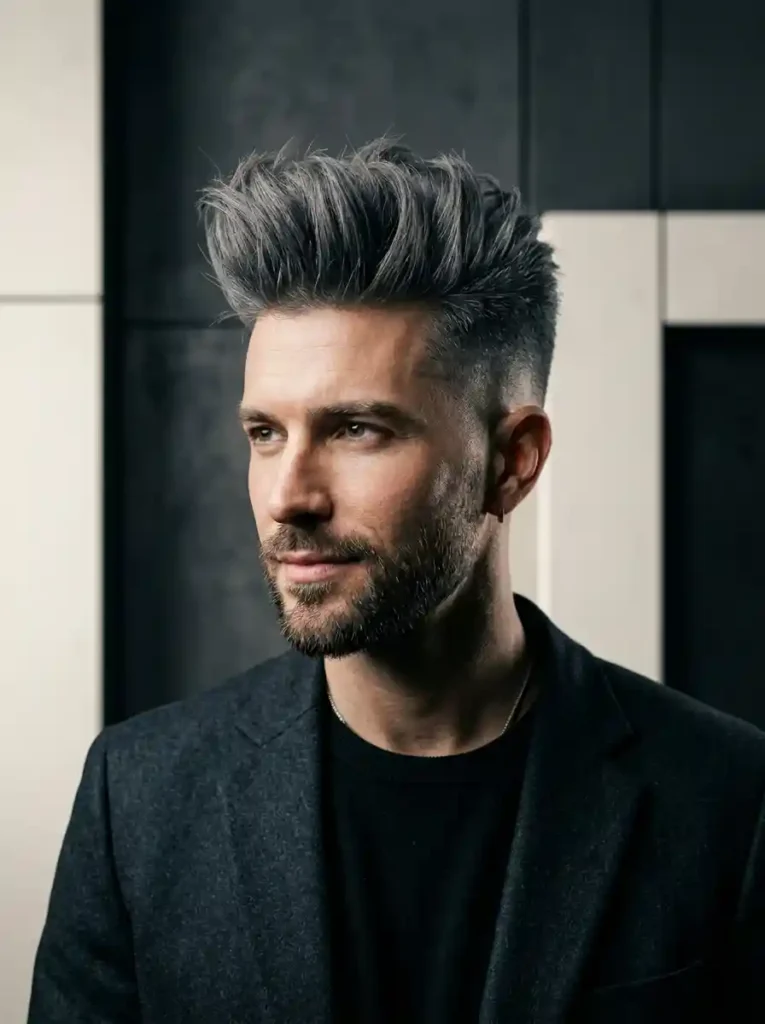
The longer top with very short faded sides is fine hair’s most dramatically effective optical illusion concept — a haircut design philosophy rather than any specific style, applicable across every top styling preference from textured crops to quiffs to side sweeps. The principle is fundamentally sound: rather than spreading fine hair evenly across the entire head where its thinness is distributed across a large surface area and therefore fully visible everywhere simultaneously, this approach concentrates every available strand onto the top section where it can be styled, lifted, and evaluated completely in isolation from any contextual thinness on the sides. Total optimization of limited resources through intentional distribution.
The practical result of this design approach is that men with genuinely very fine or thinning hair regularly achieve top sections that look impressively full when styled — not because the hair has changed, but because the visual context has been completely reconfigured by removing the sparse sides that previously provided the comparison point that revealed the thinness. Ask your barber specifically for maximum contrast between a close fade or skin fade on the sides and scissor length preserved on top, and discuss together the specific top length that allows your particular hair’s natural texture to create the most volume. That conversation — informed and specific — is the difference between a haircut that happens to you and one that genuinely works for your specific hair situation.
23. The Confidence Choice — Owning What Your Hair Does

Every technique and product on this list performs better — measurably, consistently better — when the person using it brings genuine confidence to the wearing of the result, which sounds like a motivational platitude but is actually a practical observation about how personal presentation works in real social environments. The anxiety and self-consciousness that thin hair can generate creates a particular kind of self-monitoring body language — touching the hair constantly, adjusting and checking, tilting the head to minimize visible scalp — that draws attention to exactly the thing the person is trying not to be noticed about. Confident stillness about your appearance, by contrast, makes people much less likely to critically evaluate the specific qualities you’re most concerned about.
The most valuable long-term shift available to men with fine hair is moving from a deficit framework — in which thin hair is something to be compensated for, hidden, or apologized for through constant styling effort — to a design framework in which the hair you have is simply the material you’re working with, and the goal is to make the best possible use of what exists rather than simulate what doesn’t. Every person in this list has demonstrated styles that do exactly that — work brilliantly with fine hair’s actual properties rather than against them. The men who wear their fine hair best are invariably the ones who stopped fighting it and started designing with it — and that shift in orientation, more than any product or technique, is the genuine beginning of great hair.
Conclusion
Choosing the right hairstyle can make a dramatic difference in how thin or fine hair looks and feels. The best hairstyles for men with thin hair focus on adding texture, volume, and movement while reducing the appearance of sparse areas. From textured crops and quiffs to fades, buzz cuts, and side-swept styles, there are plenty of modern options that create a fuller, thicker look. Combined with proper styling techniques, lightweight volumizing products, and regular hair care, these cuts can help maximize your hair’s potential. With the right style, thin hair can look sharp, confident, and effortlessly stylish every day.