
Beard styles have the genuine power to completely transform how a man is perceived — adding structure to soft features, authority to a young face, and a kind of quiet, considered elegance that clean-shaven skin simply cannot communicate in the same immediate way. The right beard doesn’t just change your appearance; it redefines your jawline, balances your facial proportions, and signals something specific about personal care and intentionality that other people register and respond to before a single word is spoken. Whether you’re growing your first beard or elevating what you already have, every style on this list delivers that refined quality with its own distinct character.
1. The Short Boxed Beard — Geometry That Commands Attention
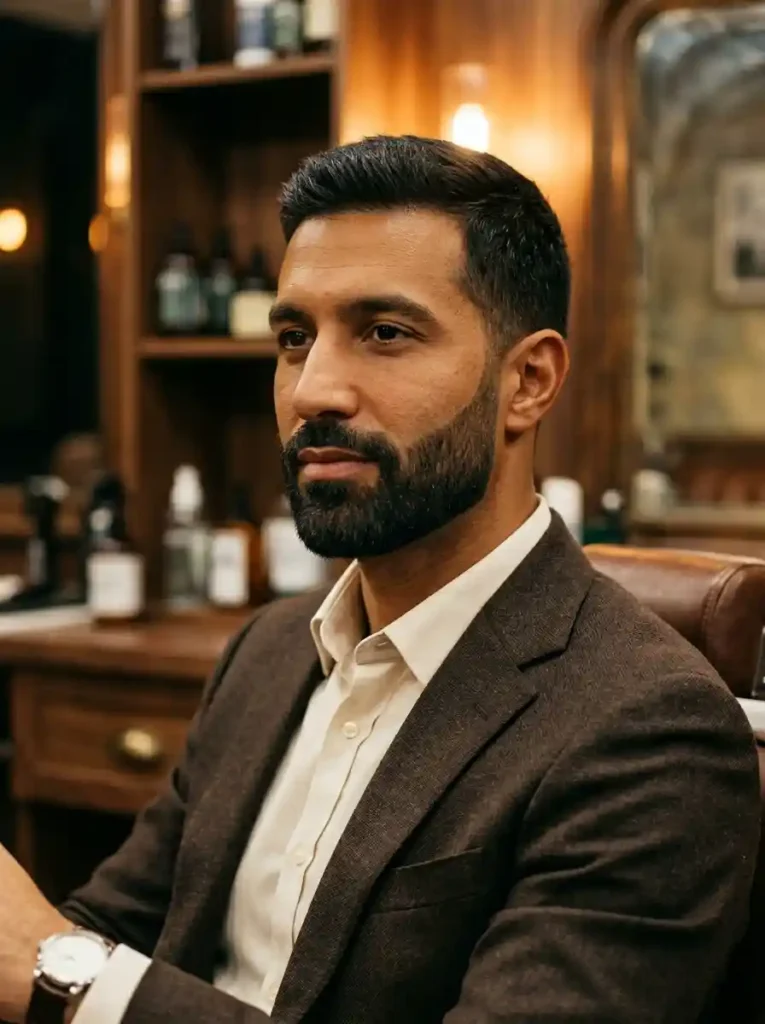
The short boxed beard is the style that converts skeptics into devoted facial hair advocates — a design so universally flattering and professionally appropriate that it genuinely works across face shapes, skin tones, and lifestyle contexts without requiring significant compromise in any direction. Its defining characteristic is the clean geometric perimeter: a sharp cheekline following the cheekbone contour and a precise neckline shaped along the natural jaw curve. Together these boundaries transform the lower face with the same effect a great haircut has on the upper one — suddenly everything reads as more structured, angular, and deliberately composed than it did without it.
The maintenance routine for a short boxed beard is genuinely sustainable even for men who’ve previously avoided facial hair specifically because of grooming demands — a beard trimmer for the body length every two to three days, and a detail trimmer or straight razor for the cheekline and neckline edges with the same frequency. Neckline placement deserves your most careful attention because it’s the single element most responsible for whether a beard reads as polished or simply unshaved — position it along the natural jaw curve, never too high toward the chin or too low blending into the neck. Get that line right and the entire style falls into refined alignment immediately.
2. The Corporate Beard — Boardroom Authority in Facial Hair Form
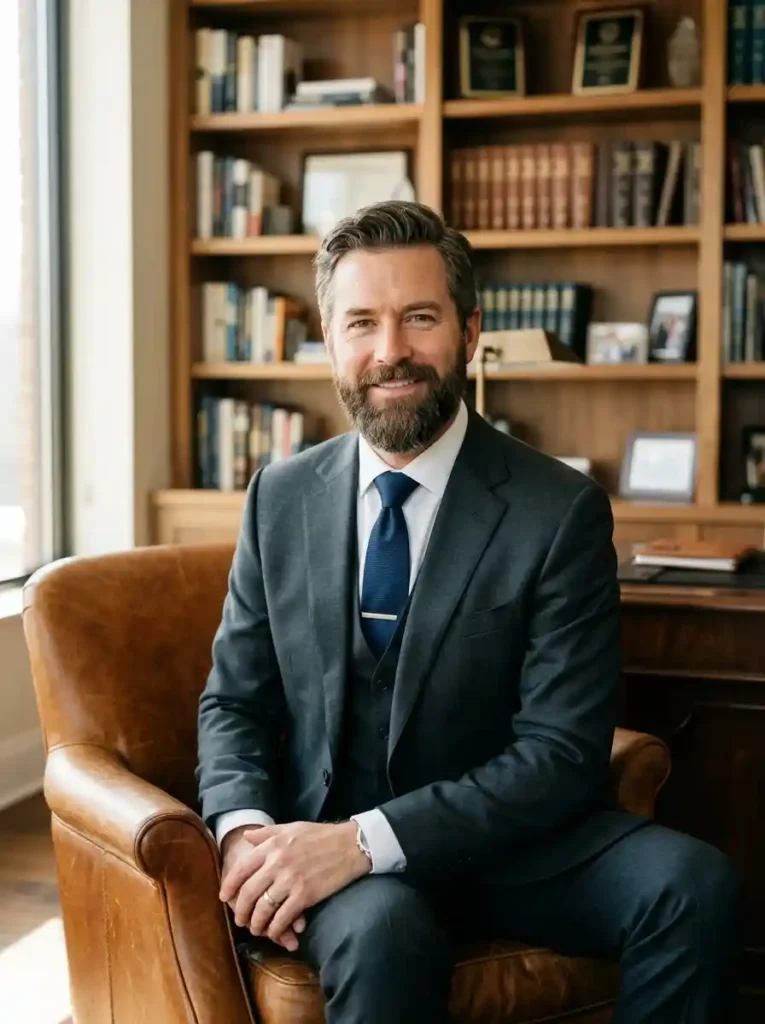
The corporate beard has definitively settled the long-running debate about whether facial hair and professional credibility can comfortably coexist — they absolutely can, and in many industries the right beard actively enhances professional presence by adding visual weight and the kind of settled maturity that clean-shaven younger men sometimes genuinely struggle to project in high-stakes environments. A medium-length beard maintained with absolute consistency communicates something specific about personal standards: that you are meticulous about details of your presentation, which is precisely the signal professional contexts reward in ways both obvious and deeply implicit.
Length sits between half an inch and one full inch for the ideal corporate beard — substantial enough to show deliberate growth and genuine texture, controlled enough to always look intentional rather than simply unshaved for a week. High-quality beard oil applied daily keeps the hair soft and the skin beneath healthy, preventing the dryness and flaking that undermine an otherwise excellent beard’s refined impression instantly. Edge maintenance every three to four days is genuinely non-negotiable — even a single day of overgrown cheekline transforms a polished corporate beard into something that reads as inattentive, and consistency of those crisp boundaries is precisely what separates the intentional beard from the accidental one in any observer’s immediate perception.
3. The Designer Stubble — Research-Backed Attractiveness at 3mm

Designer stubble occupies a uniquely powerful position in the entire beard style spectrum — it’s the facial hair length that multiple peer-reviewed studies have found most widely attractive across gender lines and cultural groups, sitting in the sweet spot between clean-shaven and genuinely bearded where the face simultaneously reads as groomed, masculine, and approachable. At approximately 3mm — roughly three to five days of natural growth for most men — designer stubble adds definition to the jawline, creates the shadow that makes facial structure appear more angular and defined, and projects the specific combination of confidence and accessibility that photographs with almost unfair attractiveness.
The maintenance requirement for designer stubble is actually more demanding than most people initially expect — it requires trimming every two to three days to maintain the ideal length rather than simply allowing growth to continue naturally, and the edges need the same clean neckline and cheekline precision that longer beards require. A quality trimmer with precise length settings is the essential investment, and consistency with those settings ensures the stubble never reads as accidentally neglected. Men who’ve never worn facial hair often describe the first time they maintain designer stubble correctly as a revelation — the jawline simply appears, sharper and more defined, like a photograph that suddenly came into clear focus.
4. The Full Beard — Classic Masculine Authority at Its Most Complete
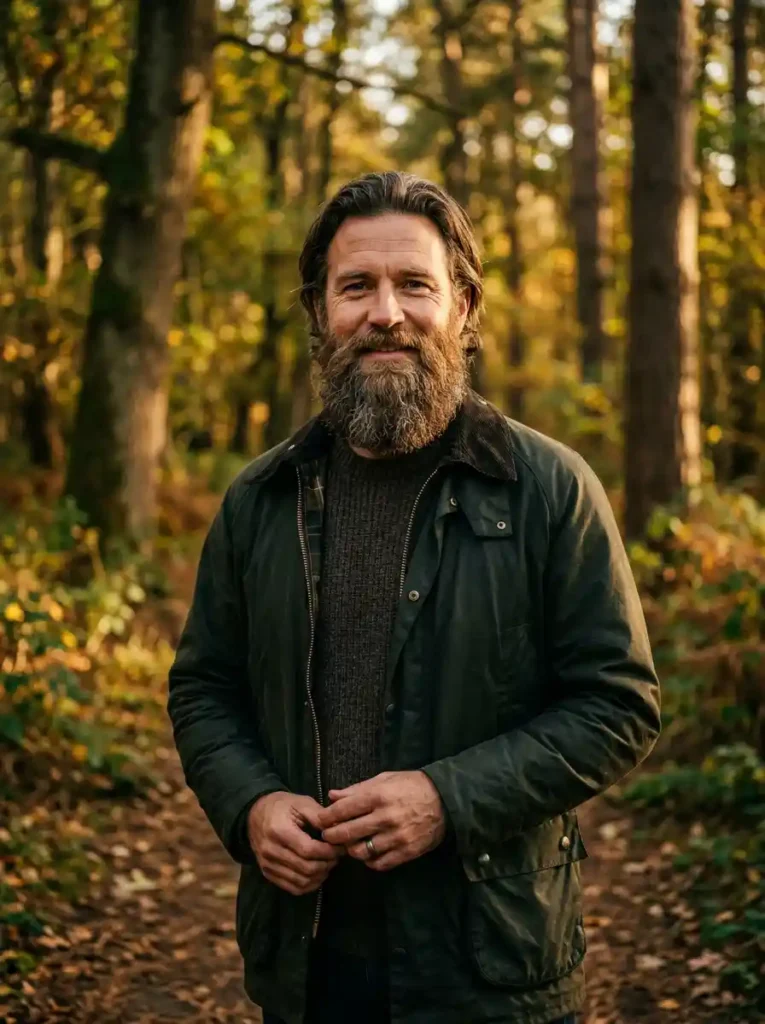
The full beard carries a specific quality of presence that no other facial hair style quite replicates — a settled, grounded masculine authority that registers immediately and communicates patience, self-assurance, and genuine attentiveness to personal presentation simultaneously. These three qualities are required in equal measure to grow and maintain a full beard at the level where it refines rather than simply covers the face it grows on, which is precisely why a well-maintained full beard functions as visible evidence of the character traits it requires. People read that signal accurately and consistently, whether they realize they’re doing so or not.
The critical distinction between a full beard that elevates and one that merely exists is the quality of its shaping — specifically the neckline that prevents the beard from merging with the neck in a shapeless mass, and the cheekline that creates the clean upper boundary separating beard from skin at the cheekbone. Beyond shaping, daily conditioning with a beard balm containing shea butter, argan oil, or jojoba oil keeps the hair soft, manageable, and visually healthy rather than dry and coarse. Brush daily with a natural boar bristle beard brush to distribute conditioning ingredients evenly, train the growth direction, and tame flyaways that are consistently the most damaging enemy of a full beard’s refined presentation.
5. The Van Dyke Beard — Artistic Sophistication With Historical Weight
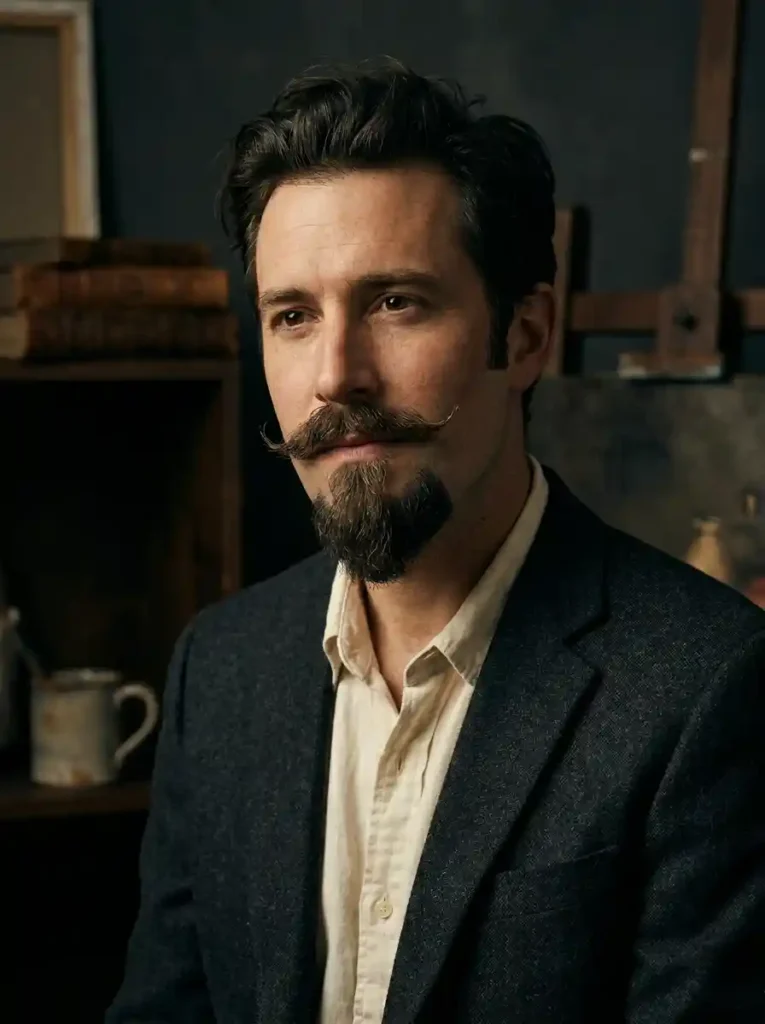
The Van Dyke beard carries genuine historical pedigree — named after Flemish Baroque master Anthony van Dyck, whose self-portraits made this distinctive style internationally recognizable in the 17th century — and wearing it today carries that quiet art history reference in a way that communicates something specifically intentional about the personality choosing it. The style combines a connected goatee and pointed chin beard with a separately styled mustache, the two elements deliberately not connected by cheek hair, creating a graphic facial hair composition that reads as immediately distinctive and consistently associated with creative, intellectually engaged masculine personalities across every cultural context it appears in.
Maintaining the Van Dyke requires disciplined simultaneous attention to three distinct elements — mustache ends, goatee body, and pointed chin section — because allowing any one element to become overgrown disrupts the visual balance that makes the entire composition work as a deliberate design. The cheeks must be kept scrupulously clean; any stubble growth on the cheeks immediately obscures the defining characteristic of deliberate disconnection between the upper and lower elements. Mustache wax is genuinely useful here, allowing the ends to be shaped in a subtle upward or outward direction that maintains the style’s composed quality throughout the day and prevents the drooping that makes even a well-grown mustache look untended by afternoon.
6. The Garibaldi Beard — Full and Natural With Dignified Restraint

The Garibaldi beard — named after Italian general Giuseppe Garibaldi and his characteristic full, rounded style — sits at the compelling intersection of full-beard exuberance and deliberate grooming restraint. It features a wide, rounded, abundantly full beard that maintains clean edges at cheekline and neckline while allowing the lower section to develop its naturally rounded shape rather than being heavily sculpted into rigid geometric forms. The result is a beard that reads as genuinely full and abundant while still communicating maintenance and intention — the kind of beard that celebrates authentic masculinity while demonstrating the self-awareness to keep that masculinity presentable.
The Garibaldi suits men with naturally strong growth patterns particularly well — those who’ve found that dense beard growth resists taming into smaller, more sculpted styles will discover that this style celebrates and channels that fullness rather than fighting it as a problem to overcome. Regular application of a quality beard butter keeps the hair soft enough to lie in the cohesive rounded shape that defines the style, rather than frizzing outward in competing directions. Weekly scissor work to remove stray outliers and gently maintain the rounded lower profile keeps the Garibaldi looking shaped and intentional without over-sculpting the natural fullness that is the entire point and considerable appeal of the style.
7. The Anchor Beard — Nautical Geometry on the Modern Man

The anchor beard earns its name from the genuinely anchor-shaped outline created by its specific combination of elements — a pointed chin beard, a thin connecting line running vertically to the lower lip, and a thin styled mustache across the upper lip — a facial hair composition that, viewed directly from the front, forms the unmistakable shape of its namesake. It’s a style with genuine graphic quality that makes it one of the most visually distinctive beard choices available, immediately recognizable and consistently associated with a certain kind of considered, stylistically literate personal presentation that identifies someone who researches their choices before making them.
The anchor beard lives and dies entirely by the precision of its outline — the pointed chin must maintain a genuinely sharp terminus rather than a blunt or rounded end, the connecting line must be thin and perfectly even, and the mustache must be shaped with enough definition to read as a deliberate composition element rather than ungroomed growth. A detail trimmer, a straight razor for fine edge work, and mustache wax for the upper lip are the three grooming tools this style requires most urgently and regularly. Men with longer face shapes find the anchor beard particularly complementary because the pointed chin extension works harmoniously with the face shape’s natural vertical emphasis rather than attempting to create illusory width.
8. The Balbo Beard — Italian Elegance Named and Worn With Pride

The Balbo beard — popularized in modern consciousness by Robert Downey Jr.’s portrayal of Tony Stark and attributed historically to Italian Air Marshal Italo Balbo — creates a distinctly sophisticated facial hair composition by deliberately combining a styled, separated mustache with a connected goatee and chin beard while keeping the cheeks and sideburn areas clean. This deliberate disconnection between upper and lower elements creates a graphic, almost designed quality that makes the Balbo more visually intentional than almost any conventional beard style — it looks unmistakably like a considered decision was made and committed to, rather than a beard that was simply allowed to grow.
The Balbo demands disciplined simultaneous maintenance of three distinct elements — mustache shape and ends, chin beard density and outline, and the connecting soul patch section that bridges them — and neglecting any one element disrupts the visual balance that makes the entire composition function. A light application of mustache wax keeps the ends shaped and prevents the center from drooping, while the chin section benefits from being kept at a moderate length that provides genuine texture and presence without overwhelming the deliberate geometry. Men who want sophisticated Italian grooming character without committing to full cheek coverage consistently find the Balbo delivers exactly that specific aesthetic with remarkable reliability.
9. The Stubble Fade Beard — Contemporary Barbershop Technique Applied to the Face
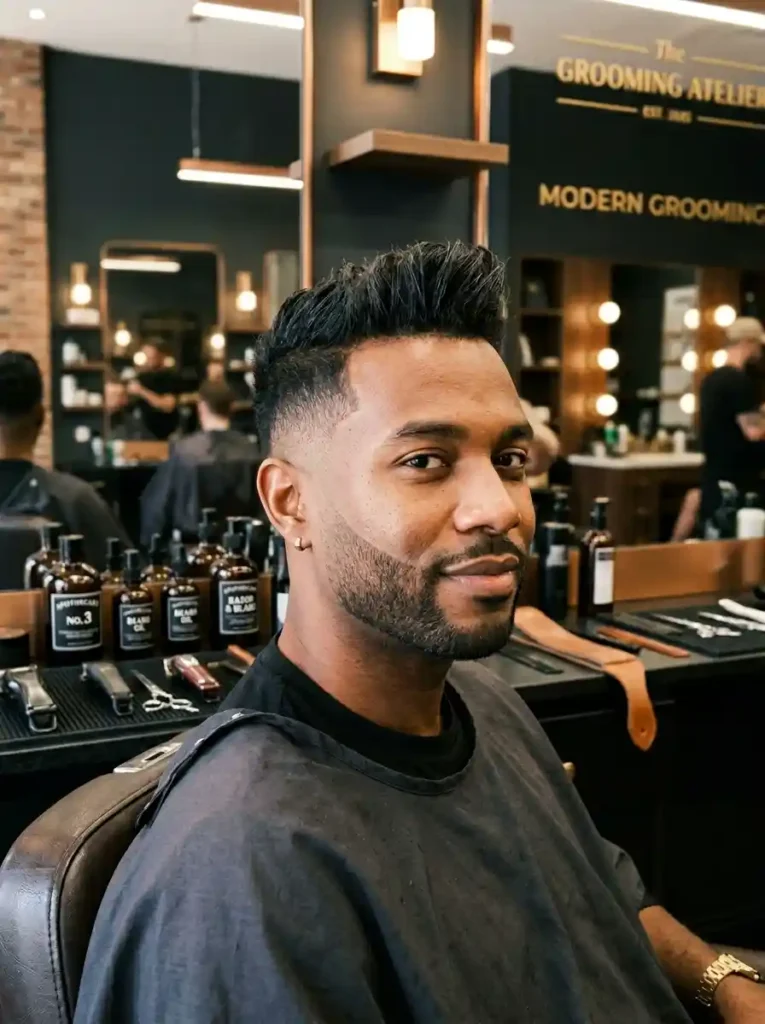
The stubble fade beard applies the gradient technique that defines modern head hair barbering directly to the beard itself — creating a gradual transition from clean skin to fuller stubble density at the cheekline and sideburn area rather than the crisp boundary line of traditional beard edges. The result has a sophisticated, contemporary quality unlike any conventional beard style: instead of a sharp line where beard ends and bare skin begins, the stubble fade creates a smooth tonal gradient at the perimeter that mirrors the aesthetic of a skin fade applied to the face with remarkable visual elegance and technical ambition.
Getting a stubble fade executed properly requires a barber with genuine experience in this specific technique, because the gradient blending demands the same practiced feel and precise clipper work that excellent head hair fades require — it cannot be adequately replicated at home without significant experience and the right tools. Once established by a skilled barber, home maintenance involves careful trimmer work that respects the established gradient rather than trimming everything uniformly to eliminate the fade effect through accidental maintenance. The stubble fade beard is the facial hair equivalent of a skin fade haircut — contemporary, technically sophisticated, and immediately identifiable as the choice of someone who takes every element of their personal presentation seriously.
10. The Chinstrap Beard — Architectural Precision Along the Jaw
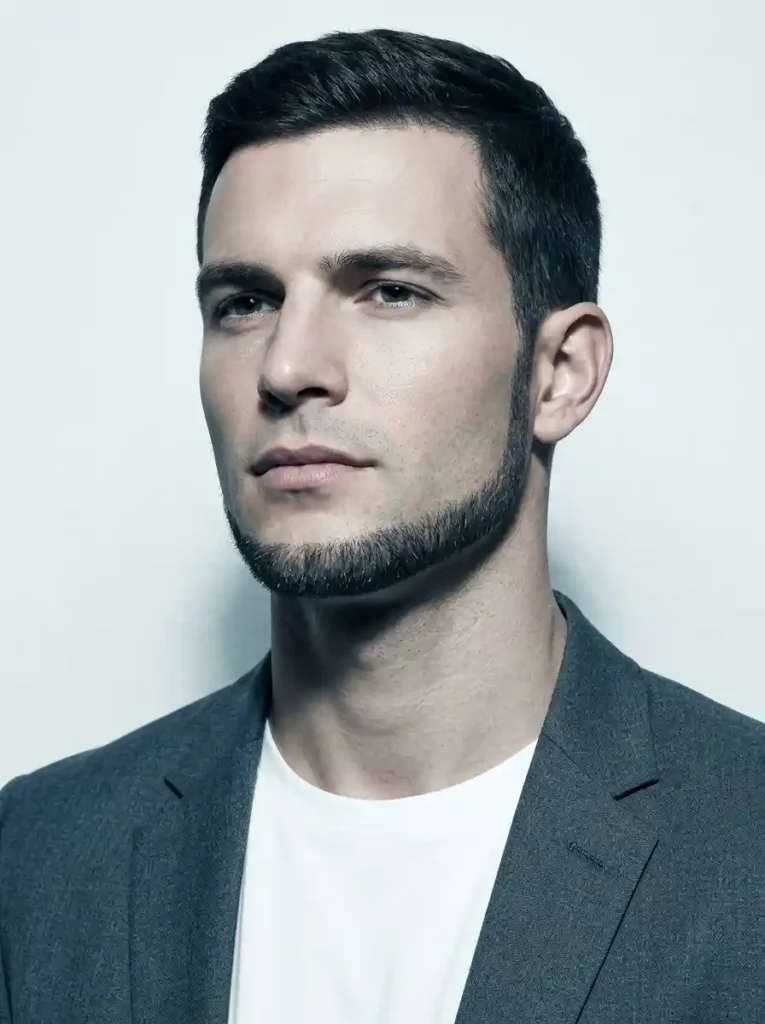
The chinstrap beard follows the jawline with a narrow, precisely maintained band of facial hair that creates an almost architectural effect — using the thin line of hair along the chin and jaw to emphasize and define bone structure at exactly the point where definition matters most to facial attractiveness. It creates the visual impression of a strong, sharply defined jawline regardless of what the natural jaw structure actually looks like beneath it, essentially drawing the viewer’s eye along the most flattering possible path around the lower face. It’s facial hair functioning as face architecture, and when executed precisely it achieves exactly that effect.
Precision is the genuine non-negotiable quality for the chinstrap — any unevenness in the band width or any wavering in the line following the jaw immediately undermines the entire geometric intention of the style and makes it read as a maintenance lapse rather than a deliberate aesthetic decision. A detail trimmer with a fine blade is the essential tool, and most men benefit significantly from barber assistance for the initial shaping before maintaining the established outline themselves between visits. The chinstrap pairs most powerfully with a haircut sharing the same geometric precision — creating a cohesive head-to-jaw grooming composition where every edge and every line reflects the same level of meticulous personal attention.
11. The Salt and Pepper Beard — Distinguished by Nature’s Own Hand
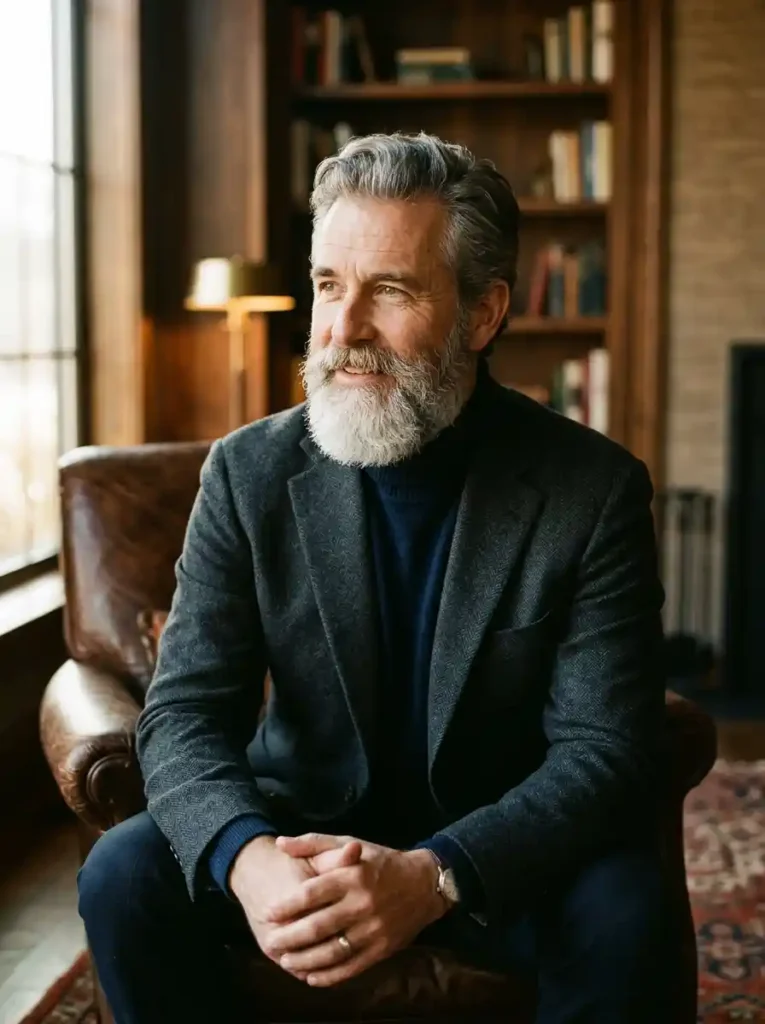
The salt and pepper beard is genuinely one of nature’s most generous gifts to men growing into their character — the mixture of darker and silver hairs that develops with age creates a visual depth and dimensional interest that solid-color beards at any age simply cannot replicate through any styling effort or product investment. The interplay of dark and light creates the same tonal richness that expensive salon highlights attempt to manufacture in hair, and in a beard it develops completely naturally and completely individually, making every salt and pepper beard a genuinely unique expression of genetic history and lived experience that no one else can wear in precisely the same way.
Men who resist the natural silver development in their beards through uniform dye applications consistently describe the decision as one they eventually regret — because dye requires constant maintenance to prevent visible regrowth, and even perfectly maintained creates a flat uniformity that lacks the dimensional warmth of the natural mix. Embracing the salt and pepper with quality conditioning care creates a style that genuinely distinguishes its wearer in any group setting — silver tones catch light in ways that darker hair doesn’t, and the dimensional richness registers as distinguished, experienced, and quietly compelling in a manner that uniformly colored beards simply cannot replicate regardless of how technically well-maintained they are.
12. The Yeard — Commitment That Becomes Its Own Profound Statement
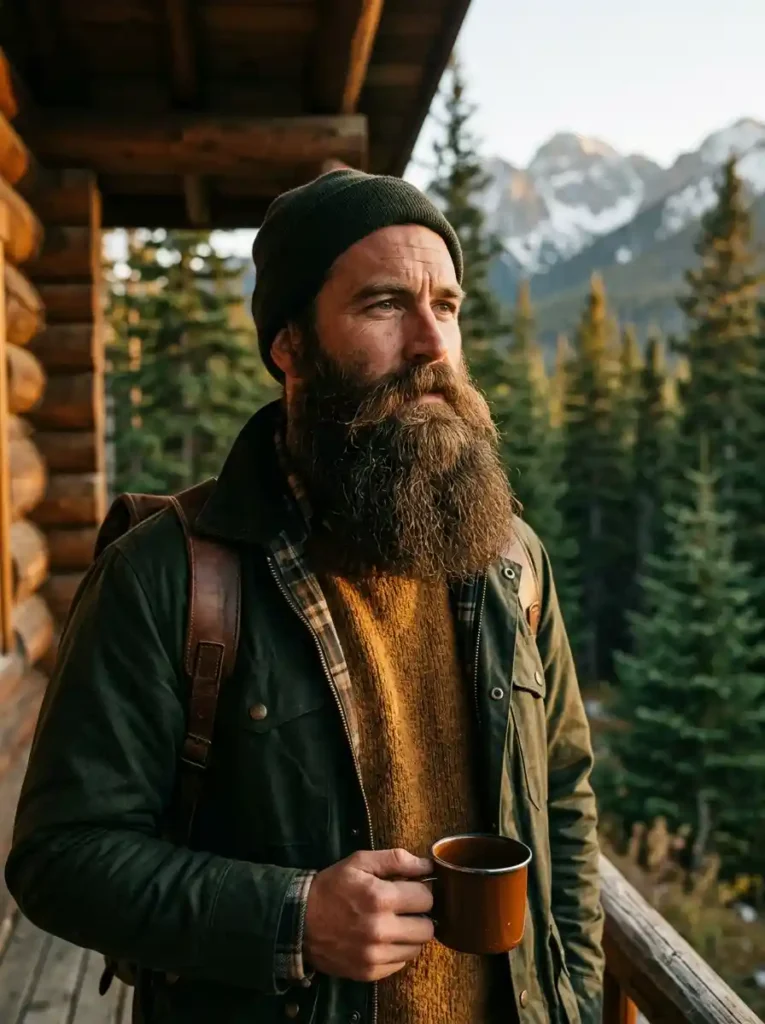
The yeard — a full year of growth cultivated with genuine care rather than simple neglect — represents the ultimate commitment available in the beard world, and when maintained as a deliberate style rather than simply as the result of forgotten grooming, it creates one of the most immediately commanding masculine presences achievable through any facial hair choice. The yeard at its refined best are long, full, well-conditioned, and gently shaped — edges maintained, body kept soft with daily conditioning rituals, and the overall form guided through regular brushing and occasional scissor removal of stray outliers that would otherwise undermine the intentional quality of the entire impressive composition.
The maintenance investment required to make a yeard genuinely refined rather than simply long is significantly greater than any shorter style — daily beard oil application to penetrate through the length and reach the skin beneath, nightly beard butter for the lengths themselves, regular detangling starting from the ends upward with a wide-tooth beard comb, and washing with a dedicated beard shampoo that cleans without stripping the natural oils that keep longer beard hair looking healthy rather than dry and weathered. Men who commit to and properly maintain a yeard discover that the beard gradually develops a genuinely unique character and texture — a deeply personal physical statement that cannot be replicated quickly by anyone, or precisely replicated by anyone else, ever.
13. The Beardstache — When the Mustache Finally Gets Its Platform

The beardstache gives the mustache — long dismissed as a relic of specific cultural moments — the supporting beard context it needs to look fully current, intentional, and creatively confident rather than ironic or costume-adjacent. By growing a noticeably fuller, more prominent mustache while keeping the beard body shorter and more closely trimmed beneath it, the beardstache creates a clear visual hierarchy where the mustache is unmistakably the feature and the beard is its sophisticated frame — the result is a genuinely distinctive, personality-forward facial hair composition that reads as confident, creatively aware, and deliberately unconventional in the most appealing way available.
Calibrating the length relationship between the two elements is the key technical decision — the mustache should be noticeably fuller and longer than the surrounding beard, but not so dramatically different that the composition reads as unbalanced or disproportionate for the face wearing it. A solid starting point is maintaining the mustache at its natural grown length with shaped, styled ends while keeping the beard body trimmed to approximately 3-5mm with clean perimeter edges throughout. Mustache wax both defines the upper lip section aesthetically and prevents the center from drooping into the mouth — a practical daily benefit that mustache wearers universally discover and appreciate within the first week of committed wearing.
14. The Extended Goatee With Mustache — Complete Lower Face Refinement

The extended goatee with connected mustache covers the lower face in a single cohesive composition — the mustache connecting across the upper lip through the chin and extending the coverage along the jaw without reaching cheek coverage — creating a complete facial hair frame for the lower portion of the face that adds structure, visual weight, and maturity. It’s ideal for men with patchy or slower-growing cheek areas who want comprehensive, dense coverage in the zones where their beard grows most reliably, without the self-consciousness that full beard patches on the cheeks can create when those areas grow unevenly or sparsely.
The extended coverage makes neckline definition particularly critical — without a clean deliberate neckline, the downward extension of the goatee can merge with neck stubble in a way that makes the entire composition read as undefined rather than intentionally shaped. Maintain clean neck skin below the neckline consistently and keep the cheekline at whatever natural growth line exists without artificially raising it in a way that makes the beard look constrained or architecturally forced. Men who master the proportional balance of this style — full enough to look substantial, shaped enough to read as deliberate — find it serves professional and social contexts with equal reliability and consistent refinement.
15. The Pointed Goatee — Sharp Geometry for the Chin Alone
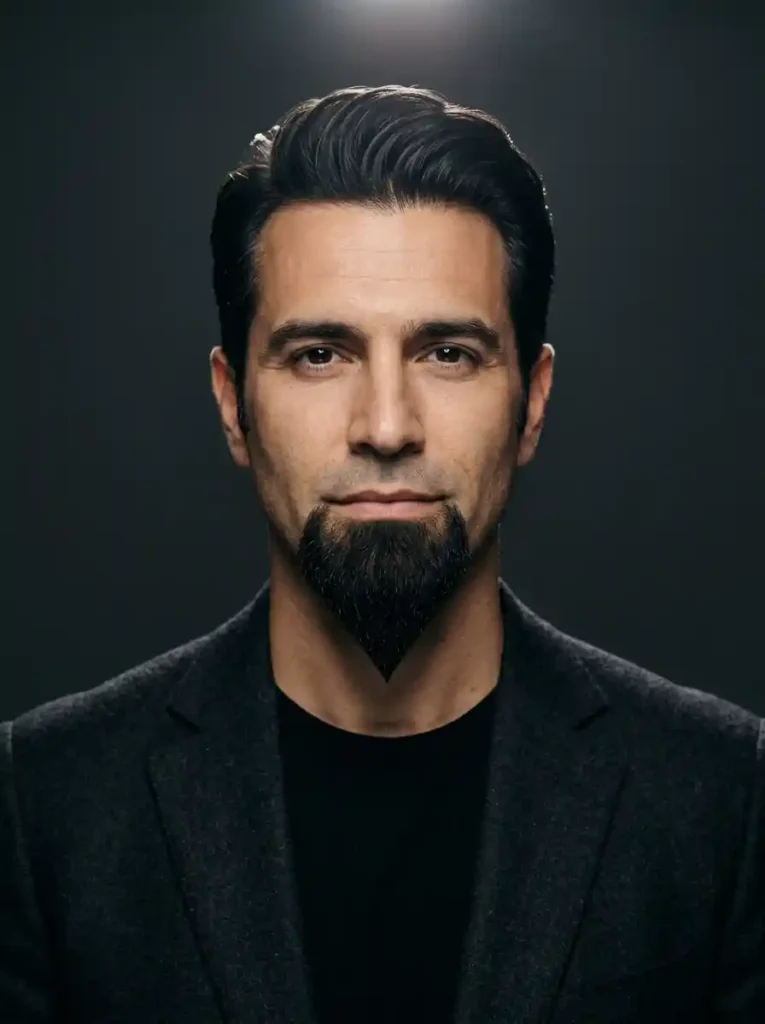
The standalone pointed goatee without a connecting mustache creates a facial hair composition with a specific graphic quality — a single precise geometric element positioned at the chin that draws the eye downward and creates the visual impression of a more elongated, sharply defined chin and jaw. It carries genuine artistic and intellectual associations, appearing consistently in portraits of composers, philosophers, writers, and creative figures across several centuries of European and American cultural history, which gives it a cultural resonance and depth that more conventional contemporary beard styles simply don’t possess in the same way.
The point is the defining element and demands maintenance with genuine precision — any bluntness or rounding at the tip immediately eliminates the geometric quality that makes the style distinctive and replaces it with something that simply looks untrimmed rather than deliberately pointed. A straight razor or precision trimmer used carefully to define and maintain the pointed terminus every few days keeps the shape architecturally crisp, and the surrounding cheek skin must be kept scrupulously clean-shaven to create the contrast that allows the goatee to read as an intentional design element rather than patchy or uneven growth. Men with rounder face shapes find the pointed goatee especially useful for creating a compelling illusion of greater chin length and jaw definition.
16. The French Fork Beard — The Renaissance Style Making a Contemporary Return
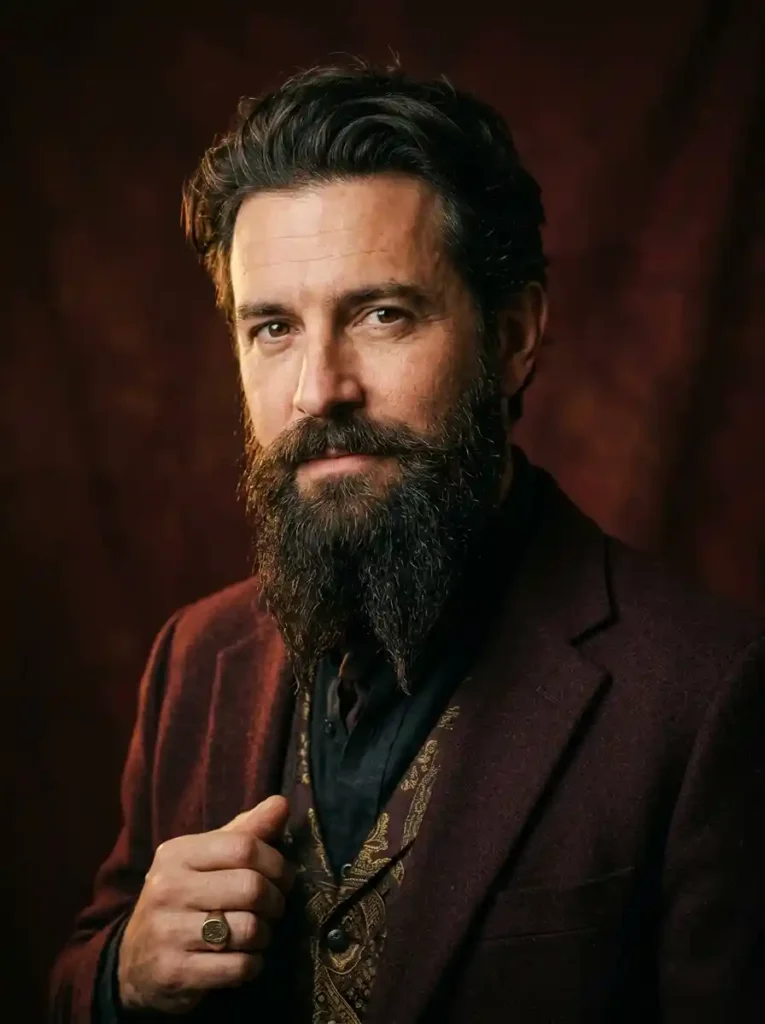
The French fork beard is experiencing a genuine contemporary renaissance after years existing primarily as a historical curiosity — a longer, fuller style characterized by the distinctive forked shape at the chin where the beard naturally splits or is deliberately styled into two separated pointed sections descending below the jaw. It appears in portraits of European aristocrats, explorers, and creative figures from the 16th and 17th centuries, giving it a historical gravitas and intellectual aesthetic that contemporary beard styles rarely carry with the same genuine depth. Worn with knowledge of that heritage today, it communicates something about the wearer’s relationship with history and aesthetics.
Achieving the fork requires sufficient beard length — at least three to four inches at the chin — and either natural growth that splits at the center chin where many men have a subtle separation in their natural growth pattern, or deliberate daily styling with a beard balm that allows the two sections to be shaped and held apart through consistent training over weeks. The body of the beard should be kept relatively full and well-conditioned to provide the substance that makes the forked chin look like a deliberate feature of an intentionally designed beard rather than simply tangled growth. Daily oil application, careful combing, and patience in training the fork direction makes maintaining this style consistently rewarding rather than a daily battle against natural growth direction.
17. The Mutton Chops — Bold Vintage Personality Completely Reclaimed
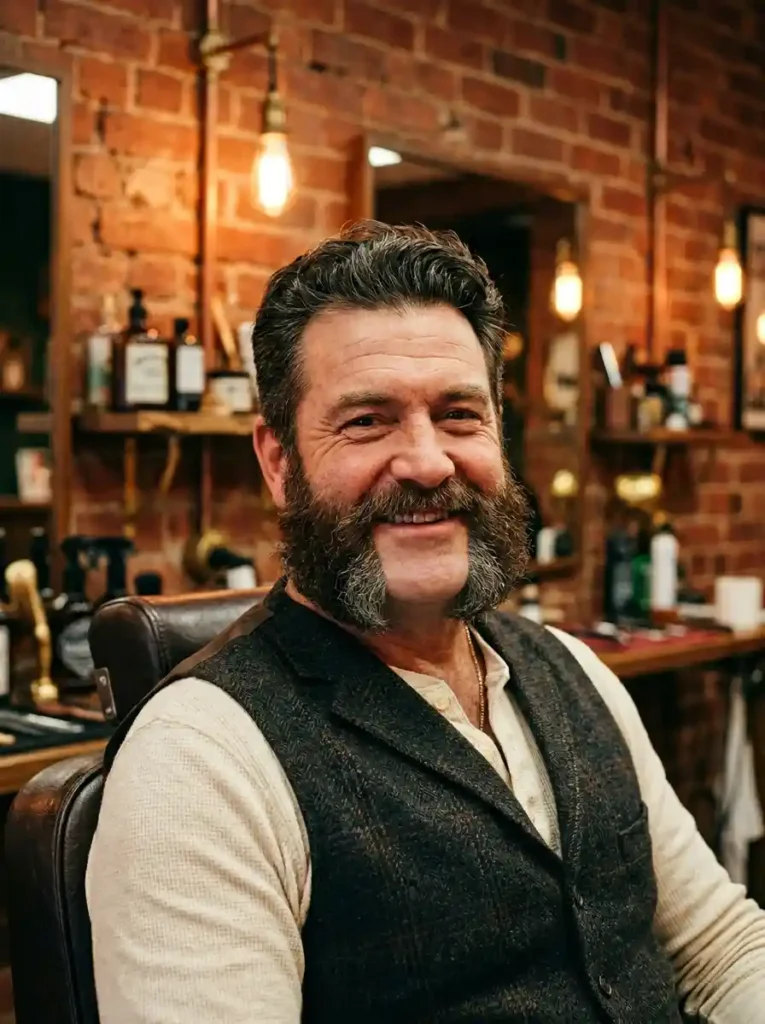
Mutton chops — the wide sideburn sections that spread along the jaw without meeting at the chin — are the most openly personality-forward facial hair style on this entire list, a choice that signals absolute confidence in one’s own eccentricity and a cheerful lack of concern for following the most obvious grooming conventions of the current moment. They reference an extraordinary range of historical personalities from Civil War generals to Victorian naturalists to 19th century explorers, and that historical breadth gives them a specific kind of substance that more contemporary beard styles simply don’t carry with the same weight. Wearing them today requires and communicates a very specific kind of assured self-expression.
The key to making mutton chops read as refined rather than theatrical is the precision of their shaping and the immaculate cleanliness of the chin area between the two sections — the chops should have well-defined upper and lower edges creating clean geometric boundaries, and the clean chin must be kept meticulously smooth to maintain the deliberate intentionality of the style’s composition. Men who pair mutton chops with a complementary grooming choice — a well-considered haircut that references similar vintage aesthetics, a thoughtfully chosen mustache that connects conceptually — create a complete historical grooming composition that looks entirely purposeful and genuinely admirable in its wholehearted, unapologetic commitment to individual style expression.
18. The Natural Neckbeard — Only When Intentionally Shaped and Owned
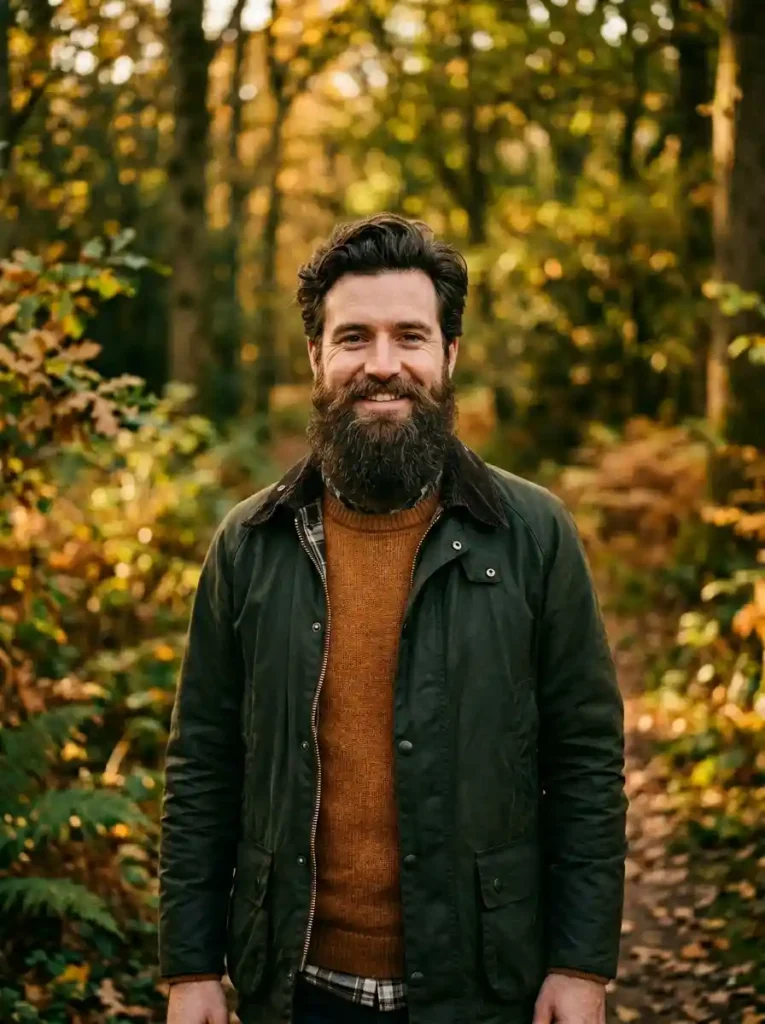
The neckbeard occupies genuinely controversial grooming territory — and for legitimate reasons — because an ungroomed, undirected accumulation of neck hair growing without shape or intention creates exactly the untended impression that every refined beard style on this list specifically works to prevent. This entry is about a completely different proposition: the deliberately shaped full beard that incorporates neck coverage as an informed design choice rather than a maintenance lapse — when executed with the same care and attention as every other element of the beard, the neck coverage adds genuine fullness and dimensional depth to a complete beard that has its own compelling substance.
The intentionally shaped neckbeard requires defining a clear neckline at the correct anatomical position — following the natural crease between the underside of the jaw and the neck rather than allowing growth to extend indefinitely downward — and keeping above this defined line as part of the intentional overall beard composition. The same level of conditioning, brushing, and shaping attention that the visible facial portions receive must be applied to the neck coverage as well. The distinction is always intentionality: the same growth that reads as negligence on an ungroomed face reads as commitment and craft on a face where every other element demonstrates the same level of deliberate, consistent, quality care.
19. The Beard Fade With Design — Where Grooming Becomes Wearable Art
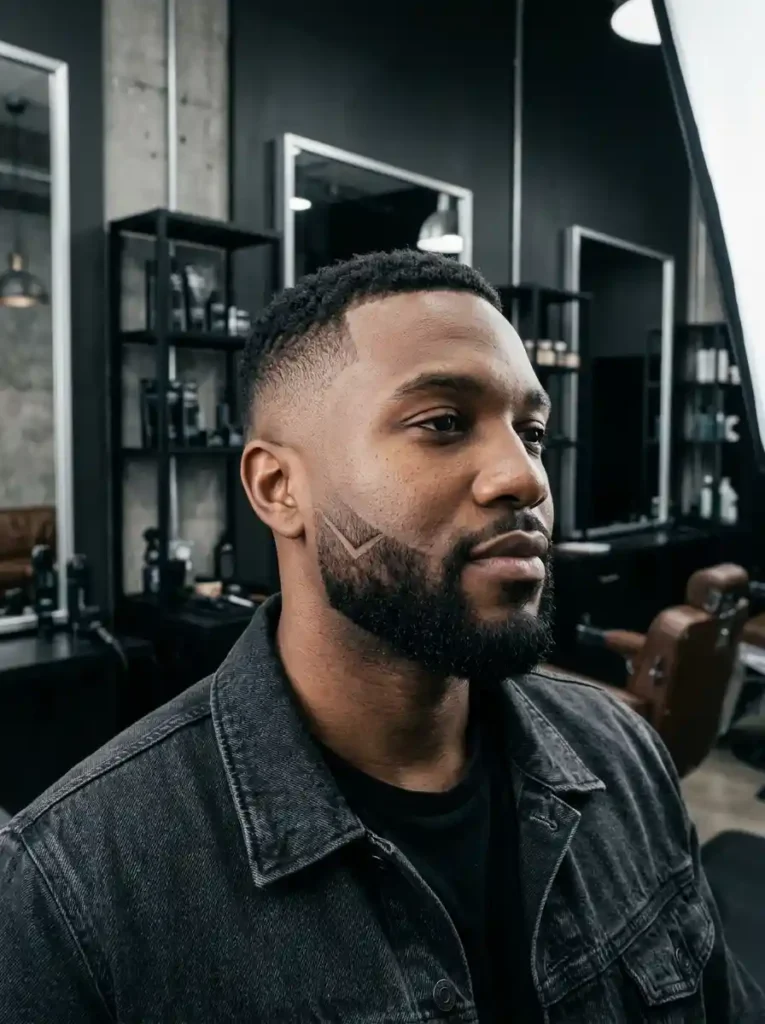
The beard fade with a shaved design element is the most contemporary and artistically ambitious style on this entire list — combining the sophisticated gradient technique of a beard fade with a precise geometric or linear design element shaved into the transition area, creating a beard that functions genuinely as wearable art rather than simply as facial hair. It exists at the intersection of barbering craft and fine art in the same way that exceptional haircut designs do, and it communicates something specifically individual and creatively aware about the man wearing it that no conventional beard style can replicate through any amount of quality maintenance alone.
These designs require a barber with genuine artistic skill and specific experience in beard design execution — this is not home maintenance territory, and the visible quality difference between an experienced beard artist and anyone attempting it for the first time is immediately and dramatically apparent. Simple designs — a single clean line, a small geometric shape, a subtle angular pattern — tend to hold their precision and age more gracefully between visits than complex designs that lose definition within days and begin to look accidentally distorted rather than deliberately composed. The beard design creates its most complete statement when paired with a haircut from the same barber whose overall aesthetic vision creates a cohesive composition from hairline to beard edge — two deliberate style statements in complete visual conversation rather than simply coexisting on the same head.
20. The Well-Conditioned Natural Beard — When Care Itself Is the Statement

The most quietly powerful refined beard statement on this entire list is the simply well-conditioned, beautifully maintained natural beard — any style, any length — kept with such consistent, quality daily care that the health and condition of the beard itself becomes the primary grooming communication. A beard that catches warm light beautifully because quality oil has made every hair shaft reflective and healthy, that lies naturally because daily brushing has distributed conditioning and trained the growth direction, and that feels genuinely soft because the skin underneath has been hydrated and cared for consistently — this beard communicates something about personal standards that no amount of precise edge work alone can fully replicate.
The daily beard oil routine is the single most transformative grooming investment available to any bearded man at any growth stage — applied to clean, slightly damp beard after washing, massaged from roots through ends with gentle circular motions that reach the skin beneath the hair, two to four drops of quality beard oil containing jojoba, argan, or sweet almond oil will gradually transform dry, wiry beard hair into genuinely soft, conditioned, visually beautiful facial hair over weeks of consistent practice. The physical experience of a well-oiled beard — soft, slightly warm from body heat, subtly fragrant with botanical notes — connects the daily grooming ritual to a broader, deeply satisfying practice of caring for oneself with genuine attention, which is ultimately what every style on this list is really about.
Conclusion
The right beard style can completely transform your appearance, adding definition, confidence, and a more refined sense of personal style. Whether you prefer the timeless appeal of a short boxed beard, the sophistication of a corporate beard, the rugged charm of a full beard, or the modern edge of a beard fade, the key is choosing a style that complements your face shape, lifestyle, and grooming habits. Great beard styles are about more than facial hair—they’re about intentional grooming and self-confidence. Use these beard style ideas as inspiration, invest in proper beard care, and create a look that feels polished, masculine, and uniquely your own.