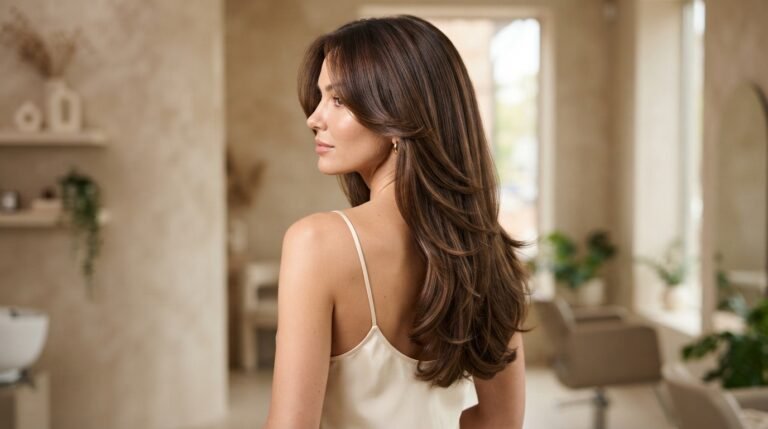
The butterfly cut is the perfect choice if you love the look of bouncy layers, face-framing pieces, and effortless volume without sacrificing the appearance of long hair. Inspired by the movement of butterfly wings, this versatile haircut combines shorter layers around the crown with longer lengths that create a soft, flowing silhouette. Whether your hair is straight, wavy, thick, or fine, these 22 butterfly cut hair ideas will help you find a flattering style, discover practical styling tricks, and choose a look that fits your personality.
1. Classic Long Butterfly Cut
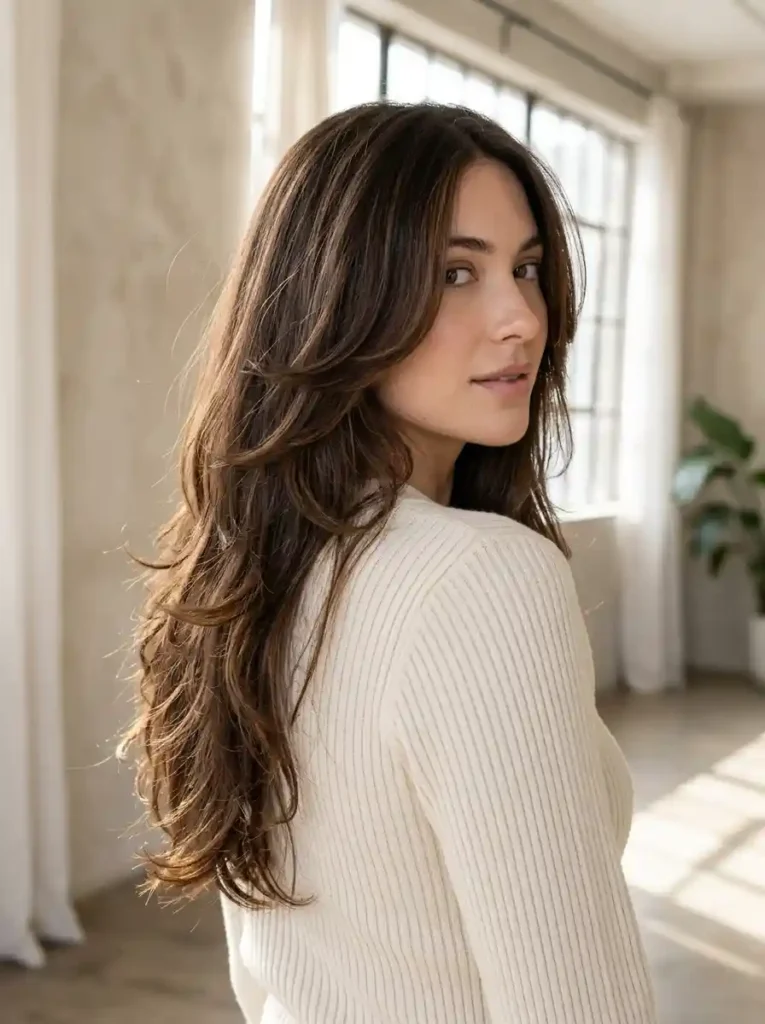
The classic long butterfly cut is an excellent starting point if you want noticeable movement without losing your length. Shorter layers around the cheekbones and shoulders create the signature shape, while the longer bottom section preserves a full, flowing appearance. This combination works particularly well for medium to thick hair because the layers remove some bulk while maintaining a beautiful silhouette. Ask your stylist to customize the shortest pieces to your face shape and preferred level of volume.
Styling this haircut is all about creating lift at the roots and a gentle curve through the layers. Use a round brush with a blow-dryer or a large-barrel hot brush to direct the front pieces away from your face. A lightweight heat protectant helps limit styling damage, while a small amount of flexible-hold spray keeps the shape in place. If you prefer a relaxed finish, let your hair air-dry partially before using a brush to smooth only the front sections.
2. Butterfly Cut with Curtain Bangs
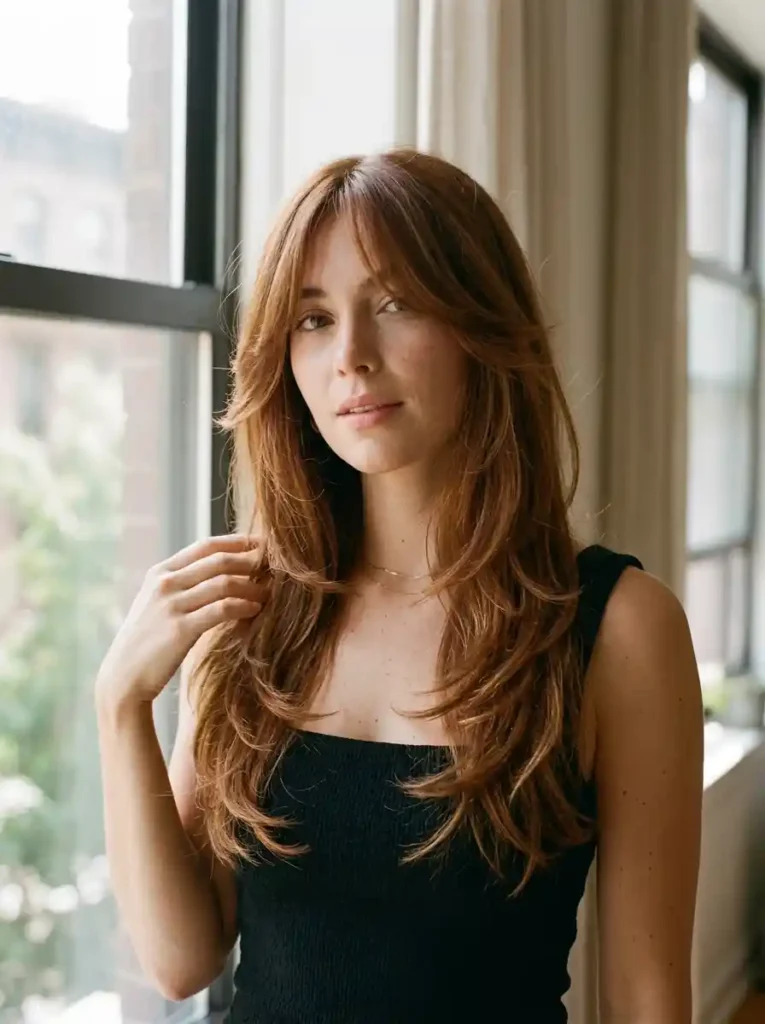
Curtain bangs and butterfly layers make a natural pairing because both styles emphasize movement around the face. The center-parted fringe opens up the forehead before blending into longer cheekbone and jawline layers. This creates a soft frame rather than a heavy, disconnected fringe. The look suits long and medium-long hair particularly well, and your stylist can adjust the bangs to highlight your eyes, soften a strong jawline, or add balance to a longer face.
For everyday styling, direct each side of the curtain bangs away from your face using a medium round brush. Allow the hair to cool in its curved position before loosening it with your fingers. Avoid cutting the fringe too short if you want an easy, grown-out effect; slightly longer pieces offer more flexibility when changing your part. Because bangs can lose their shape faster than the rest of your haircut, a quick front-section refresh may be all you need between full styling sessions.
3. Soft Butterfly Cut for Fine Hair

Fine hair can benefit from butterfly layers when they are strategically placed rather than cut too aggressively. A softer version uses restrained crown layering and a few face-framing sections to create movement without making the ends appear sparse. The key is preserving enough density through the bottom of the haircut. If your hair is naturally fine, show your stylist reference photos with similar hair density so the finished shape reflects what your own strands can realistically support.
Styling products make a noticeable difference, but lightweight formulas are usually the safest starting point. Apply volumizing mousse near the roots, then blow-dry with your head upright to maintain a balanced shape. A large round brush can add a slight bend to the front pieces without requiring tight curls throughout the hair. Skip heavy oils and rich creams near the crown, as they may flatten your roots. A light mist of texture spray can provide separation while keeping the overall finish airy.
4. Butterfly Cut for Thick Hair

Thick hair provides plenty of material for a dramatic butterfly shape, especially when the stylist distributes weight carefully throughout the layers. Shorter pieces can lift around the crown while longer sections create a smooth foundation. This approach helps bulky hair move more freely without automatically removing too much density. If your hair is especially dense, discuss internal weight removal with your stylist, who can determine whether subtle texturizing or longer layers will give you the most manageable result.
The main challenge is preventing the finished style from becoming too wide or overly rounded. Ask for a silhouette that follows your natural head shape rather than excessive volume at every level. During styling, work in manageable sections and direct the brush downward before curving the ends outward or inward. A smoothing cream applied sparingly to the mid-lengths can reduce frizz without eliminating movement. Regular trims help maintain the balance between the shorter layers and the longer perimeter as your hair grows.
5. Shoulder-Length Butterfly Cut
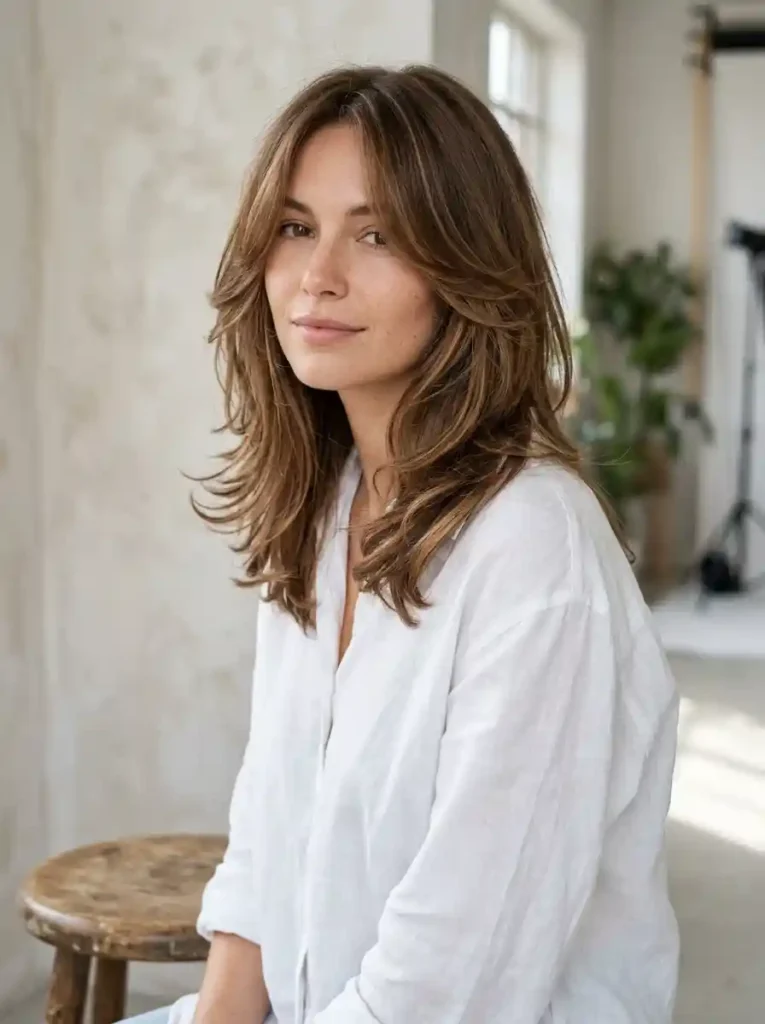
You do not need waist-length hair to enjoy the butterfly cut. A shoulder-length interpretation creates a lighter, bouncier silhouette while retaining enough length for face-framing layers and flipped ends. It is especially appealing if you want a noticeable transformation without committing to a short bob. Ask your stylist to map out where the shortest layers will sit, since the proportions determine whether the haircut feels softly rounded, feathered, or more dramatically layered.
Because shorter lengths have less weight pulling them down, the ends can naturally flick outward when blow-dried. Use a medium round brush to lift the roots and shape the ends in alternating directions for a relaxed finish. If you prefer a smoother appearance, curve the lower sections inward instead. A shoulder-length butterfly cut can also grow into a longer layered style relatively gracefully, provided the front pieces are not cut too short for your desired future length.
6. Butterfly Cut with Wispy Bangs

Wispy bangs add a delicate detail to the butterfly cut without creating the visual weight of a thick, blunt fringe. Their lightly separated texture allows some forehead to remain visible, making them a useful option if you want to experiment with bangs gradually. Paired with longer face-framing layers, they create a cohesive transition from the forehead to the sides of the haircut. This combination can work with straight or naturally wavy hair, although cowlicks and growth patterns may affect how the fringe sits.
Keep the bangs light by using very little styling product near the roots. After washing, blow-dry them gently from side to side before directing them into their final position. This technique can reduce the appearance of stubborn parting lines without requiring excessive heat. Avoid trimming wispy bangs too frequently at home, because removing even a small amount can change their proportions. If you like a softer, imperfect finish, separate the fringe with your fingertips instead of smoothing it into a single solid shape.
7. Butterfly Cut with Face-Framing Highlights
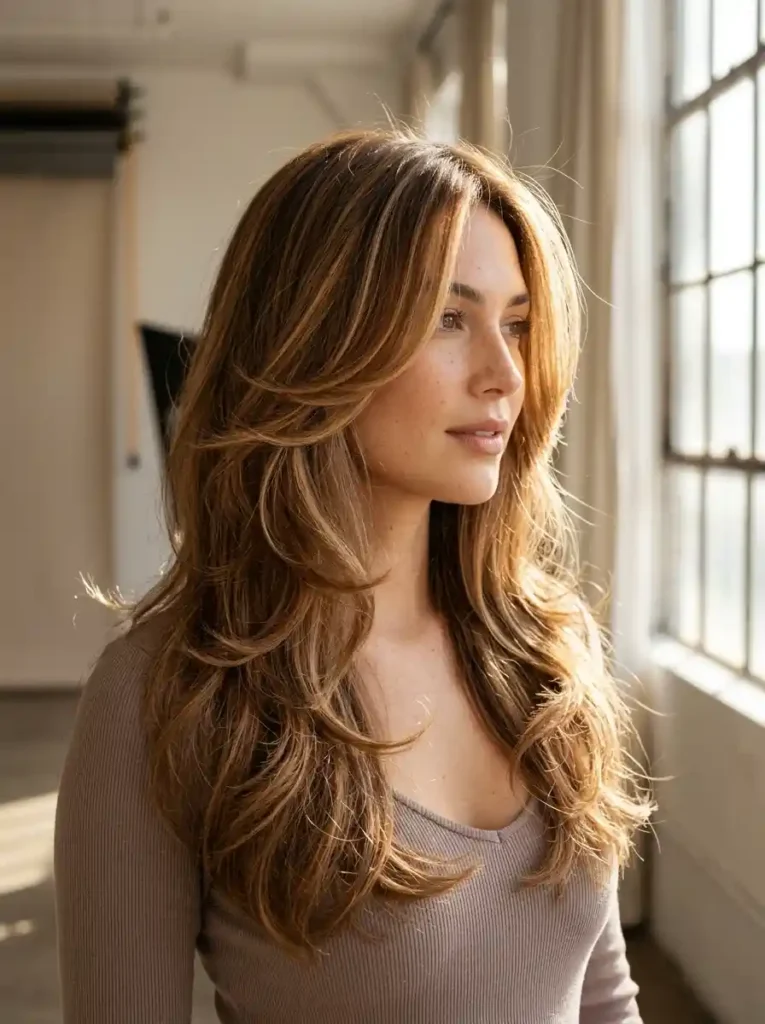
Face-framing highlights can make butterfly layers more visually distinct by drawing attention to the shorter sections around the cheeks and jawline. Caramel ribbons suit warm brown bases, while beige or champagne tones may complement cooler brunette shades. The most flattering placement depends on your natural color, skin tone, and maintenance preferences. Ask your colorist to keep the brightness concentrated where you want emphasis rather than adding uniformly thick highlights throughout every layer.
This combination looks particularly attractive when the hair has a gentle bend, because the lighter strands become visible along the curves. A round brush or large curling iron can emphasize those sections without creating formal curls. Protect colored hair with a suitable color-safe shampoo and conditioner, and use heat protection before styling. If you want a lower-maintenance result, choose a blended highlight technique with a softer root transition. That way, regrowth is less visually obvious than it would be with strong, high-contrast streaks.
8. Butterfly Cut on Naturally Wavy Hair
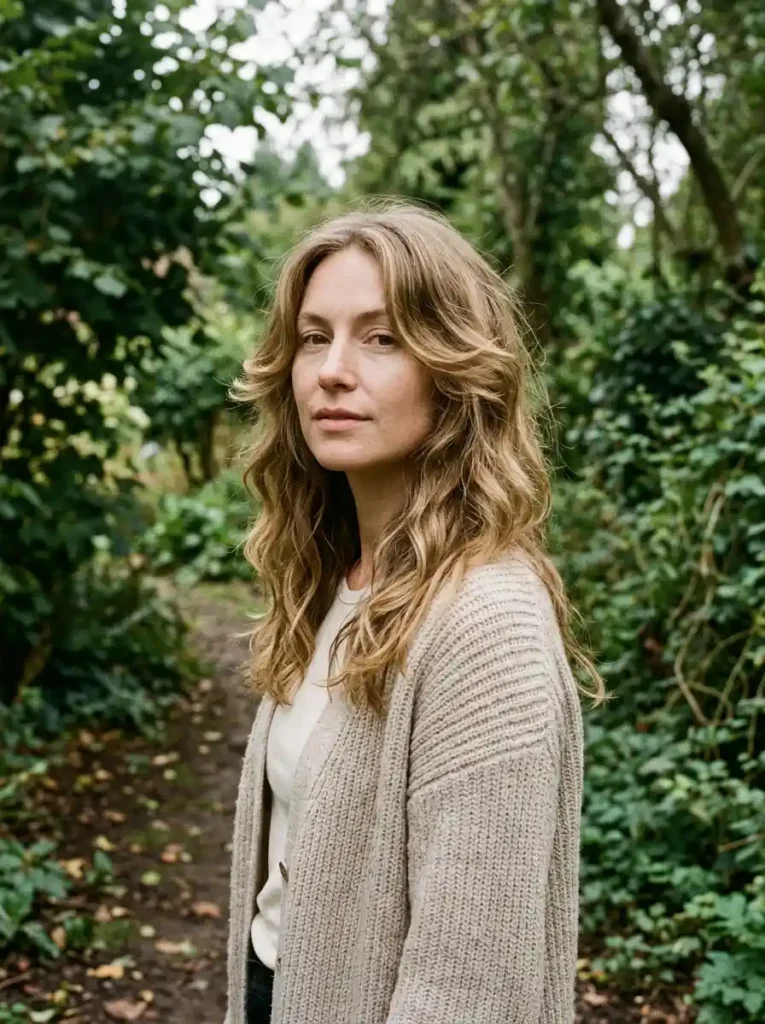
Naturally wavy hair gives the butterfly cut built-in movement, making it possible to achieve a relaxed finish without curling every section. The shorter layers can enhance the wave pattern around the face, while the longer lengths retain a flowing shape. However, waves may spring up differently after drying, so a stylist experienced with your texture can help determine suitable layer lengths. If your waves are inconsistent, begin with a moderate amount of layering before choosing a more dramatic version.
For styling, apply a lightweight curl cream or wave-enhancing mousse to damp hair, then scrunch gently from the ends upward. Let your hair air-dry or use a diffuser on a low setting to preserve definition. Avoid repeatedly brushing the finished waves, which can disrupt their shape and increase frizz. On days when the front layers look flat, refresh just those pieces with a little water and your fingers. You can keep the rest of your hair natural for a quick, low-effort look.
9. Butterfly Cut with Bouncy Blowout
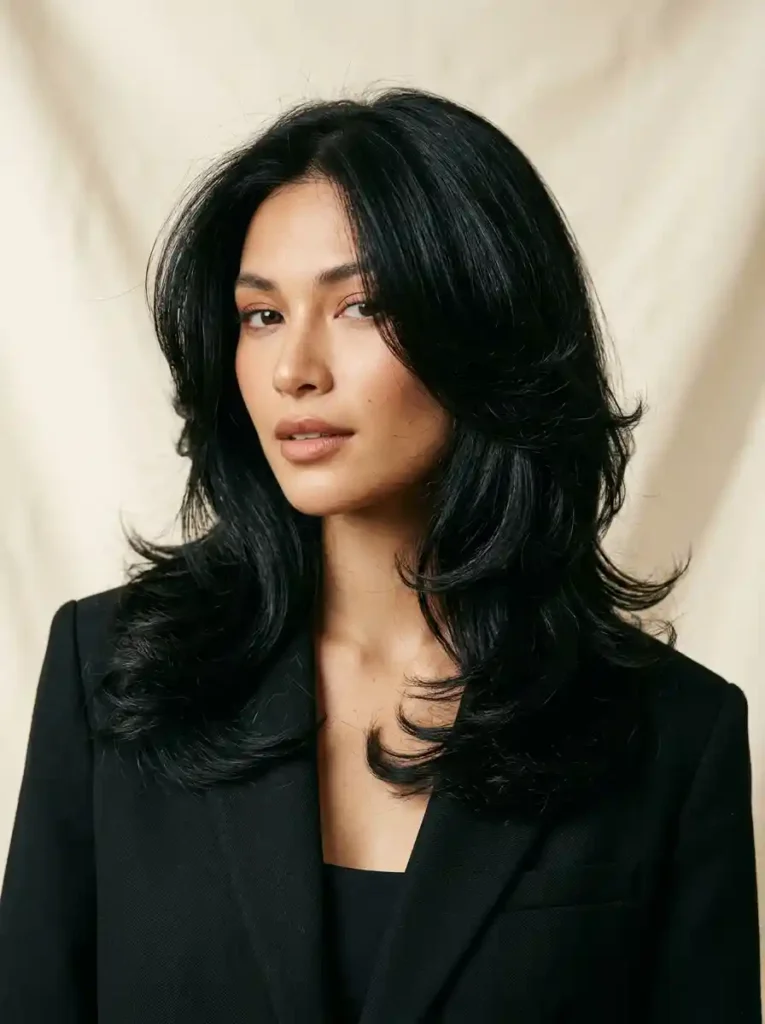
A bouncy blowout brings out the butterfly cut’s most recognizable feature: distinct layers that curve away from the face and cascade into longer lengths. This styling choice works well for occasions when you want your haircut to look polished, including celebrations, dinners, or professional photographs. The finish depends on directing each section carefully rather than simply adding curls. Ask your stylist to demonstrate how the shorter layers should roll around the brush so you can recreate the shape at home.
Start with a heat protectant and a volumizing product suited to your hair density. Blow-dry the roots first, then work through sections using a round brush that is large enough to create smooth curves without tight ringlets. Let each section cool before releasing it to help the shape last longer. For additional lift, use large rollers on the crown and front pieces while the hair cools. Finish with flexible-hold spray rather than a heavy coating that could weigh down the layers.
10. Butterfly Cut with Flipped Ends
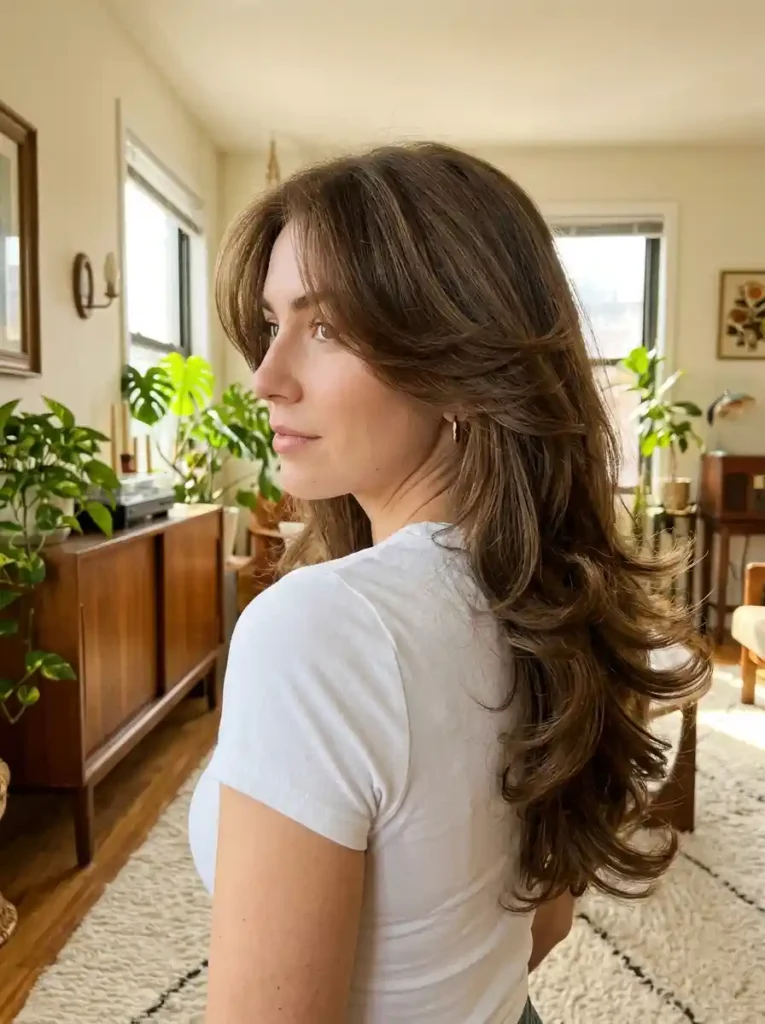
Flipped ends give the butterfly cut a playful, slightly retro finish while keeping the overall haircut soft and wearable. The outward curves emphasize the separation between the shorter layers and longer lengths, making the haircut appear more structured. This variation is especially attractive on shoulder-length and long hair because there is enough length for the ends to move visibly. If you want a subtler result, flip only the face-framing pieces rather than turning every section outward.
A hot brush or medium-barrel curling iron can create the effect, depending on your preferred level of definition. Direct the tool away from your face on the front layers, then turn the remaining ends outward in small sections. Keep the temperature appropriate for your hair type, and avoid repeated passes over the same strands. A flexible finishing spray helps the curves hold while allowing natural movement. If your ends tend to fall flat, style them on completely dry hair and let each section cool before touching it.
11. Butterfly Cut for a Round Face
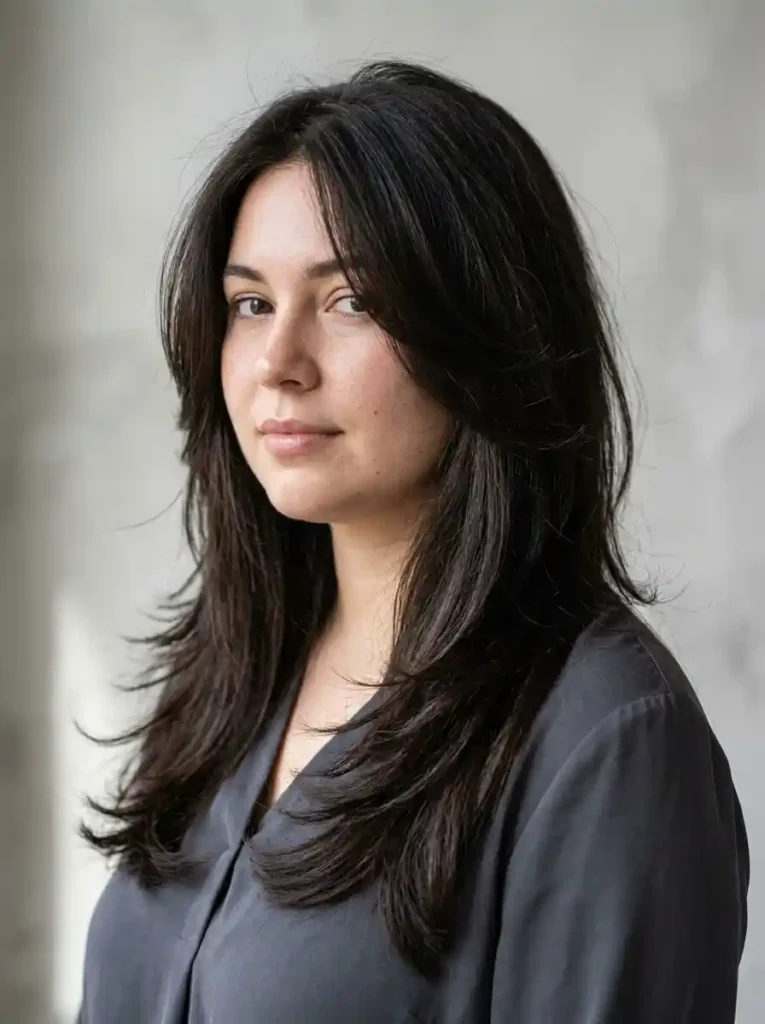
For a round face, a butterfly cut with elongated front layers can create a balanced frame without hiding your natural features. Pieces that begin around the cheekbones and continue below the jaw encourage the eye to follow a vertical line. Moderate crown lift can also add visual height, while excessive width at cheek level may create a rounder overall silhouette. These are styling preferences rather than strict rules; your hair density, parting, and personal taste matter just as much.
Ask your stylist to assess the haircut from the front and side before deciding where the shortest pieces should fall. A slightly off-center part can add asymmetry, while long curtain bangs offer another way to shape the face. During styling, direct the front layers backward and away from your cheeks instead of curling them tightly inward. Keep the sides soft rather than overly inflated. The goal is not to conceal your face shape, but to create movement that feels harmonious with your features.
12. Butterfly Cut for an Oval Face

An oval face offers flexibility when choosing butterfly cut proportions because many different fringe lengths and layer placements can complement its balanced outline. You can experiment with cheekbone-level framing, longer curtain bangs, or layers that begin closer to the jaw. The most important decision is how dramatic you want the finished haircut to look. Shorter front pieces create more visible movement, while longer layers produce a subtle, flowing shape that can feel easier to maintain.
Consider your usual hairstyle before choosing the front length. If you often wear your hair tied back, excessively short face-framing sections may escape from ponytails and clips. If you wear it down most days, a more pronounced layered silhouette could be worth exploring. Styling options range from a sleek blowout to natural waves, so you are not restricted to one finish. Bring a few reference images to your appointment and identify the specific details you like, such as fringe length, volume, or the shape of the ends.
13. Butterfly Cut with a Middle Part

A middle part creates a balanced foundation for butterfly layers, allowing the shorter pieces to sweep away from both sides of the face. This arrangement highlights cheekbone framing and produces a symmetrical appearance when the hair is styled evenly. It works particularly well if your hair naturally falls near the center. If you have a strong side part or noticeable growth pattern, however, forcing a perfectly straight middle part may require more styling than you prefer.
To encourage a smooth center part, create it while your hair is damp and direct the roots on each side with a blow-dryer. Use a round brush to curve the front layers away from your face without creating excessive height at the sides. A small amount of lightweight smoothing serum can help control flyaways through the lengths. For a more casual finish, allow a few strands to fall naturally rather than aiming for perfect symmetry. The haircut should still feel comfortable when you move or tuck one side behind your ear.
14. Butterfly Cut with a Deep Side Part
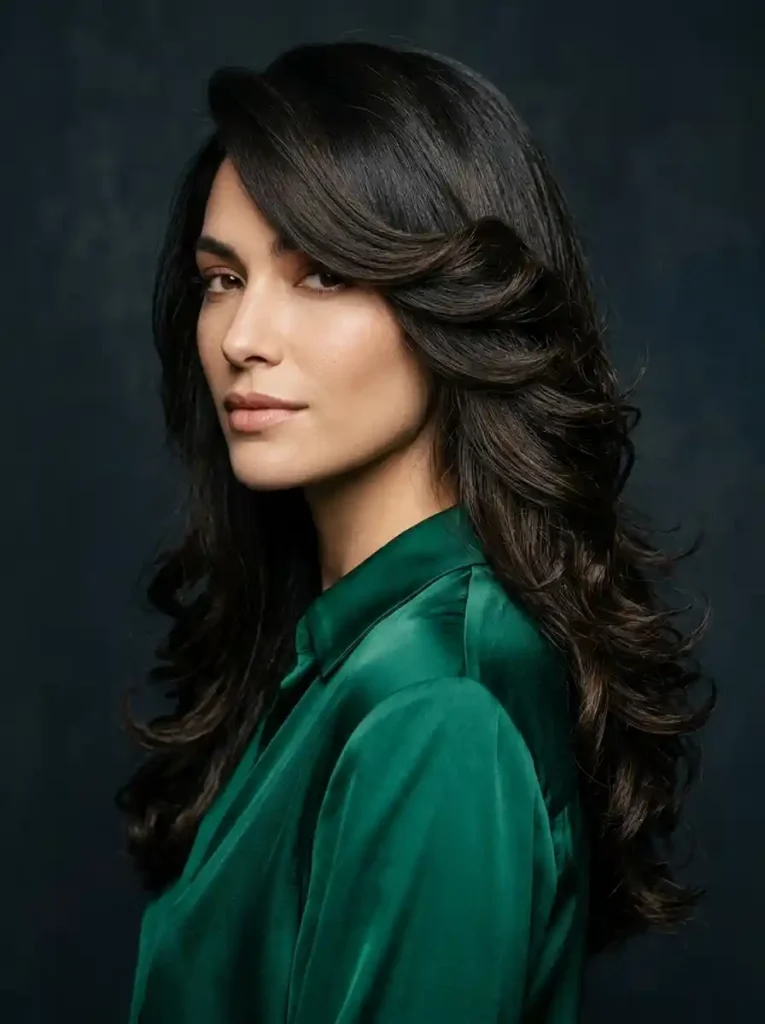
A deep side part gives butterfly layers a more dramatic shape by concentrating volume on one side and creating a sweeping front section. This is a useful alternative if you enjoy movement across the forehead or want a change from a center part without cutting bangs. The asymmetrical arrangement also makes the shorter layers especially visible from the front. Your stylist can adjust the depth of the part to suit your natural growth pattern and prevent the heavier side from overwhelming the rest of the haircut.
For a polished finish, blow-dry the roots in the opposite direction first, then move the hair into your preferred part. This creates lift without relying entirely on teasing. Curve the front section away from your face and allow it to settle naturally over the longer layers. A lightweight root-lifting spray can help fine hair hold the shape, while thicker hair may need careful sectioning during drying. If you switch your part frequently, ask for layers that remain attractive from more than one direction.
15. Butterfly Cut on Dark Brown Hair

Dark brown hair offers a beautiful backdrop for a butterfly cut because the shape can be emphasized through shine, curved ends, and the contrast between overlapping layers. You do not need highlights to make the haircut noticeable. Subtle tonal variation from natural lighting can reveal the movement, especially when the front sections are styled away from the face. If you prefer a low-maintenance color routine, keeping your natural brunette shade lets you focus on the haircut rather than frequent salon color appointments.
To showcase the layers, use a smoothing blow-dry technique that leaves the hair glossy without making it look stiff. A small amount of shine serum can help reflect light, but concentrate it on the mid-lengths and ends. If your hair is very dark and thick, avoid using so much product that the individual layers blend together visually. Gentle bends around the face can create definition without full curls. Regular conditioning and careful heat protection help maintain a healthy-looking finish.
16. Butterfly Cut on Blonde Hair
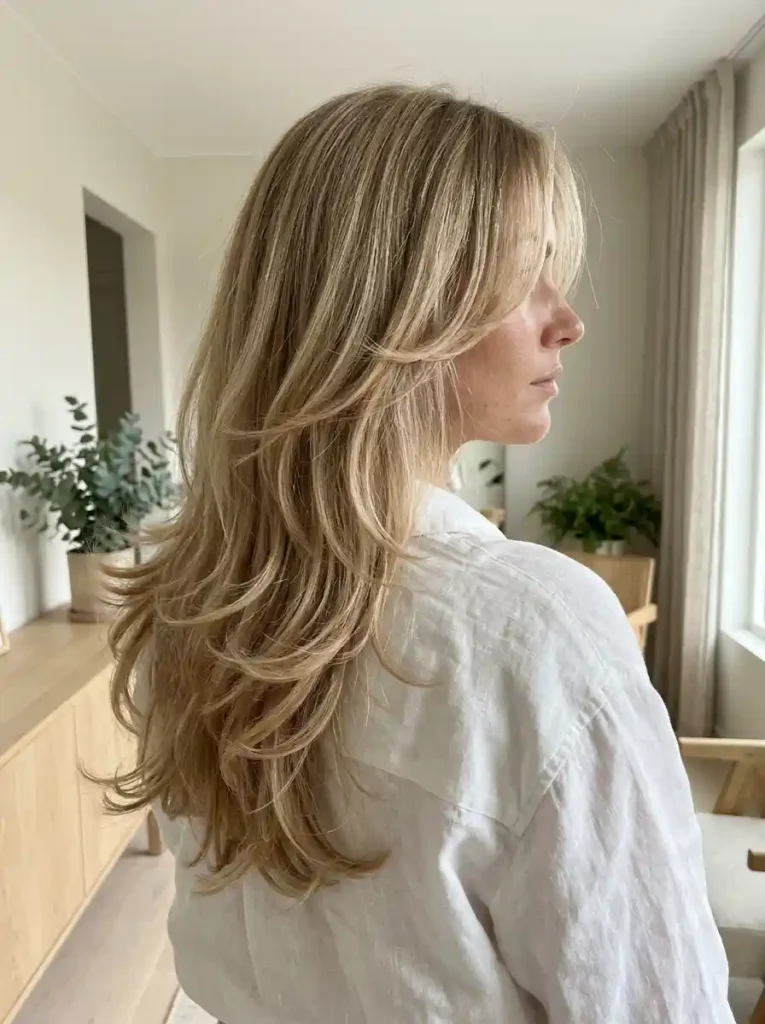
Blonde hair can make a butterfly cut look especially airy because the layers catch light along their curves. Beige blonde, honey blonde, and champagne tones each create a different mood, from warm and sunlit to cooler and more understated. The haircut itself can remain the main focus, so there is no need to choose an elaborate color technique. If your blonde hair has been lightened, tell your stylist about its condition before adding shorter layers that may be more vulnerable to breakage.
Blonde lengths often benefit from gentle styling and conditioning that preserve softness without flattening the roots. Use a heat protectant before blow-drying, and keep hot tools moving rather than holding them in one place. If you enjoy a bouncy finish, add volume around the crown while allowing the ends to curve loosely. For a natural daytime look, let the hair air-dry until mostly dry and smooth only the front layers. Maintaining healthy ends will help the layered shape look intentional rather than frayed.
17. Butterfly Cut with Caramel Balayage

Caramel balayage adds dimension to a brunette butterfly cut without requiring a uniform lighter shade from roots to ends. The painted highlights can follow the haircut’s movement, bringing attention to the shorter face-framing sections and the longer layers beneath them. This is particularly useful if you want a more noticeable transformation while keeping your natural base color. The ideal caramel tone depends on your starting shade and desired contrast, so ask your colorist to tailor the brightness rather than copying another person’s exact result.
The color placement becomes most visible when the hair has soft bends or a gentle blowout. You can enhance the effect by curling a few sections away from the face, then separating them with your fingers. Balayage generally offers a softer regrowth line than an all-over lightened look, although upkeep depends on the technique and contrast. Use color-safe products and avoid excessive heat to preserve the finish. If your hair is already dry from lightening, prioritize conditioning before pursuing additional layers or highlights.
18. Butterfly Cut with Soft Shaggy Layers

A shag-inspired butterfly cut combines the flowing length of the classic style with a more relaxed, textured finish. Instead of perfectly rounded layers, the haircut uses additional separation around the crown and ends to create a slightly undone silhouette. This version is worth considering if you enjoy movement but do not want your hair to look overly polished. It works particularly well with naturally wavy textures, although straight hair can also carry the shape when the layers are cut thoughtfully.
The secret to styling this variation is preserving texture instead of smoothing every strand into place. Apply a small amount of mousse or texturizing cream to damp hair, then scrunch or diffuse gently. Once dry, separate a few sections with your fingertips to emphasize the layers. Avoid heavy waxes or too much dry shampoo, which can make the hair feel coated and reduce its natural movement. Because shaggy layers can look different as they grow, occasional shaping appointments help maintain the balance between crown volume and longer lengths.
19. Butterfly Cut with a U-Shaped Back

A U-shaped back creates a rounded outline that complements the butterfly cut’s cascading layers. Rather than ending in a straight horizontal line, the hair gradually curves toward the center, allowing the longest section to remain visually prominent. This is a strong option if you love long hair and want the back to look shaped even when it is not curled. The perimeter matters as much as the shorter layers, so ask your stylist to show you the intended outline before the first cut.
This shape looks attractive when the hair is worn straight, softly waved, or gathered into a loose ponytail. To display the U-shaped outline, blow-dry the longer lengths smoothly and add gentle bends only where you want extra movement. If your ends are thin or damaged, discuss trimming the perimeter before adding dramatic upper layers. A fuller-looking outline often depends on preserving healthy ends rather than removing excessive weight. Photographing the finished haircut from behind can also help you communicate your preferred shape at future appointments.
20. Butterfly Cut with a V-Shaped Back

A V-shaped back gives the butterfly cut a more dramatic finish than a rounded or blunt perimeter. The longest central section extends farther down the back, while the outer lengths gradually become shorter. This outline is especially noticeable on long hair and can emphasize the waterfall effect created by the layers. It may be less suitable if your ends are already sparse, because a pronounced point can make the outer perimeter appear thinner. Ask your stylist to balance the V with your actual hair density.
Styling the back smoothly makes the outline easier to see, but loose waves can create an attractive cascading effect too. If you usually wear your hair in braids or ponytails, consider how the shorter outer sections will fall around your shoulders. The V-shaped perimeter may require more length than a U-shaped cut to achieve a pronounced point. Keep your ends conditioned and trim them when necessary to preserve the outline. A subtle V is a useful compromise if you want shape without sacrificing too much fullness.
21. Butterfly Cut with Loose Romantic Waves
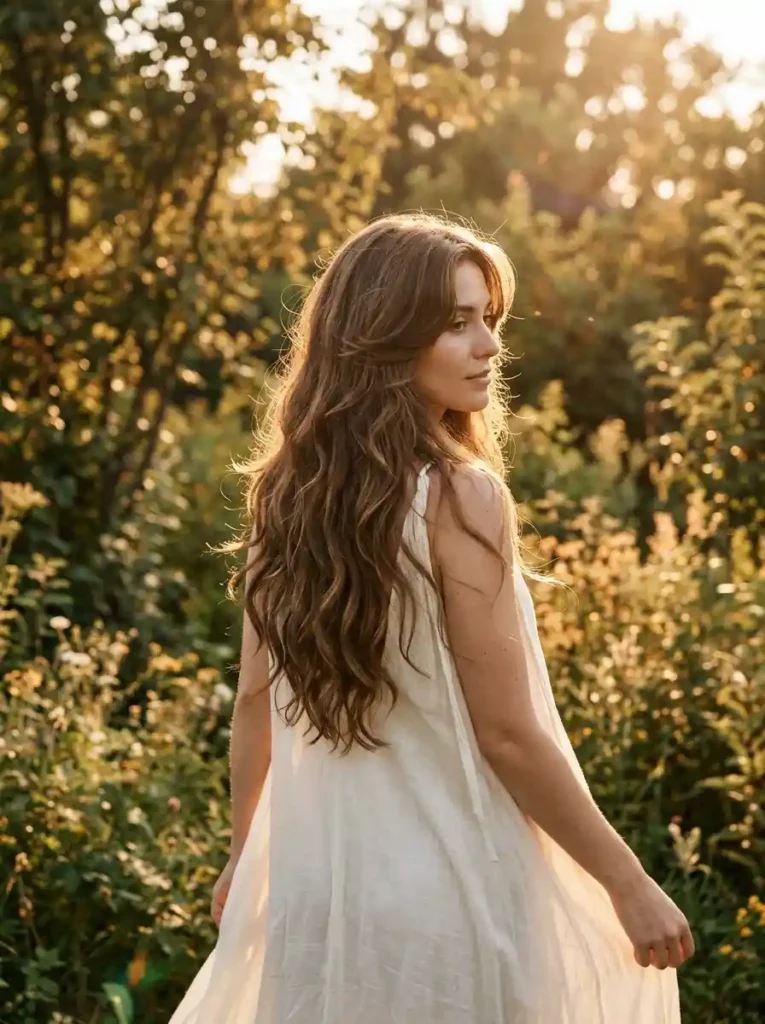
Loose romantic waves bring softness to the butterfly cut while allowing each layer to remain visible. Unlike tight curls, this finish creates broad bends that flow naturally from the cheekbone pieces through the longer lengths. It is a versatile choice for dinners, weddings, photographs, or everyday wear when you want a slightly dressed-up appearance. The key is varying the wave pattern and leaving the ends relatively relaxed, which prevents the hairstyle from looking overly uniform or formal.
Use a curling iron with a barrel size suited to your hair length, working in sections that are not too thick. Alternate the direction of the waves through the longer lengths, while directing the front pieces away from your face. Once the hair has cooled, loosen the curls gently with your fingers or a wide-tooth comb. A flexible finishing spray helps maintain movement without making the hair crunchy. If your hair holds curls poorly, start with a light styling mousse rather than adding more hairspray after the waves have fallen.
22. Low-Maintenance Air-Dried Butterfly Cut

If you prefer a simple routine, a low-maintenance butterfly cut can give your hair shape without requiring a full blowout every morning. The most practical version uses blended layers that work with your natural texture rather than relying on dramatic curves that need constant heat styling. This approach is especially useful for people who want movement around the face but prefer to spend more time on everyday activities than on their hair. Your stylist should consider how your hair dries naturally before choosing the final layer lengths.
After washing, gently squeeze excess water from your hair and apply a lightweight leave-in conditioner or wave product if needed. Create your part while the hair is damp, arrange the front pieces with your fingers, and allow everything to dry without repeated brushing. If the crown becomes flat, lift the roots briefly while the hair is nearly dry. Remember that even low-maintenance layers benefit from occasional shaping, especially around the face, where growth can gradually change the haircut’s proportions.
Conclusion
The best butterfly cut is the one that complements your natural hair texture, fits your preferred routine, and makes you feel comfortable wearing your hair every day. From classic long layers and curtain bangs to caramel balayage, romantic waves, and air-dried styles, these 22 ideas show how adaptable this haircut can be without sacrificing its signature movement.
Before booking your appointment, save two or three reference photos that reflect your desired length, face-framing pieces, and overall volume. Tell your stylist how much time you usually spend styling your hair and whether you want to preserve your current length. If your hair is fine, focus on maintaining fullness through the ends; if it is thick, discuss thoughtful weight removal.
Finally, remember that the haircut creates the foundation, but styling brings out its personality. Start with a simple blowout or your natural texture, then experiment with bangs, highlights, or loose waves as you discover what works best for you.