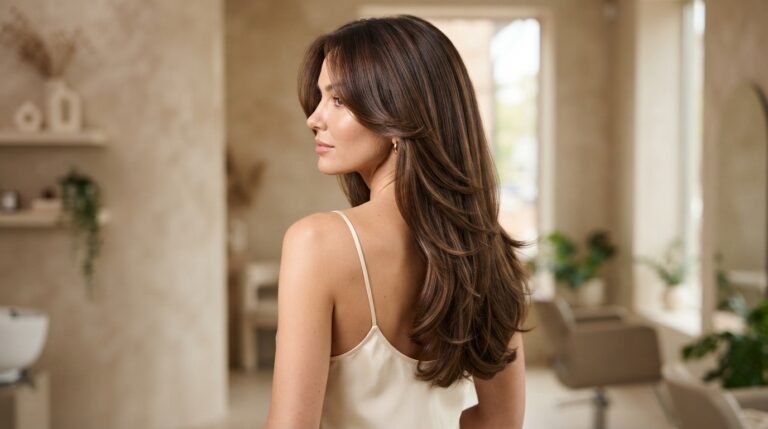
If you love hairstyles that look stylish without feeling overly polished, the shag cut deserves a place on your inspiration board. This layered haircut has evolved far beyond the classic rock-and-roll version, with modern variations that can suit short, medium, and long hair, as well as straight, wavy, curly, and textured strands. The secret is in the combination of strategically placed layers, movement around the face, and a deliberately effortless finish.
In this guide, you’ll discover 22 shag haircut ideas designed to make choosing your next look easier. Some are soft and wearable, while others bring bold volume, dramatic fringe, or retro personality. You’ll also find practical details about face-framing layers, styling, maintenance, and which versions work particularly well with different hair textures. Whether you’re considering your first shag or simply want to refresh your current cut, these ideas can help you identify the details worth showing your hairstylist before your next appointment.
1. Soft Shoulder-Length Shag

A shoulder-length shag offers a comfortable middle ground when you want noticeable layers without sacrificing versatility. The length keeps enough weight for ponytails and simple updos, while shorter pieces around the crown create movement. Ask your stylist for blended layers rather than extremely choppy sections if you prefer a softer finish. A curtain fringe can connect the face-framing pieces beautifully, especially when it begins around the cheekbones and gradually blends into the rest of the haircut.
For everyday styling, apply lightweight mousse to damp hair and scrunch gently before air-drying or using a diffuser. Avoid brushing once the hair has dried if you want the layers to retain their natural separation. A small amount of texturizing cream can define the ends without making them stiff. This version works particularly well for medium-density hair because the layers add shape while leaving enough fullness through the lower sections.
2. Shaggy Bob With Piecey Layers
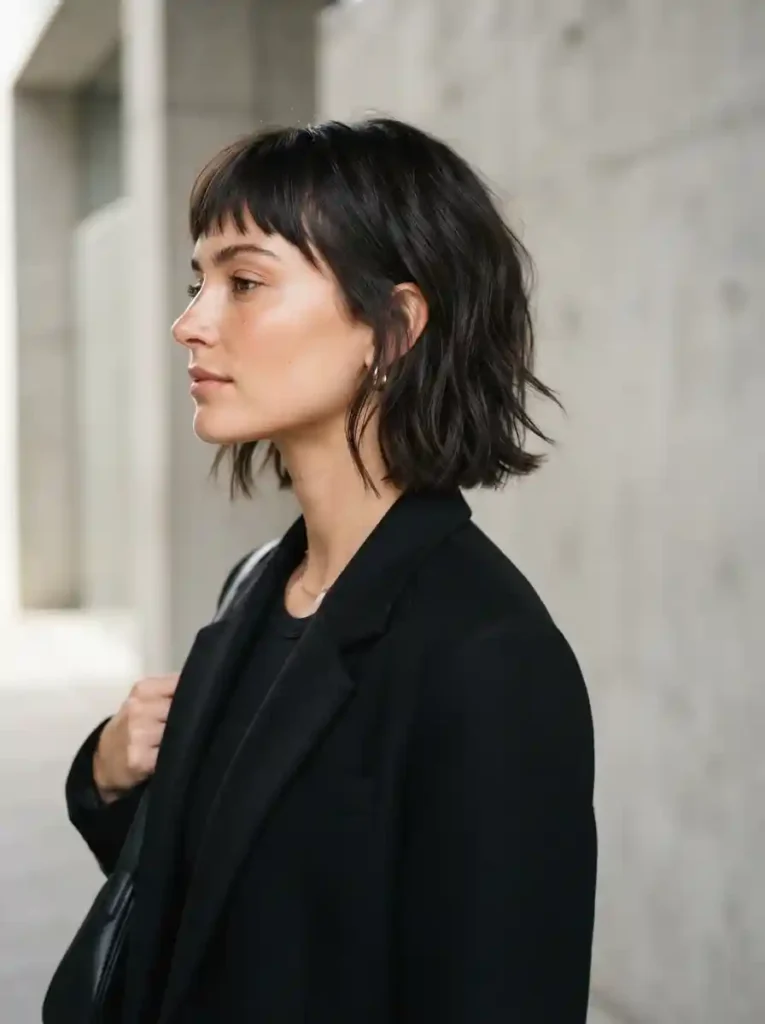
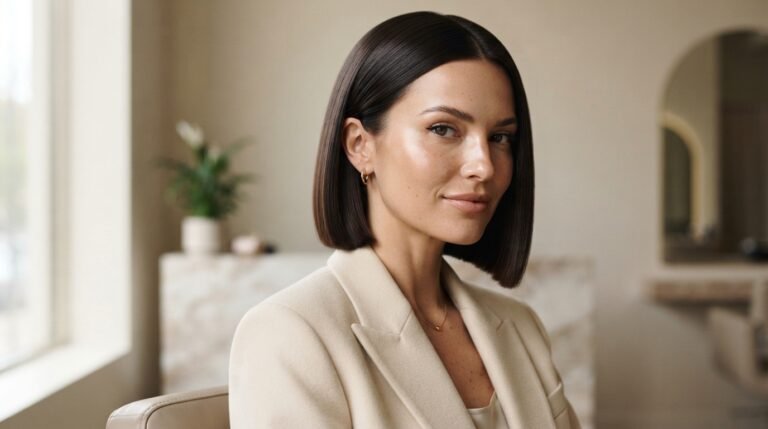
A shaggy bob brings the layered character of a classic shag into a shorter, more structured silhouette. The ends can sit around the jaw or slightly below it, while choppy crown layers prevent the shape from looking like an ordinary blunt bob. Piecey sections around the temples and cheekbones make the haircut feel lighter and more playful. If your hair is thick, internal layering can remove bulk without making the perimeter appear excessively thin.
This cut is especially convenient for anyone who likes a deliberately undone finish. After washing, work a small amount of volumizing foam through the roots, then let the hair dry naturally or diffuse it with your head tilted forward. Finish by twisting a few sections between your fingers to emphasize separation. Avoid applying heavy oils near the roots because they can flatten the lifted crown that gives this short shag its distinctive personality.
3. Long Shag With Curtain Bangs

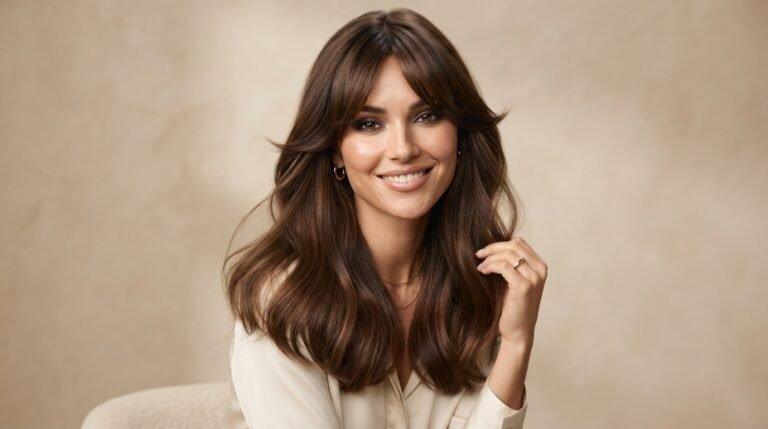
Long hair does not have to lose its impact when transformed into a shag. Keeping substantial length through the back while adding graduated layers around the crown and face creates movement without dramatically shortening the overall silhouette. Curtain bangs are a natural companion because they open around the eyes and blend into longer framing pieces. This combination suits anyone who wants the character of a shag while still enjoying noticeably long hair.
When styling long shag layers, concentrate volume near the crown instead of creating excessive fullness at the ends. A round brush can softly curve curtain bangs away from the face, while a diffuser or loose braid can encourage texture through the lengths. Bring reference photos showing your preferred layer placement because “long shag” can range from subtle to dramatically choppy. Discuss how much length you are willing to lose before the scissors come out.
4. Curly Shag With Rounded Volume
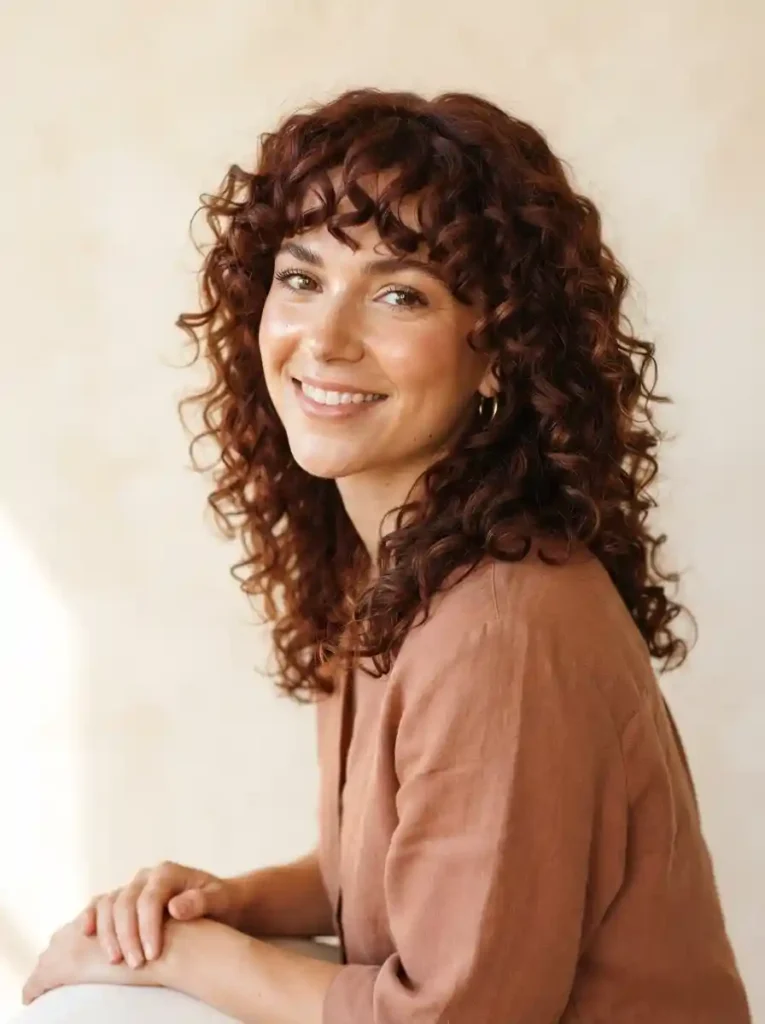
A curly shag is built around the natural behavior of curls rather than forcing every section into a uniform shape. Rounded layers through the crown can create lift, while carefully placed side layers help curls form a balanced outline. The amount of layering should reflect curl density and shrinkage, since curls can appear significantly shorter after drying. A stylist experienced with textured hair can help determine where the finished shape will actually sit.
Moisture and definition matter more than excessive manipulation for this haircut. Apply curl cream or lightweight gel to soaking-wet hair, scrunch upward, and allow the curls to dry with minimal touching. Once completely dry, gently separate a few curls if additional fullness is desired. Avoid thinning aggressively with standard texturizing techniques unless your stylist understands your curl pattern, because removing too much density can produce uneven results and make the silhouette harder to control.
5. Shaggy Pixie With Feathered Texture
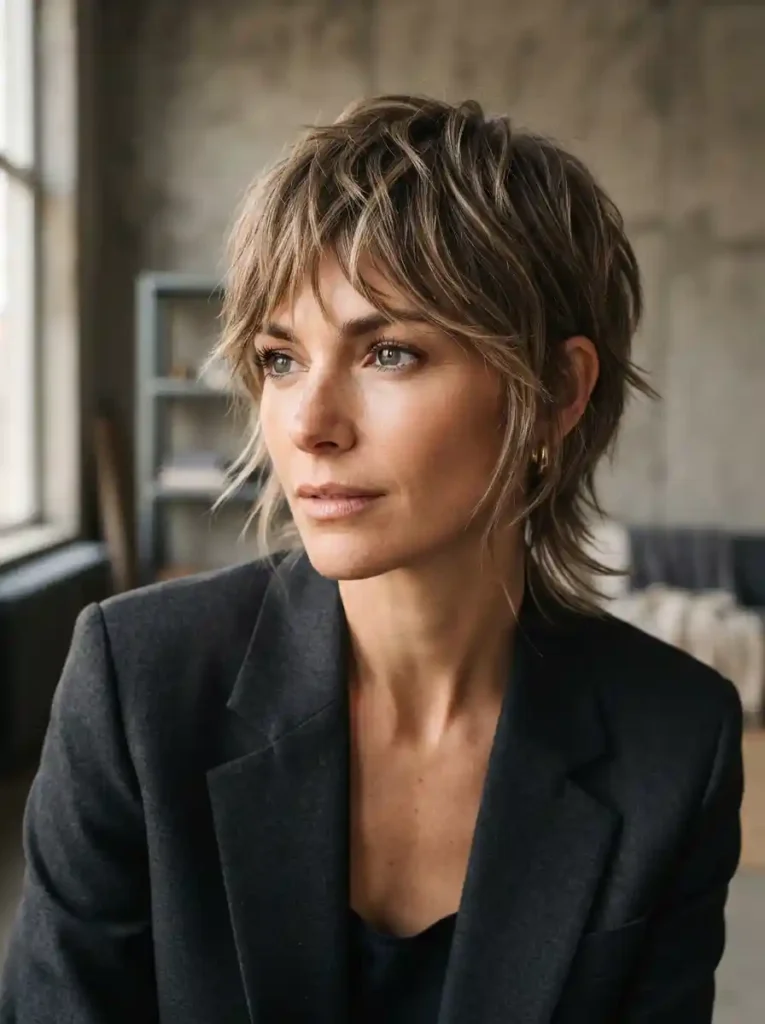
A shaggy pixie combines the freedom of a short haircut with the irregular layering associated with a shag. Instead of keeping the sides and crown uniformly short, the stylist can leave selected pieces longer around the forehead, ears, and nape. This creates a softer silhouette that feels less conventional than a traditional pixie. It is particularly useful for someone who wants short hair but still enjoys styling options and visible texture.
Because the haircut relies on separation, a lightweight styling paste is usually more useful than a rich cream. Warm a tiny amount between your fingertips, then pinch individual layers into place rather than coating the entire head. Short shaggy pixies generally require regular trims to maintain their proportions, especially around the neckline and ears. Before choosing this version, consider whether you are comfortable refreshing the shape more frequently than a longer shag.
6. Copper Shag With Wispy Fringe

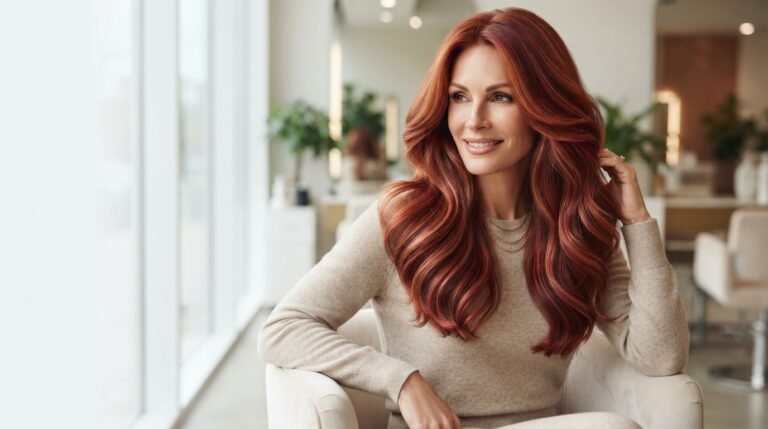
A copper shag makes the haircut itself feel even more expressive because warm color emphasizes the separation between layers. The wispy fringe keeps the look light rather than creating a heavy horizontal line across the forehead. Ask for subtle tonal variation if you color your hair, since dimensional copper shades can make individual layers easier to see. If your natural color is dark, discuss maintenance before committing to a brighter copper transformation.
Colored hair benefits from gentle styling methods, particularly when the cut already provides plenty of visual interest. Use a sulfate-free cleanser if recommended by your colorist, wash with comfortably cool water, and apply heat protection before using hot tools. For styling, loose bends work beautifully because they catch the light across different layers. If the fringe becomes oily quickly, refresh only the front sections rather than repeatedly washing the entire haircut.
7. Wispy Shag For Fine Hair

Fine hair can work beautifully with a shag when the layering is controlled rather than excessive. Too many short layers may make the ends appear sparse, so ask your stylist to preserve a stronger perimeter while using selective layers near the crown and face. Wispy pieces can create the impression of movement without removing too much density. A shorter fringe can also add visual fullness around the forehead while keeping the overall shape airy.
For styling, prioritize root lift and lightweight products. Apply volumizing mousse close to the roots, then blow-dry with your head tilted forward or use a large round brush for gentle elevation. Avoid heavy conditioners near the scalp and thick waxes throughout the lengths. If your hair tends to fall flat during the day, keep a small texturizing spray available for the crown rather than repeatedly teasing the layers, which can create unnecessary breakage.
8. Thick Hair Shag With Internal Layers

Thick hair can carry dramatic shag layers exceptionally well, but the goal is controlled movement rather than simply removing as much weight as possible. Internal layers can reduce heaviness underneath the surface while preserving a full-looking outline. Longer face-framing pieces help connect the crown to the ends, preventing the haircut from developing a disconnected shape. Tell your stylist whether you want your natural density to remain visible or feel significantly lighter.
After washing, divide the hair into manageable sections before styling so the layers receive even attention. A diffuser can encourage natural waves without creating excessive frizz, while a blow-dryer and paddle brush can smooth the outer surface when preferred. Avoid aggressive home thinning with razors or shears. Thick hair can change dramatically as it dries, so evaluate the finished shape only after the haircut has been fully dried and styled.
9. ’70s-Inspired Shag With Dramatic Layers
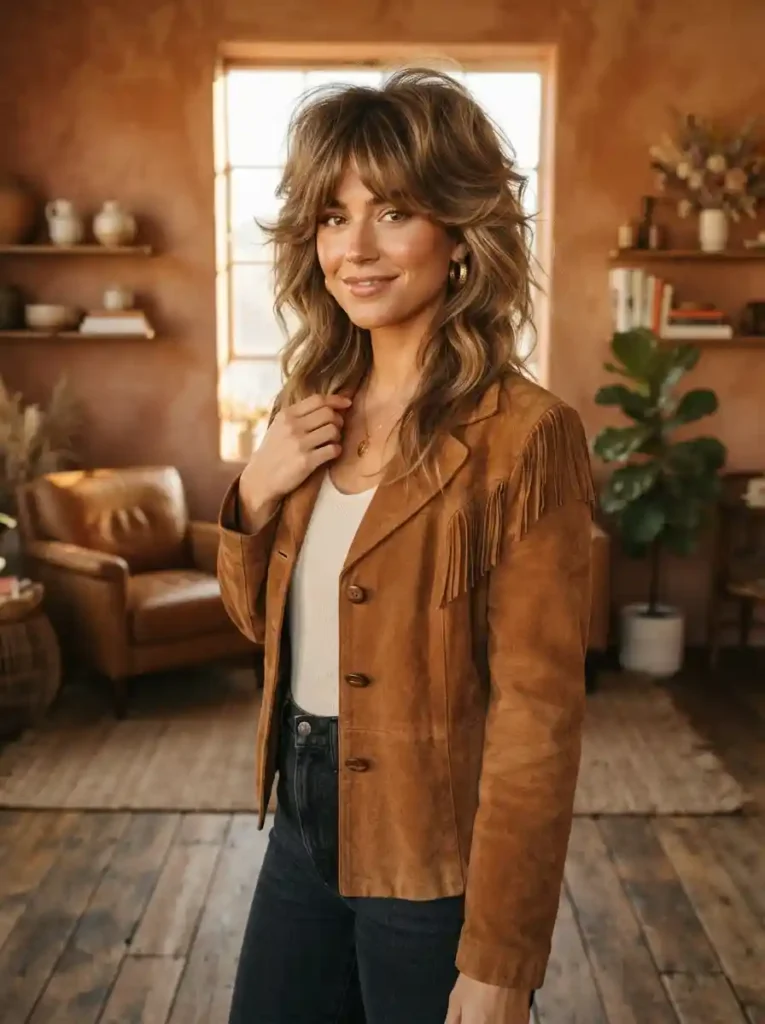
The ’70s-inspired shag leans into volume, feathering, and unmistakable movement around the face. Compared with softer modern versions, this cut often features more pronounced crown layers and a stronger transition between short and long sections. Curtain bangs help establish the retro character, especially when they are blow-dried away from the face. It is a good option for anyone who wants their haircut to feel intentionally vintage rather than merely textured.
To style this shape, lift the roots while directing the front layers outward and slightly backward. A medium round brush can create the sweeping movement associated with classic feathered hair, while a lightweight hairspray helps hold the shape without making it rigid. If you prefer a less retro result, leave the ends slightly tousled instead of perfectly curled. Regular trimming keeps the feathered sections defined and prevents the silhouette from toward a more dramatic, layered silhouette. It typically features stronger crown volume, shorter upper layers, and a noticeable taper through the lower sections. The result has more contrast than a classic soft shag, making it appealing if you enjoy bold texture. Before choosing it, ask your stylist how the shape will look when your hair is becoming heavy.
10. Wolf-Shag Hybrid

A wolf-shag hybrid pushes the shag toward a more dramatic, layered silhouette. It typically features stronger crown volume, shorter upper layers, and a noticeable taper through the lower sections. The result has more contrast than a classic soft shag, making it appealing if you enjoy bold texture. Before choosing it, ask your stylist how the shape will look when your hair is worn naturally, because heavy layering can behave differently depending on density and texture.
This haircut works best when the styling emphasizes separation rather than perfection. Apply mousse or texturizing spray while the hair is damp, then rough-dry the roots before shaping individual pieces with your fingers. If your hair is naturally straight, a few loose bends can help reveal the layers. Keep product concentrated through the mid-lengths and ends so the crown stays lifted. Bring several reference photos from different angles to communicate how much taper you want.
11. Beachy Blonde Shag

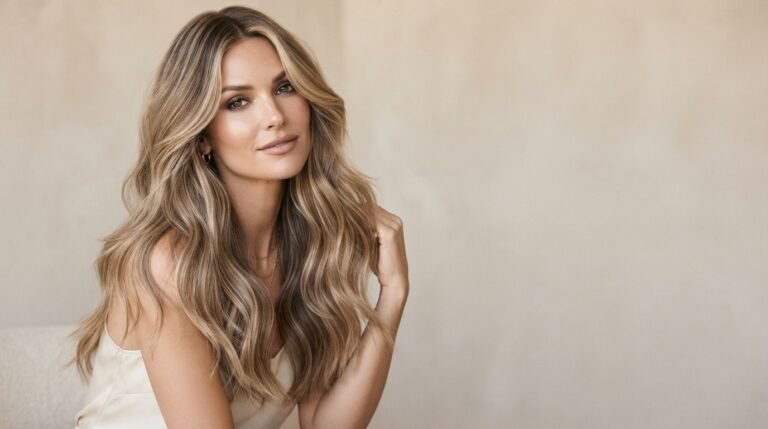
A beachy blonde shag combines relaxed waves with layers that keep the hair from looking overly uniform. Maintaining a slightly darker root can add depth and make regrowth less visually abrupt, while sun-kissed highlights emphasize the movement between sections. The haircut does not need extremely short layers to feel textured. A stylist can preserve enough length for loose waves while using face-framing pieces to create that breezy, undone appearance.
For a low-effort finish, mist a lightweight wave product through damp hair and twist a few sections away from the face. Let it air-dry when possible, then gently loosen the waves with your fingers. If your blonde hair is chemically lightened, use a moisturizing treatment regularly and limit high heat. A beachy shag looks best when the texture remains touchable, so avoid layering several heavy styling products that leave the hair stiff or coated.
12. Black Shag With Micro Bangs
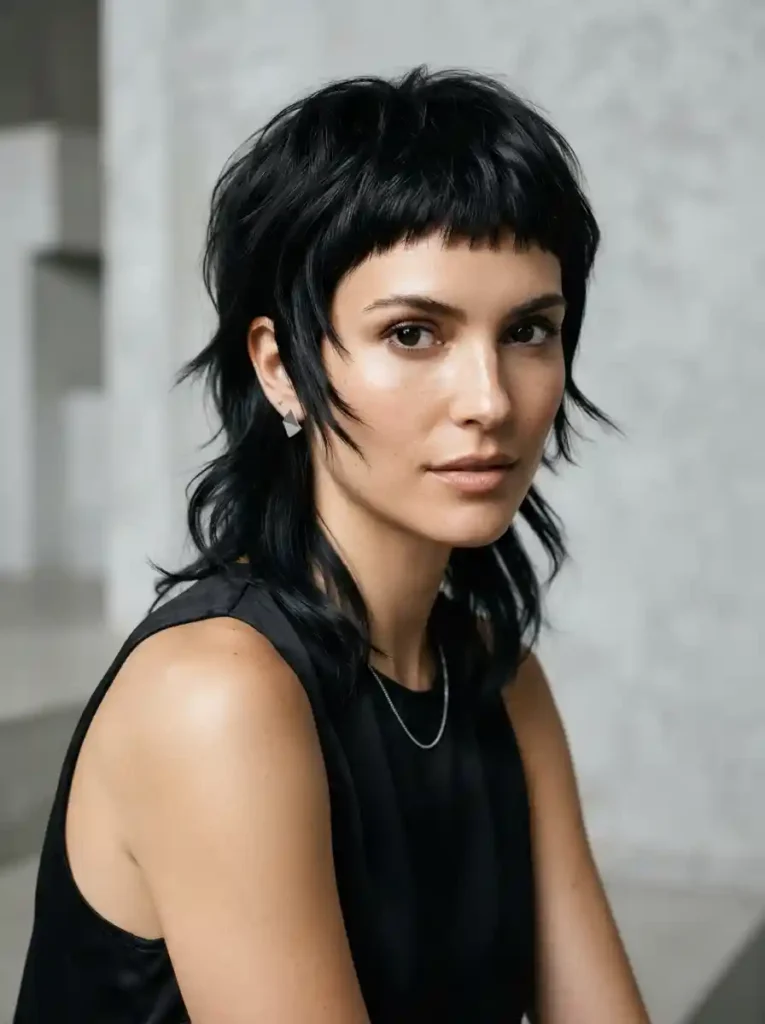
Micro bangs change the personality of a shag immediately by creating a stronger visual focal point around the eyes. Keeping them short while allowing the surrounding layers to remain soft creates an interesting contrast between precision and movement. This version can work with straight or slightly wavy hair, although the fringe requires enough natural consistency to sit where intended. Discuss your natural cowlicks with your stylist before deciding on the exact fringe length.
Short bangs require a little more daily attention than longer curtain fringe because even small growth can change their appearance. Blow-dry them soon after washing while directing the hair gently downward, using your fingers instead of a round brush if you want a flatter finish. Avoid cutting them yourself between appointments. If you are unsure about committing to very short bangs, ask for a slightly longer version first and gradually shorten it once you understand how your hair behaves.
13. Shag With Bottleneck Bangs

Bottleneck bangs offer a softer alternative to a traditional straight fringe because the shortest section sits near the center before gradually lengthening toward the temples. That shape blends naturally into a layered shag and creates a flattering transition around the eyes and cheekbones. It is particularly useful if you like fringe but do not want a solid, heavy line. Ask your stylist to connect the outer sections directly into your existing face-framing layers.
Styling these bangs usually takes only a few minutes. While damp, use a small round brush to direct the center downward and sweep the longer sides outward. Finish with your fingers rather than a dense brush so the fringe retains separation. Because the middle is shorter, it can become noticeable quickly as it grows. A small amount of dry shampoo can also add grip and prevent the longer side sections from separating too heavily.
14. Shaggy Lob With Face-Framing Layers

A shaggy lob is ideal when you want the practicality of a longer bob but still crave visible movement. The collarbone length provides enough weight to keep the shape polished, while layers around the face and crown prevent it from appearing boxy. This cut can be especially versatile for people who alternate between wearing their hair loose and tied back. Ask for a slightly longer perimeter if keeping a ponytail matters to you.
For styling, create a loose bend through the mid-lengths rather than curling every section individually. This keeps the shag relaxed and allows the layers to separate naturally. A texture spray can enhance the ends, while a small smoothing serum can tame flyaways around the face. If your hair is naturally straight, ask your stylist to cut the layers with your usual styling routine in mind so the shape does not rely entirely on curling tools.
15. Shag With Wispy Curly Bangs

Curly bangs can make a shag feel softer and more integrated because the fringe follows the same natural texture as the rest of the haircut. The key is accounting for curl shrinkage before deciding on length. A stylist may prefer to cut curls dry or evaluate their natural spring before finalizing the fringe. Wispy separation usually works better than a dense block of curls, particularly when you want the forehead to remain partially visible.
Your styling routine should encourage consistent curl formation from root to tip. Apply a moisturizing leave-in followed by a lightweight gel, then gently scrunch without repeatedly combing the hair after product application. A diffuser on low heat can reduce drying time while preserving the shape. Refresh the bangs separately on non-wash days with a little water and curl product rather than saturating the entire head, which can unnecessarily disturb the established layers.
16. Razor-Cut Textured Shag

A razor-cut shag has a lighter, more feathered quality because the cutting technique can create softer separation at the ends. It is particularly appealing when you want movement that looks airy rather than bulky. However, razor work is not ideal for every hair type or every stylistic goal. If your hair is very fragile or prone to fraying, discuss whether a razor is appropriate before choosing this version.
The finished cut benefits from lightweight styling products that allow the ends to move freely. A small amount of styling cream can define the pieces without making them rigid, while a texture mist can emphasize the feathered finish. Avoid repeatedly applying high heat directly to the ends because heavily textured sections may be more vulnerable to dryness. Regular conditioning and occasional trims help keep the airy silhouette intentional rather than ragged.
17. Subtle Shag For Straight Hair
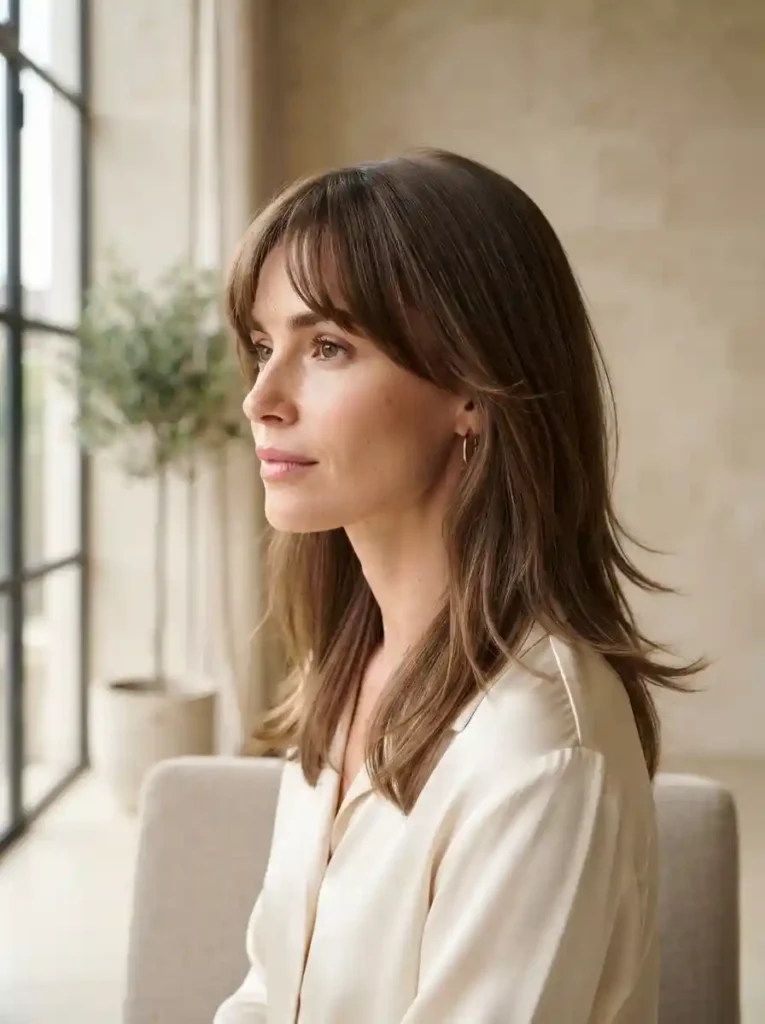
Straight hair can showcase shag layers clearly because each section tends to fall into its intended position. For a wearable interpretation, keep the perimeter relatively substantial and place most of the texture around the crown, temples, and face. This prevents the haircut from becoming excessively thin at the bottom. If you prefer a polished appearance for work or formal settings, a subtle shag provides movement without requiring a dramatically messy finish.
A flat iron can be useful, but resist the temptation to straighten every layer completely flat. Instead, create tiny bends at selected ends to reveal the haircut’s texture. Heat protectant should be applied before styling, especially when using frequent hot tools. For a no-heat option, add lightweight mousse to damp hair and tuck sections behind the ears while drying. This can create gentle bends that make the layers visible without obvious curls.
18. Shag With Face-Framing Money Pieces
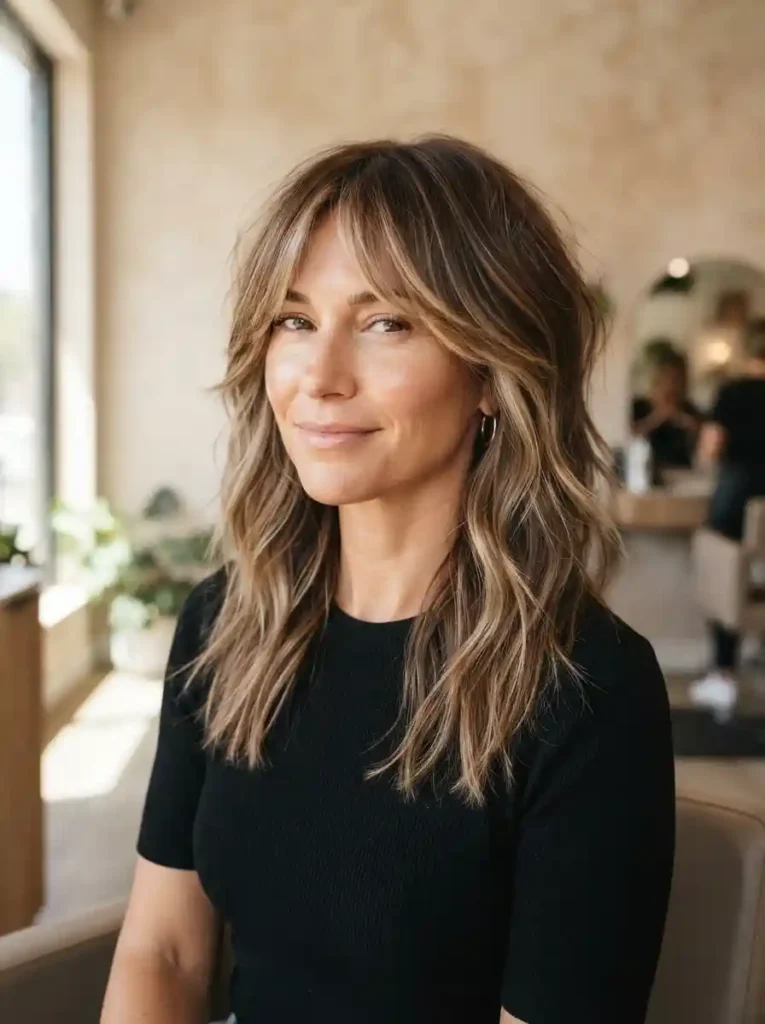
Strategic face-framing highlights can make the structure of a shag easier to notice without requiring an all-over color change. A few brighter pieces near the temples and front layers draw attention to the movement around the face, while maintaining a deeper base keeps the overall color dimensional. Ask for a blended transition rather than sharply defined stripes if you want the result to remain natural as it grows.
Color placement should complement the haircut rather than compete with it. Bring your haircut reference to your color appointment so the stylist can see where your layers actually sit. After coloring, use products designed for treated hair and protect the front pieces from excessive heat. Because face-framing strands receive frequent styling and environmental exposure, keeping them conditioned helps maintain shine. Subtle highlights are also easier to personalize by adjusting their brightness and width.
19. Messy Shag With Choppy Ends
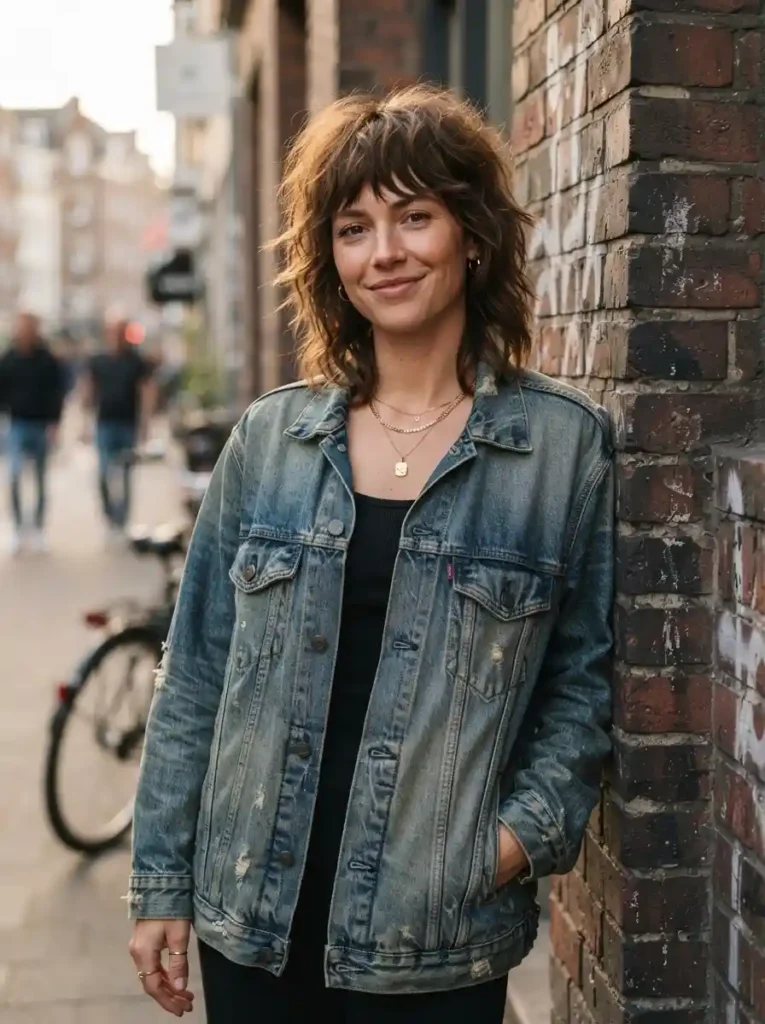
A choppy shag is for anyone who wants the haircut itself to provide plenty of attitude. The layers are more visibly separated than in a soft shag, and the ends can vary in length to create an intentionally irregular silhouette. This version works particularly well with naturally wavy hair because the texture helps blend approach is to enhance whatever natural movement already exists. Apply a small amount of matte styling cream to damp hair, scrunch the lengths, and allow them to dry before separating selected pieces with your fingers. If your hair is very smooth, use a light texturizing spray at the roots and mid-lengths. Avoid brushing aggressively the different sections. Straight hair can also wear it, although styling may be needed to reveal the choppy structure.
The easiest approach is to enhance whatever natural movement already exists. Apply a small amount of matte styling cream to damp hair, scrunch the lengths, and allow them to dry before separating selected pieces with your fingers. If your hair is very smooth, use a light texturizing spray at the roots and mid-lengths. Avoid brushing aggressively once dry, since excessive brushing can erase the separation that makes a choppy shag distinctive.
20. Soft long-layered shag haircut
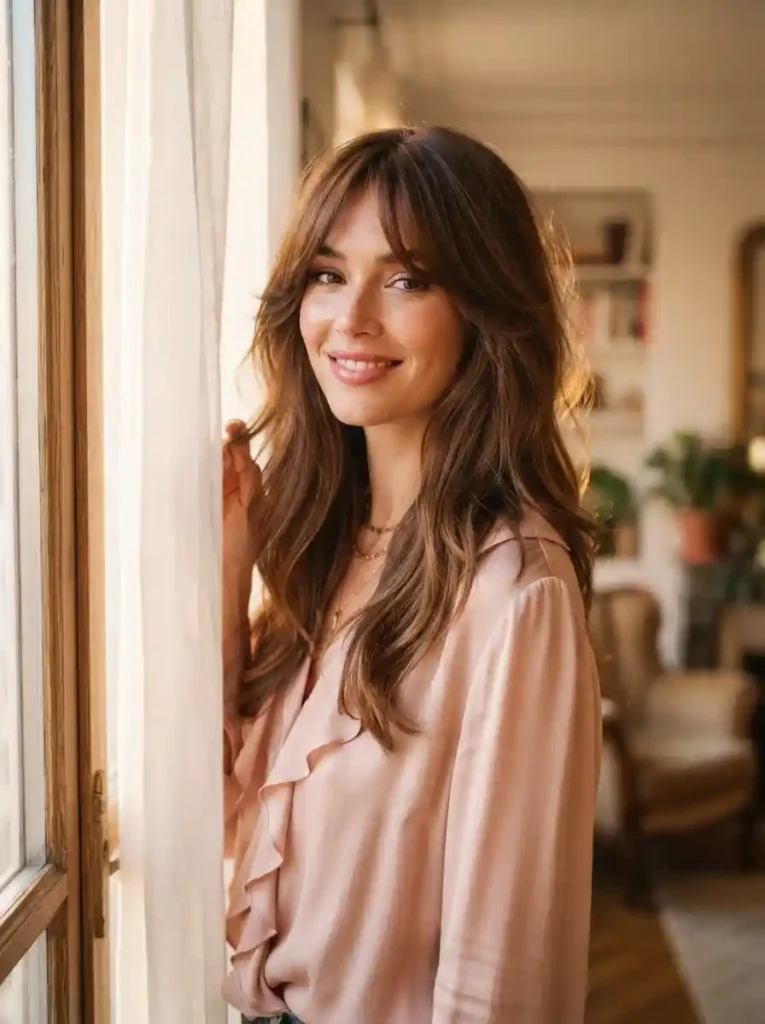
A romantic soft shag proves that layered hair does not have to look edgy or heavily textured. Long, flowing layers maintain a graceful silhouette while subtle feathering around the face adds movement. Curtain bangs can be kept longer and blended into the front sections for a seamless effect. This variation suits someone who wants a modern shag but prefers softness, femininity, and versatility over strongly chopped layers.
For styling, create broad waves rather than tight curls so the layers remain fluid. A large-barrel curling iron can help, but wrap sections loosely and leave the ends slightly straighter. Finish with a flexible hairspray that allows the hair to move. If you air-dry frequently, ask your stylist to make the cut work with your natural texture rather than designing it entirely around heat styling. That choice can make the haircut much easier to maintain.
21. Shag With Side-Swept Fringe

A side-swept fringe gives the shag a different character from curtain or straight bangs. Instead of opening symmetrically, the fringe creates an angled line that directs attention toward one side of the face. It can be particularly useful if you want the appearance of bangs without committing to a short, centered fringe. Ask your stylist to blend the longer edge into your face-framing layers so the transition feels deliberate.
Styling becomes easier when you establish the fringe’s direction while the hair is still damp. Use a small brush or your fingers to guide it across the forehead, then briefly apply warm air from a blow-dryer. For extra volume, direct the fringe toward the opposite side while drying and flip it back afterward. This creates lift at the roots without requiring excessive teasing. A lightweight finishing spray can hold the sweep while preserving movement.
22. Modern Shag With Natural Gray Dimension

A modern shag can be especially striking on naturally gray or silver hair because the layers reveal variations in tone throughout the strands. Instead of hiding those differences, the haircut can emphasize them through movement and separation. Soft crown layers and feathered ends keep the silhouette contemporary, while longer fringe provides a gentle transition around the face. The result can feel polished without losing the natural character of gray hair.
Keep the shape healthy by focusing on moisture and gentle handling. Gray hair can sometimes feel drier or more wiry, so a conditioning treatment may help improve softness and manageability. If you use purple shampoo, follow the product directions rather than assuming frequent use is necessary. For styling, a lightweight smoothing cream can control flyaways while preserving texture. Regular trims are useful for keeping the feathered ends intentional and preventing the haircut from losing its shape.
Conclusion
The most appealing shag haircut is not necessarily the most dramatic one—it is the version that works with your natural texture, preferred length, styling habits, and personal sense of style. A soft shoulder-length shag can offer everyday versatility, while a wolf-shag hybrid or choppy cut creates a stronger statement. Curly, straight, thick, fine, colored, and naturally gray hair can all take different approaches to the layered shape.
Before your appointment, save two or three of these ideas and pay attention to the details you actually like: fringe length, crown volume, face-framing placement, perimeter length, or the amount of texture through the ends. Then show those references to your stylist and explain how much daily styling you realistically want to do. The best shag is one that looks intentional in the salon and still feels effortless on an ordinary morning.