The right shag haircut can make your hair feel lighter, look fuller, and take on that effortlessly tousled shape that always catches the eye on Pinterest. From soft, face-framing layers to bold, rock-inspired texture, layered shag cuts offer plenty of ways to express your personal style without sacrificing everyday wearability. Whether your hair is straight, wavy, curly, short, or long, these 25 trendy shag haircut ideas will help you discover a look that feels fresh, flattering, and uniquely yours.
1. Classic Layered Shag with Soft, Wispy Bangs

The classic layered shag is an excellent starting point if you want movement without committing to an overly dramatic haircut. Its defining features include shorter layers around the crown, graduated lengths through the sides, and soft bangs that blend naturally into the rest of the hair. The result feels relaxed rather than overly styled. Medium-length hair works particularly well because it provides enough length for the layers to fall beautifully while maintaining that signature shaggy silhouette.
For everyday styling, apply a lightweight volumizing mousse to damp hair and scrunch gently while blow-drying with a diffuser or using your fingers. Wispy bangs look best when they retain some separation, so avoid coating them with heavy oils or thick styling creams. Ask your stylist to customize the fringe around your forehead and cheekbones instead of copying a fixed bang length. This small adjustment can make the haircut feel considerably more personal and easier to maintain.
2. Modern Short Shag with Choppy Layers
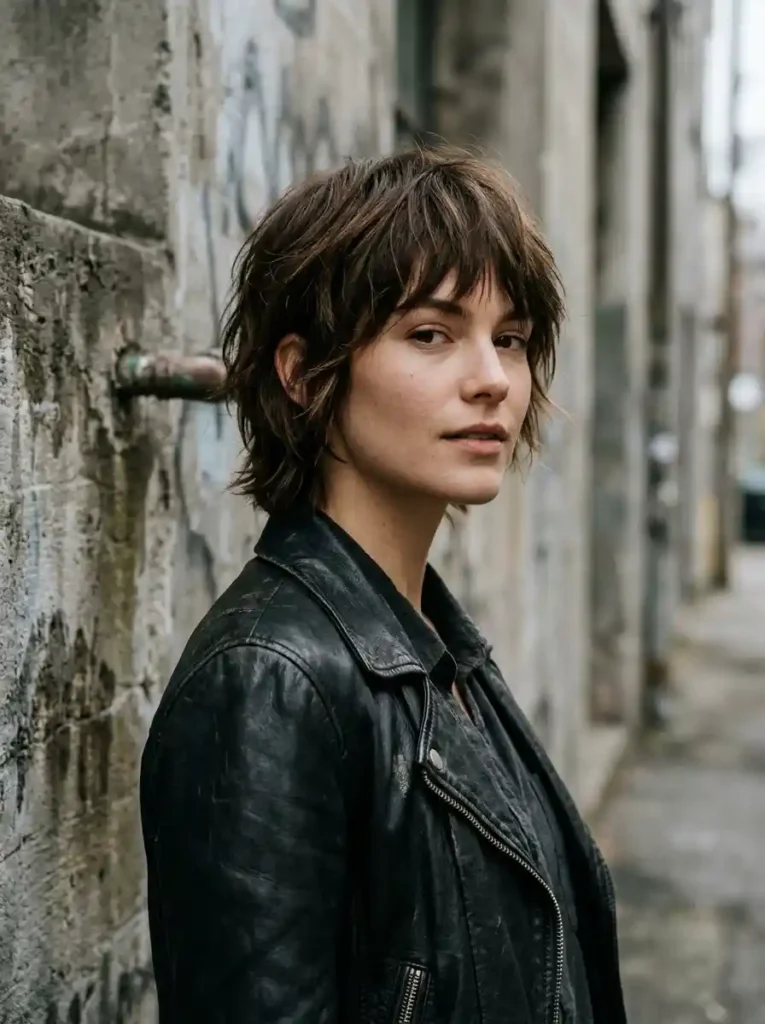
A short shag is ideal if you love an expressive haircut that requires less length to create a strong silhouette. Choppy layers give the crown lift while irregular ends prevent the shape from looking too rounded or overly polished. This version is especially appealing for people who enjoy slightly edgy fashion but still want a haircut that works with casual outfits. Fine hair can benefit from carefully placed layers that create movement, although excessive thinning may leave delicate ends looking sparse.
Styling is refreshingly simple: work a small amount of texturizing cream through damp hair, then let it air-dry or use a diffuser on low heat. Once dry, separate a few sections with your fingertips to emphasize the choppy finish. Bring reference photographs to your appointment because short shag haircuts can vary considerably in their proportions. Discuss how much length you want to retain around the ears and nape, particularly if you prefer a softer, less dramatic result.
3. Long Layered Shag with Curtain Bangs
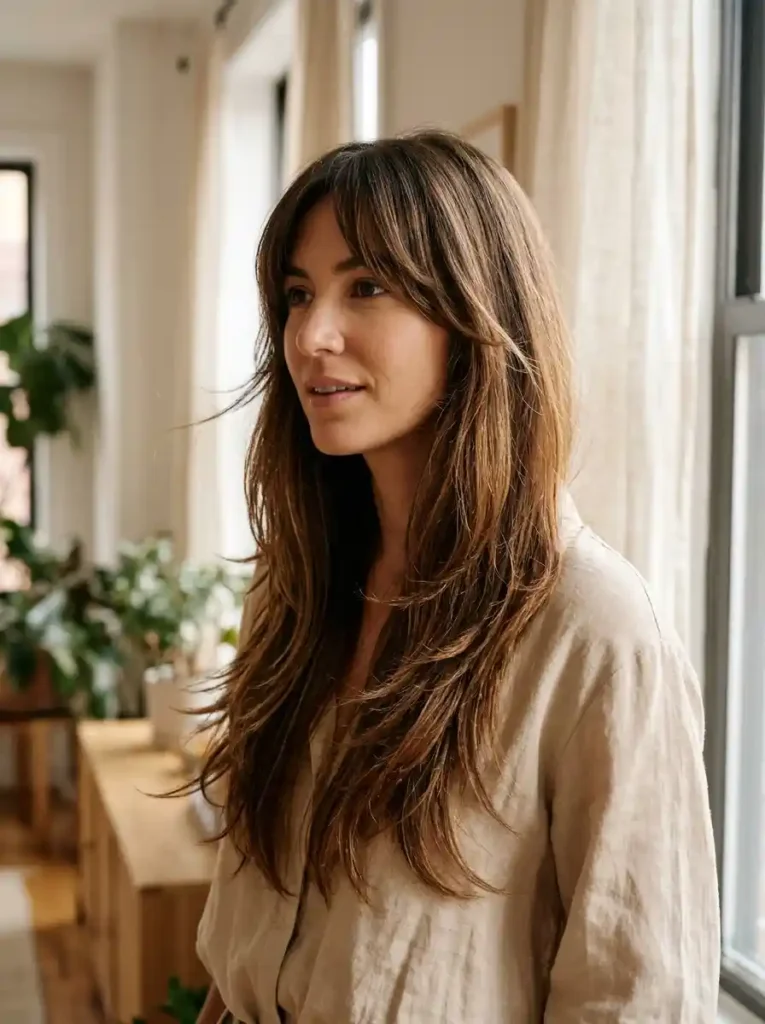
Long shag haircuts offer an appealing balance between dramatic texture and familiar, versatile length. Instead of removing all the weight, a stylist distributes shorter layers through the crown and around the face while allowing the lower lengths to remain substantial. Curtain bangs open away from the forehead, creating a soft frame that complements the cascading layers. This combination works especially well for people who enjoy wearing their hair down but want more movement than a conventional long, one-length cut provides.
To style the haircut, create a loose center part and direct the curtain bangs away from your face with a round brush or a blow-dryer attachment. A few loose bends through the mid-lengths help emphasize the shag’s shape without making it appear overly curled. If your hair is very thick, ask for internal weight removal rather than excessively thin ends. Regular trims will preserve the face-framing pieces while allowing you to keep the longer length you love.
4. Curly Layered Shag with Natural Volume

A curly shag celebrates natural texture rather than forcing every strand into a uniform shape. Layers distributed through the crown and sides help curls form a balanced silhouette, while carefully shaped fringe can bring attention to the eyes. This cut is particularly useful when curls tend to create a heavy triangle shape at the bottom. The goal is not simply to remove bulk; it is to position the layers so the curls spring naturally and the overall outline feels intentional.
Choose a stylist experienced with your particular curl pattern, since wet curls can shrink substantially as they dry. Discuss whether your hair should be shaped dry, wet, or through a combination of both techniques. At home, apply a curl cream or lightweight gel to soaking-wet hair, scrunch upward, and diffuse gently if desired. Avoid brushing the finished curls when dry, as this can create frizz and disrupt definition. Refresh flattened sections with water instead of repeatedly adding more product.
5. Textured Shaggy Bob with Face-Framing Layers
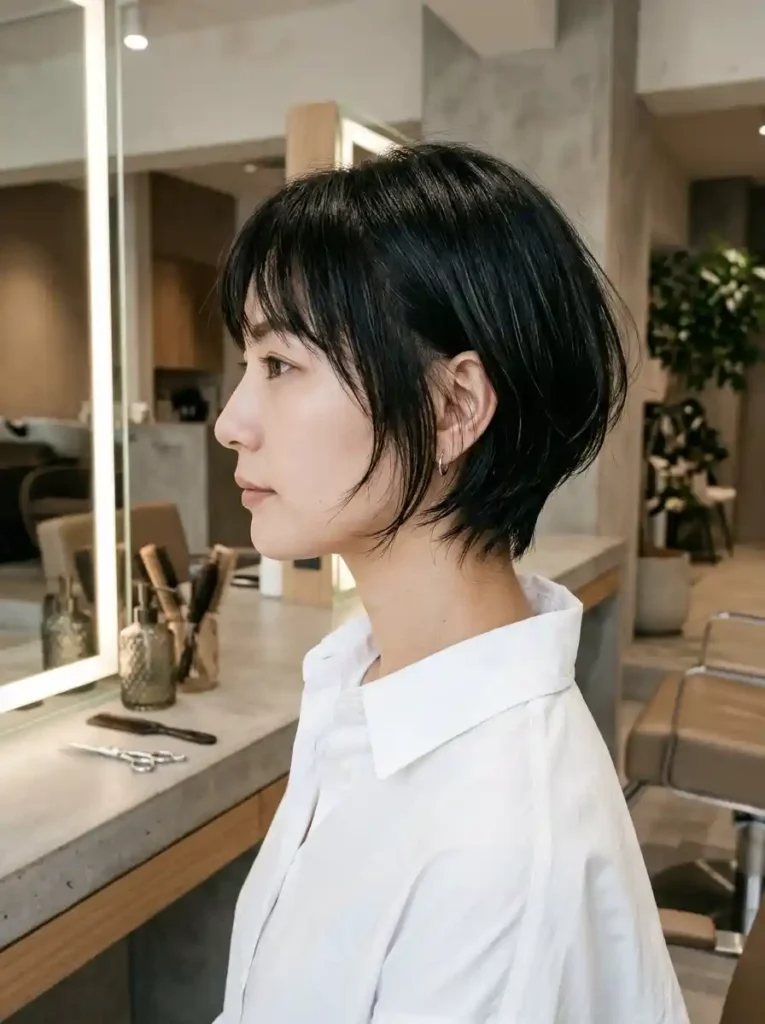
A shaggy bob combines the convenience of a shorter haircut with the movement of a layered shag. Its length typically sits between the chin and jaw, while textured ends prevent the shape from appearing like a blunt traditional bob. Face-framing layers add softness around the cheeks and temples, making this style a useful option if you want a noticeable change without going extremely short. It can suit straight and wavy textures, although the placement of the layers should reflect your hair’s natural density.
The key to styling a shaggy bob is preserving its deliberately imperfect finish. Use a lightweight blow-dry lotion, lift the roots with your fingers, and add a few loose bends with a flat iron if your hair is naturally straight. Avoid curling every section in the same direction, which can make the cut look too formal. Because shorter layers can lose their shape as they grow, schedule trims according to how sharply defined you want the bob’s outline to remain.
6. Soft Shag Haircut for Fine Hair
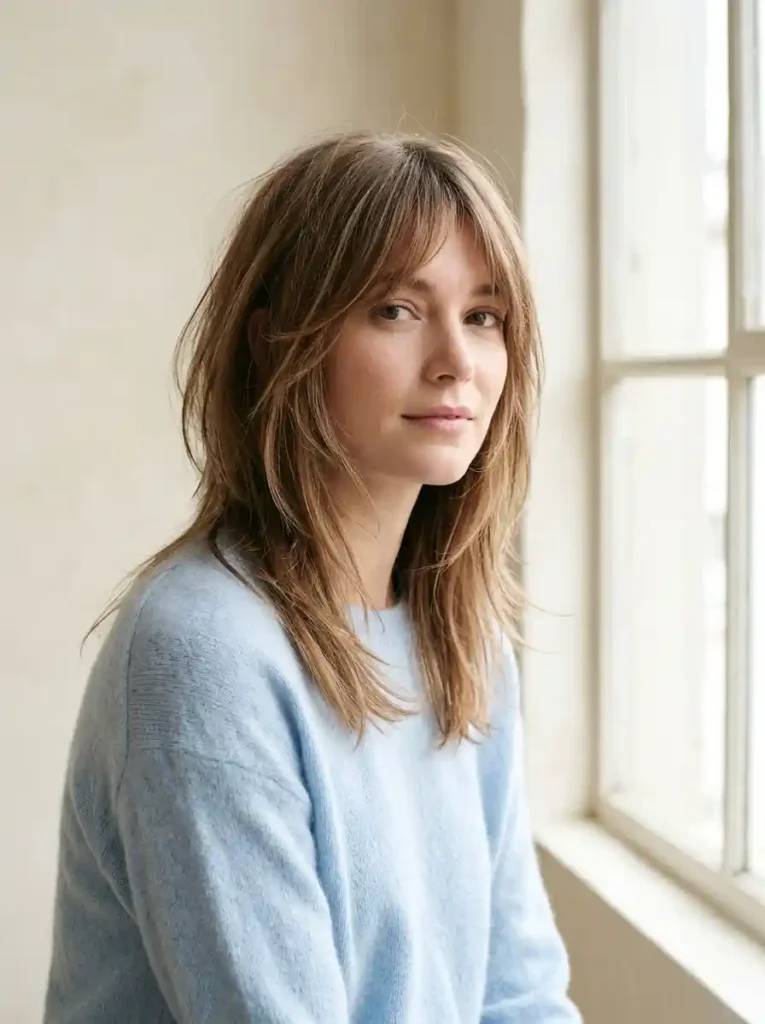
Fine hair can look beautifully airy in a shag haircut when the layers are carefully controlled. Rather than removing too much hair from the ends, a stylist can introduce shorter sections near the crown and face to create visible movement without sacrificing the appearance of fullness. A soft fringe adds another point of interest and can make the cut feel more substantial. The most flattering version is usually tailored to your natural density instead of relying on aggressive razor work or excessive thinning.
For styling, start with a lightweight root-lifting spray and a small amount of mousse, concentrating on the crown rather than saturating the ends. Blow-dry the roots in alternating directions before allowing the lengths to fall naturally. Heavy waxes and rich creams can flatten delicate strands, so use finishing products sparingly. When booking a haircut, explain that preserving the density at the bottom is a priority. Strategic layering can create texture, but removing too much length may produce the opposite of your desired effect.
7. Thick Hair Shag with Feathered Ends
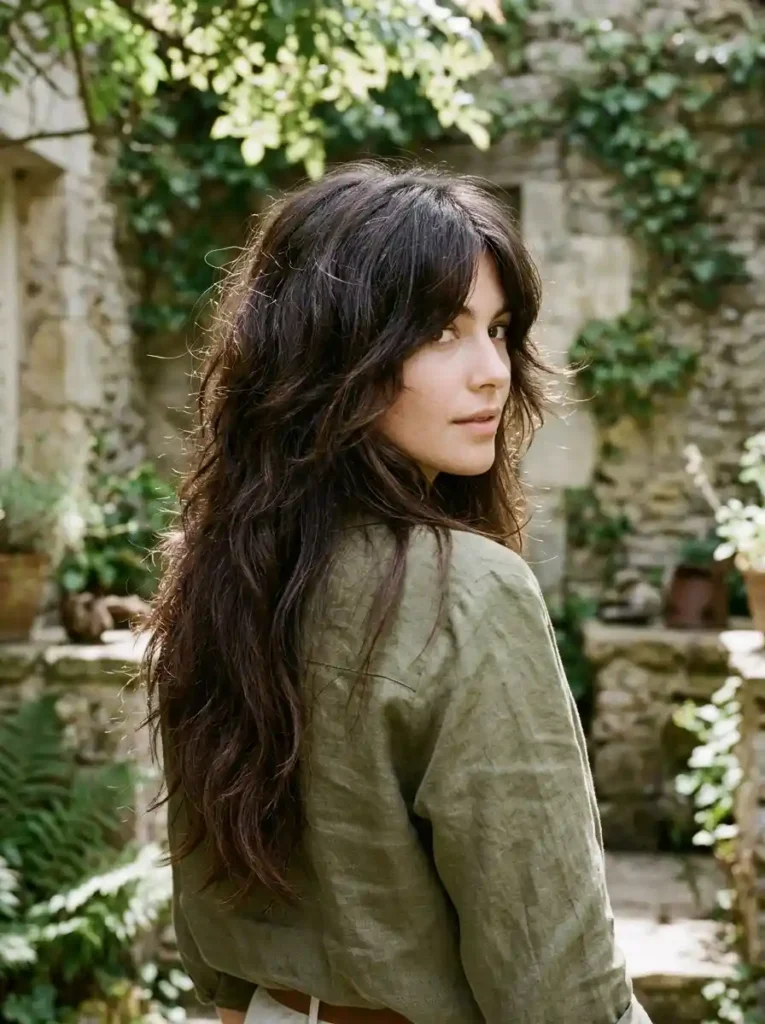
Thick hair can make a shag look especially striking because there is plenty of natural volume to support the layers. The challenge is managing bulk without leaving the ends looking thin or disconnected. A well-planned haircut removes weight where it is needed, particularly around the interior and upper sections, while maintaining enough substance through the lower lengths. Feathered ends help the hair move more freely, giving a dense mane a lighter appearance without forcing you to sacrifice its overall length.
Ask your stylist to assess how your hair expands as it dries before deciding how much layering to add. If your strands are coarse or naturally wavy, too many short layers may create unwanted width around the sides. At home, use a smoothing leave-in conditioner on the mid-lengths and ends, then scrunch a lightweight texturizer into selected sections. This approach allows you to enjoy the shag’s movement while keeping frizz manageable and the longer pieces looking healthy.
8. Shaggy Wolf Cut with Dramatic Crown Layers

The wolf cut is a bolder relative of the traditional shag, recognizable by its fuller crown, shorter upper layers, and longer, more textured back. It creates a deliberate contrast between volume near the head and a lighter, tapered outline below. This style is worth considering if you enjoy alternative fashion, expressive haircuts, or a little rock-and-roll influence. Although the silhouette can look dramatic, the degree of contrast is adjustable, allowing you to choose a softer interpretation.
Before committing, decide how much separation you want between the upper layers and the longer back. Bring photographs that show the side profile, not just the front, because the silhouette is central to this haircut. Styling usually involves lifting the roots and separating the ends with a light texturizing spray. If you prefer a wearable everyday version, ask for blended transitions and moderate crown height. More dramatic layers can require additional shaping as the haircut grows out, especially around the nape.
9. Shag Haircut with Bottleneck Bangs

Bottleneck bangs offer an appealing alternative to both blunt fringe and traditional curtain bangs. They begin shorter near the center of the forehead and gradually lengthen toward the outer edges, creating a shape that blends into the shag’s face-framing layers. This design can draw attention to the eyes while softening the transition around the temples. Paired with a medium-length shag, it feels contemporary and polished without losing the casual texture that makes this haircut appealing.
The fringe needs enough flexibility to sit comfortably whether you wear your hair parted centrally or slightly off-center. Use a small round brush to direct the shorter center sections forward, then sweep the longer sides outward. Avoid cutting the bangs too short at home because their shape depends on a gradual progression of lengths. If your hair has a strong cowlick, show your stylist how the fringe naturally separates when dry so the finished cut works with your growth pattern.
10. Blonde Layered Shag with Sun-Kissed Highlights

A blonde shag can make the movement of layered hair particularly visible because lighter sections catch the light along the bends and ends. Rather than choosing one uniform shade, consider a blend of beige, honey, or buttery highlights over a slightly deeper root. This creates dimension without requiring every strand to be dramatically lighter. The cut itself can range from soft and shoulder-length to more heavily textured, depending on how much contrast you prefer around the face and crown.
If you color your hair, discuss its condition before adding extensive layers or lightening the ends. Blonde hair can become dry or fragile after chemical processing, so retaining healthy perimeter length is often more useful than aggressively thinning it. Use a color-safe shampoo, conditioner, and heat protectant, and apply a lightweight leave-in treatment to the ends. For styling, create loose, irregular bends instead of uniform curls. This helps the highlights look naturally sunlit and keeps the haircut from appearing overly arranged.
11. Shaggy Pixie with Longer Side Pieces
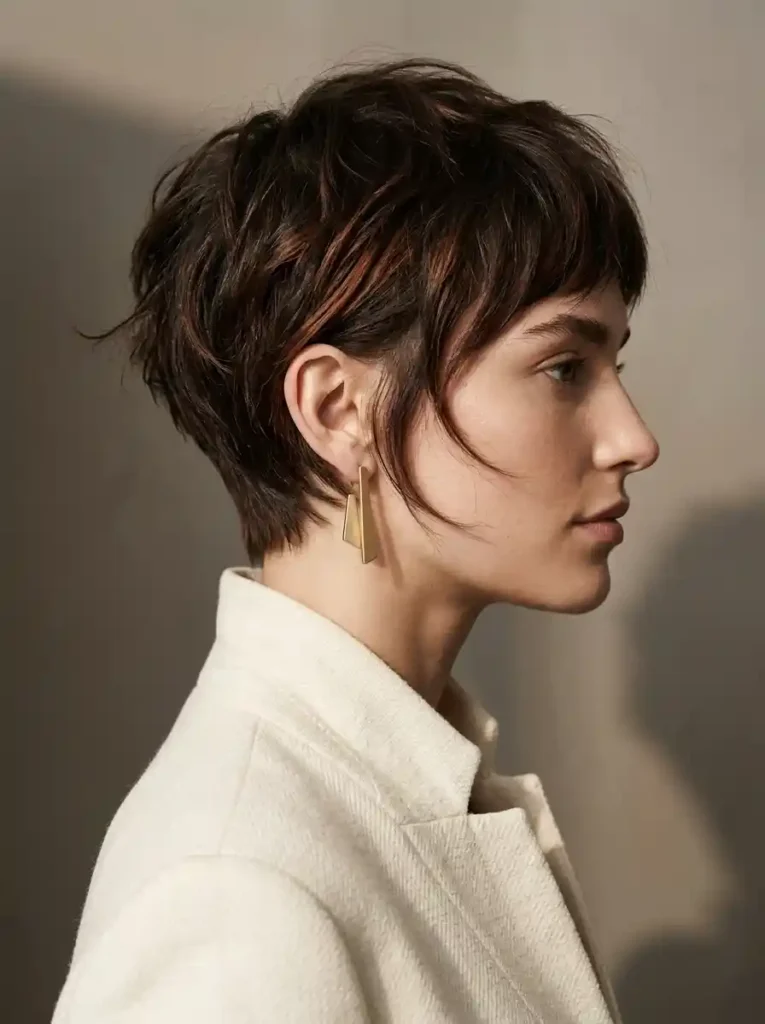
A shaggy pixie brings the layered, undone character of a shag into a much shorter silhouette. The crown remains textured, while longer sections near the temples and ears prevent the haircut from looking uniformly cropped. This can be a good choice if you want to remove substantial length but still enjoy some styling flexibility around your face. It also provides a way to experiment with a bold haircut without committing to a completely uniform buzzed or tightly tapered shape.
Because the haircut relies on the relationship between short and long sections, the initial consultation matters. Ask how the cut will look from the front, side, and back, and discuss whether you want the ears exposed or partly covered. Styling requires little product: rub a pea-sized amount of matte paste between your fingertips and define selected pieces. Regular trims help maintain the silhouette, although you can let the pixie grow into a longer shag if you prefer a gradual transition.
12. Medium-Length Shag with Side-Swept Bangs

Side-swept bangs give a layered shag a softer, slightly asymmetrical appearance. Because the fringe moves diagonally across the forehead, it offers a useful alternative for people who dislike the commitment of a full fringe or prefer not to wear a precise center part. Combined with collarbone-length layers, the haircut feels versatile enough for casual days and more polished occasions. The longer fringe can also blend easily into the rest of the haircut as it grows.
To style the bangs, direct them across the forehead with a brush while blow-drying, then allow the ends to curve naturally toward the cheek. Avoid forcing the hair into an overly rigid side part if you want a relaxed finish. A small amount of flexible-hold spray can help control flyaways without making the fringe stiff. If your hair tends to fall flat, ask for subtle crown layers that complement the side-swept direction rather than adding too many short pieces around the top.
13. Shag Haircut with Micro Bangs
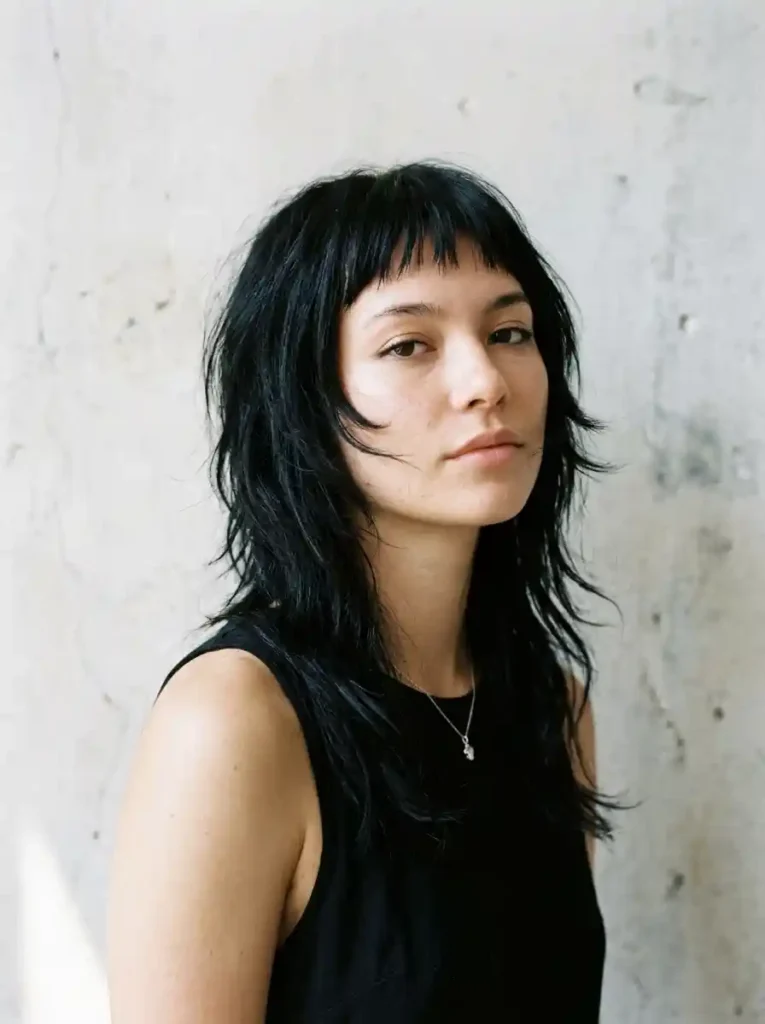
Micro bangs give a layered shag a distinctive, fashion-forward personality. Because the fringe sits higher on the forehead than conventional bangs, it creates a clear focal point and draws attention to the eyes and brows. Paired with medium or shoulder-length hair, it creates contrast between the short front and the more relaxed, textured lengths. This option is especially appealing if you enjoy experimental styling, although the shorter fringe makes the overall haircut more visually noticeable.
Consider your everyday styling habits before choosing this fringe. Micro bangs need occasional trimming to maintain their intended length, and natural cowlicks may affect how neatly they sit. Ask your stylist to customize the width and density so the fringe complements your forehead and hairline. For a softer result, keep the ends slightly irregular rather than perfectly blunt. A touch of lightweight styling cream can separate individual pieces, while excessive hairspray may make the short fringe look rigid.
14. Copper Red Shag with Textured Layers

Copper hair color adds warmth and visual dimension to a layered shag, especially when the haircut includes movement around the face. Rather than choosing a completely flat red shade, you might discuss subtle variations of copper, strawberry, and auburn with your colorist. These tones can create depth as the layers shift in different lighting. A shoulder-length cut with curtain fringe offers a balanced canvas, making the color noticeable while keeping the overall hairstyle practical for everyday wear.
Red shades often need thoughtful maintenance because their vibrancy can fade with repeated washing and sun exposure. Ask your colorist which home-care products suit your specific color formula, and consider washing less frequently when your scalp and hair allow it. Use heat protection whenever styling, since excessive heat can affect both the condition and appearance of colored hair. For the cut, loose waves and separated ends showcase the dimensional color without requiring elaborate styling or perfectly defined curls.
15. Shag Haircut for Natural Black Hair

A layered shag can be adapted beautifully to natural Black hair when the cut respects the hair’s curl pattern, shrinkage, and density. Instead of forcing the curls into a straight-haired silhouette, the stylist shapes the outline around how the coils naturally expand and settle. Shorter crown layers can create a rounded, lively shape, while carefully tapered ends help distribute volume. The result can be expressive and dimensional without relying on chemical straightening or daily heat styling.
Look for a stylist experienced in cutting natural curls and discuss whether you usually wear your hair stretched, shrunken, or somewhere between the two. These styling habits affect how the layers will appear in everyday life. Keep the curls hydrated with products that suit your texture, and avoid heavy application that causes buildup or weighs down the shape. A gentle wash routine, regular conditioning, and careful detangling help preserve definition while allowing the shag’s natural movement to remain the main feature.
16. Shaggy Lob with Blended Layers

The shaggy lob, or long bob, is a practical middle ground between a short bob and a longer layered haircut. Its collarbone-skimming length preserves enough hair for ponytails and simple updos, while blended layers prevent the outline from appearing heavy. This makes it a useful option if you want a contemporary shape without the stronger contrast of a wolf cut. The overall effect can be understated, especially when the layers are integrated gradually rather than cut into sharply separated sections.
For a polished everyday finish, blow-dry the hair with a paddle brush and bend a few pieces away from the face using a flat iron. If you prefer a more relaxed look, let the hair air-dry with a small amount of wave-enhancing product. Ask your stylist to preserve sufficient length around the front if you regularly tuck your hair behind your ears. This detail keeps the lob versatile while allowing the textured ends to move freely.
17. Shag Haircut with Flipped-Out Ends
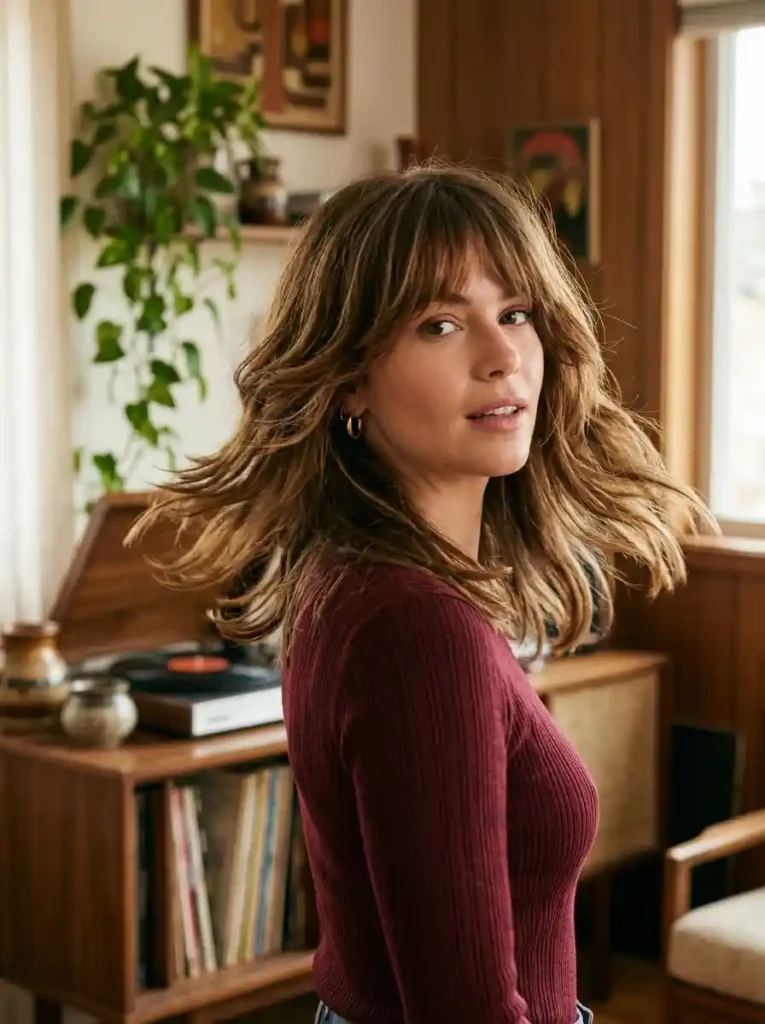
Flipped-out ends bring a playful retro influence to the layered shag, recalling the movement of vintage salon hairstyles without requiring a completely retro haircut. The layers create natural points for the ends to turn outward, particularly around the shoulders and jawline. This style works well if you enjoy visible movement and want something more distinctive than loose waves. It can be worn with curtain bangs or a side part, depending on whether you prefer a softer or more graphic frame.
To create the flip, blow-dry each section with a round brush and rotate the ends outward as you reach the bottom. A flat iron can also produce the effect, but use low enough heat to suit your hair type. Avoid making every section identical; slightly different directions help the finish look modern rather than overly styled. If your hair is naturally thick, ask for balanced layers that prevent the flipped ends from forming an exaggerated, bulky shelf.
18. Shag Haircut with Deep Side Part
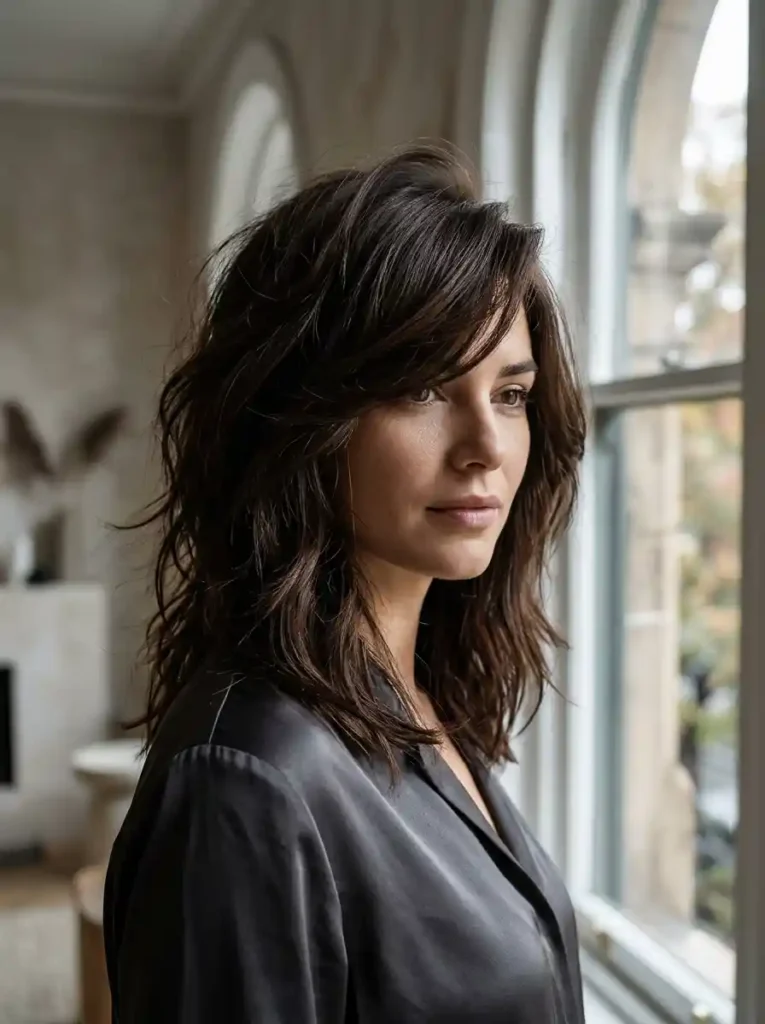
A deep side part changes the visual balance of a layered shag without requiring an entirely different haircut. It creates a sweeping section across the forehead and can make the crown appear fuller on the side where the hair is lifted. This is an interesting option if you usually wear a center part and want to refresh your look while keeping the same overall length. The layered sides maintain movement, while the shifted part adds a little extra drama.
To style the part, begin with damp hair and direct the roots away from their usual position as you blow-dry. Once dry, allow the shorter layers to fall naturally rather than forcing every piece into place. A lightweight volumizing spray can help support the crown, but avoid stiff products that prevent the fringe from moving. If your hair repeatedly returns to its natural part, ask your stylist how to work with your growth pattern instead of relying on constant heat and tension.
19. Shag Haircut with Wispy, Airy Layers

An airy shag is a softer interpretation of the heavily textured haircut, with layers that blend instead of creating obvious steps. It is especially appealing if you want movement but dislike the deliberately messy appearance of a more dramatic shag. The ends remain light, while the face-framing pieces create a gentle outline around the cheeks and jaw. Depending on the starting length, this approach can suit a bob, a lob, or a longer haircut with minimal changes to your overall silhouette.
The styling goal is softness, not maximum volume. Apply a light leave-in conditioner, allow the hair to dry partially, and use your fingers to lift the roots as you finish drying. If you use a curling tool, create only a few loose bends so the layers retain their natural fall. Tell your stylist that you want visible movement without extreme separation or excessive thinning. This helps prevent an airy cut from becoming too wispy, particularly if your hair is naturally fine or delicate.
20. Shoulder-Length Shag with Beachy Waves

Beachy waves and shag layers complement one another because both emphasize movement rather than perfectly uniform styling. A shoulder-length cut offers enough hair for loose bends while allowing the layers to lift around the face and crown. The result feels relaxed and adaptable, whether you are dressing for a weekend outing or a casual workday. This version is particularly appealing if you want a hairstyle that looks intentionally textured without needing the precision of a smooth blowout.
To achieve the finish, apply a lightweight wave spray to damp hair and scrunch gently, concentrating on the mid-lengths. Let it air-dry or use a diffuser on low heat. If your hair is naturally straight, add a few loose bends with a curling wand, leaving the last inch or two relatively straight. Avoid excessive salt spray if your hair already feels dry, since buildup can make the ends rough. A small amount of leave-in conditioner can help preserve softness.
21. Shag Haircut with Face-Framing Money Pieces
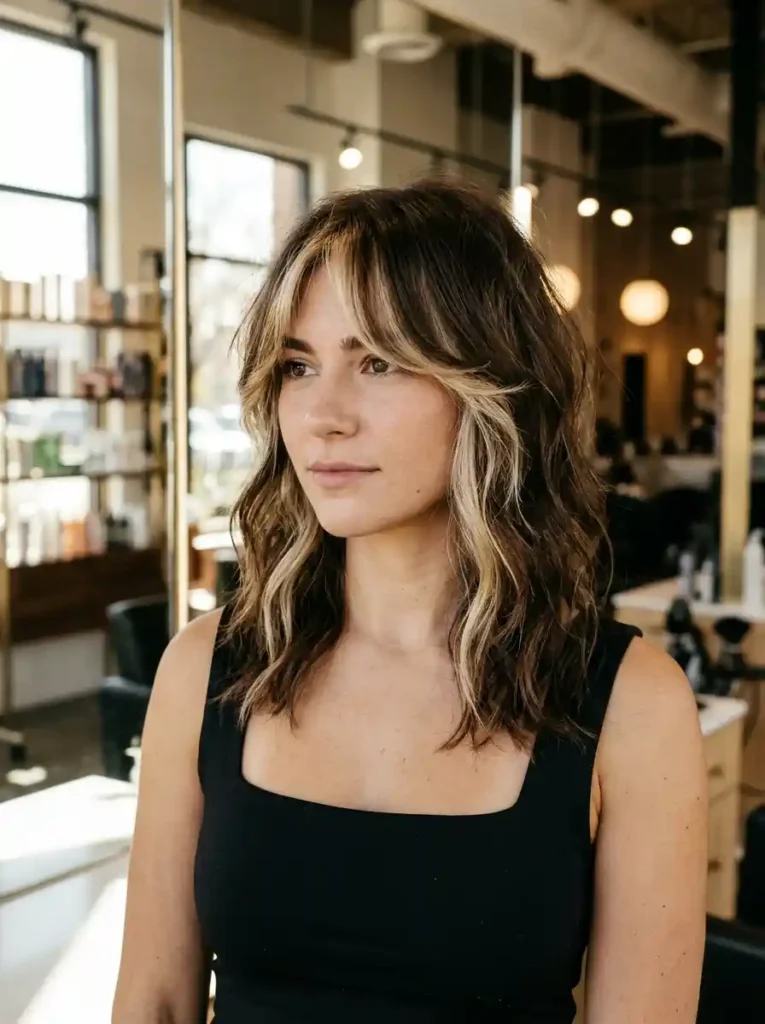
Money pieces are lighter sections placed around the front hairline, and they can emphasize the face-framing layers of a shag. Against a brunette base, blonde accents create a noticeable contrast that moves with the hair. The technique can be subtle or bold, depending on how light the front sections are and how far the color extends toward the crown. Combined with curtain bangs and layered sides, this gives the haircut a customized finish without requiring an all-over color change.
Ask your colorist to consider your natural base color, hair history, and desired maintenance level before choosing the lightness of the front pieces. A soft blend at the roots can make regrowth less obvious than a sharply defined block of color. Use color-safe products and heat protection to preserve the lighter sections. When styling, direct the front layers away from your face so the color remains visible. Avoid over-lightening fragile ends, particularly if your shag already contains substantial layering.
22. Shag Haircut with a Soft Center Part

A soft center part gives a shag a balanced, easygoing appearance while allowing the face-framing layers to take center stage. The shorter pieces can begin around the cheekbones and gradually blend into the longer sections, creating movement without an abrupt transition. This option works well if you like a symmetrical look but still want a haircut with personality. It can also be adapted to straight, wavy, or loosely curled hair by adjusting the amount and placement of the layers.
The secret is allowing the part to remain natural instead of flattening the roots on either side. Blow-dry the front sections away from your face, lifting slightly at the roots before letting the hair settle. If your hair is naturally wavy, preserve some of its texture rather than straightening everything. Ask your stylist to check how the shortest layers sit when the hair is tucked behind the ears. This helps the haircut maintain a pleasing shape during everyday activities.
23. Shag Haircut for Wavy Hair with Minimal Styling

Naturally wavy hair often provides the texture that makes a shag look effortless, so the best haircut works with the existing pattern instead of trying to manufacture one. Blended crown layers can encourage waves to lift, while face-framing pieces help distribute movement around the cheeks. This version is useful if you prefer a low-maintenance routine and want your haircut to look attractive without spending time creating every bend. The final shape should reflect how your waves behave on an ordinary day.
After washing, apply a lightweight leave-in product or wave cream and gently scrunch the hair while it remains damp. Avoid brushing repeatedly during drying, since this can disrupt the wave pattern and create unwanted frizz. If certain sections dry flat, twist them loosely around a finger and let them set naturally. During your appointment, explain how much time you realistically want to spend styling. A well-customized shag should complement your natural texture, not depend on daily curling to look complete.
24. Long Shag with a Subtle Butterfly-Layer Effect
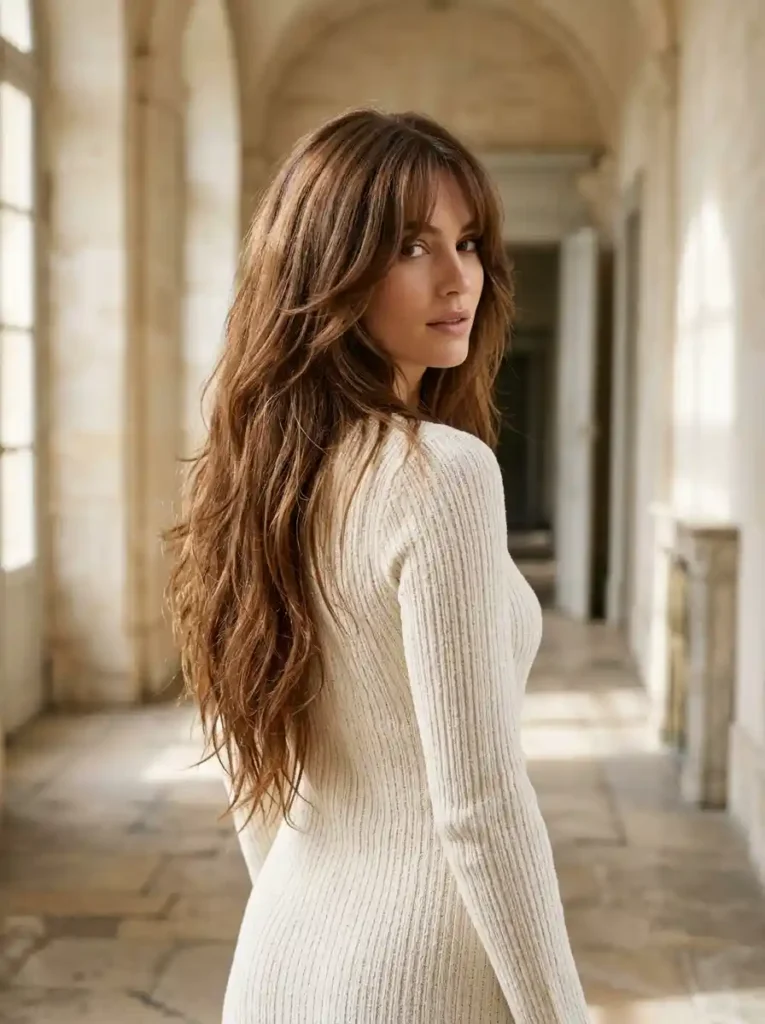
A long shag with butterfly-inspired layers combines two appealing features: the movement of a shag and the cascading face frame associated with butterfly cuts. Shorter pieces around the cheeks and shoulders create a lifted appearance, while longer sections preserve the feeling of length. This is a useful option if you want a noticeable shape change but are reluctant to lose several inches. The layers can also help long hair feel less uniform without turning the entire haircut into a heavily textured style.
The balance between short and long sections is especially important here. Ask your stylist to show where the shortest pieces will fall and how they will blend into the back before cutting. This prevents the face-framing sections from becoming disconnected from the overall silhouette. For styling, create a soft outward bend around the cheeks and let the longer lengths fall naturally. If you frequently tie your hair back, mention this during the consultation so the shorter pieces remain manageable.
25. Soft Shag Haircut with Natural Gray Blending
A soft shag can work beautifully with naturally gray or salt-and-pepper hair because its layers highlight the different tones throughout the hair. Silver strands may reflect light differently from darker sections, making the texture especially noticeable as the hair moves. A shoulder-length shape with blended layers and a gentle fringe offers a modern alternative to a blunt cut, without requiring you to hide your natural color. The finish can feel polished while retaining the relaxed, slightly undone character of a shag.
Gray hair sometimes feels coarser or drier than it did previously, so consider your hair’s condition when choosing the amount of texturizing. A moisturizing conditioner and lightweight smoothing product can help the ends remain manageable without flattening the crown. If you are transitioning from colored hair to natural gray, ask your stylist to account for the existing color and different textures as the hair grows. Regular shaping can maintain the silhouette while allowing your natural color pattern to become the main attraction.
Conclusion
A layered shag can be as subtle or expressive as you want it to be. From the soft movement of a classic shag to the dramatic contrast of a wolf cut, these 25 ideas demonstrate how layers, bangs, color, and natural texture can transform the same basic haircut into something entirely personal.
Before booking your appointment, consider three things: your natural hair texture, the amount of daily styling you enjoy, and how much length you want to preserve. Bring two or three reference photos showing the front, sides, and back of your favorite cut, and discuss how it can be adapted to your hair rather than copied exactly.
Remember that the most flattering shag isn’t necessarily the trendiest or most heavily layered one. It’s the version that complements your features, works with your hair’s natural behavior, and fits your everyday routine. Start with the idea that catches your eye, then personalize the layers and fringe with your stylist to create a look you’ll genuinely enjoy wearing.


