A curly bob is one of those hairstyles that can feel playful, polished, romantic, or effortlessly cool, depending on how you wear it. Whether you love soft, loose waves or tight, springy coils, the right bob can highlight your natural texture while making everyday styling feel easier. From chic French-inspired cuts to bold, voluminous shapes, these 21 cute curly bob hair ideas will help you discover a fresh look that suits your personality, hair type, and lifestyle.
1. Classic Rounded Curly Bob
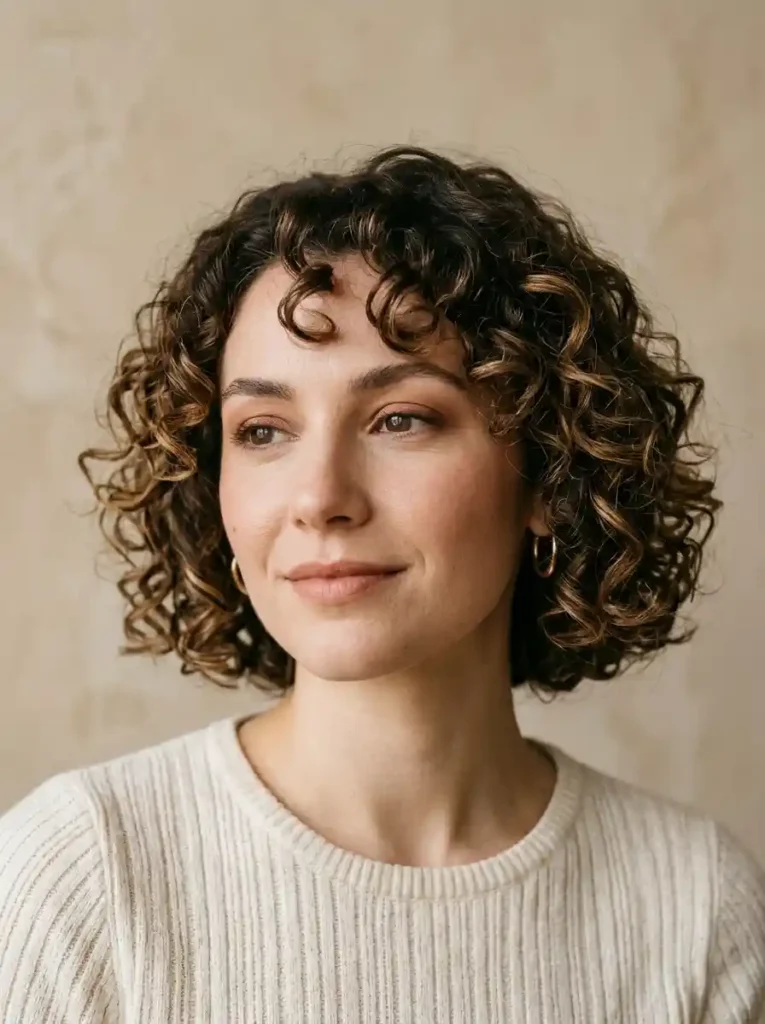
A classic rounded curly bob is a beautiful starting point if you want a hairstyle that looks balanced, feminine, and easy to personalize. The hair follows the natural curve of your head, creating fullness around the cheeks and jawline without looking overly structured. This cut works especially well for naturally curly hair with a consistent pattern. Ask your stylist to shape your curls individually so the finished silhouette feels soft rather than triangular, with enough length to maintain bounce and movement.
To keep the rounded shape looking fresh, use a lightweight curl cream on damp hair, distributing it evenly with your fingers or a wide-tooth comb. Scrunch gently and diffuse on low heat, directing airflow upward to encourage volume without disturbing curl definition. A small amount of lightweight finishing oil can soften dry ends. If your curls shrink significantly as they dry, discuss the desired finished length before cutting. Regular shaping appointments will help maintain the bob’s curved outline as it grows.
2. Short Curly French Bob

The short curly French bob brings a little Parisian charm to natural texture. Usually cut around the cheekbones or jaw, it combines a compact silhouette with soft curls and optional wispy fringe. Its slightly imperfect finish is part of the appeal, so you do not need every ringlet to sit neatly in place. This style suits anyone who enjoys a distinctive, fashion-forward haircut and is comfortable with a shorter length. Your stylist can adjust the fringe and side pieces to complement your features.
Styling is refreshingly simple when your curls already have a natural pattern. Apply a small amount of curl-defining cream to soaking-wet hair, then scrunch with a microfiber towel to remove excess moisture. Let the curls air-dry for a relaxed finish or use a diffuser for extra lift at the roots. Avoid brushing the finished style, since that can create unwanted frizz. If you choose bangs, expect to refresh them more often than the rest of the cut to keep their length and shape flattering.
3. Curly Bob with Curtain Bangs
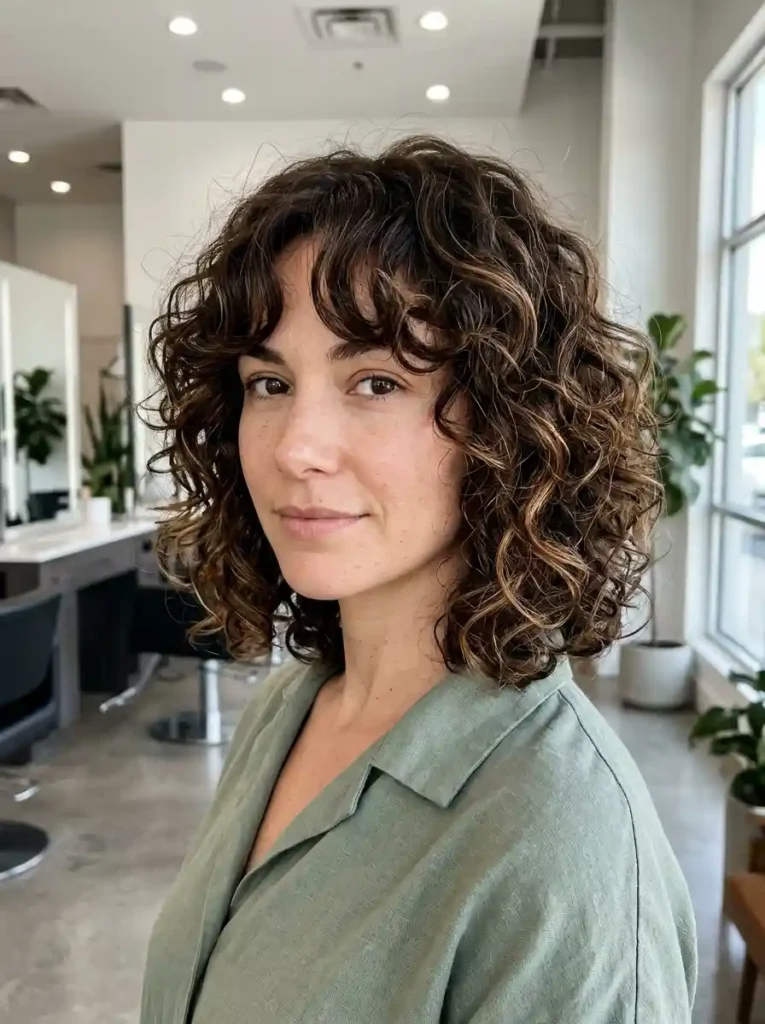
Curtain bangs add softness to a curly bob without creating the heavier appearance that a full fringe can sometimes produce. The center part allows shorter curls to sweep outward, creating a natural frame for the forehead, cheekbones, and eyes. This combination is especially appealing if you want to change your look without sacrificing the versatility of a longer bob. Ask your stylist to cut the fringe according to your natural curl pattern, allowing for shrinkage and avoiding an overly short result once the hair dries.
The secret to styling curly curtain bangs is encouraging separation while preserving their movement. Apply a little leave-in conditioner, then use your fingertips to guide the shorter curls away from the center part. Diffuse gently, or allow the fringe to air-dry while checking that it falls evenly on both sides. If one section springs upward more than the other, lightly rewet it instead of pulling it straight with a brush. A slightly irregular finish often looks more natural than perfectly symmetrical curls.
4. Voluminous Curly Bob
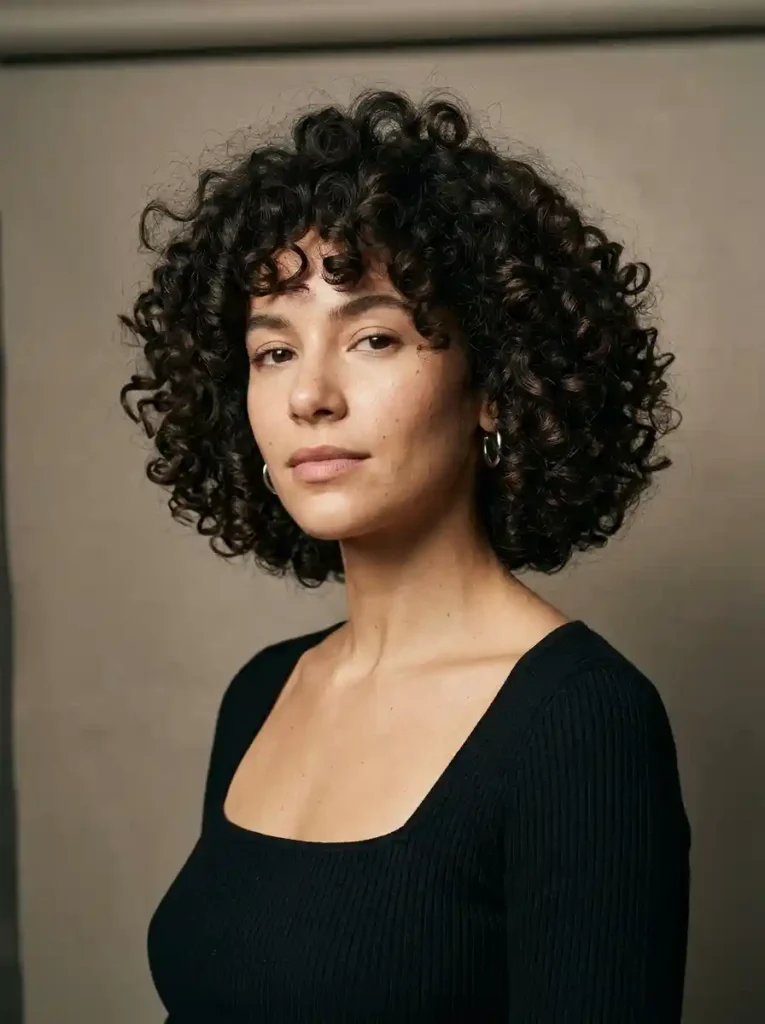
If you love hair that makes a statement, a voluminous curly bob celebrates fullness instead of trying to control it. This shape emphasizes lifted roots, rounded sides, and abundant texture, creating an expressive silhouette that looks especially striking with naturally dense curls. The key is strategic shaping rather than removing too much hair. Ask your stylist to distribute the weight thoughtfully so the bob expands in a balanced way, with enough internal structure to prevent the sides from becoming disproportionately bulky.
For maximum volume, begin with a lightweight mousse or root-lifting foam before diffusing. Dry your hair with your head tilted to different sides, allowing the roots to lift naturally, and avoid touching the curls excessively while they set. Once completely dry, gently separate a few coils with oiled fingertips for added fullness. Heavy butters and thick creams may weigh down finer curls, so adjust your products to your hair’s density. A satin pillowcase can also help preserve the shape overnight.
5. Chin-Length Curly Bob
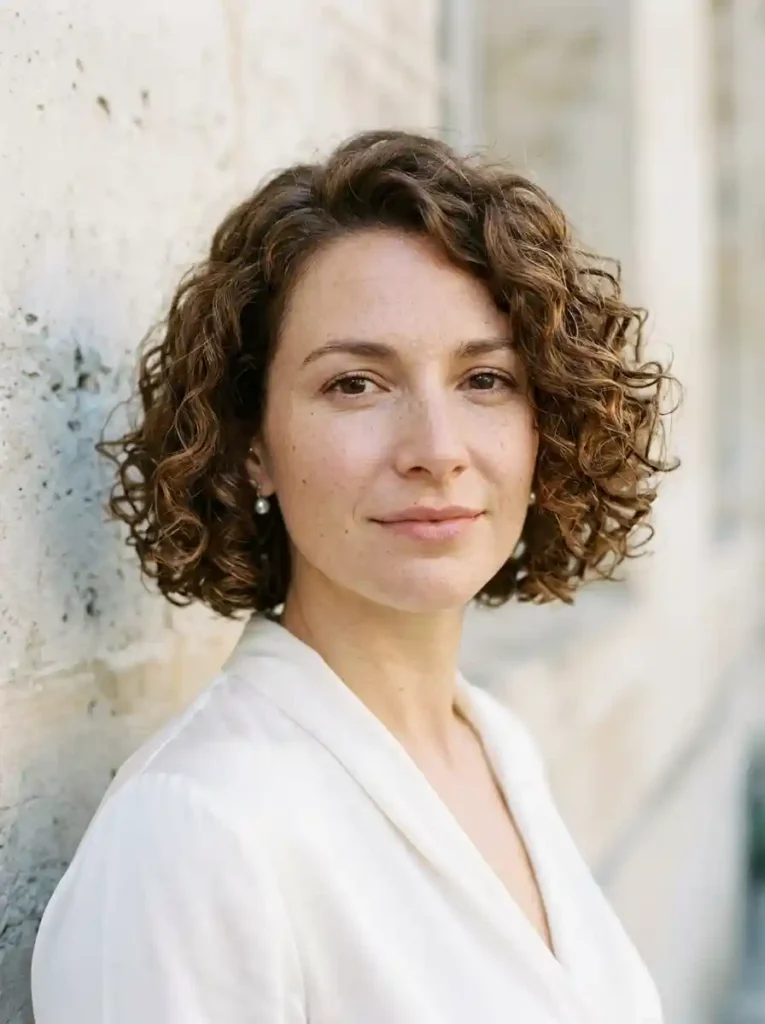
A chin-length curly bob offers a noticeable change without going as short as a pixie cut. Its ends draw attention to the jawline, while natural curls keep the overall effect soft and lively. This length can work with several curl patterns, although the finished shape depends on how much your hair contracts when dry. If you have a rounder silhouette in mind, ask for gentle graduation through the back. For a more relaxed finish, a slightly irregular perimeter can preserve natural movement.
One practical consideration is how your curls behave around the jaw and neck. Hair that flips outward at the ends may need a little extra shaping, while tight ringlets may appear shorter than expected. Apply a curl gel to wet hair and allow the ends to settle naturally before diffusing. When refreshing the style the following morning, mist only the flattened sections with water and smooth in a tiny amount of leave-in conditioner. This targeted approach avoids saturating the entire bob unnecessarily.
6. Layered Curly Bob
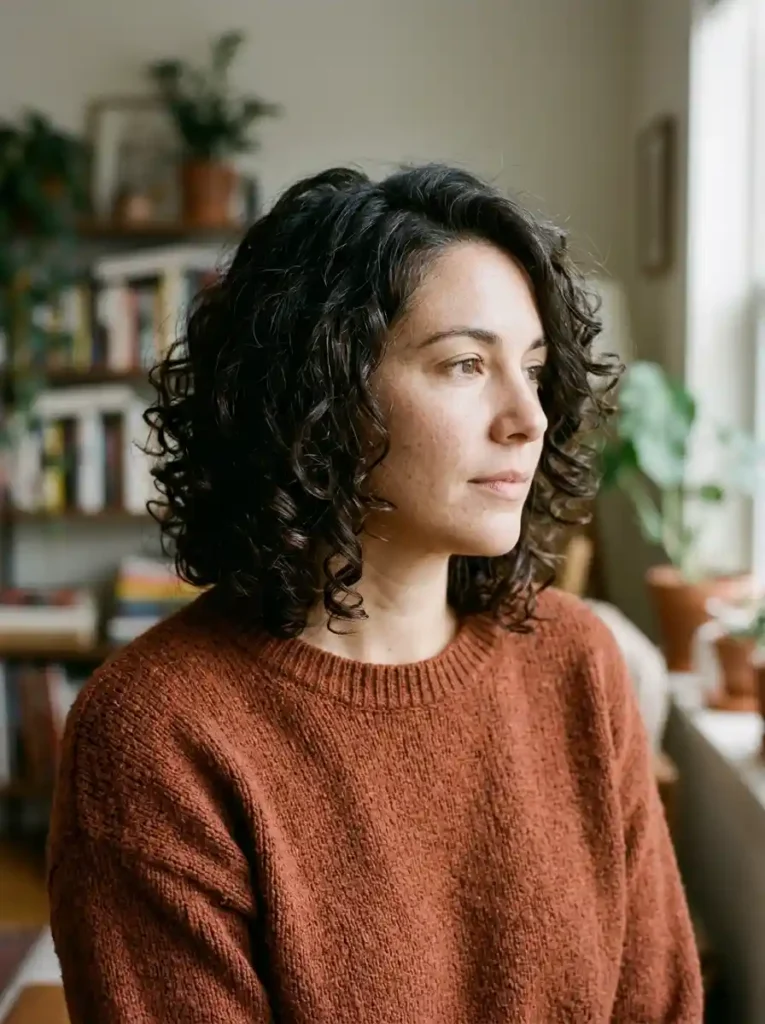
Layers can transform a curly bob by distributing weight and allowing individual curls to move more freely. Instead of forming one heavy block, the hair develops dimension, with shorter pieces creating lift and longer pieces preserving a rounded outline. This cut is particularly useful for dense curls that tend to feel bulky at the bottom. The best layering pattern depends on your texture and preferred length, so bring reference photos showing the silhouette you like rather than requesting a specific number of layers.
Layered curls usually respond well to products that define without flattening. Work a lightweight leave-in conditioner through damp hair, followed by a flexible-hold gel to encourage clumping and reduce frizz. Scrunch upward, then diffuse without separating the curls prematurely. Be cautious about excessive thinning or aggressive texturizing, especially if your hair is fine or prone to frizz. Too much removal can leave uneven gaps in the shape. Ask your stylist how the layers will sit both immediately after cutting and several weeks into regrowth.
7. Asymmetrical Curly Bob
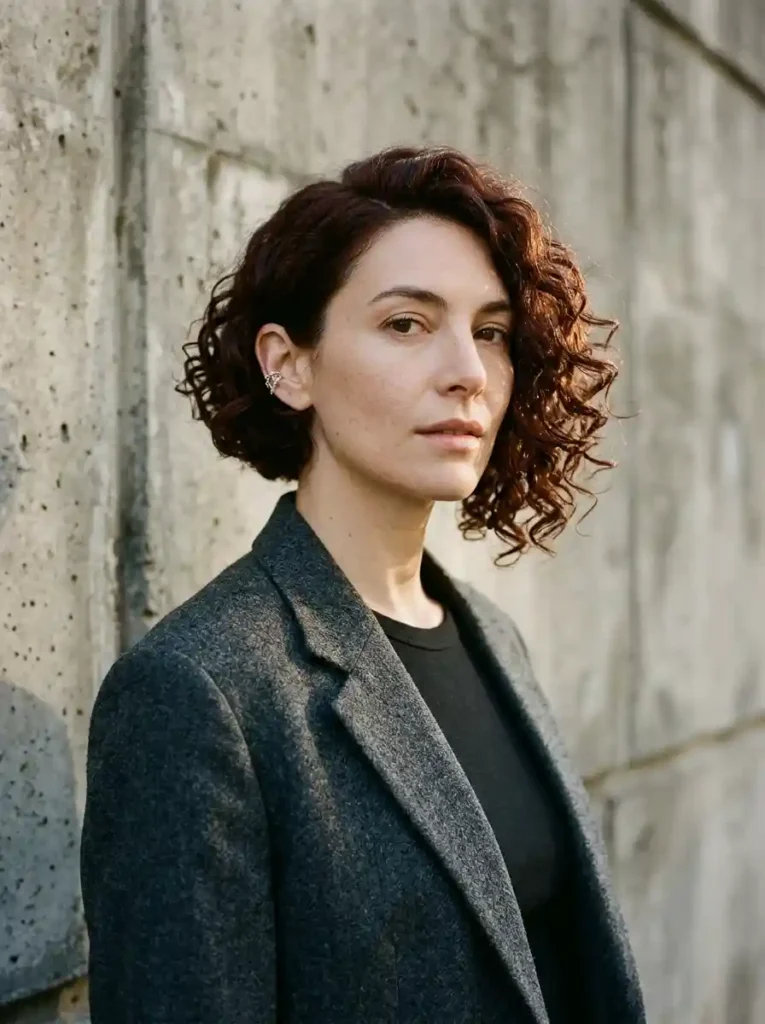
An asymmetrical curly bob brings a modern edge to a familiar haircut. One side sits slightly shorter than the other, creating an intentional diagonal line that contrasts beautifully with rounded curls. The result feels expressive without requiring vivid color or elaborate styling. This look can suit people who enjoy a more distinctive silhouette and want their haircut to feel individual. Discuss the degree of asymmetry with your stylist, since a subtle difference creates a wearable everyday look while a dramatic angle makes a stronger statement.
To maintain the shape, pay attention to how your part affects the longer side. A deep side part can emphasize the angle, while a softer part makes the contrast less pronounced. Use a medium-hold gel to define curls individually and diffuse with the longer section positioned away from your face. If one side shrinks more than the other, ask your stylist to account for that difference during shaping. Plan regular trims to prevent the diagonal line from becoming difficult to recognize as the hair grows.
8. Curly Bob with Side-Swept Bangs
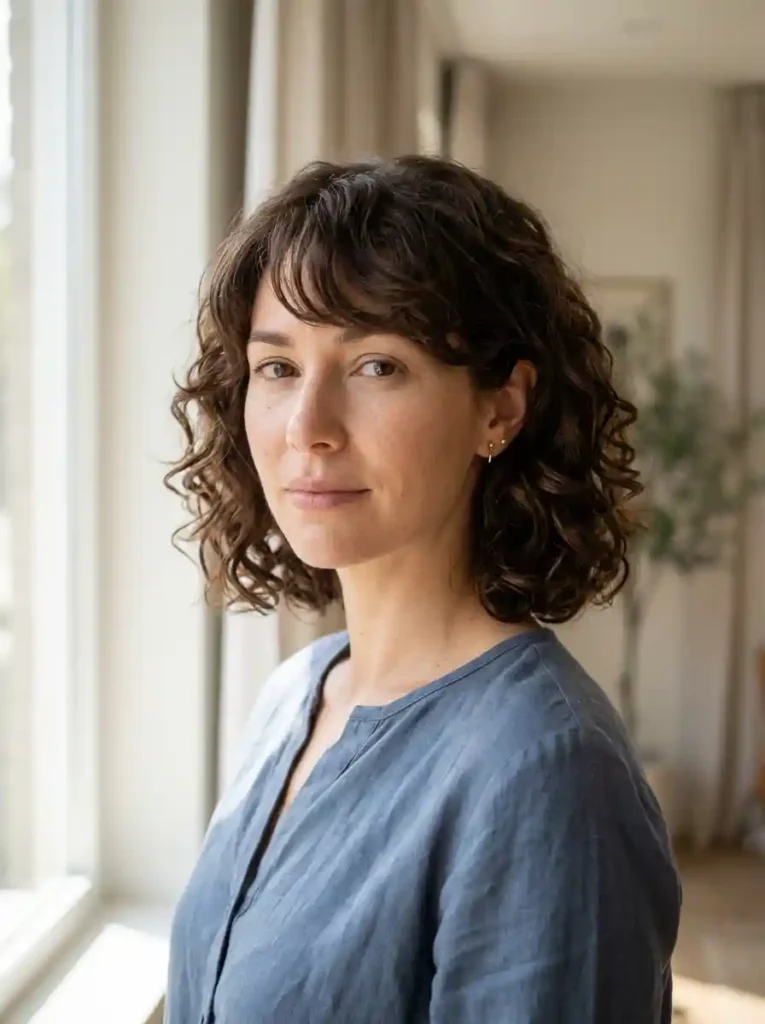
Side-swept bangs provide an attractive alternative to a center-parted fringe. Their diagonal movement adds asymmetry around the forehead and blends naturally into a curly bob with longer front sections. This is a useful option if you want some face-framing detail without committing to a short, straight-across fringe. The cut works with many curl patterns, but your stylist should evaluate how your curls fall when dry. Leaving the fringe slightly longer initially gives you room to adjust the shape after experiencing its natural spring.
Styling the bangs begins with directing the curls while the hair is damp. Apply a small amount of curl cream, then gently guide the fringe toward your preferred side using your fingers. Diffuse on low heat, keeping the airflow soft so the curls do not separate into frizzy strands. You can tuck the lighter side behind your ear for a different effect without changing the haircut. If the bangs lose their shape overnight, refresh them separately with a fine mist of water and a small amount of styling product.
9. Shaggy Curly Bob

A shaggy curly bob combines the compact shape of a bob with the carefree texture of a shag haircut. Choppy layers and a relaxed fringe give it movement, making it a good choice if you prefer an undone look over a perfectly rounded outline. It is particularly appealing for curls that naturally vary in size or refuse to form identical ringlets. Rather than hiding those differences, the haircut uses them to create a deliberately textured finish that feels casual, youthful, and expressive.
The shaggy shape needs definition without too much polish. Try a lightweight mousse or curl foam, scrunching it into damp hair before allowing the curls to dry. Once dry, lift the roots with your fingertips and separate only a few curls to preserve the intentionally messy texture. Avoid brushing through the entire style, which can turn defined curls into unwanted puffiness. If your hair is very fine, ask for restrained layering so the ends retain enough density to frame your face instead of appearing sparse.
10. Curly Bob with a Deep Side Part
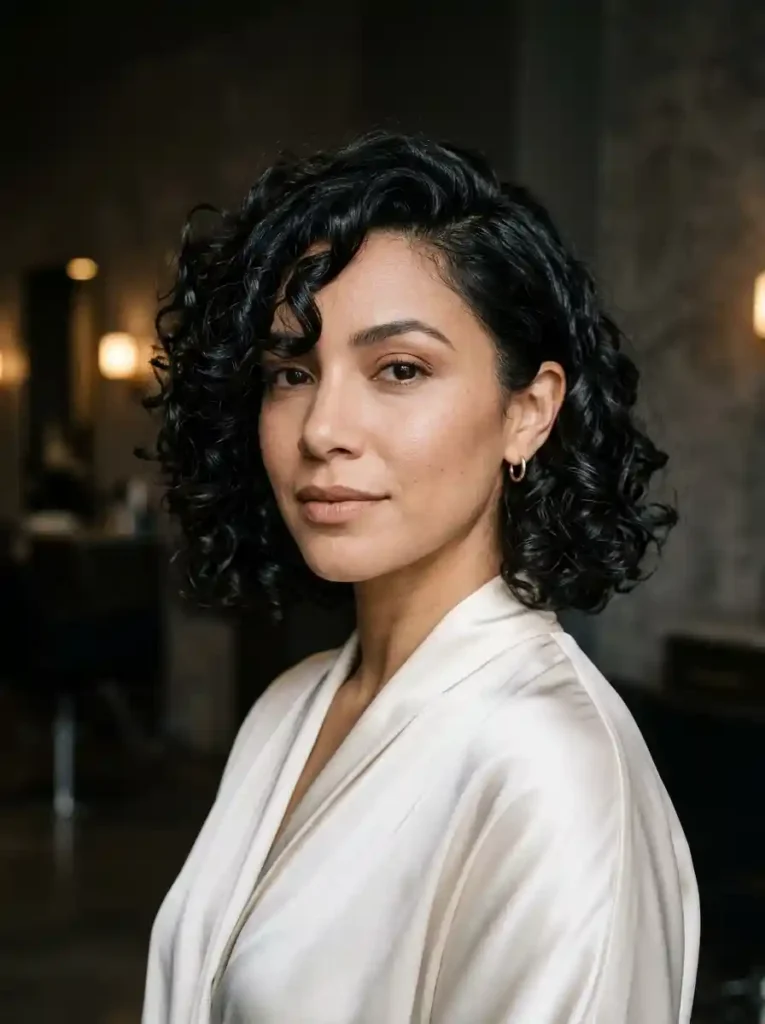
A deep side part changes the appearance of a curly bob without requiring a different cut. Sweeping the hair across the forehead creates instant asymmetry and can make the crown appear fuller on the heavier side. This is a particularly useful styling trick when you want your curls to look more dressed up for an event or simply want a change from your usual center part. The result can feel sophisticated while still allowing your natural curl pattern to remain the main feature.
To create the look, establish the part while your hair is wet rather than forcing it into place once dry. Apply curl-defining cream, then arrange the curls across the forehead with your fingers. Diffuse gently, supporting the heavier side so it keeps its shape as it dries. If your part naturally returns to the center, use a small amount of lightweight gel at the roots and allow it to set. Avoid excessive product at the crown, where buildup can make the style appear flat rather than voluminous.
11. Soft Wavy Curly Bob
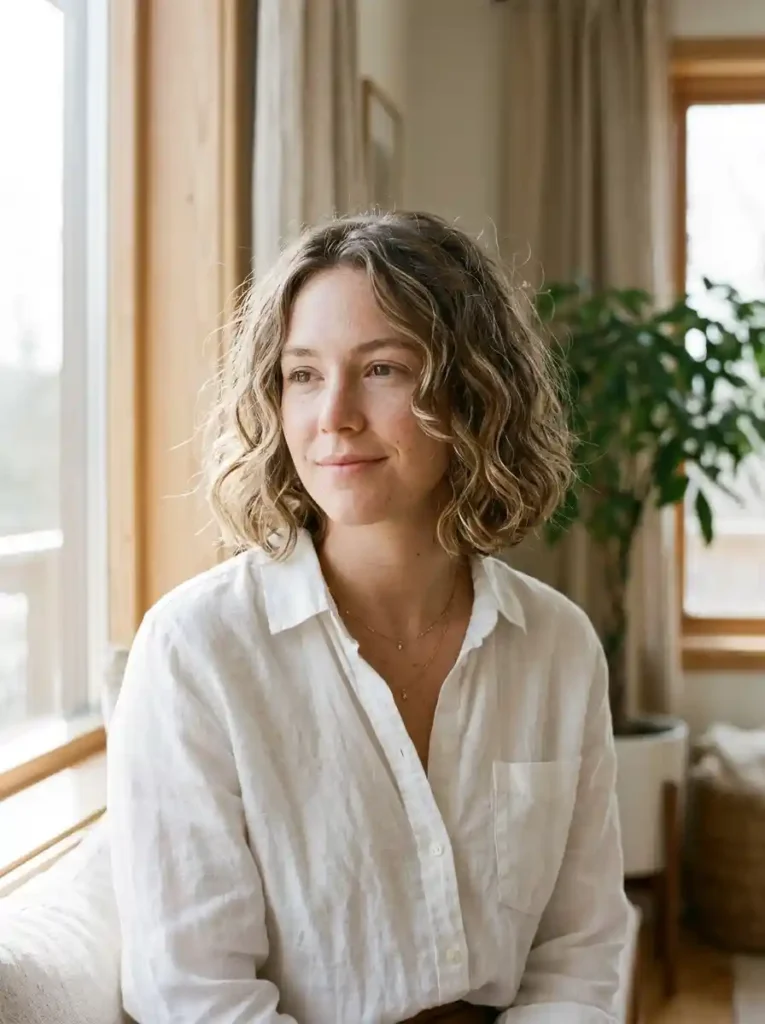
If your hair falls somewhere between waves and defined curls, a soft wavy bob can showcase that in-between texture beautifully. Loose S-shaped bends create movement without the compact appearance of tight ringlets, giving the haircut a relaxed and understated finish. This style works especially well for people who prefer a little natural imperfection and do not want to spend long periods defining every curl. A lightly layered perimeter can help the ends curve naturally while keeping the overall length looking full.
For styling, start with a lightweight leave-in conditioner and a flexible curl mousse instead of a heavy defining butter. Scrunch gently while the hair is damp, then air-dry or diffuse using low airflow. Once the hair is completely dry, separate a few waves with your fingers to soften the finish. If your texture tends to fall flat, avoid applying rich products near the roots. A small amount of texturizing spray on the finished lengths can add separation without making the bob feel stiff.
12. Curly Bob with Face-Framing Layers
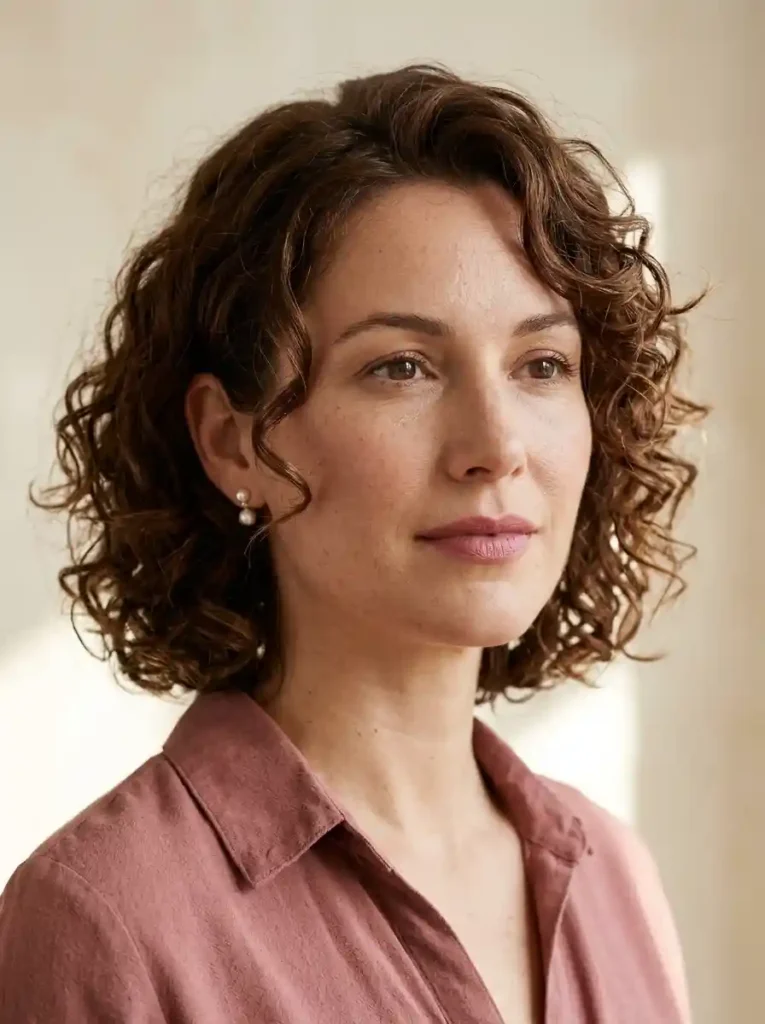
Face-framing layers give a curly bob a personalized finish by directing attention toward your eyes, cheekbones, and jawline. The shortest pieces can sit near the cheekbones, while longer sections blend into the rest of the haircut. This approach is useful if you like the idea of a bob but worry that one uniform length might feel too heavy around your face. A skilled stylist can adjust the placement of the layers to work with your natural curl pattern instead of forcing the hair into an artificial shape.
For everyday styling, define the front curls separately from the back. Apply a little product to the face-framing pieces, then coil individual sections around your finger if they need extra encouragement. Let them dry without repeatedly touching them, which helps preserve their shape. When discussing the cut, bring up how you normally wear your part and whether you tuck your hair behind your ears. Those small habits affect where the layers should begin and how they will frame your features throughout the day.
13. Curly Bob with Honey Highlights
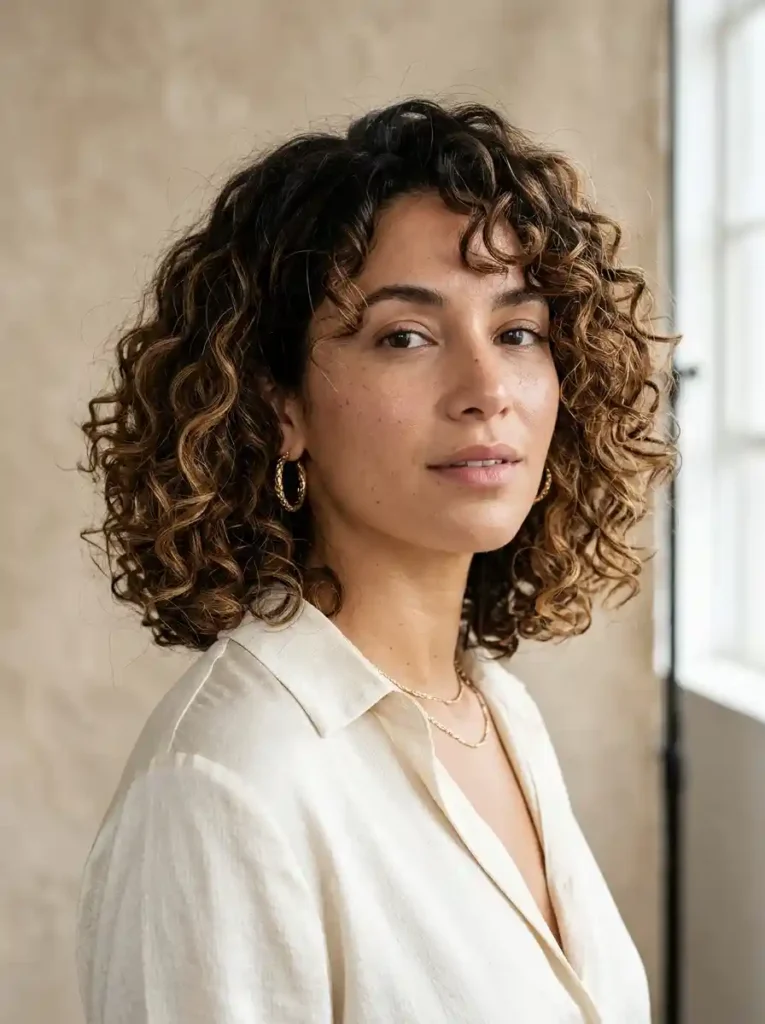
Honey highlights can bring extra dimension to a curly bob by making individual curls easier to distinguish visually. Warm golden ribbons catch the light on the bends and edges of the hair, creating depth without changing the overall haircut. This color combination works particularly well with brunette bases and warm-toned highlights, although the exact shade should complement your natural coloring and maintenance preferences. Ask your colorist for a placement that follows your curl pattern, with enough variation to avoid a flat or overly striped result.
Color-treated curls may need extra attention to moisture, particularly if lightening has made the ends feel drier. Use a gentle shampoo, a nourishing conditioner, and a weekly treatment suited to your hair’s condition. A heat protectant is important if you regularly diffuse, even when using moderate temperatures. Keep in mind that highlights require upkeep as the hair grows, so discuss a softer root transition if you prefer fewer salon visits. Well-placed color can remain attractive as it grows out, especially when the contrast is gradual.
14. Curly Bob with a Middle Part
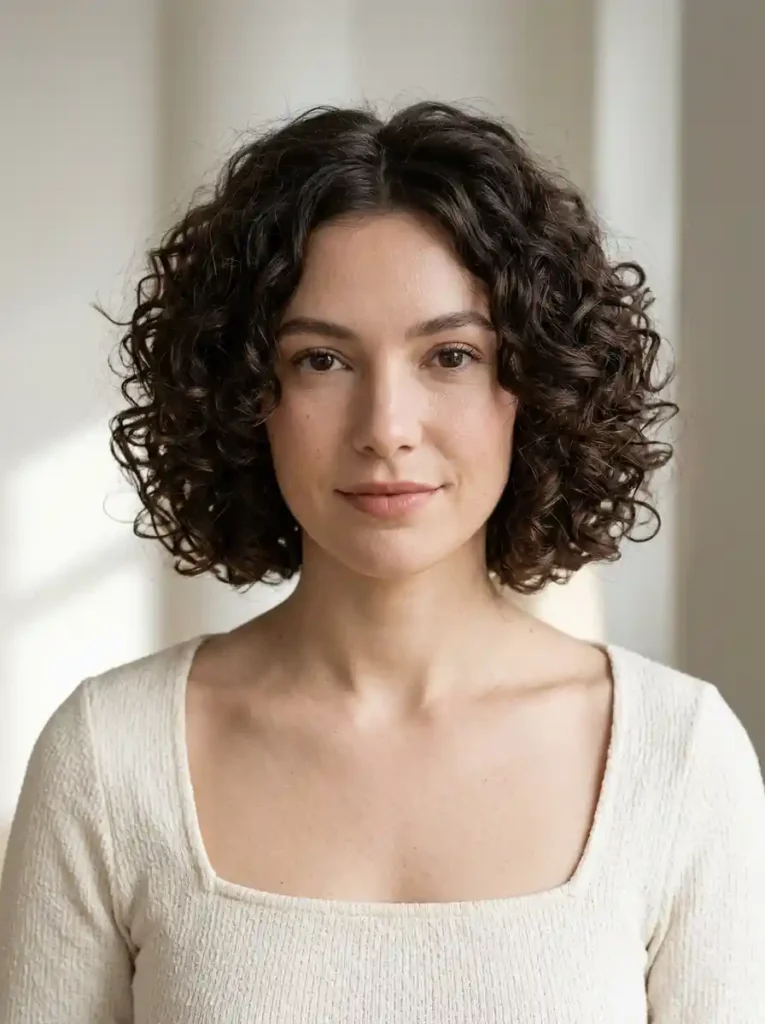
A middle part gives a curly bob a balanced, symmetrical appearance while allowing the curls to soften the overall outline. It is a versatile choice for anyone who likes a clean, understated look that works with casual outfits as easily as dressier clothing. Depending on the curl pattern, the center part may create a gentle curtain effect or allow the hair to expand evenly on both sides. Ask your stylist to check the finished shape from the front, since balance is especially noticeable with this styling choice.
To make the center part look natural, establish it when your hair is damp and avoid creating a perfectly straight, overly exposed line if your scalp naturally shows through. Apply a light curl cream from the mid-lengths to the ends, then scrunch to encourage consistent definition. Diffuse with your head upright and alternate the direction of airflow to avoid flattening one side. If the part looks too sharp after drying, gently shift a few curls with your fingertips. The goal is balance without making the hairstyle appear rigid.
15. Tapered Curly Bob
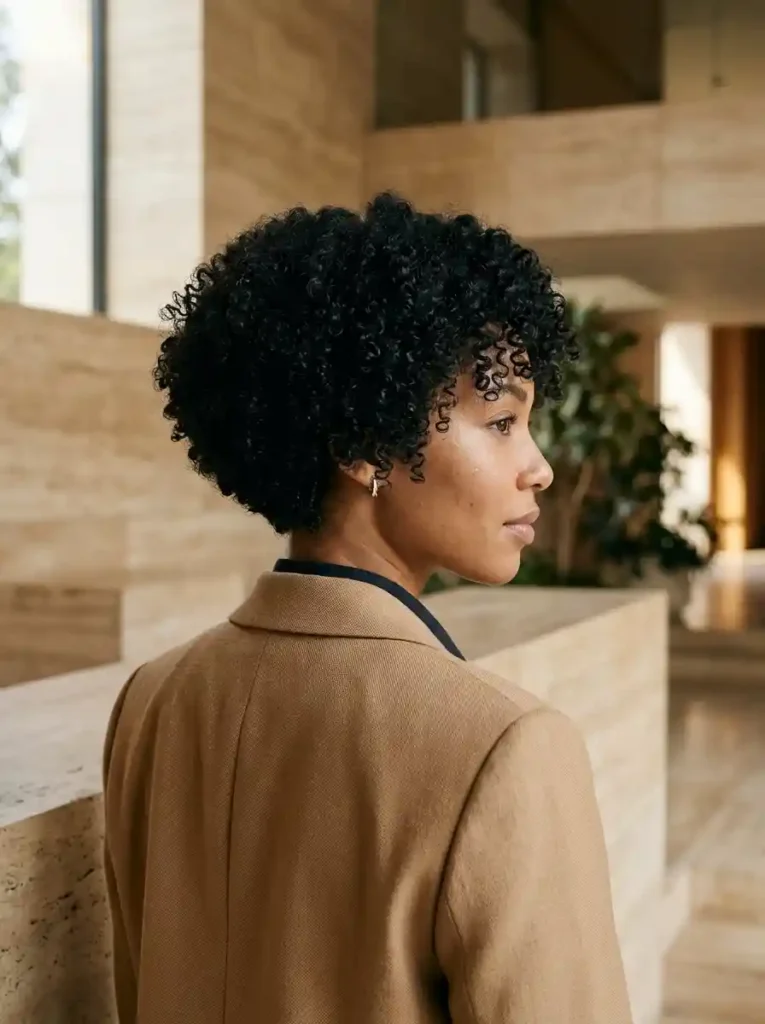
A tapered curly bob keeps the neckline relatively close while allowing more fullness through the crown and upper sides. The gradual change in length gives the haircut structure without removing the softness that makes curly styles appealing. It is a practical option for people who dislike bulky hair at the nape or want their curls to sit neatly around the head. The degree of taper can be subtle or more pronounced, so discuss how much scalp visibility and contrast you are comfortable with before your stylist begins.
Because the back is shorter, maintaining the tapered shape may require more frequent trims than a uniform bob. Use a curl cream or lightweight gel to define the longer sections, while keeping the nape free from excessive product buildup. If your hair grows quickly at the neckline, occasional professional cleanup can preserve the silhouette between full appointments. Ask your stylist to show you how the cut looks from the back and sides, not just from the front, since the graduated shape is an important part of its appeal.
16. Tousled Curly Bob

A tousled curly bob is ideal if you like texture that feels relaxed rather than carefully arranged. The curls may vary in size, the part can shift slightly, and a few flyaways add to the casual finish. This look is less about creating a perfect silhouette and more about making your natural hair feel intentional. It suits busy routines because small imperfections are part of the style. A lightly layered cut can help the hair move freely, while a consistent length keeps the overall shape recognizably bob-like.
Start with a lightweight styling foam or flexible gel, scrunching the product into damp curls before drying. Once the hair is fully dry, tip your head forward and gently shake the roots with your fingertips. Avoid running a brush through the lengths, since that can disrupt curl clumps and create unnecessary frizz. If the shape becomes flattened overnight, refresh only the sections that need attention with a fine water mist. This approach preserves the tousled character without requiring you to restyle every curl from scratch.
17. Curly Bob with Defined Ringlets

Defined ringlets create a polished curly bob with plenty of texture and visible movement. This look works especially well if your hair naturally forms spirals or responds easily to curl-defining products. The key is encouraging curls to group together without making them feel crunchy or overly uniform. A stylist who understands your curl pattern can shape the perimeter to prevent the ends from appearing uneven. The result can be neat enough for professional settings while retaining the personality and softness of naturally curly hair.
For better definition, apply a leave-in conditioner followed by a gel designed for your hair’s texture while the curls are still wet. Use your fingers or a gentle scrunching motion to encourage natural curl groups, then diffuse on low heat or allow the hair to air-dry. Wait until the curls are completely dry before scrunching away any firm cast with clean hands. This final step softens the finish without sacrificing hold. Avoid repeatedly separating the ringlets throughout the day, as that can gradually increase frizz.
18. Rounded Curly Bob with a Fringe
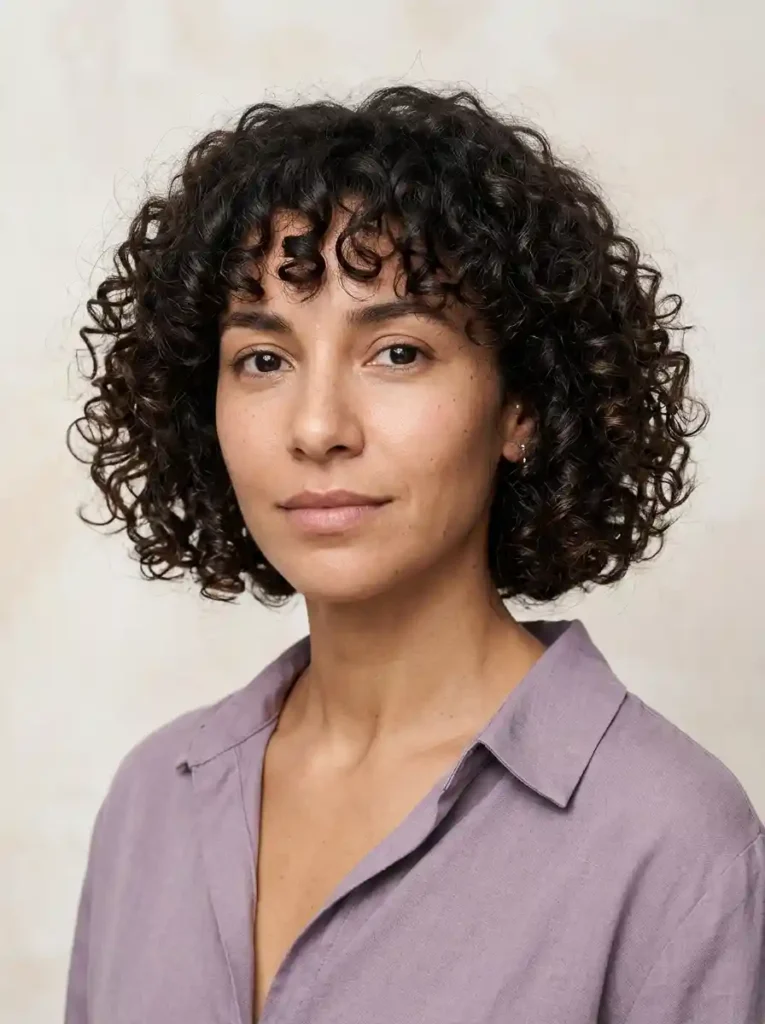
A full curly fringe gives a rounded bob a distinctive frame, drawing attention to the eyes while emphasizing the natural bounce of your curls. Unlike straight bangs, the fringe follows the hair’s texture, so its finish may be airy and separated rather than perfectly solid. This look can be striking on a range of curl patterns, but the fringe should be tailored to your density and shrinkage. Ask your stylist to leave enough length for adjustment, particularly if your curls spring upward considerably after washing.
Curly bangs often benefit from a small amount of lightweight styling product applied while damp. Use your fingertips to separate the fringe into natural curl groups, then let it dry with minimal disturbance. If the curls form too tightly across the forehead, gently reposition a few sections while they are still wet rather than stretching them once dry. Because fringe length is sensitive to shrinkage, regular maintenance is helpful. On days when you prefer a different look, pinning back one side can create a softer, more open silhouette.
19. Long Curly Bob (Lob)

A long curly bob, often called a lob, is an excellent choice if you want the freshness of a bob without giving up much length. Falling near the shoulders, it leaves enough hair for a small ponytail or half-up style while retaining a clear, bob-inspired shape. This length can be especially comfortable for people transitioning from long hair to a shorter cut. Ask your stylist to consider how your curls rest against your shoulders, since contact with clothing can influence the way the ends flip or expand.
The lob offers several styling possibilities, from soft everyday curls to more defined ringlets for special occasions. Apply a lightweight leave-in conditioner and flexible gel to damp hair, then diffuse gently to reduce excess shrinkage and encourage consistent shape. If your ends curl outward against your shoulders, a few well-placed layers may help the perimeter sit more naturally. You can also pin back the front sections for a quick half-up look. Regular trims help maintain the intended length while preventing the ends from appearing overly heavy.
20. Short Curly Bob with Undercut
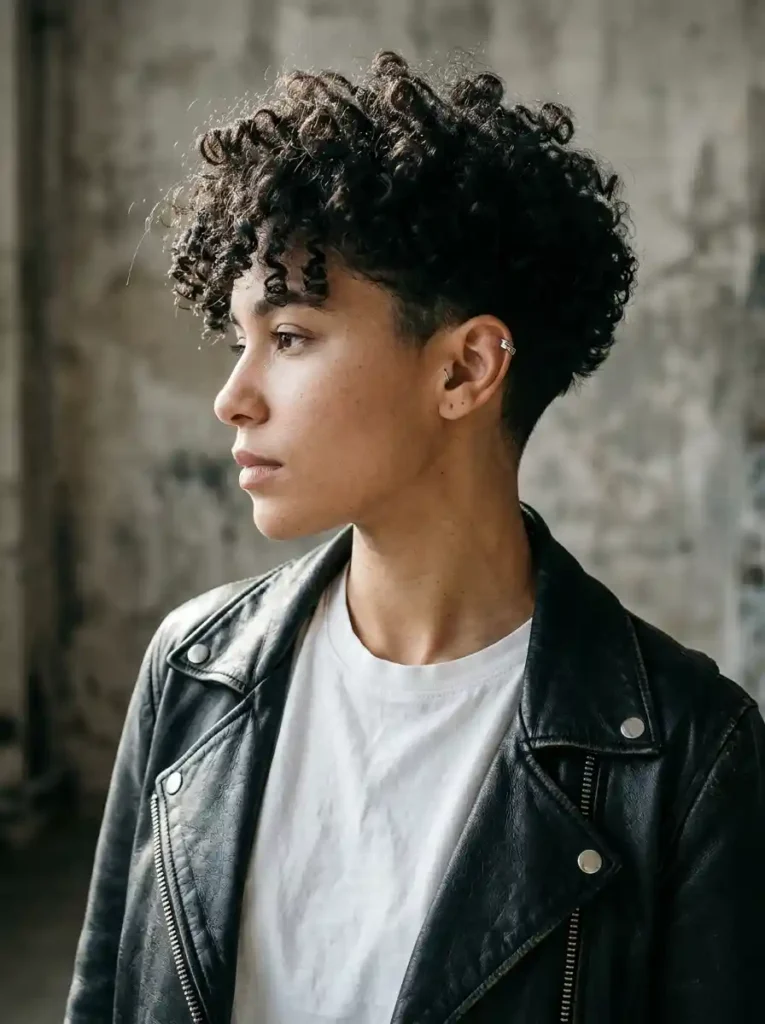
A curly bob with an undercut offers a bold alternative for people who enjoy contrast and a more sculpted shape. The hair remains full on top while a section near the nape or around one side is clipped shorter, reducing bulk and introducing an unexpected detail. The undercut can be discreet when the upper curls cover it or more visible when the hair is tucked back. Before choosing the placement, consider whether you want the feature to be hidden for work or displayed as part of your everyday style.
The main maintenance difference is that the undercut will need periodic trimming to retain its clean appearance. Meanwhile, the curls on top can be styled much like a conventional short bob using a lightweight cream or gel. Ask your stylist how the undercut will look when your hair is worn loose, tied back, or tucked behind the ear. Remember that growing out a clipped section takes patience, so discuss how the shape can transition if you decide to return to a more uniform length later.
21. Curly Bob with Subtle Balayage
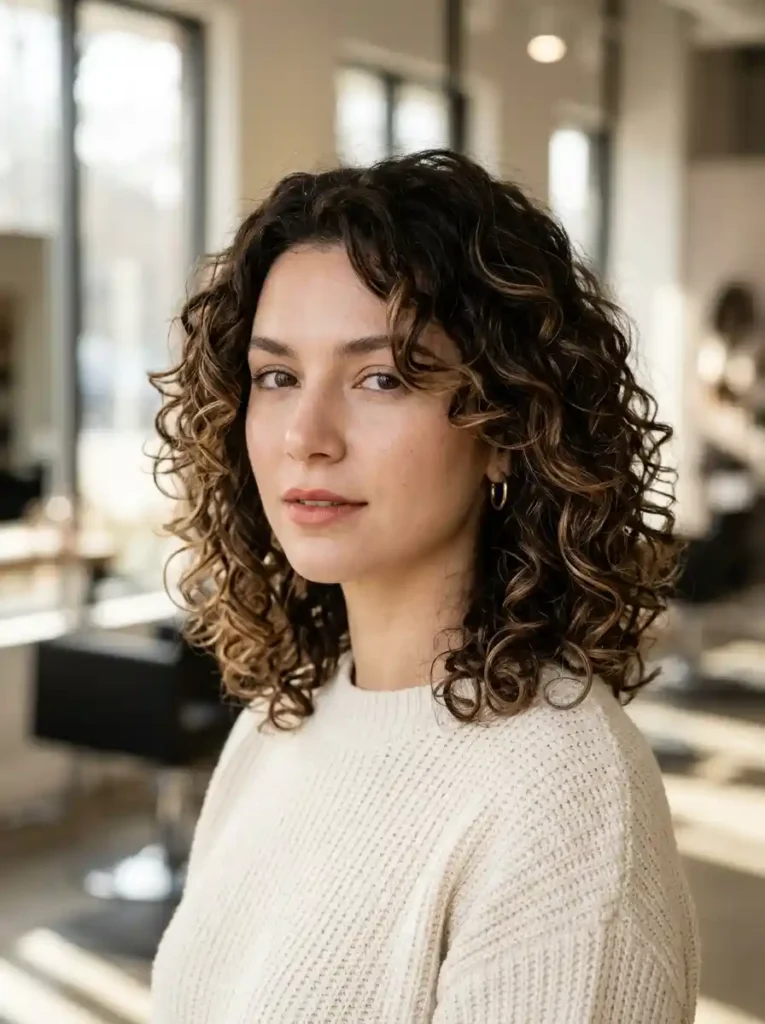
Subtle balayage gives a curly bob depth without requiring a dramatic all-over color change. The lighter pieces are concentrated through selected lengths and ends, creating a soft transition that becomes visible as the curls move. This approach is especially appealing if you want your haircut to look dimensional in photographs while keeping the overall color natural. A brunette base paired with caramel or toffee tones is one option, although your colorist can adapt the palette to suit your starting shade and preferred level of contrast.
To preserve the condition of highlighted curls, focus on moisture and gentle handling. Use a conditioner formulated for your hair’s needs, and add a weekly treatment if your ends feel dry after coloring. A color-safe shampoo may help maintain the desired tone, while heat protection is useful whenever you diffuse. Tell your colorist how often you are willing to refresh the color before choosing a technique. Softly blended balayage can make regrowth less noticeable than high-contrast highlights, helping the style remain attractive between appointments.
Conclusion
Choosing a curly bob is about more than finding a cute haircut. The best style works with your natural curl pattern, fits your daily routine, and makes you feel comfortable wearing your hair the way it grows. A rounded bob offers timeless shape, curtain bangs create a softer frame, and a shaggy cut brings relaxed movement. If you prefer a bolder look, asymmetry, an undercut, or dimensional balayage can add personality without sacrificing your curls.
Before booking your appointment, save two or three reference photos that show the length, volume, and texture you want. Ask your stylist to consider shrinkage, density, and how the cut will look when dry. These details can make a significant difference in the final result.
Most importantly, choose a style you can realistically maintain. With a suitable cut, curl-friendly products, and a simple styling routine, your next curly bob can feel fresh, flattering, and distinctly your own.


