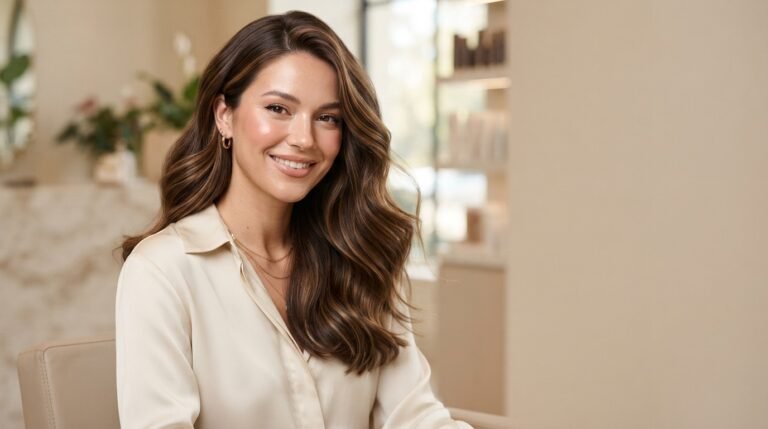
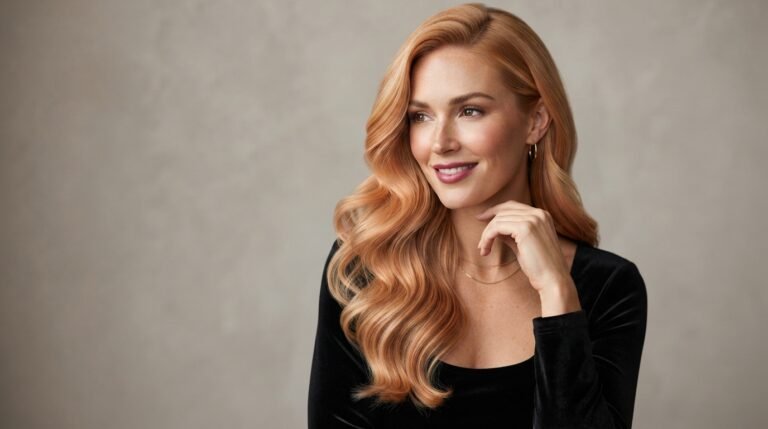
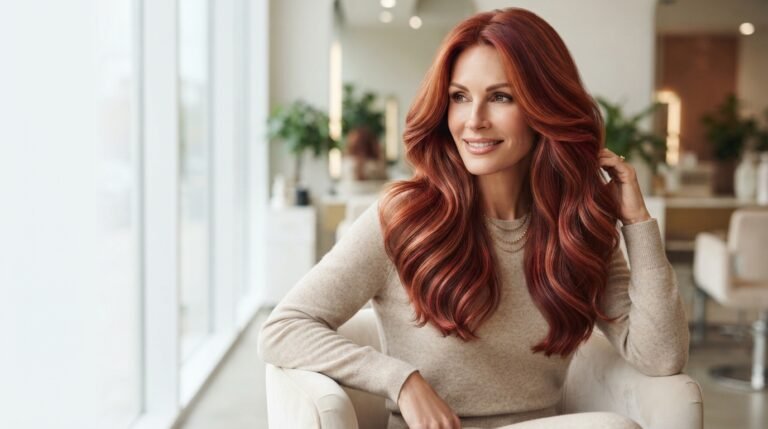
Burgundy hair has a way of looking dramatic without feeling overly bright, which makes it one of the most versatile statement colors to try this year. From deep wine shades that look almost black indoors to brighter berry tones that catch the light, there is a burgundy hair color for nearly every personal style. The best part is how easily the shade can be customized with highlights, balayage, layers, bangs, or different levels of intensity.
Whether you want a subtle change or a noticeable transformation, these burgundy hair ideas offer plenty of inspiration before your next salon appointment. You’ll find options for brunettes who want dimension, ideas for long and short hairstyles, low-maintenance color techniques, and richer shades designed to complement different complexions. As you browse, pay attention not only to the color itself but also to the placement and finish. Those details can completely change how burgundy looks and help you choose a version that feels genuinely like you.
1. Deep Wine Burgundy for a Sophisticated Finish
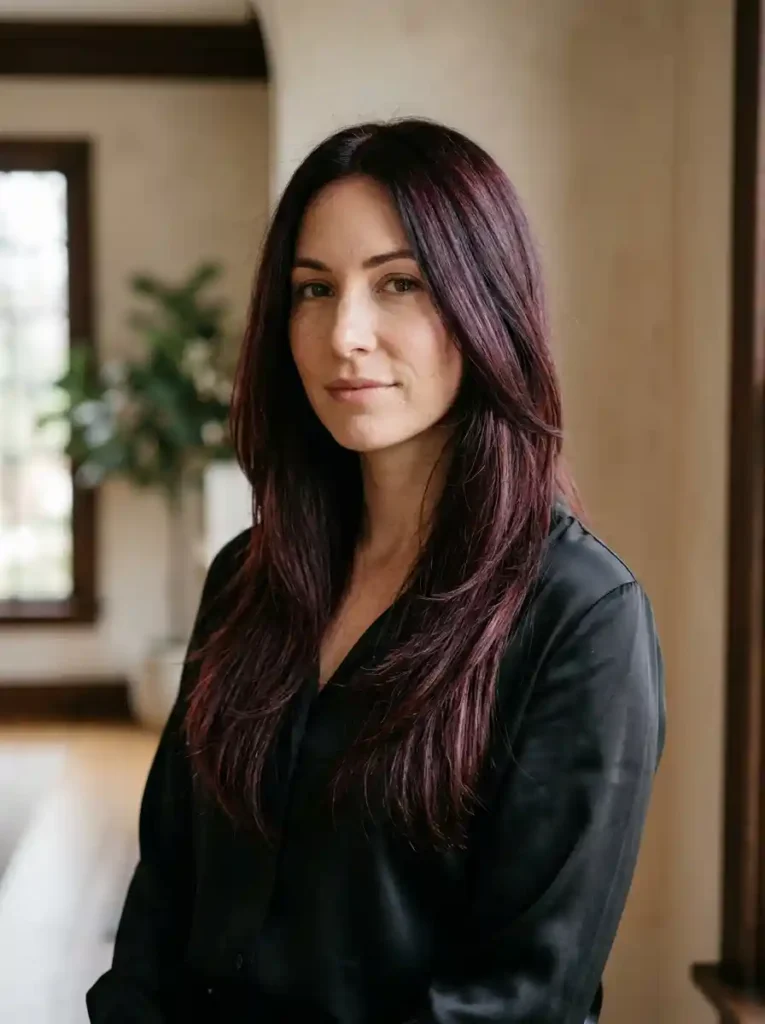
Deep wine burgundy is ideal if you want color that feels luxurious rather than flashy. Its dark red-violet base blends beautifully with naturally brown or dark hair, especially when the roots remain close to their original shade. Ask your stylist for a rich, low-light burgundy rather than a bright cherry red. The result should look almost brunette in dim lighting while revealing a beautiful wine-colored sheen when sunlight or indoor illumination hits the lengths.
This shade works particularly well with long layers, smooth blowouts, or loose waves because movement reveals the subtle color variations. If your hair is naturally very dark, maintaining depth at the roots can also make regrowth less noticeable. Use a sulfate-free, color-safe shampoo and wash with cooler water to help preserve the red pigments. A weekly moisturizing mask is useful too, since glossy hair makes this dark burgundy shade look considerably richer.
2. Burgundy Balayage on Dark Brown Hair
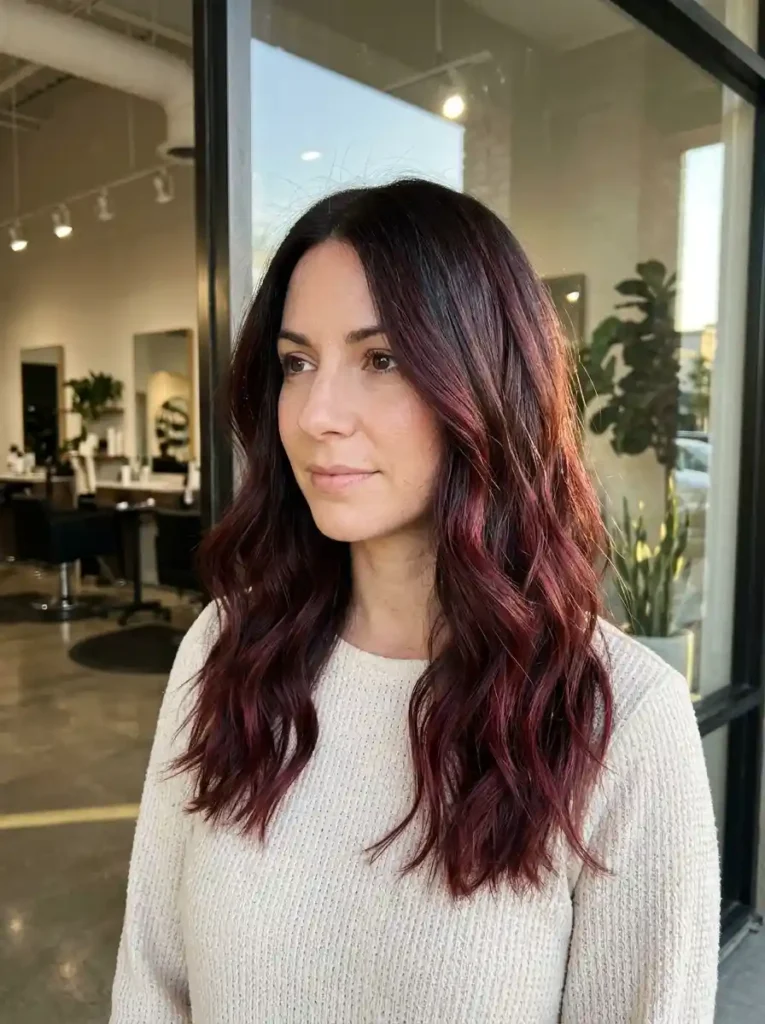
Burgundy balayage is a smart choice for someone who loves the color but does not want an all-over transformation. Keeping the natural dark brown base intact creates a softer contrast, while burgundy pieces brighten the middle and lower sections of the hair. Ask for hand-painted placement rather than evenly spaced highlights so the color looks naturally blended. Concentrating the strongest burgundy around the face and ends can make the style feel especially dimensional.
This technique is also practical for people who prefer less frequent salon appointments. Because the roots remain natural, there is no obvious line as the color grows out. Wavy or lightly curled hair shows the balayage beautifully because different strands catch the light at different angles. For an understated result, choose a brown-burgundy blend; for more impact, request a deeper berry tone through the ends. Both options pair beautifully with layered cuts.
3. Black Cherry Burgundy Hair
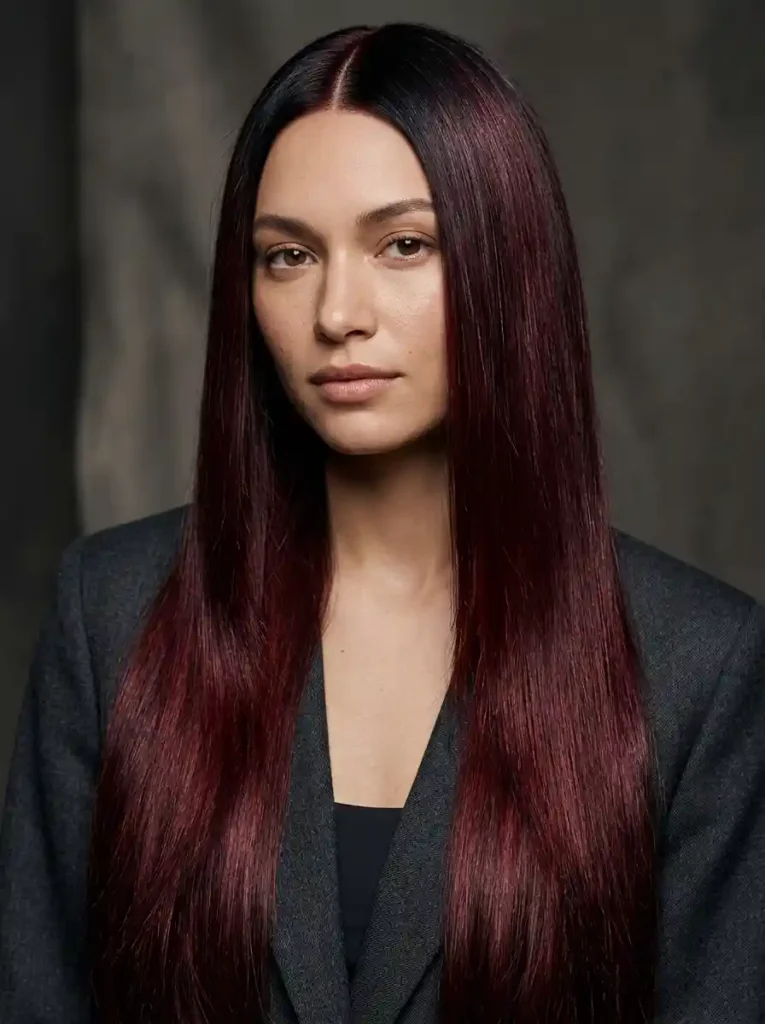
Black cherry burgundy combines the depth of nearly black hair with a concentrated red undertone, creating an especially sleek and dramatic result. It suits people who want their color to appear understated indoors but noticeably red in brighter light. The shade looks striking on straight hair because a smooth surface reflects light evenly, although soft waves can make the red dimension more visible. Keeping the roots dark also helps the overall look remain polished rather than overly vivid.
Before choosing black cherry, consider your existing color history. If your hair is already very dark, your stylist may be able to create the effect with a deposit-focused formula. Previously lightened hair can produce a brighter result and may require different formulation. To keep the glossy finish intact, minimize excessive heat styling and use a heat protectant whenever you blow-dry or straighten. A clear gloss between color appointments can also refresh the reflective quality.
4. Plum Burgundy with Cool Violet Undertones
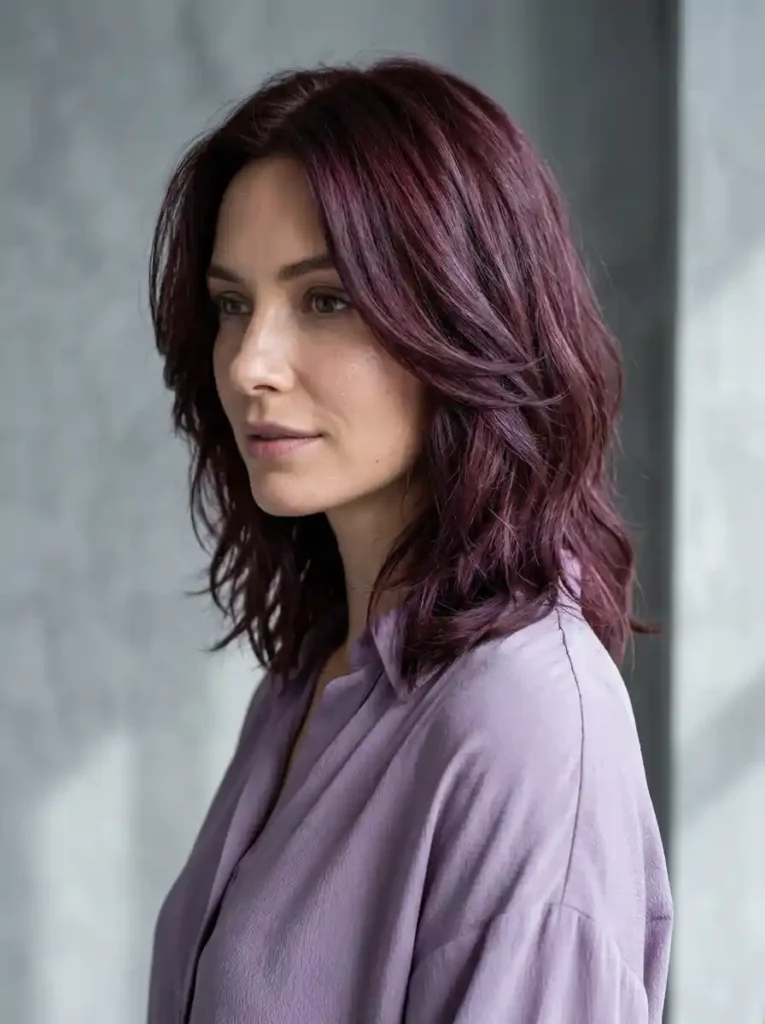
Plum burgundy leans toward violet, making it a beautiful alternative for anyone who finds traditional red too warm. The cool undertones give the hair a sophisticated, slightly mysterious appearance, especially when paired with a blunt bob or textured shoulder-length cut. Rather than choosing an extremely purple shade, ask your stylist for a burgundy base with controlled violet undertones. This keeps the color wearable while still giving it noticeable personality under daylight and bright indoor lighting.
Cool-toned burgundy can be especially attractive when your wardrobe includes charcoal, navy, cream, silver, or muted lavender. Because violet-red pigments can fade visibly, color-preserving products are worth using consistently. Avoid washing immediately after coloring and keep very hot showers to a minimum. If your natural hair is warm, your stylist may need to balance the underlying tones first. A strand test is helpful when aiming for a specific plum intensity rather than a general burgundy effect.
5. Burgundy Money Pieces for a Subtle Statement
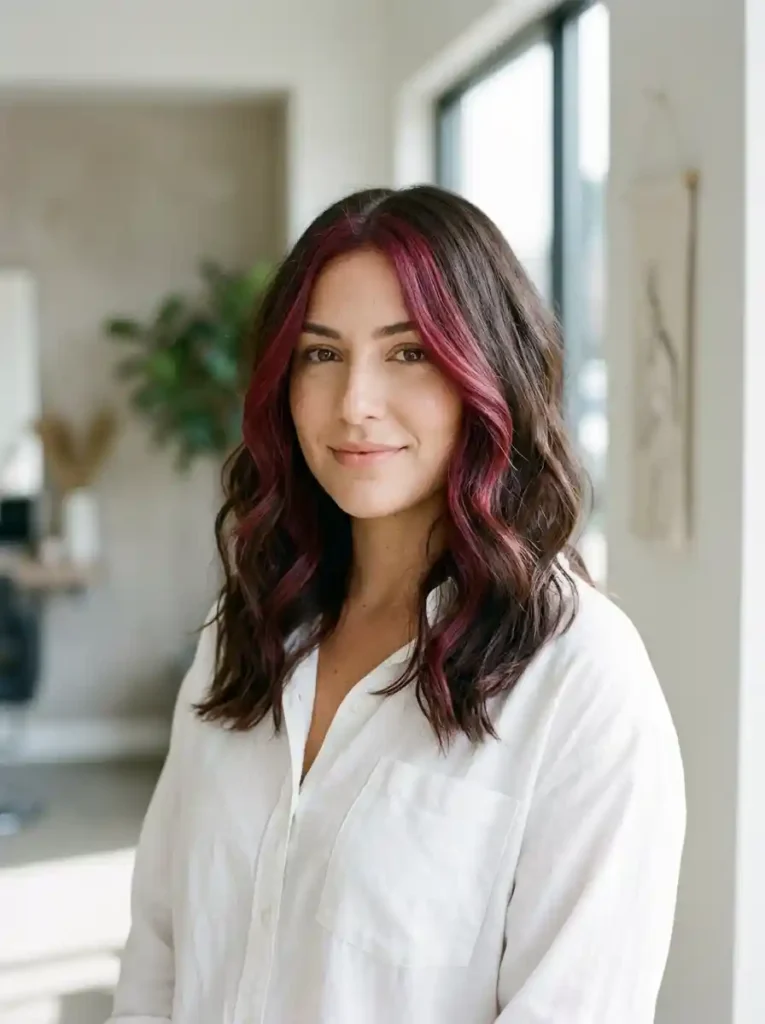
Burgundy money pieces place the strongest color around the front sections of the hair, creating an immediate focal point without requiring the entire head to be colored. This approach is particularly useful if you want to experiment with red tones before committing to a full burgundy transformation. The framing pieces can be narrow and understated or wider and more noticeable. On dark brown hair, a wine-toned front section creates contrast while still feeling sophisticated.
Placement matters more than simply choosing the color. Ask your stylist to consider your haircut, parting pattern, and where the front layers naturally fall. Face-framing pieces that begin slightly below the roots can look softer than a solid strip starting at the scalp. If you frequently wear your hair tied back, mention that during your consultation so the color placement works from multiple angles. Regular glossing can help keep the face-framing sections shiny and polished.
6. Rich Burgundy on a Shoulder-Length Bob
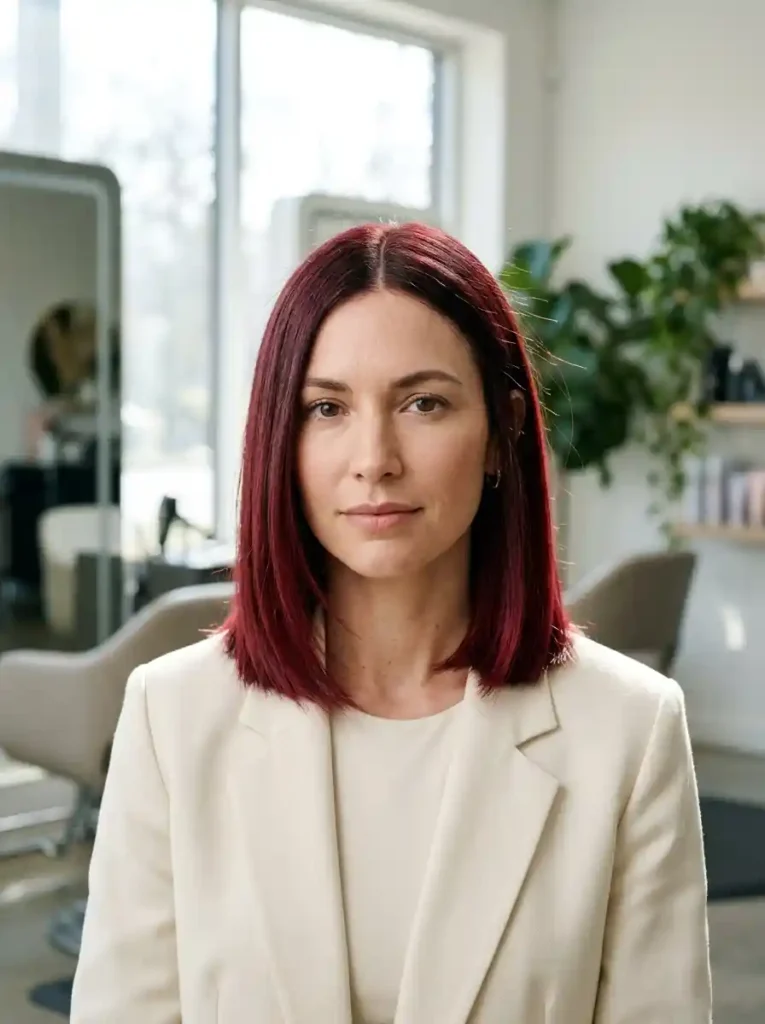
A shoulder-length bob gives burgundy a clean, modern shape because the compact haircut allows the color to appear concentrated and polished. A rich red-wine formula works particularly well on a blunt bob, where the even perimeter creates a strong visual line. If you want a softer finish, ask for subtle dimensional pieces through the interior rather than adding obvious highlights. This keeps the bob looking full while preventing a flat, single-color appearance.
The bob is also convenient for showing off burgundy without requiring extremely long hair. A smooth finish emphasizes shine, while loose bends give the color more movement and variation. When styling, apply a lightweight heat protectant before using a flat iron or curling tool. Avoid heavy oils immediately before heat styling because they can interfere with the finish. For maintenance, schedule color refreshes according to how quickly your red tones fade, rather than waiting for the haircut itself.
7. Burgundy Ombré with Berry-Toned Ends
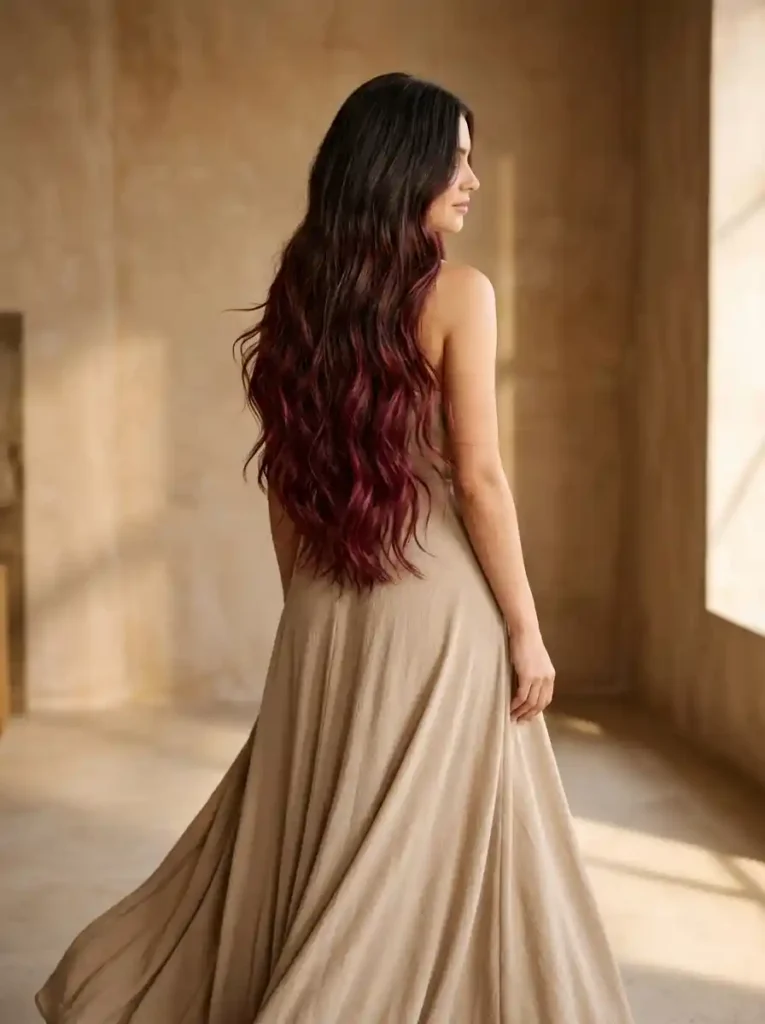
A burgundy ombré creates a noticeable color story from dark roots to richer ends. Instead of placing random highlights throughout the hair, the color gradually becomes stronger toward the bottom, making the transition easy to see. This style works especially well on long hair because there is enough length for a gradual fade between shades. A dark brown or almost-black root paired with berry burgundy ends gives the result depth without making the overall look too bright.
For the most natural transition, ask for several closely related tones rather than one abrupt red section. Your stylist can blend brown, wine, and berry shades so the ends appear intentionally saturated. This technique tends to look beautiful with loose waves, braids, and ponytails because the color gradient remains visible when the hair moves. Keep the ends well conditioned, since dry or porous tips can absorb red pigment differently and make the ombré appear uneven.
8. Warm Burgundy with Subtle Copper Reflections
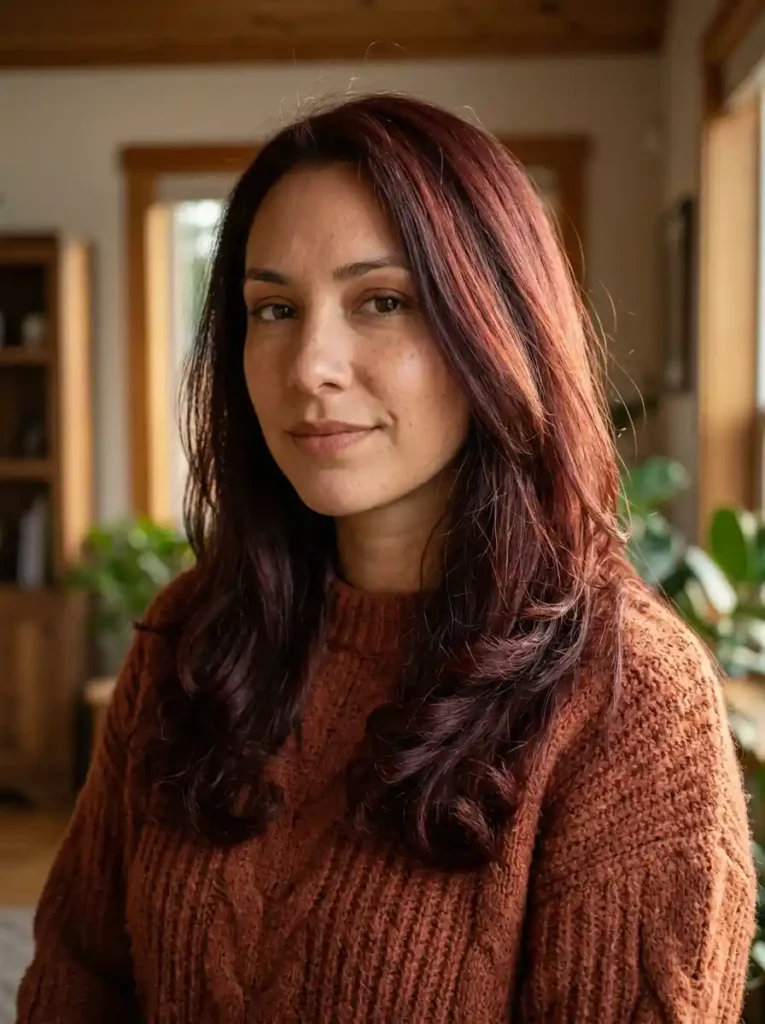
Warm burgundy introduces subtle copper or auburn notes into a deeper red base, creating a softer and more sunlit appearance. It is a useful option if you like burgundy but prefer warmer colors over violet-heavy shades. The copper should act as a reflection rather than overpowering the wine base. Ask your stylist for warmth concentrated through selected pieces or the mid-lengths, which can prevent the finished color from looking uniformly orange.
This version pairs naturally with warm brown, camel, rust, olive, and cream clothing, making it easy to incorporate into an everyday wardrobe. It can also be flattering on hair with naturally warm undertones because the transition feels less stark. If your hair tends to become brassy, explain your preferred level of warmth during the consultation. A professional colorist can balance copper and red pigments so the result stays burgundy rather than drifting toward a conventional copper shade.
9. Burgundy Highlights for Brunettes
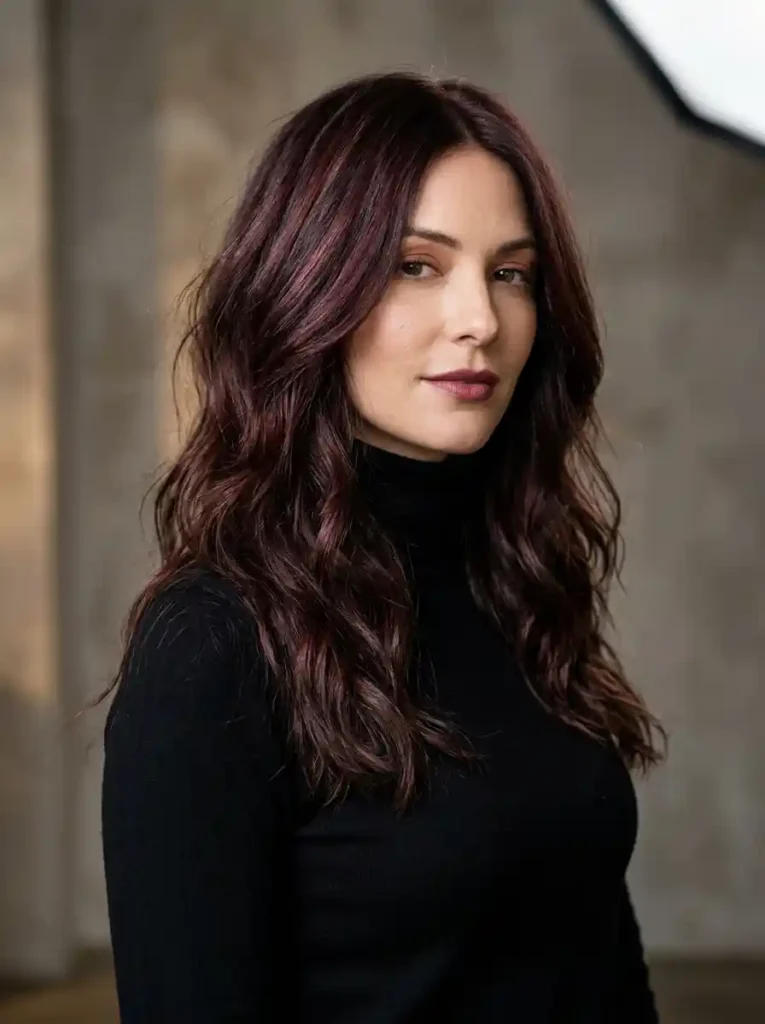
Fine burgundy highlights can transform brunette hair without hiding its natural depth. Instead of covering the entire head, strategically placed red-wine strands create flashes of color whenever the hair moves. This technique is particularly attractive on layered cuts because the different lengths allow individual burgundy pieces to catch the light. Ask for fine, blended highlights if you want subtle dimension, or slightly thicker ribbons if you prefer the color to be more noticeable.
The beauty of this approach is its flexibility. You can begin with a conservative amount of burgundy and add more at a later appointment if you decide you want stronger contrast. Tell your stylist whether you usually wear your hair straight, wavy, or tied back, since placement should reflect your everyday styling habits. To maintain vibrancy, alternate regular washing with gentle refresh products recommended for red-toned color and avoid excessive exposure to very hot water.
10. Burgundy on Long Layered Hair
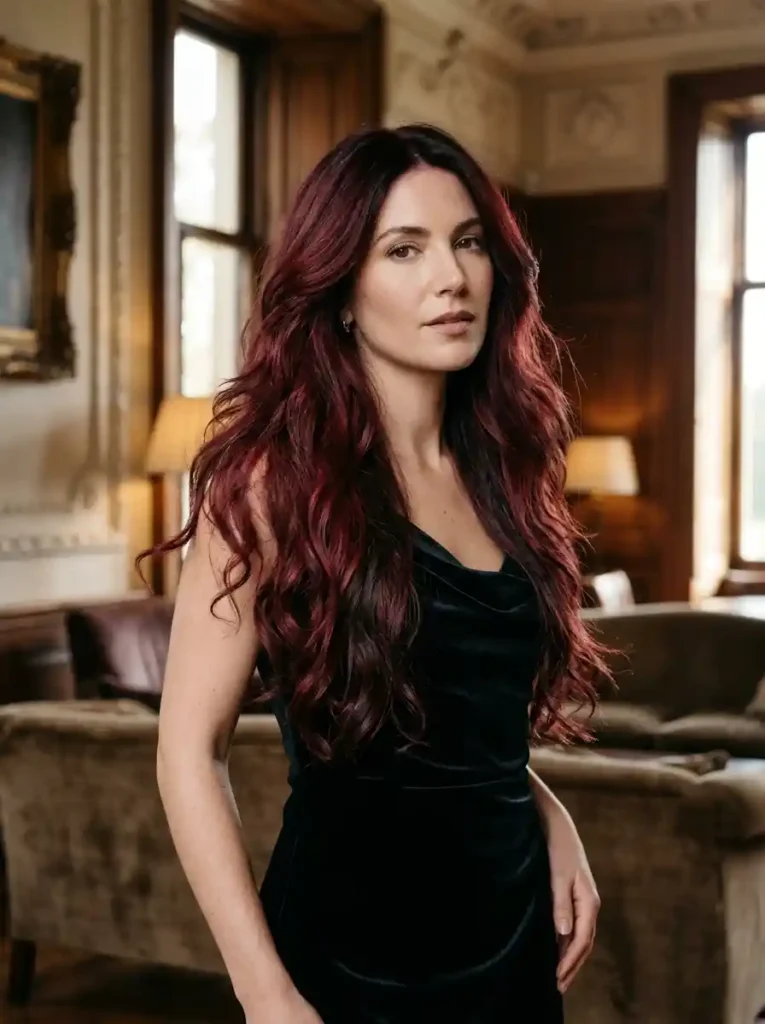
Long layers give burgundy plenty of room to show dimension, particularly when the color contains slightly different depths throughout the hair. A deep root, medium wine lengths, and selectively brighter ends can create a sophisticated multi-tonal effect without relying on obvious streaks. This works beautifully for someone who enjoys styling their hair in waves because the layers separate naturally, allowing different shades to appear and disappear as the hair moves.
Long hair does require thoughtful maintenance because the ends are usually older and more vulnerable to dryness. Ask for regular trims and use a moisturizing conditioner from mid-lengths downward. When curling, choose moderate heat and avoid repeatedly passing the tool over the same section. If your burgundy begins fading unevenly, a salon gloss can help restore richness. Photographing your preferred color in both indoor and outdoor light can also help your stylist match the depth you actually want.
11. Dark Burgundy Pixie Cut
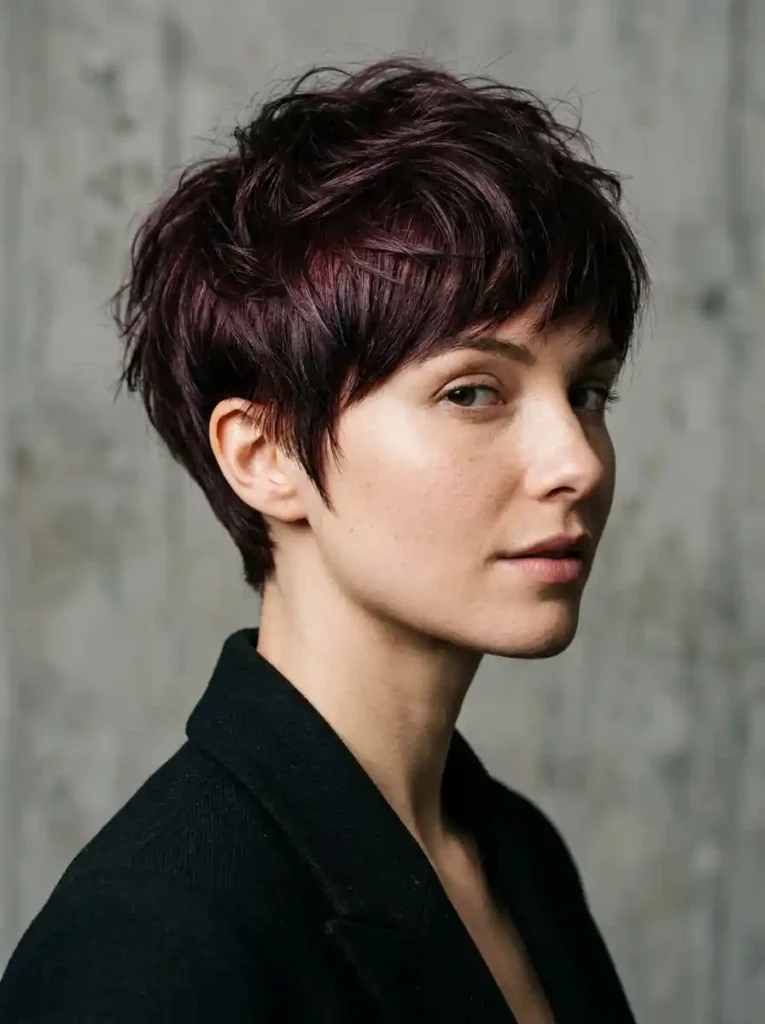
A dark burgundy pixie is a bold option for someone who wants the haircut and color to work together rather than compete. The short length makes the shade appear concentrated, while texture on top allows small variations in red and violet to catch the light. Keeping the color deep prevents the style from becoming overly bright, especially when the haircut itself has strong structure. It is an excellent choice for someone comfortable with frequent trims.
The main maintenance consideration is the haircut rather than root growth alone. As the pixie grows, the shape changes quickly, and freshly colored sections can become less evenly distributed. Schedule trims often enough to preserve the intended silhouette and discuss how the burgundy should be refreshed around shorter areas. A matte styling paste can emphasize texture, while a lightweight shine product works better when you want the color to appear glossy and sleek.
12. Burgundy Curtain Bangs with a Natural Base
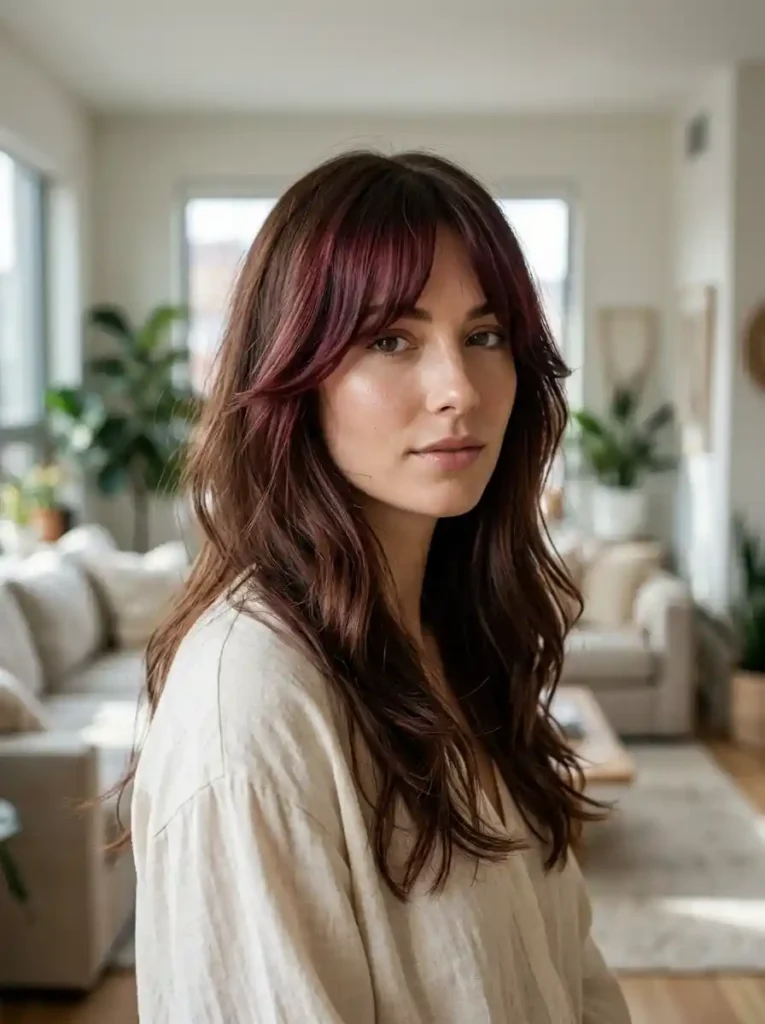
Burgundy curtain bangs offer a clever way to introduce color around the face while keeping most of the hair close to its natural shade. The longer, parted shape of curtain bangs creates movement across the forehead and cheekbones, so the red tones become visible without dominating the hairstyle. A softly blended burgundy section can look especially attractive with brunette hair, where the contrast remains noticeable but not harsh.
This option is worth considering if you enjoy changing your hairstyle frequently because curtain bangs can be worn parted, swept sideways, or blended into face-framing layers. Tell your stylist exactly how you normally part your hair before color placement begins. The front sections often receive more washing, heat, and product than the back, so they may fade differently. A color-safe cleanser and occasional professional toner can keep the burgundy looking balanced and intentional.
13. Glossy Burgundy Waves
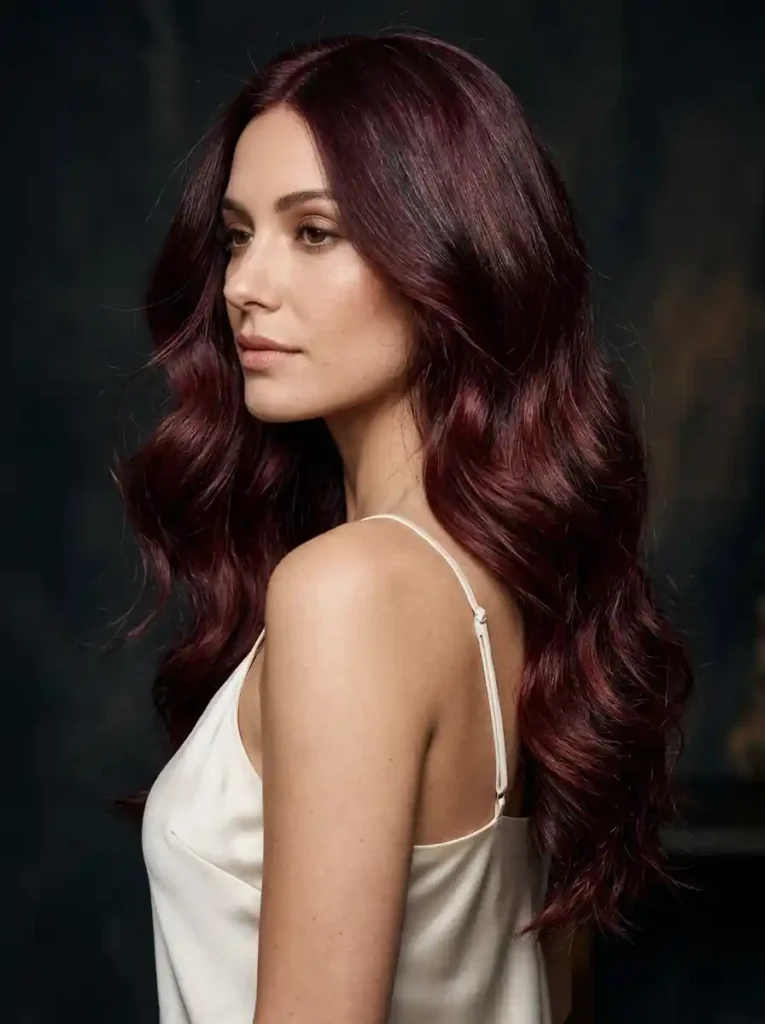
If shine is your priority, glossy burgundy waves create an especially polished finish. The combination of saturated color and large, smooth waves allows light to travel across the hair, emphasizing the difference between darker and lighter sections. Rather than choosing an extremely bright red, consider a concentrated wine shade with a reflective finish. The result feels glamorous while remaining wearable for everyday occasions when styled more casually.
To recreate the look at home, use a lightweight smoothing product before blow-drying and a heat protectant before curling. Large sections produce softer waves, while smaller sections create more defined movement. Avoid applying too much finishing oil because heavy products can flatten the style and make fine hair appear greasy. If your color starts looking dull, ask your stylist about a gloss service instead of automatically choosing a stronger permanent color.
14. Burgundy and Chocolate Brown Melt
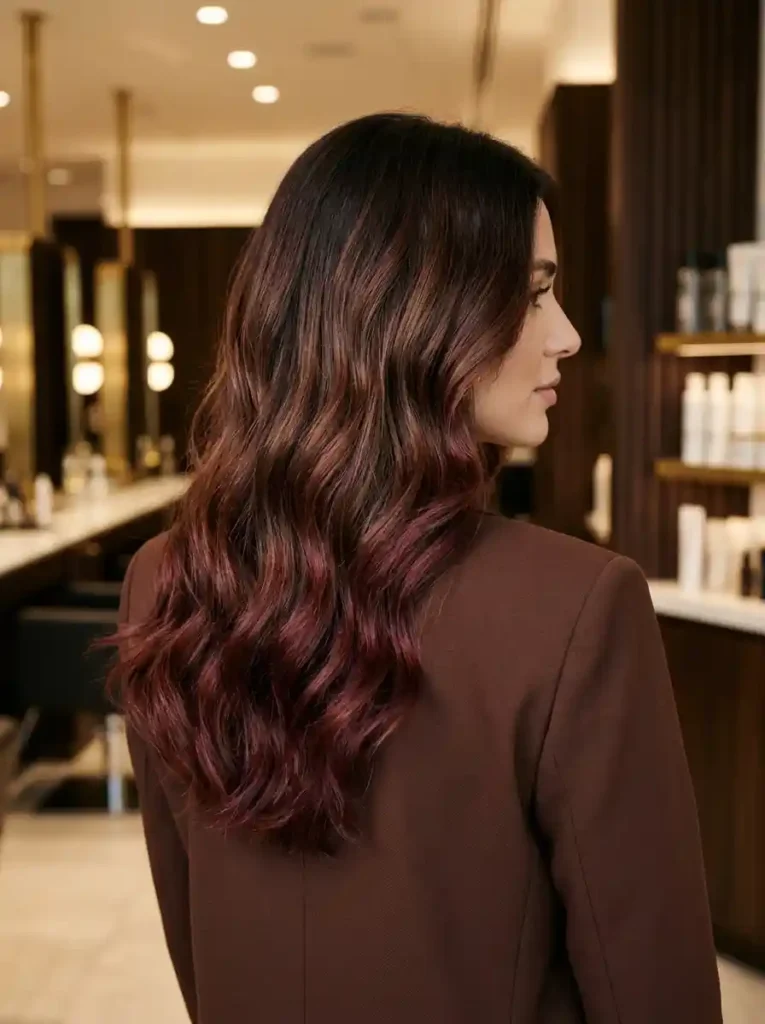
A chocolate brown and burgundy melt is perfect when you want red tones softened by rich brunette depth. The color can begin with an espresso or chocolate root, transition through warm brown, and finish with a restrained wine tone. Because the shades share a deep intensity, the result looks blended rather than sharply contrasted. This approach works particularly well for medium-to-thick hair where there is enough density to showcase multiple tones.
The key is controlling the transition so the burgundy does not appear like a separate block of color. Ask your stylist for a gradual melt with overlapping tones instead of a defined horizontal line. This style can also be customized according to your comfort level: keep burgundy concentrated near the ends for subtlety or bring it higher for a stronger effect. Regular conditioning is important because the color looks most luxurious when the hair surface remains smooth and reflective.
15. Berry Burgundy on Curly Hair
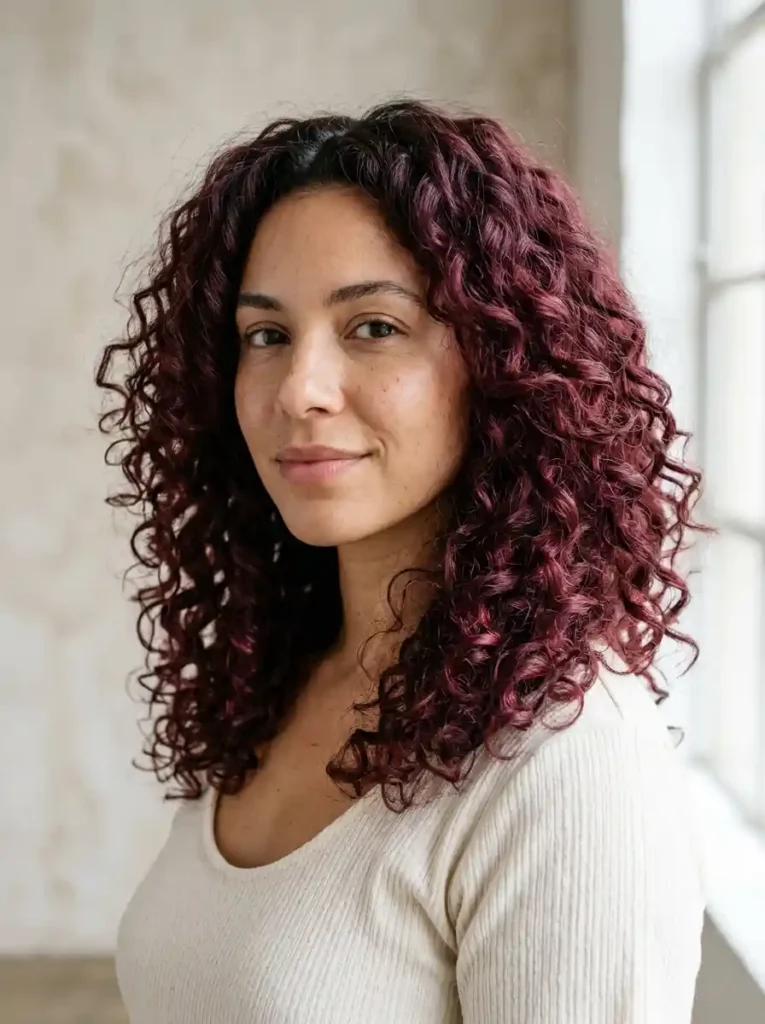
Berry burgundy can look especially dimensional on curly hair because each curl reflects light differently. Instead of one uniform shade, the rounded shapes naturally create areas that appear deeper and brighter. A red-violet berry tone works beautifully when you want a more noticeable color while still keeping the overall finish sophisticated. If your curls are already color-treated, discuss the condition of the hair before adding additional lightening or pigment.
Protecting curl health should remain a priority throughout the color process. Ask your stylist to use an approach appropriate for your hair’s porosity and avoid unnecessary lightening when possible. At home, choose moisturizing products designed for colored curls and avoid rough towel drying, which can disturb both definition and shine. Refreshing curls with water and a lightweight leave-in conditioner can help maintain the shape without repeatedly applying high-heat styling tools.
16. Burgundy Peekaboo Highlights
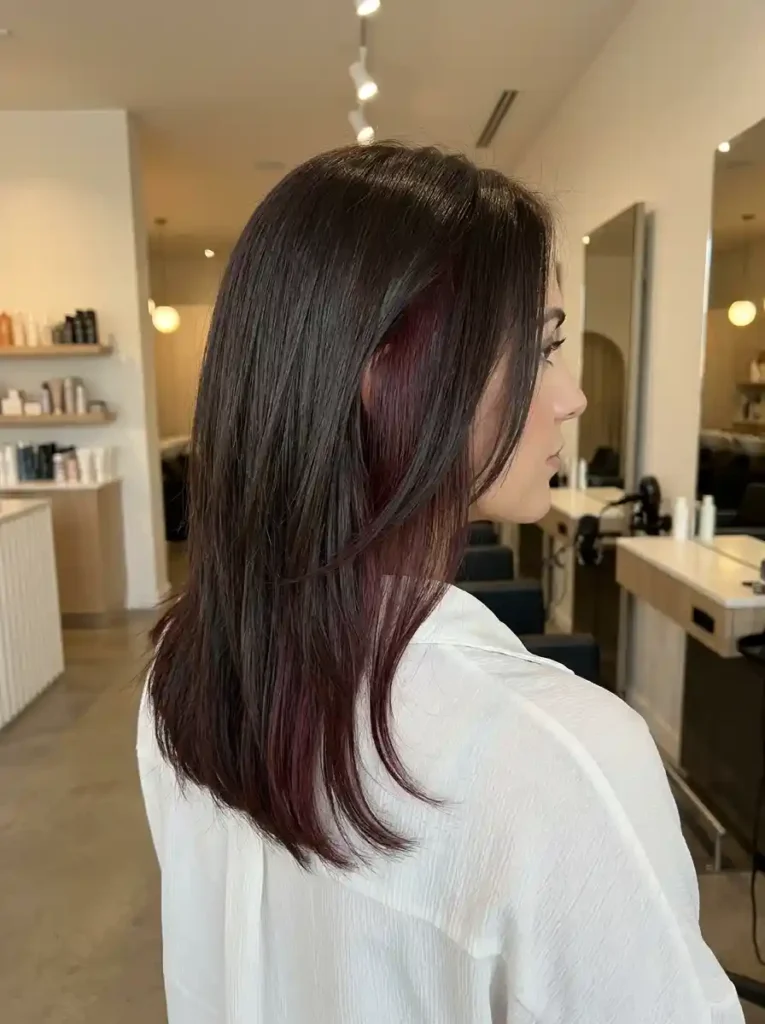
Peekaboo burgundy highlights are designed for anyone who wants color that appears selectively rather than constantly. The red sections can be placed underneath the top layer, around the nape, or within side panels, allowing the natural brunette shade to remain dominant when the hair is down. The color becomes more visible when you tuck the hair behind your ears, create a ponytail, braid it, or move the upper layers aside.
This technique is easy to personalize because the amount of visible color depends largely on placement. For a workplace-friendly version, keep the burgundy concentrated beneath the crown. If you want more impact, extend the panels toward the sides and front. Straight hair displays the hidden sections clearly, while waves make them appear intermittently. Before coloring, decide how often you wear your hair up, since the best placement depends on when you want the burgundy to show.
17. Soft Burgundy Lob with Face-Framing Layers
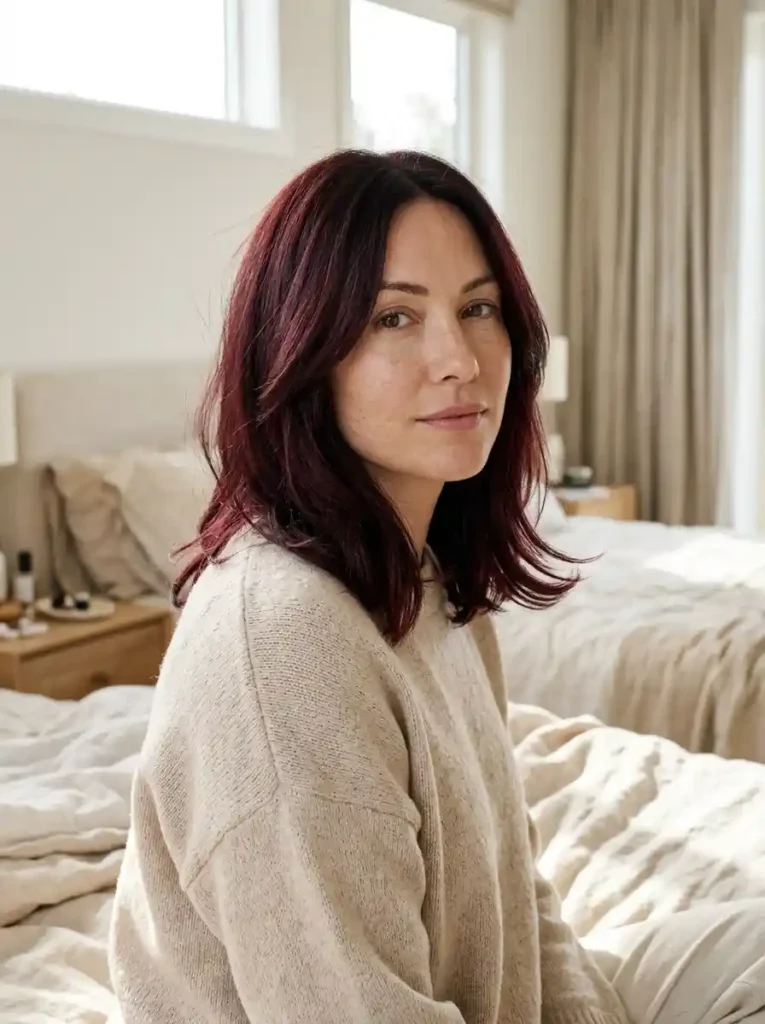
A burgundy lob sits between the sharpness of a bob and the versatility of longer hair, making it a practical canvas for rich color. A soft wine shade paired with face-framing layers gives the haircut movement without requiring dramatic highlights. Keeping the root slightly deeper than the lengths can add visual depth and make the transition more forgiving as the color grows. The collarbone length also works well for ponytails, clips, and loose waves.
For styling, try bending only the lower half of the hair rather than creating tightly defined curls. This produces an effortless shape while allowing the burgundy tones to catch the light naturally. If your ends are prone to dryness, ask for a small trim before coloring so the finished shade looks even. A lightweight leave-in conditioner can help smooth the surface without weighing down the lob or reducing its natural movement.
18. Mahogany Burgundy for a Warmer Look
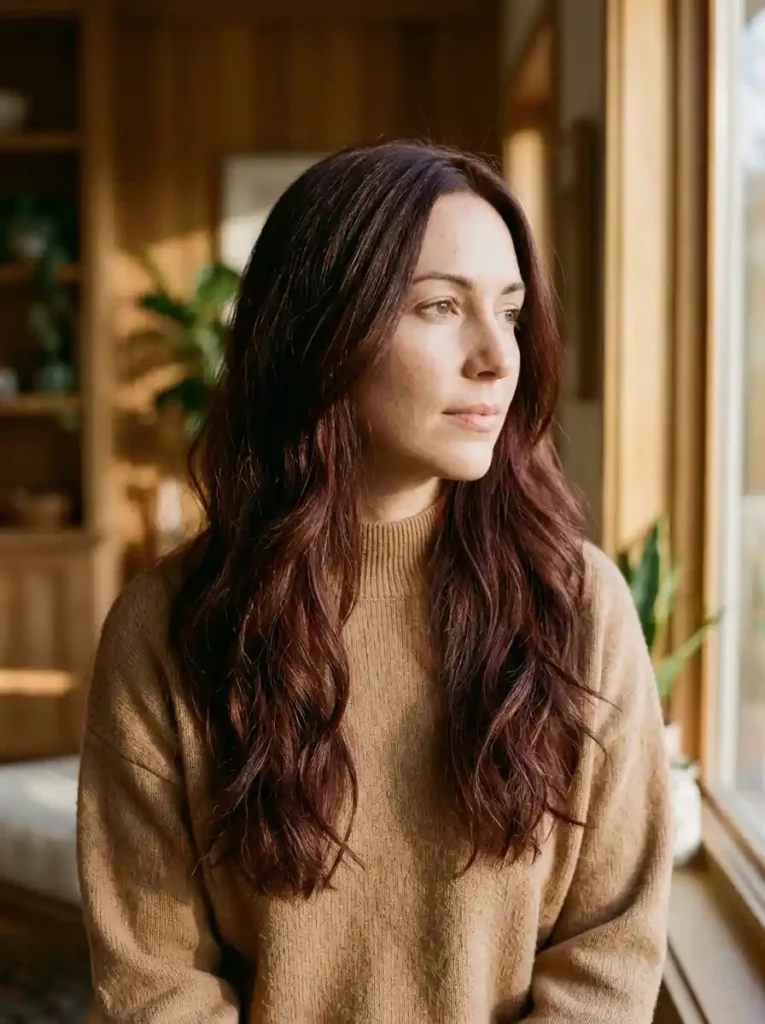
Mahogany burgundy sits on the warmer side of the color spectrum, combining deep red with brown and subtle auburn influences. It is a strong choice if you want burgundy to feel natural rather than strongly purple. The brown component gives the shade depth, while the red keeps it distinctive. This color can be especially appealing on medium or dark brown hair because the underlying base already supports the richer, warmer character.
When discussing mahogany burgundy with your stylist, bring reference photos taken in natural daylight rather than relying only on heavily edited salon images. Warm shades can look very different under indoor lighting. You can also decide whether you prefer more brown for subtlety or more red for visibility. Once colored, protect the warmth with a color-safe routine and limit prolonged exposure to strong sun when possible, since intense light can gradually change red pigments.
19. Burgundy with Subtle Face-Framing Balayage
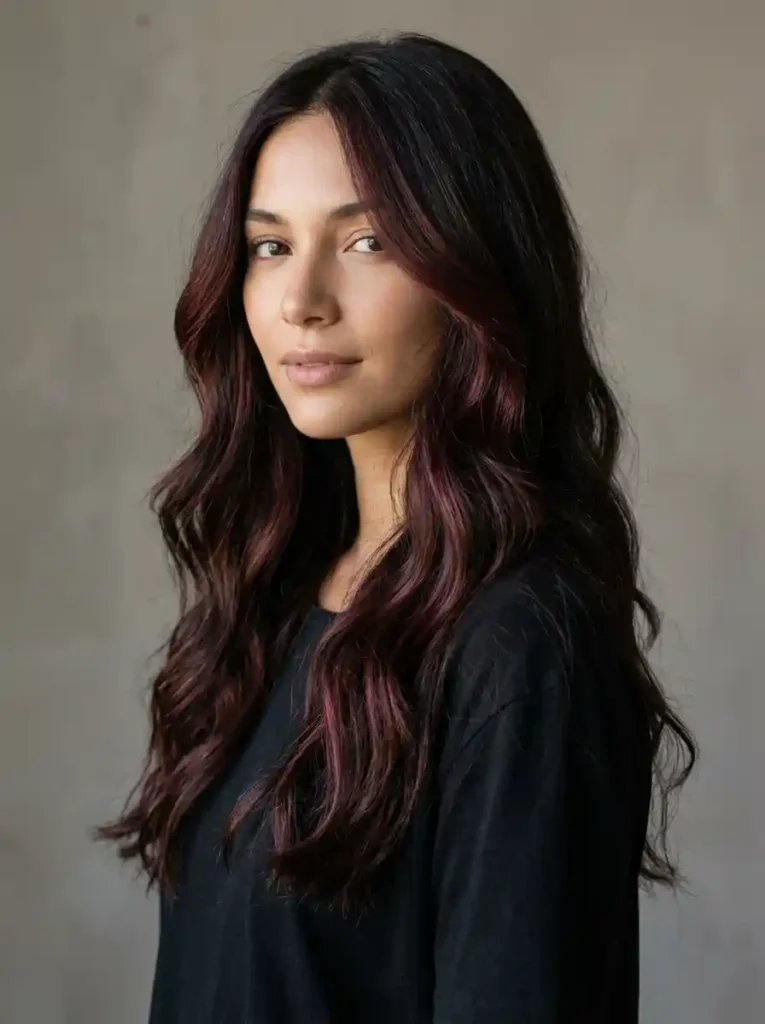
Combining burgundy balayage with subtle face framing gives you dimension without requiring a dramatic full-head color change. The strongest pieces can begin around the cheekbone or jawline, while softer burgundy strands continue into the surrounding lengths. This placement draws attention toward the face and works particularly well when the haircut already includes long layers. Keeping the majority of the base dark helps the color remain sophisticated and relatively easy to grow out.
Ask your stylist to avoid making the front pieces identical on both sides. Slight variation often creates a more natural result, especially when the hair is parted differently from day to day. If you usually wear your hair behind one ear, the color can be positioned to complement that habit. Use a gentle cleansing routine afterward, and consider a tinted gloss when the burgundy loses its original richness but the underlying balayage still looks good.
20. Burgundy on a Sleek Long Bob
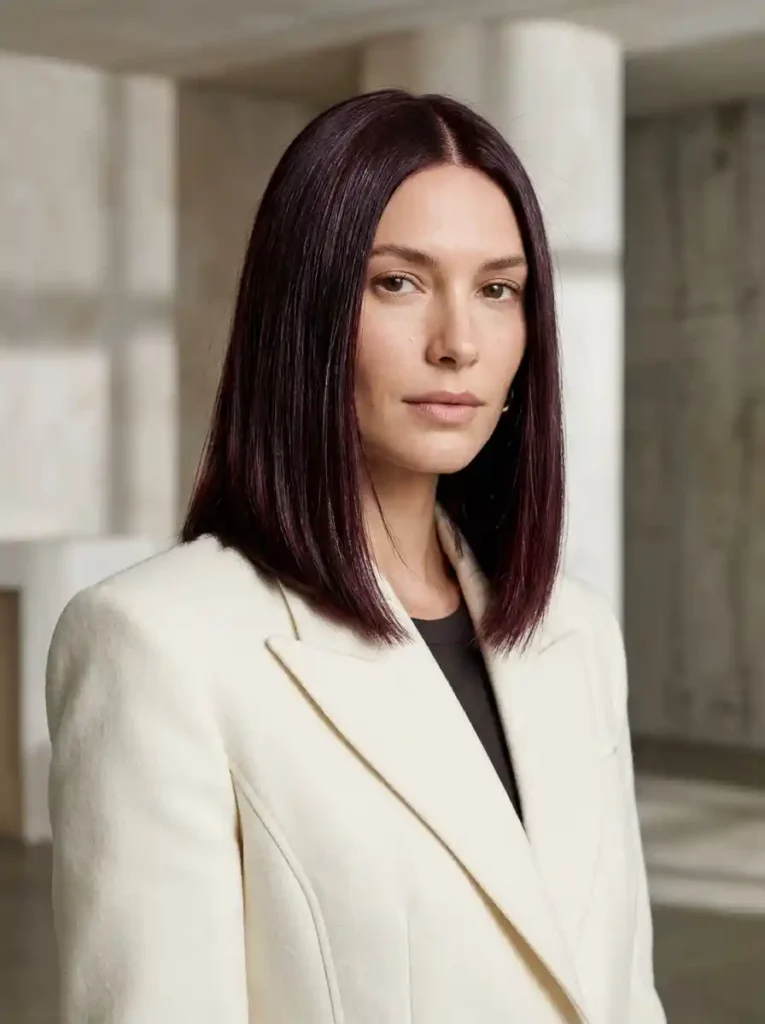
A sleek long bob gives burgundy a crisp, contemporary appearance because the clean haircut creates a strong outline around the color. A saturated wine shade works beautifully when the ends are precise and the surface is smooth. For a more dimensional finish, your stylist can use a slightly deeper root or subtle tonal variation through the lower sections. The overall effect remains polished without requiring visible highlights or dramatic color blocking.
This style is particularly useful for people who like a refined look but still want a noticeable change. A center part emphasizes symmetry, while a side part can make the same cut feel softer. Straightening should always be paired with heat protection, especially when the goal is high shine. If your hair naturally has frizz or uneven texture, a smoothing treatment may be worth discussing separately from the color appointment.
21. Rich Burgundy with Subtle Red Highlights
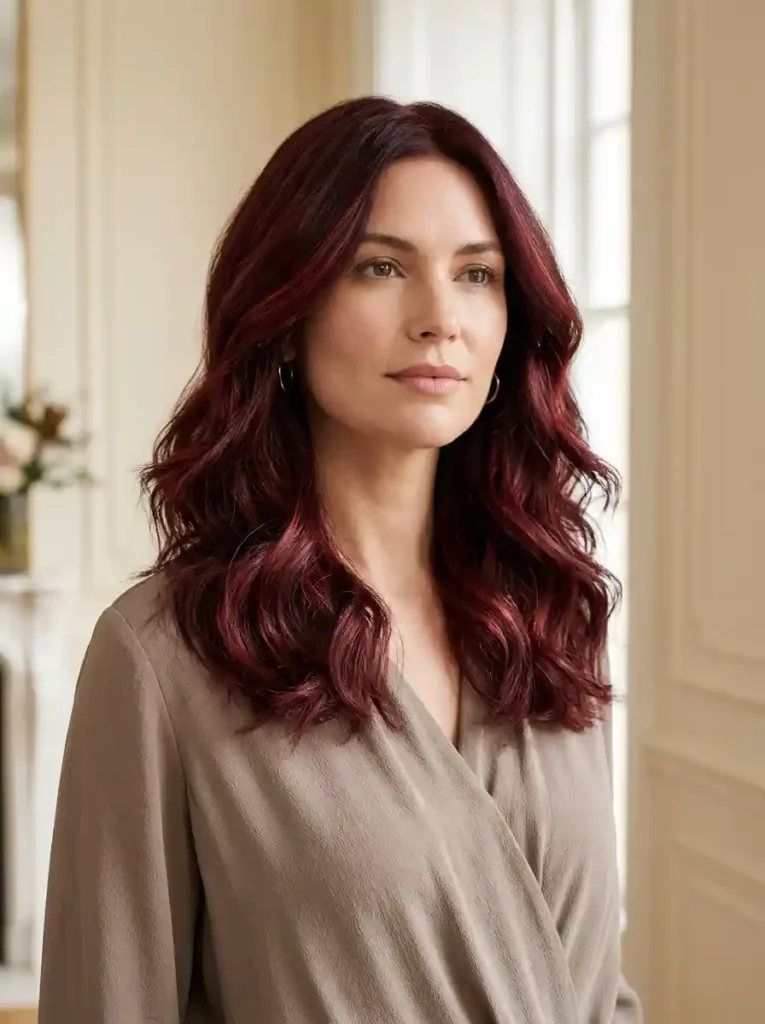
A deep burgundy base with subtle brighter red highlights is ideal when you want dimension that becomes more noticeable as the hair moves. The foundation stays rich and wine-toned, while carefully placed red pieces create flashes of brightness through the layers. This is more nuanced than an all-over bright red and can be customized according to how visible you want the highlights to be. Fine ribbons generally create a softer effect than chunky contrasting sections.
Consider placing the brightest pieces around the upper layers and toward the ends so they appear naturally illuminated. If you have fine hair, avoid excessive highlighting because repeated processing can compromise the texture you are trying to showcase. Ask your stylist whether a deposit-only red gloss could achieve part of the effect without additional lightening. With regular conditioning and gentle heat styling, the combination of deep burgundy and brighter red can retain its dimensional appearance between salon visits.
Conclusion
Rich burgundy hair offers far more possibilities than one standard shade of red. You can keep it nearly black with a subtle wine reflection, warm it with mahogany and copper, brighten it with berry tones, or use balayage and peekaboo placement for a more customized transformation everyday environment. Tell your stylist how much maintenance you are comfortable with, whether your hair has been previously colored, and how you normally style it. Most. The haircut matters just as much as the formula, since waves, layers, bobs, curls, and short cuts reveal color in completely different ways.
Before your appointment, save two or three reference images that show the color in lighting similar to your everyday environment. Tell your stylist how much maintenance you are comfortable with, whether your hair has been previously colored, and how you normally style it. Most importantly, choose the depth and undertone that genuinely suit your personal style. A well-planned burgundy shade can feel distinctive while still being remarkably wearable.