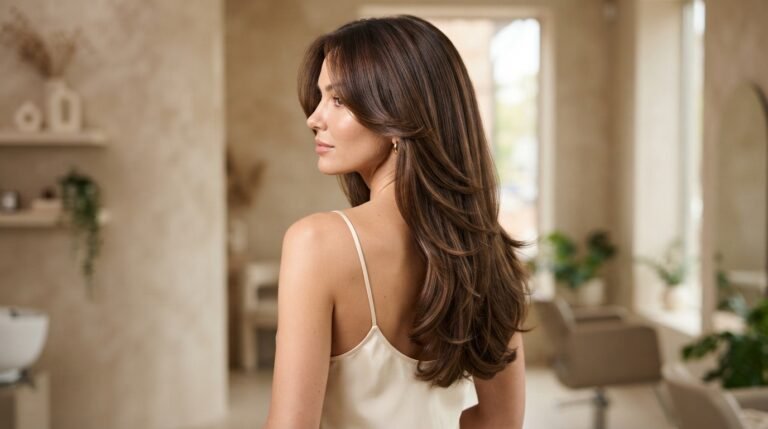
The French bob has a special way of making everyday hair feel effortlessly polished, whether you prefer a soft, romantic finish or a bold, fashion-forward cut. With its signature shorter length, face-framing shape, and Parisian-inspired charm, this timeless hairstyle offers plenty of room for personalization. From wispy bangs and tousled texture to sleek lines and modern layers, these 22 chic French bob hair ideas will help you discover a look that feels fresh, flattering, and uniquely yours.
1. The Classic Parisian French Bob

The classic Parisian bob captures the understated elegance that makes French hairstyles so appealing. Cut around the jawline, this version features a softly rounded silhouette, subtle movement through the ends, and light bangs that skim the eyebrows. It works beautifully for anyone who wants a recognizable French bob without dramatic layers or complicated styling. Brunette shades emphasize its timeless character, although blonde, copper, and natural silver tones can look equally sophisticated.
Ask your stylist to customize the perimeter to your hair density and face shape rather than copying a single reference photograph. Fine hair often benefits from a relatively solid outline that creates the appearance of fullness, while thicker hair may need carefully placed internal layers. For everyday styling, apply a lightweight heat protectant, rough-dry the roots, and gently bend the ends with a round brush. Leave a little natural irregularity instead of aiming for a perfectly sculpted finish.
2. The French Bob With Wispy Bangs

Wispy bangs give the French bob a lighter, more relaxed personality than a dense, blunt fringe. The delicate pieces allow glimpses of the forehead, creating a softer frame around the eyes without overwhelming the face. This combination is especially appealing if you love fringe but worry about committing to a heavy, straight-across cut. The result feels youthful without being overly sweet, and it pairs naturally with both casual outfits and polished everyday clothing.
To style this look, direct the fringe forward while blow-drying with a small brush, alternating the airflow slightly from side to side to prevent a stubborn center part. A tiny amount of lightweight styling cream can separate the ends without making them greasy. If your hair naturally separates into strong sections, ask your stylist to account for its growth pattern before cutting the bangs too short. Regular fringe trims will preserve the airy shape while allowing the rest of the bob to grow gracefully.
3. The Blunt French Bob
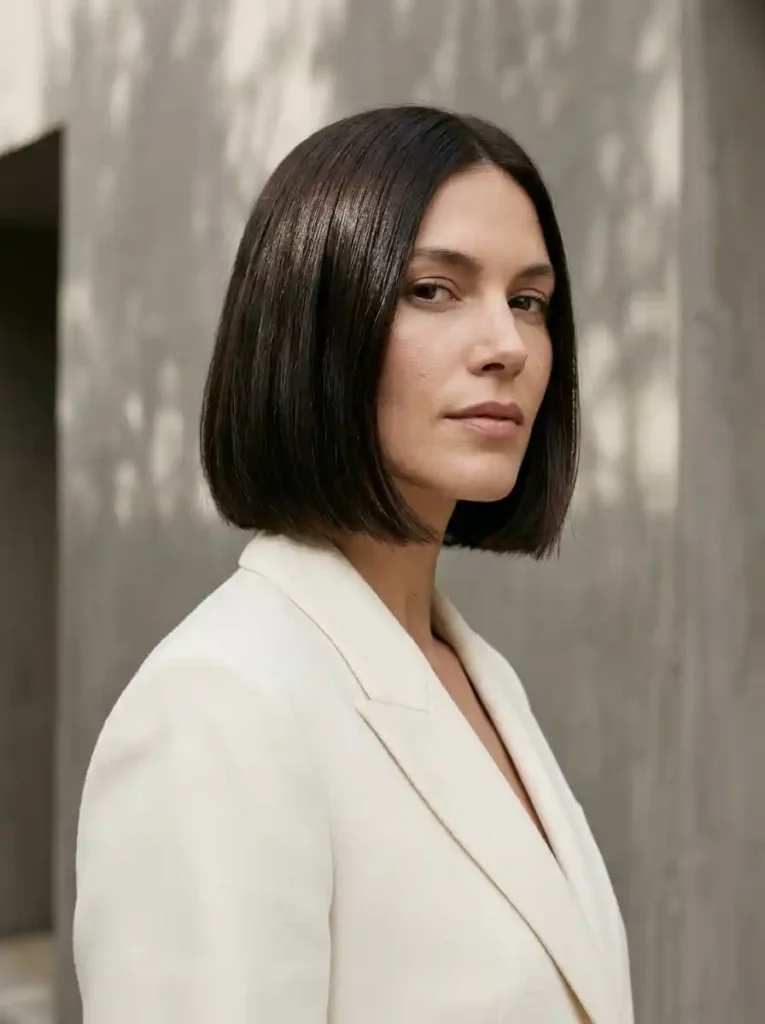
A blunt French bob offers a crisp alternative to the softer, more tousled versions of this haircut. Its straight, compact outline creates a strong visual shape, making the hair appear denser at the ends. That quality can be particularly useful for people with fine or medium-density hair who dislike wispy-looking tips. The clean finish also gives simple outfits a more intentional feel, especially when paired with tailored jackets, minimal jewelry, and understated makeup.
This cut depends on precision, so choose a stylist experienced with short geometric shapes. The ideal length may sit just below the cheekbones or directly at the jaw, depending on how your hair behaves when dry. For a smooth finish, use a heat protectant and a flat iron sparingly, keeping the ends mostly straight rather than turning them dramatically inward. If your hair is naturally curly or prone to swelling in humidity, discuss a slightly longer version to accommodate shrinkage and preserve the intended outline.
4. The French Bob With Curtain Bangs

Curtain bangs bring a relaxed, face-framing quality to a French bob while preserving more versatility than a short, solid fringe. The center part opens the forehead, and the longer sides blend into the bob to create a continuous shape around the cheeks. This option can suit people who like the idea of bangs but want something that grows out more gradually. It also transitions easily between casual, undone styling and a more polished blowout.
Ask your stylist to blend the shortest pieces around the brow area into longer sections near the cheekbones. The proportions matter: bangs that are too short may feel disconnected from the rest of the haircut, while excessively long pieces can lose their curtain effect. Style them with a medium round brush, directing each side away from the face before allowing the hair to settle naturally. A flexible styling spray can help maintain separation without making the front sections feel stiff or overly arranged.
5. The Textured French Bob
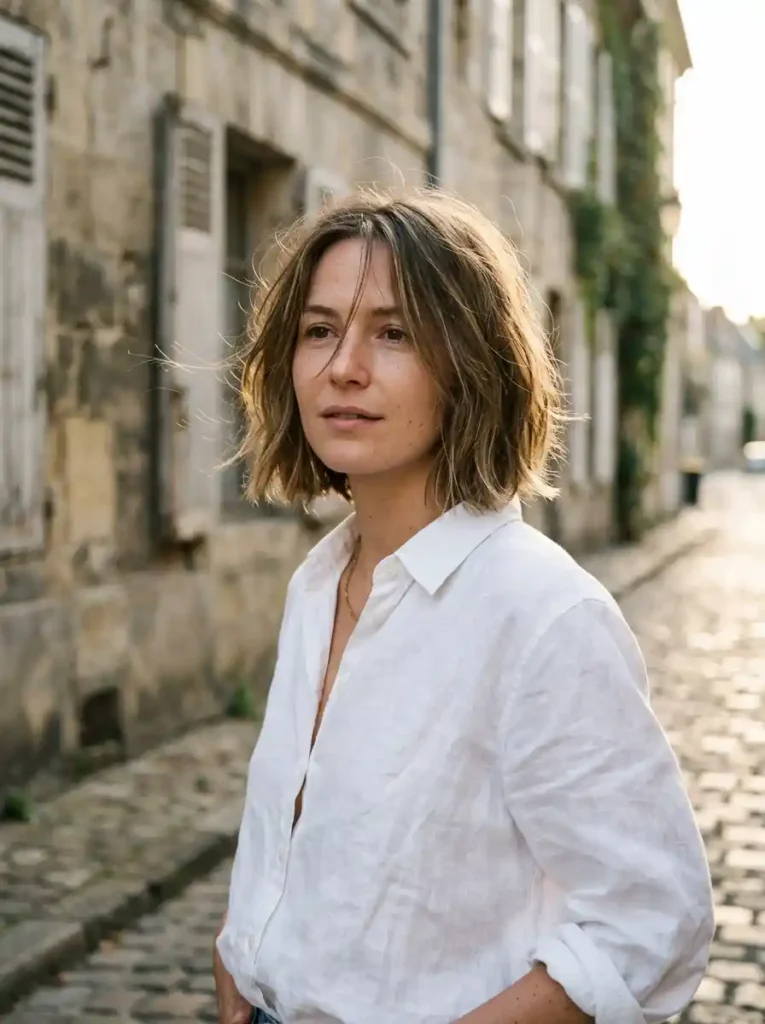
If you prefer hair that looks lively rather than meticulously arranged, a textured French bob is worth considering. Its subtle layers and uneven movement keep the shape from appearing too rigid, making it a natural match for relaxed personal style. This version is particularly attractive on hair with an existing wave, although straight hair can also achieve the effect with thoughtful cutting and a small amount of styling product. The finish should feel airy and intentional, not excessively choppy.
The key is to distinguish useful texture from unnecessary thinning. Ask your stylist to remove bulk selectively while keeping enough weight around the perimeter to maintain the bob’s recognizable shape. After washing, scrunch a small amount of lightweight texturizing cream or mousse into damp hair and let it air-dry when practical. If you use a diffuser, keep the airflow gentle to preserve movement. Avoid applying heavy oils throughout the roots, as they can flatten the separation that makes this haircut interesting.
6. The French Bob With Micro Bangs
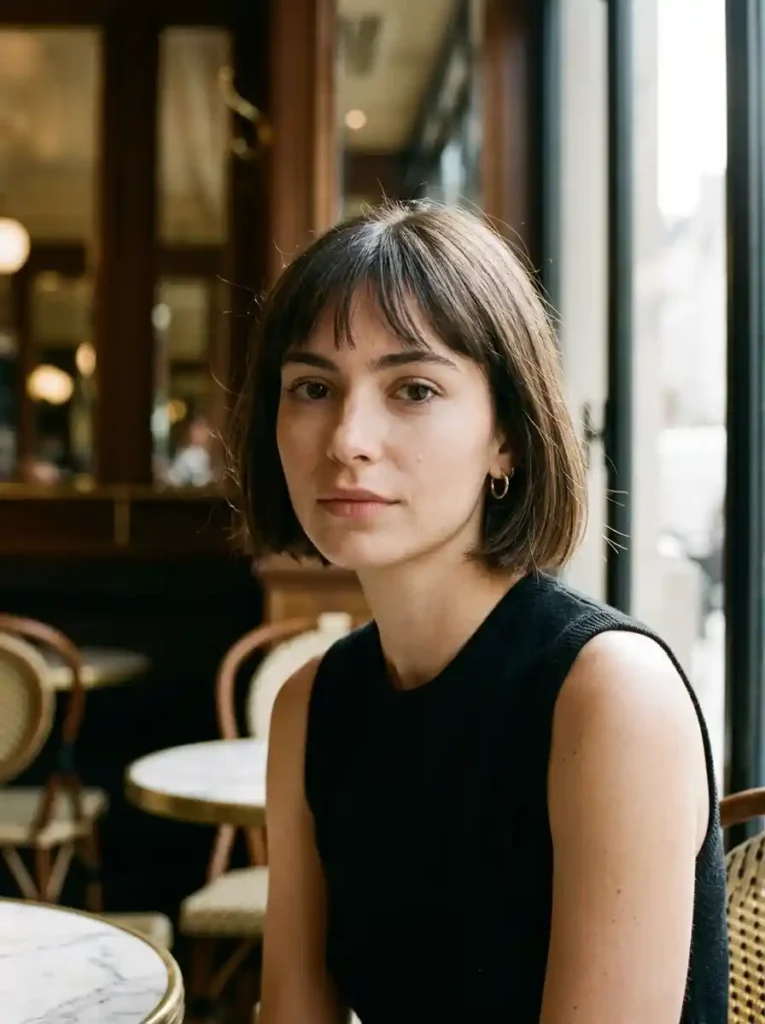
Micro bangs give a French bob a distinctly modern edge. Because the fringe sits higher on the forehead, it draws attention toward the eyes and creates a more graphic silhouette than traditional eyebrow-length bangs. This version is ideal for someone who enjoys expressive fashion and wants a haircut with a recognizable focal point. The shorter fringe also reveals more of the face, making the entire style feel deliberate, architectural, and slightly unconventional.
Before committing, discuss your forehead proportions, hairline, and natural growth direction with your stylist. Micro bangs are less forgiving of uneven growth and usually require more frequent trimming than longer fringe styles. For daily maintenance, use a small brush and low heat to guide the bangs into position without forcing them completely flat. Keep the remaining bob softly curved or lightly textured to balance the sharpness of the fringe. If you are uncertain about the length, start slightly longer and shorten it gradually.
7. The Wavy French Bob

A wavy French bob combines the recognizable short silhouette with movement that feels relaxed and easygoing. Rather than creating uniform curls, the aim is to preserve loose bends and natural variation from section to section. This can be particularly flattering for people whose hair already develops waves after air-drying. The shorter length gives those bends room to move, while a slightly irregular outline prevents the overall shape from appearing too formal or overly controlled.
The right cut makes a noticeable difference. A stylist should consider where your waves expand and how much the hair contracts as it dries, especially around the sides and nape. For styling, apply a lightweight curl cream or mousse to damp hair, then scrunch gently and allow it to dry without repeatedly touching it. A diffuser on low heat can speed up the process while retaining definition. If your waves tend to become fluffy, avoid brushing them once dry and refresh the shape with a little water instead.
8. The Curly French Bob

A curly French bob celebrates natural texture instead of trying to force curls into a straight, uniform shape. Its rounded outline can frame the face beautifully, while the compact length keeps the curls visually lively. The final appearance will vary considerably with curl pattern, density, and shrinkage, so two people with the same nominal haircut may end up with different silhouettes. That individuality is part of the appeal, particularly if you prefer expressive, touchable hair.
Look for a stylist who regularly cuts curly hair and can assess how your curls sit in their natural state. Cutting everything too short while the hair is wet may produce an unexpected result once the curls contract. For home care, use a moisturizing leave-in conditioner and a curl-defining product suited to your texture. Distribute products through damp hair, then scrunch gently rather than pulling curls apart. Sleeping on a smooth pillowcase and refreshing flattened sections with water can help preserve definition between wash days.
9. The French Bob With a Deep Side Part
A deep side part changes the balance of a French bob without requiring a different haircut. By shifting the hair’s visual weight to one side, it creates an elegant sweep across the forehead and gives the crown a little extra lift. This is a useful option if you enjoy polished styling or want to make your short haircut feel different for an evening out. It also offers an alternative to the center parts frequently associated with modern French-inspired looks.
Start with slightly damp roots and direct the hair across the head in the opposite direction before setting the desired part. This simple technique can help create lift without relying on excessive backcombing. Use a small amount of smoothing cream through the lengths, keeping the roots light so the shape does not collapse. If your natural part strongly resists change, work with its direction instead of forcing a dramatic separation. The most flattering side part should complement your growth pattern and remain comfortable throughout the day.
10. The French Bob With Face-Framing Layers

Face-framing layers add movement around the front without sacrificing the compact identity of a French bob. The shortest pieces can soften the cheek area, while slightly longer sections create a gentle transition toward the jawline. This is a versatile choice if you want more dimension than a blunt cut provides but do not want dramatic, heavily layered hair. The result can look especially natural when the front pieces move independently rather than sitting in a perfectly uniform curve.
Ask your stylist to place the layers according to where you want the eye to travel, whether that is toward the cheekbones, jaw, or eyes. Avoid taking too much weight out of the sides if your hair is fine, as excessive layering can leave the ends looking sparse. To style, blow-dry the front sections with a medium round brush, directing them slightly away from the face. Finish with a light cream to define the movement without separating the haircut into obvious, disconnected pieces.
11. The French Bob With a Soft Fringe
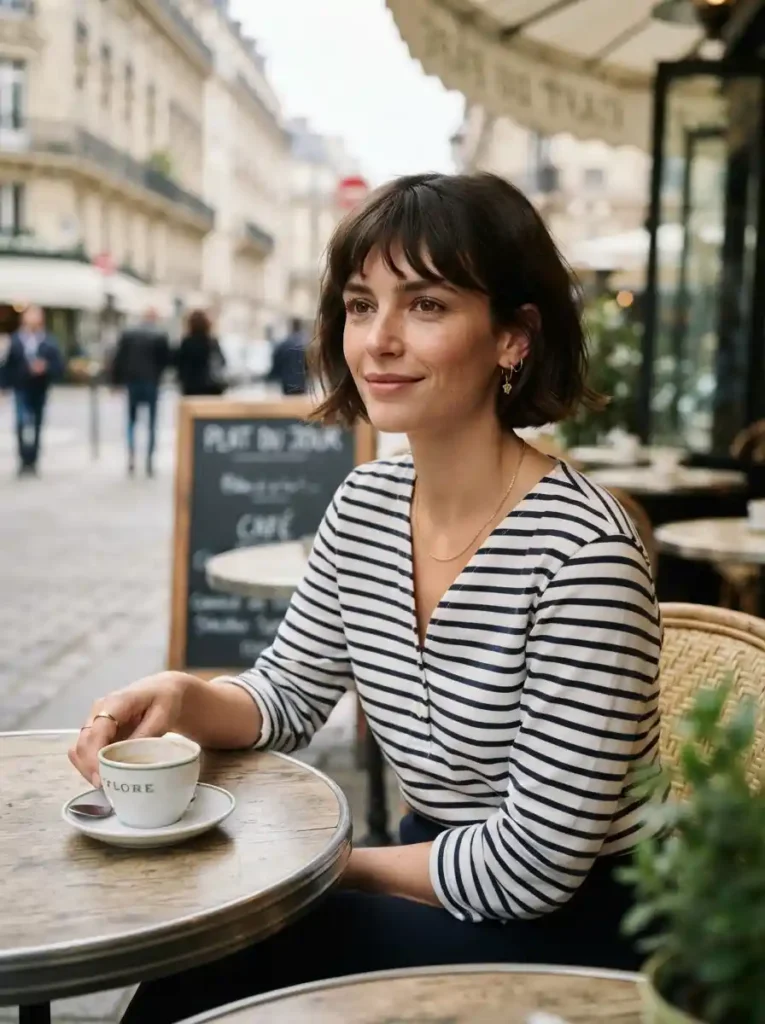
A soft fringe offers a middle ground between blunt bangs and wispy, separated pieces. It creates a gentle horizontal frame across the forehead while retaining enough movement to avoid a severe appearance. Paired with a French bob, this fringe feels feminine and classic without looking overly formal. It is a good option if you enjoy the visual definition of bangs but prefer a shape that blends naturally with the rest of your haircut.
The most important detail is the fringe’s density. A lighter section can be easier to style and less overwhelming, while a fuller fringe may work better for hair that naturally falls forward. Ask your stylist to consider your cowlicks and how much time you want to spend blow-drying in the morning. Use a small brush to direct the fringe into place, then let it cool before touching it. A little dry shampoo at the roots can absorb oil between washes and prevent the bangs from separating awkwardly.
12. The Blonde French Bob

Blonde coloring brings extra dimension to a French bob, especially when the cut includes gentle texture or curved ends. A creamy blonde shade can create a soft, luminous impression, while a darker root blend helps the style feel more natural as it grows. Depending on your complexion and maintenance preferences, you might choose beige blonde, honey blonde, champagne, or a cooler ash tone. The haircut itself remains simple, allowing the color to contribute much of the visual interest.
Before choosing a blonde shade, discuss your natural base color, previous color treatments, and hair condition with a qualified colorist. Going significantly lighter may require multiple appointments, and excessive processing can make short ends feel rough or fragile. A color-safe shampoo, conditioner, and occasional bond-supporting treatment can help maintain the hair’s appearance. If you want a lower-maintenance option, ask about subtle highlights or a soft root shadow instead of an all-over light blonde. These approaches can create dimension without requiring frequent root touch-ups.
13. The Copper French Bob
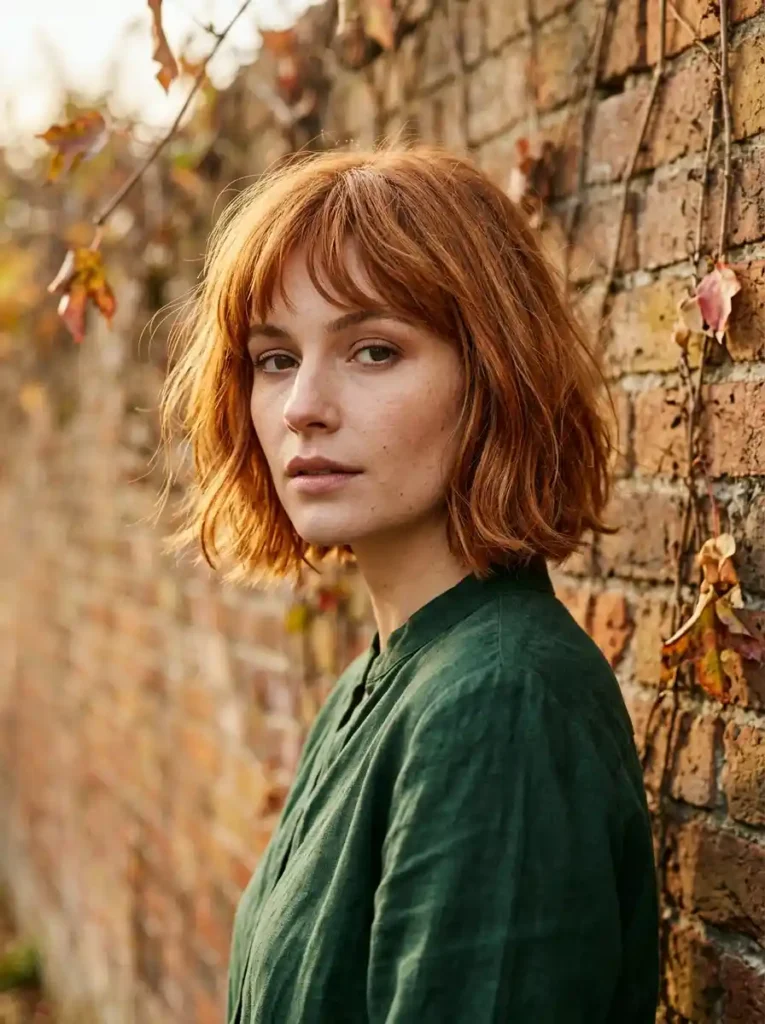
A copper French bob makes the haircut feel expressive while keeping its overall shape manageable and elegant. Copper shades range from soft strawberry tones to richer auburn and burnt orange, so there is room to choose a color that feels distinctive without being overpowering. The shorter length also makes the cut a useful canvas for showing off the richness of a carefully blended shade. Paired with soft bangs, copper hair can look warm and relaxed rather than overly dramatic.
Color maintenance deserves consideration before making the change. Red and copper pigments can fade noticeably with repeated washing, frequent heat styling, and prolonged sun exposure. Use a shampoo formulated for color-treated hair, wash with lukewarm rather than very hot water, and ask your colorist whether a tinted conditioner would help maintain your preferred shade. Bring reference images taken in natural daylight so you can compare tones accurately. If you prefer subtlety, a muted auburn-copper blend can provide warmth without requiring an especially vivid finish.
14. The French Bob With Subtle Highlights
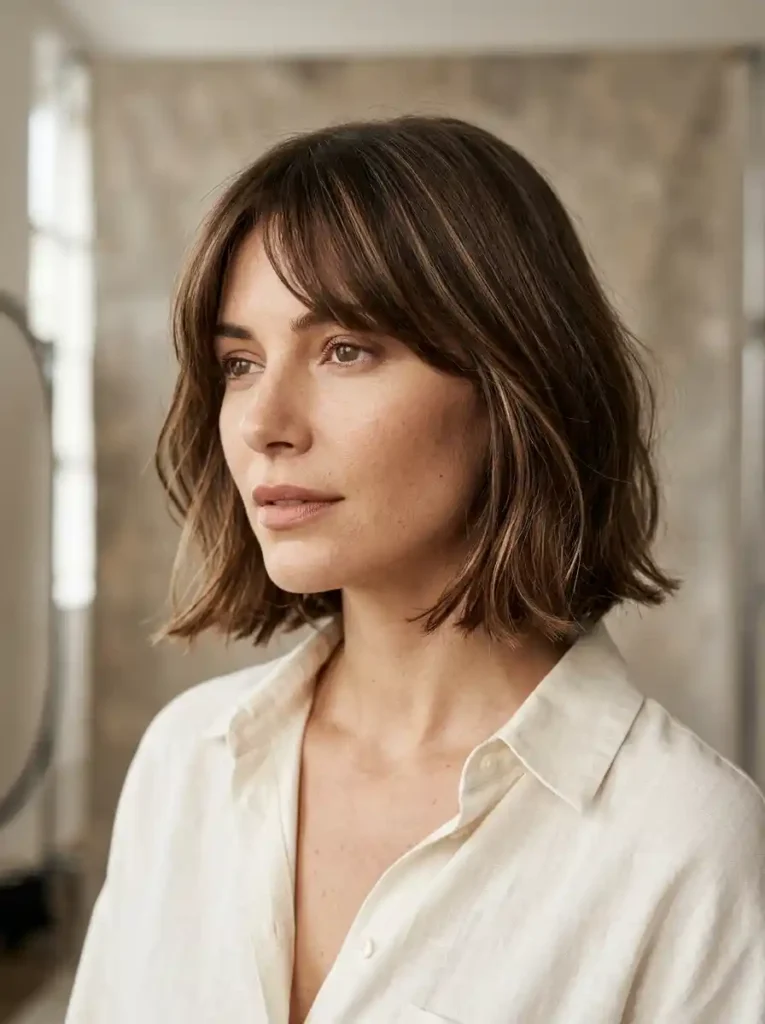
Subtle highlights can make a French bob look more dimensional without changing its fundamental silhouette. Fine ribbons of caramel, honey, or beige around the face catch the light as the hair moves, helping the layers and curved ends become more visible. This approach works particularly well if you like your natural brunette base but want a refreshed appearance. The effect is understated enough for everyday wear and can look sophisticated even when the hair is styled with minimal effort.
Ask your colorist to keep the highlights fine and strategically placed rather than creating a strong contrast from root to tip. A few brighter pieces around the front may be sufficient, especially on a short haircut where color changes are immediately noticeable. Because highlights can make hair feel drier, use a nourishing conditioner and limit unnecessary heat. For an easy styling routine, create a slight bend through the lengths with a round brush or curling iron to reveal the color variation without making the bob look overly styled.
15. The Sleek French Bob
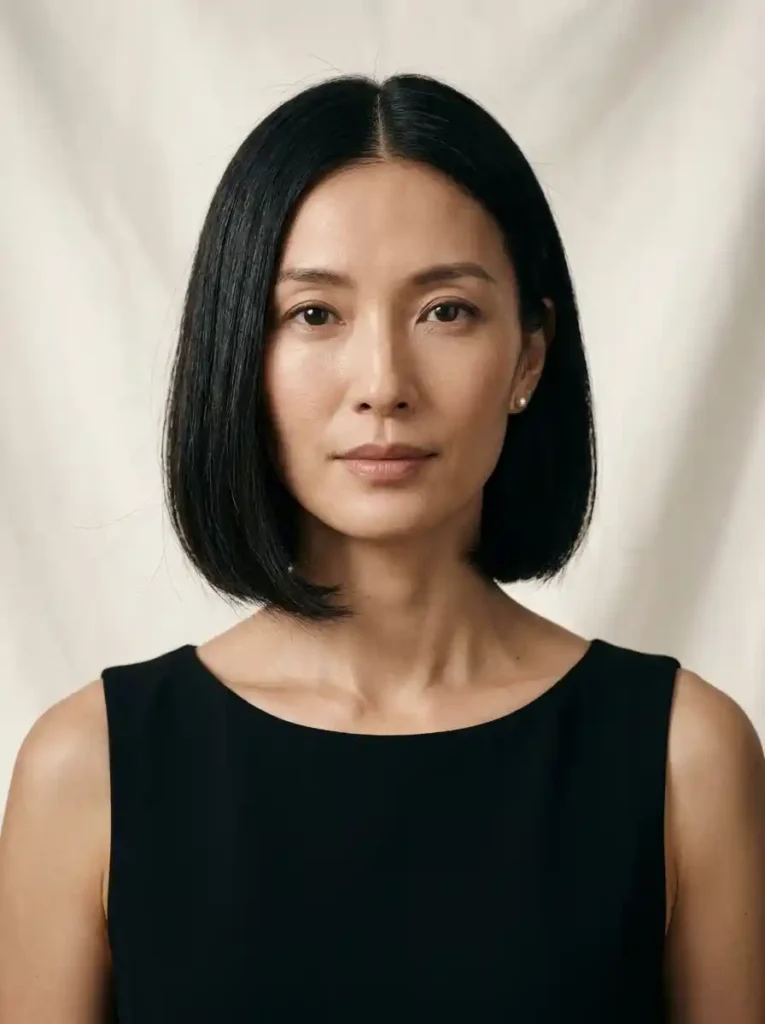
A sleek French bob offers a more polished interpretation of the classic cut. The smooth surface emphasizes the line around the jaw, while a center part creates a balanced, modern appearance. This style works especially well for people who enjoy minimalist clothing, clean accessories, and hair that looks intentionally finished. Although the shape is simple, its success depends on a good cut, healthy-looking ends, and styling that preserves movement rather than making the hair appear stiff.
Begin with a smoothing product suited to your hair type and use a nozzle attachment to direct airflow down the hair shaft. If needed, pass a flat iron through small sections at a moderate temperature, avoiding repeated passes over the same strands. Finish with a tiny amount of lightweight serum on the ends rather than coating the entire head. Remember that sleek styling may expose uneven sections more clearly than textured finishes, so regular trims and careful drying technique help maintain the clean outline.
16. The French Bob With a Tousled Finish

The tousled French bob is ideal if you want the appeal of short hair without the impression that every strand has been carefully arranged. Its relaxed shape relies on movement, a little irregularity, and enough texture to keep the outline interesting. The style pairs naturally with denim, knitwear, striped tops, and other everyday staples. It is also a practical way to make a traditional bob feel less formal, especially when your hair already has a slight wave.
To create the finish, start with damp hair and apply a small amount of texturizing mousse or spray through the mid-lengths and ends. Scrunch gently, then air-dry or use a diffuser on a low setting. Once dry, separate a few pieces with your fingertips instead of repeatedly brushing the hair. If you have straight hair, a large-barrel curling iron can create loose bends, but alternate the direction of each section to avoid uniform curls. The goal is controlled imperfection, not a deliberately messy appearance.
17. The French Bob for Fine Hair
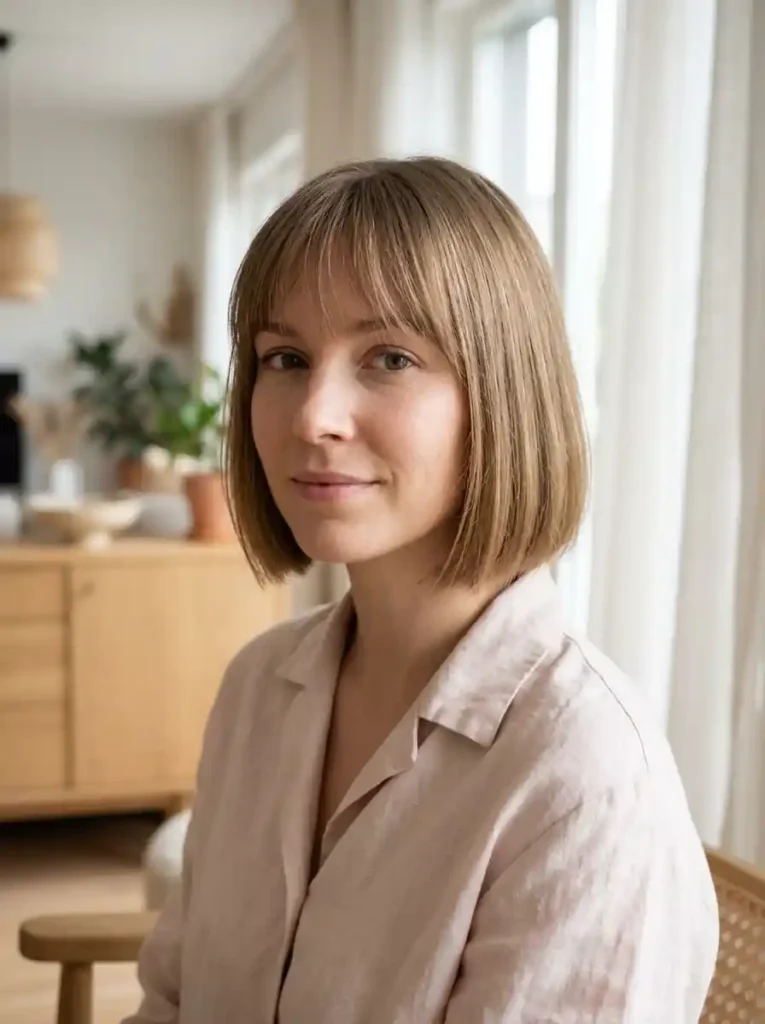
Fine hair can work beautifully with a French bob because the shorter length reduces the weight pulling down the roots. A compact outline can also make the ends appear fuller, particularly when the cut avoids excessive thinning or disconnected layers. If your hair tends to lie flat, a shorter shape with a little lift at the crown may feel more manageable than longer styles. The key is choosing proportions that preserve density instead of trying to manufacture texture everywhere.
Tell your stylist that maintaining the appearance of fullness is a priority. A blunt or softly rounded perimeter often works better than heavily razored ends, although the right choice depends on your hairline and density. For styling, apply a lightweight volumizing mousse near the roots and blow-dry with your head tilted slightly forward. Avoid rich oils and heavy creams at the scalp, as they can flatten fine strands. A small amount of dry shampoo at the roots can add grip on non-wash days without requiring elaborate styling.
18. The French Bob for Thick Hair
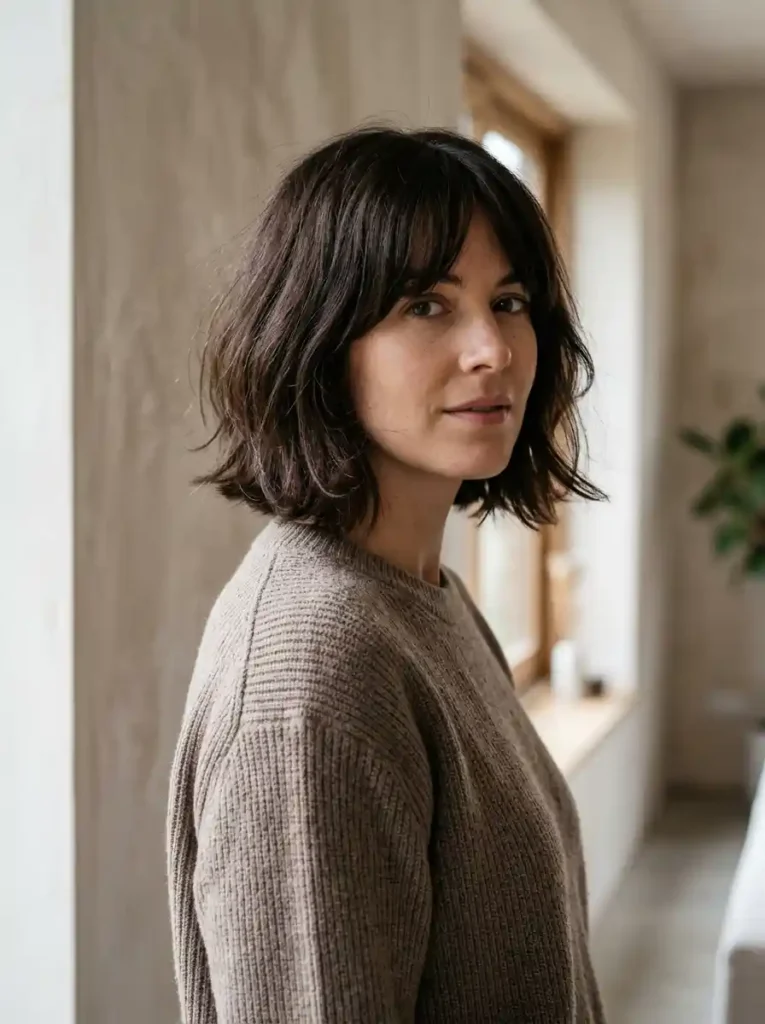
Thick hair gives a French bob natural presence, but the cut needs enough internal shaping to prevent the sides from becoming excessively wide. When thoughtfully balanced, the result can feel sculptural and full without turning into a heavy, triangular silhouette. This makes the style appealing if you want to remove length while retaining a substantial shape. A slightly longer front or carefully controlled layers can also help the haircut sit more comfortably around the jaw and neck.
Ask for weight removal in specific areas rather than aggressive thinning throughout the entire haircut. Over-thinning can create frizzy ends or cause short pieces to expand unpredictably, particularly in humid weather. Your stylist should assess the hair’s natural direction and how it settles after drying before deciding where to remove bulk. At home, use a smoothing cream on the mid-lengths and ends, then blow-dry in manageable sections. A little inward movement at the perimeter can keep the shape controlled without sacrificing its natural fullness.
19. The Asymmetrical French Bob

An asymmetrical French bob introduces visual interest through an uneven length rather than relying on elaborate styling or dramatic color. One side sits slightly longer, creating a diagonal line that feels contemporary while remaining wearable. The difference can be subtle enough for everyday life or more pronounced if you prefer a statement haircut. It is a useful option when you love the French bob’s compact shape but want something less traditional than a perfectly balanced silhouette.
The best asymmetrical cuts are planned carefully from the front, sides, and back so the longer section looks intentional rather than accidental. Ask your stylist to show you how the shape will sit when your hair is parted in its usual direction. This is especially important if your hair has a strong natural part or uneven growth patterns. Styling can remain simple: smooth the longer side slightly forward and let the shorter side reveal the jawline. Regular trims preserve the diagonal outline as the hair grows.
20. The Shaggy French Bob
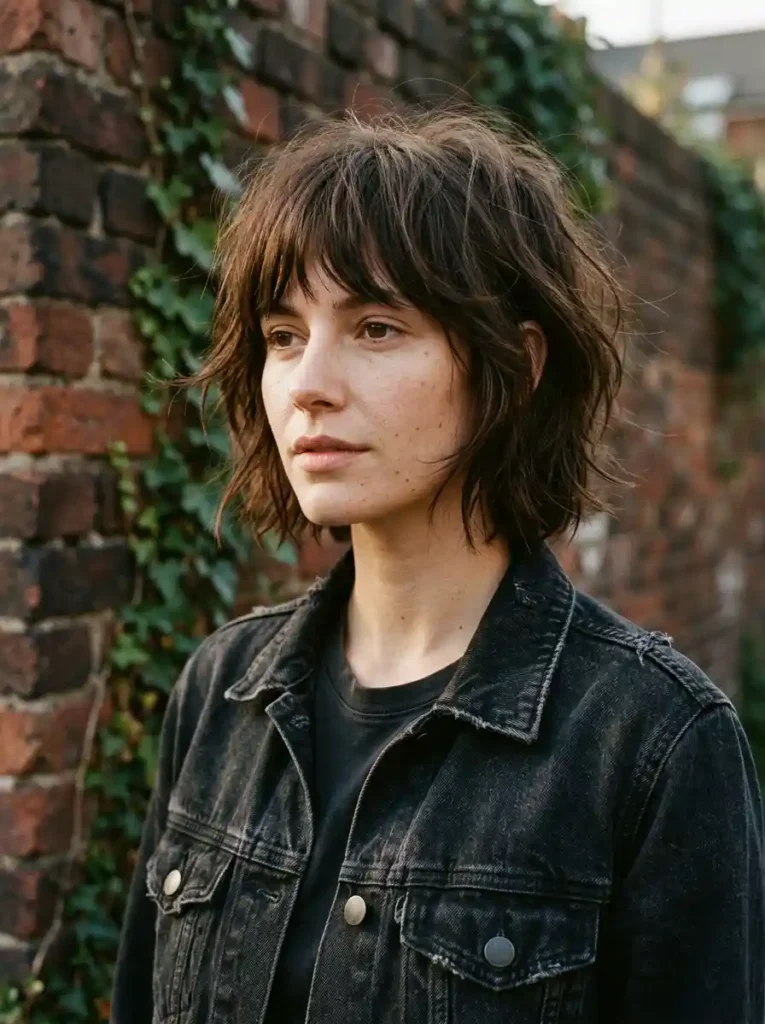
The shaggy French bob is a good fit if you like short hair with a little rock-and-roll character. Unlike a blunt bob, this version uses more visible layers and a deliberately broken-up outline to create movement around the crown and ends. It can be especially appealing for naturally wavy hair or anyone who enjoys a casual, slightly undone finish. The combination of compact length and textured pieces keeps the style expressive without requiring a long daily styling session.
Because the shaggy effect depends on the placement of the layers, bring photographs that show the shape from several angles. Ask your stylist to preserve enough length around the perimeter so the haircut still reads as a bob rather than a very short shag. Styling products should enhance separation without making the hair crunchy; a flexible cream or lightweight paste is often sufficient. Work a small amount between your fingertips and define only a few sections. This keeps the finish relaxed instead of making every layer look individually sculpted.
21. The French Bob With a Rounded Shape
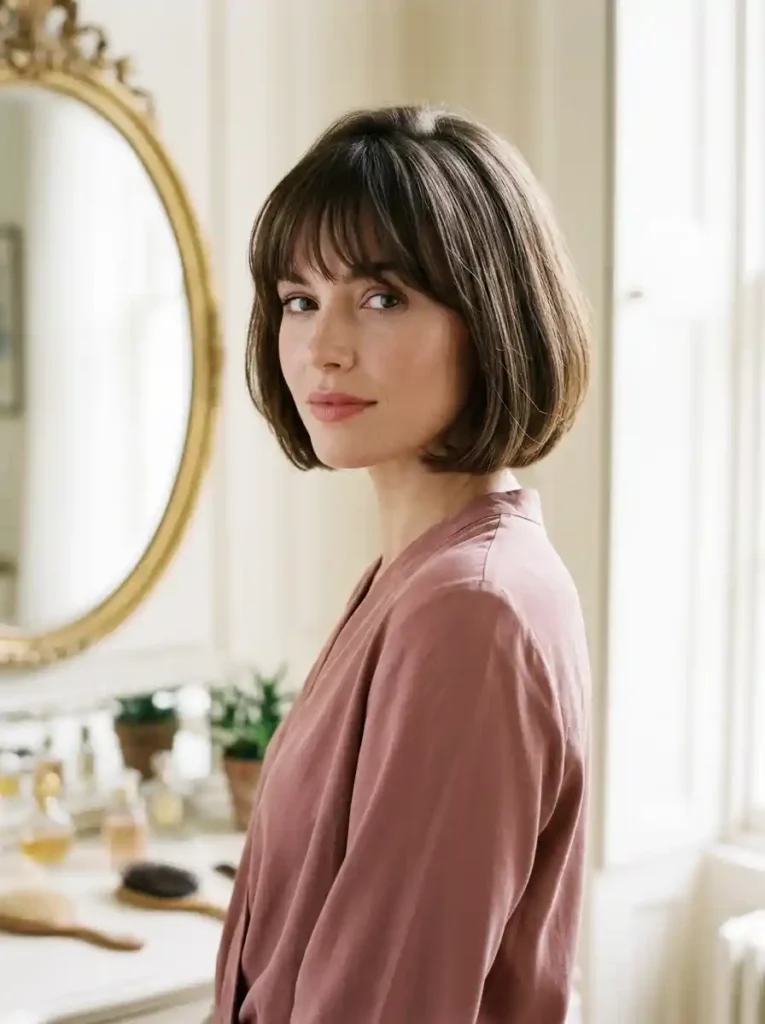
A rounded French bob emphasizes a gentle curve rather than a sharp, straight perimeter. The ends tuck subtly inward, creating a cohesive shape that feels classic and polished without requiring an extremely sleek finish. This version may appeal to people who want a soft frame around the face or prefer a more structured look than a tousled bob provides. It can also be personalized through fringe length, crown volume, and the precise point where the ends meet the jawline.
To achieve the shape, your stylist may use careful graduation or subtle internal shaping, depending on your hair texture and desired volume. At home, a medium round brush can guide the ends inward while lifting the roots slightly for balance. Avoid rolling the brush too tightly, as excessive curl can make the haircut appear dated or overly rounded. Instead, aim for a soft bend that follows the natural line of the head. A lightweight finishing spray will help the style hold while allowing the hair to move comfortably.
22. The Modern French Bob With Soft Layers

A modern French bob combines the recognizable jaw-length silhouette with softer detailing that makes the cut feel current and adaptable. Gentle layers introduce movement without sacrificing fullness, while a natural part keeps the style from looking too rigid. This version is particularly useful if you want a haircut that transitions between polished workwear, relaxed weekend outfits, and evening looks. Rather than following one strict trend, it offers a balanced starting point that can be customized to your hair’s natural behavior.
When discussing the cut with your stylist, focus on the finish you want rather than relying on the word “modern” alone. Bring references showing the preferred length, fringe, and amount of texture, and explain how much time you are willing to spend styling. A few strategically placed layers may be enough to create movement without making maintenance difficult. Between appointments, refresh the shape with a blow-dry, a small amount of styling cream, or natural air-drying. The best version should complement your routine as comfortably as it complements your features.
Conclusion
A French bob can be classic, edgy, romantic, or effortlessly relaxed, depending on its length, fringe, texture, and color. The best choice is not necessarily the trendiest version but the one that works with your natural hair and makes you feel comfortable wearing it every day. If you have fine hair, a clean perimeter may help create a fuller appearance. If your hair is thick or curly, thoughtful shaping can preserve movement while controlling excess bulk. Bangs, highlights, and subtle asymmetry offer additional ways to personalize the cut without changing its essential character.
Before your salon appointment, save two or three reference photos that show the features you like most, and discuss your styling routine, hair texture, and maintenance preferences. Remember that a photograph is inspiration, not a guarantee of an identical result. A skilled stylist can adapt the proportions to suit you. With the right combination of shape and styling, your French bob can feel fresh, practical, and unmistakably personal.