Mushroom brown hair is the perfect choice if you love cool, sophisticated brunette shades that feel modern without looking overly dramatic. Inspired by the soft taupe, smoky beige, and earthy brown tones of its namesake, this versatile color creates beautiful dimension while keeping your look effortlessly polished. Whether you prefer subtle highlights, a glossy all-over color, or a dimensional balayage, these 24 chic mushroom brown hair ideas will help you discover a shade and style worth saving for your next salon appointment.
1. Classic Mushroom Brown Hair

Classic mushroom brown is an excellent starting point if you want a brunette shade that feels refined rather than ordinary. Its signature combination of cool brown and muted gray-beige undertones creates depth without relying on obvious highlights. The result is understated, elegant, and easy to coordinate with different outfits. This shade works particularly well for anyone who wants a noticeable color refresh while staying close to a natural-looking brunette base.
To achieve this look, ask your colorist for a neutral-to-cool brown formula with soft taupe undertones rather than an overly ashy finish. Your natural hair color, previous dye history, and underlying warmth will influence the final result. A gloss can help maintain shine and refine the tone between appointments. Use a color-safe shampoo, limit excessive heat styling, and consider a weekly conditioning treatment to keep the brunette finish looking smooth and polished.
2. Mushroom Brown Balayage
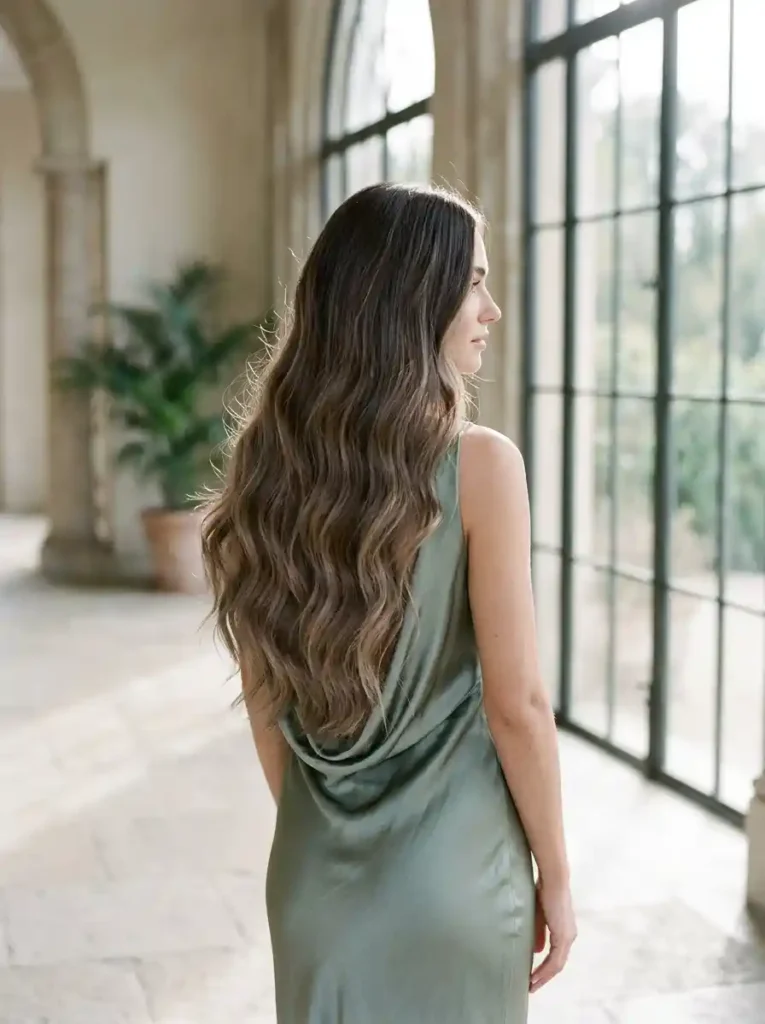
Mushroom brown balayage is ideal if you want dimension without committing to a single, uniform shade. Hand-painted sections create a gradual transition from darker roots to lighter taupe-brown ends, giving long hair a beautifully blended appearance. Because the color placement can be customized, the result may look delicate and understated or more noticeable, depending on the contrast. It is especially flattering on layered cuts, where the variation in tone helps individual pieces stand out.
For the most natural finish, ask your stylist to concentrate lighter mushroom and beige-brown tones around the mid-lengths and ends while preserving depth near the scalp. This technique can make regrowth less obvious than a traditional full-head highlight service, although maintenance depends on your starting color and desired brightness. Schedule toning appointments when warmth becomes noticeable, and use a heat protectant before styling. Loose waves are particularly effective for showing the gradual movement between shades.
3. Mushroom Brown Hair With Curtain Bangs
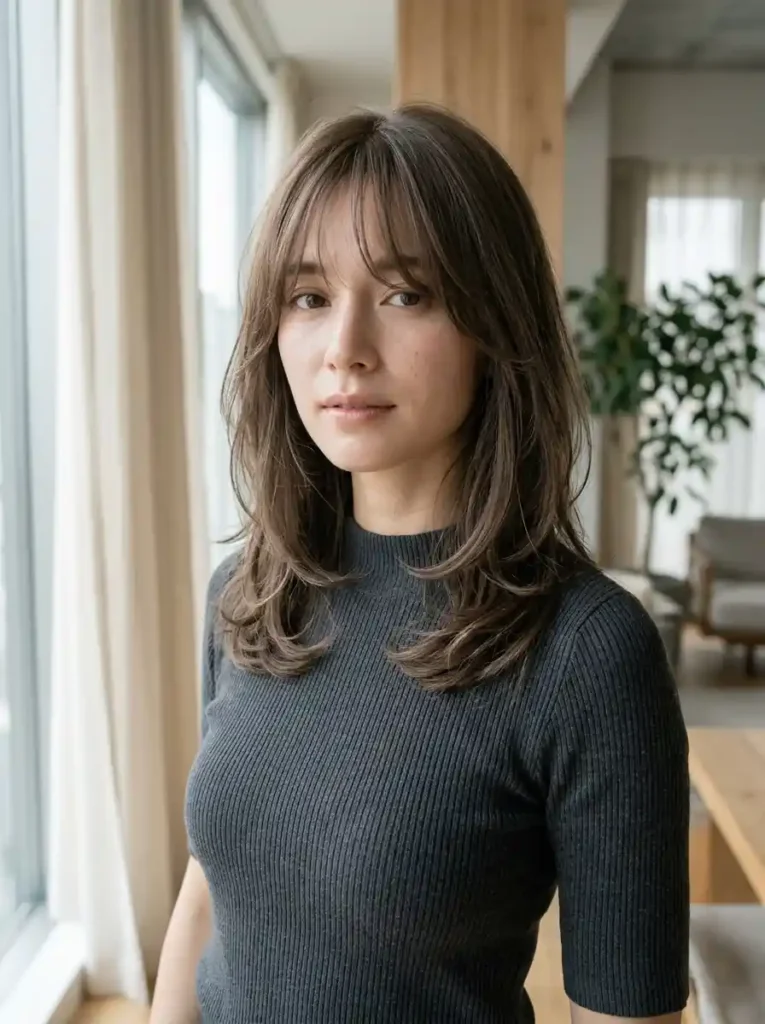
Curtain bangs bring a relaxed, fashionable quality to mushroom brown hair by drawing attention toward the eyes and cheekbones. The softly parted fringe blends into longer face-framing layers, making the haircut feel connected rather than sharply separated. Mushroom brown adds another layer of sophistication because its muted undertones complement the movement of the cut without competing with it. This combination suits medium-length hair particularly well, although longer hair can also carry the look beautifully.
Before choosing curtain bangs, consider how much styling you want to do each morning. A round brush and blow dryer can help create the characteristic outward sweep, while a lightweight styling cream controls flyaways without flattening the fringe. Ask your stylist to customize the shortest pieces to your face shape and natural growth pattern. Since bangs grow noticeably between trims, regular fringe maintenance will help preserve their shape even when the rest of your haircut needs little attention.
4. Dark Mushroom Brown Hair
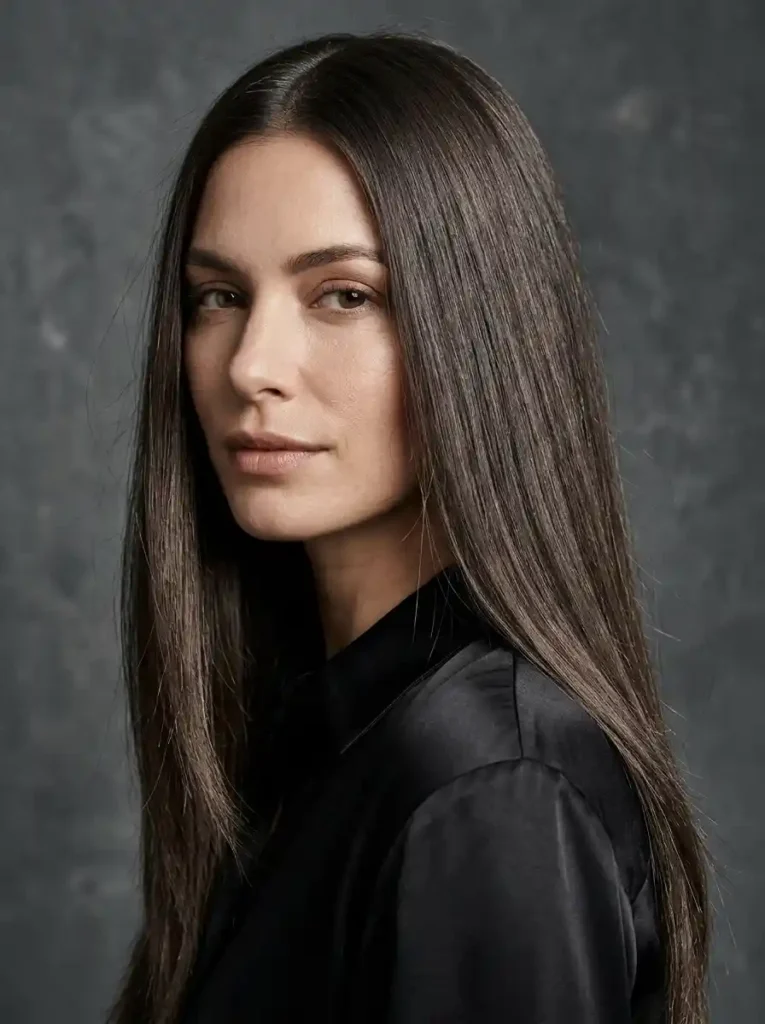
Dark mushroom brown offers a more understated alternative to lighter ash-brown shades. Its deeper brunette foundation preserves richness, while muted taupe undertones soften the overall color and prevent it from feeling excessively warm. The effect is polished and contemporary, particularly on sleek bobs, long straight hair, or softly layered styles. It is a useful option if you prefer subtle color changes that remain professional and versatile across different wardrobes and occasions.
When discussing this shade with your stylist, emphasize that you want a deep, cool brunette rather than a flat black-brown or an overly gray finish. A gloss can add reflectivity and help refine the undertone without necessarily requiring dramatic lightening. If your hair naturally pulls warm, your colorist may need to adjust the formula to achieve the desired result. Preserve the sleek appearance with lightweight smoothing products, and avoid heavy oils that can make dark hair appear greasy.
5. Mushroom Brown Hair With Beige Highlights
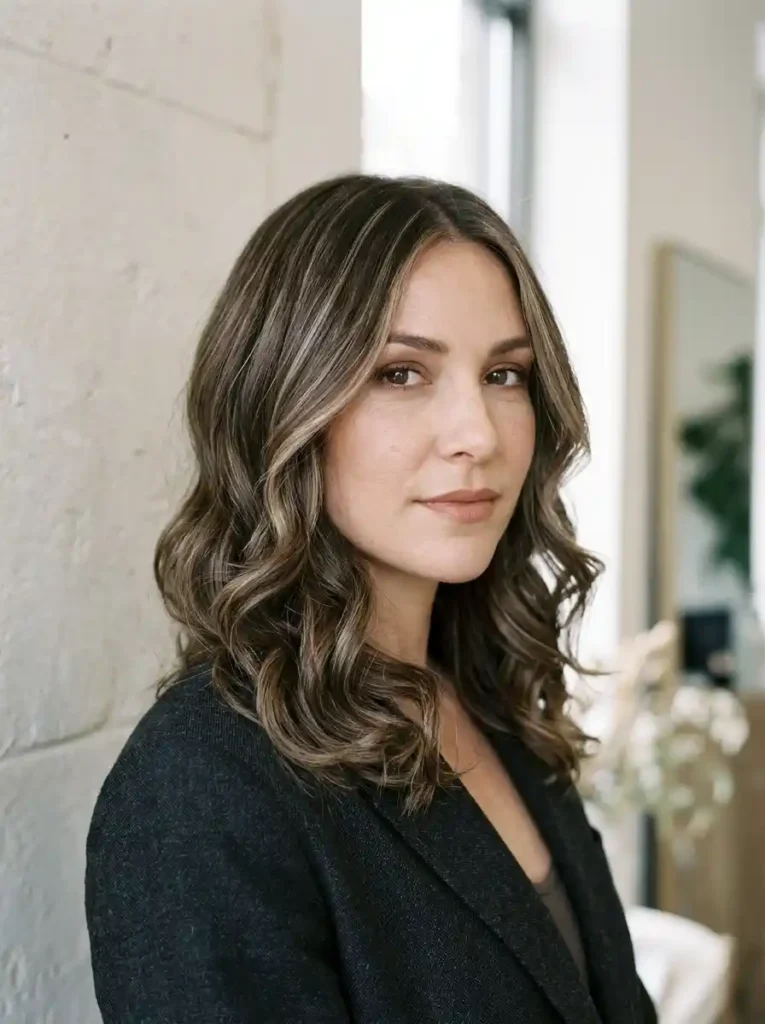
Beige highlights introduce gentle brightness into mushroom brown hair without creating the golden appearance associated with traditional warm brunette highlights. The contrast between the cool brown base and muted beige ribbons gives the hair a dimensional finish that looks especially attractive in natural daylight. This option works well if your current brunette color feels a little flat but you are not ready for a significantly lighter overall shade.
Placement makes a noticeable difference. Fine highlights around the face can brighten the front sections, while scattered pieces through the crown and lengths provide balanced dimension. Ask your colorist to keep the beige tones neutral or slightly cool so they complement the mushroom base. Highlighted hair may need extra conditioning, especially if lightener is involved. A color-safe routine and occasional salon gloss can help preserve the blended appearance without allowing the beige sections to become excessively yellow or brassy.
6. Mushroom Brown Lob Haircut

A long bob, or lob, gives mushroom brown hair a fresh shape without requiring the commitment of a very short haircut. The length typically falls between the chin and collarbone, making it adaptable to straight styling, loose waves, and simple tucked-behind-the-ear looks. The cool brunette shade emphasizes the clean outline of the cut, while subtle tonal variation prevents the style from appearing too uniform.
For fine hair, a relatively blunt perimeter can create the impression of fuller ends, whereas a few internal layers may help thicker hair move more naturally. Tell your stylist how you usually wear your hair before deciding on the final length, because natural texture can change how a lob sits. A lightweight volumizing product works well at the roots, while a small amount of smoothing cream can refine the ends. Regular trims will help maintain the shape and keep the outline looking intentional.
7. Mushroom Brown Hair With Soft Waves
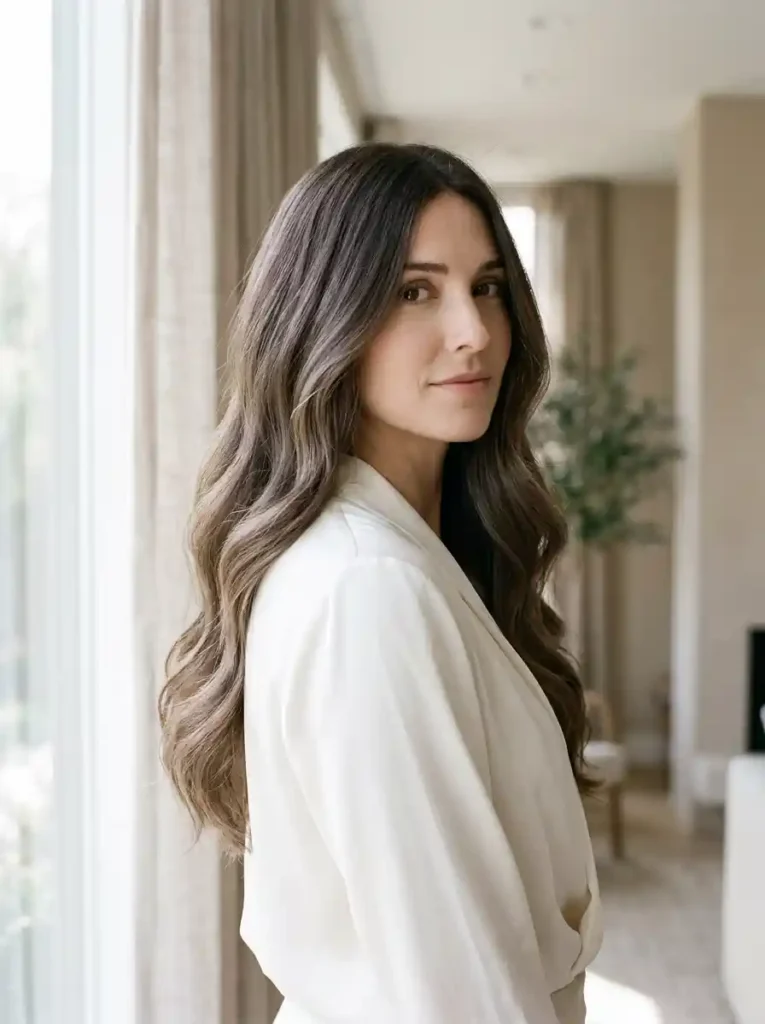
Soft waves are a beautiful way to showcase the subtle tonal variation in mushroom brown hair. Unlike tight curls, which can visually compress the color, loose bends allow light to travel across different sections and reveal smoky, beige, and brunette undertones. The overall effect feels relaxed yet polished, making it suitable for everyday outfits, dinner plans, or special occasions that call for a little extra refinement.
You do not need a complicated styling routine to achieve this finish. Apply heat protectant to dry or appropriately prepared hair, then use a medium-barrel curling iron to create loose sections, alternating their direction for a more natural result. Leave the ends slightly straighter if you prefer a modern, undone appearance. Once the hair cools, gently separate the waves with your fingers and finish with a flexible-hold spray. Avoid excessive product, which can weigh down the movement and reduce visible dimension.
8. Mushroom Brown Hair With Face-Framing Highlights
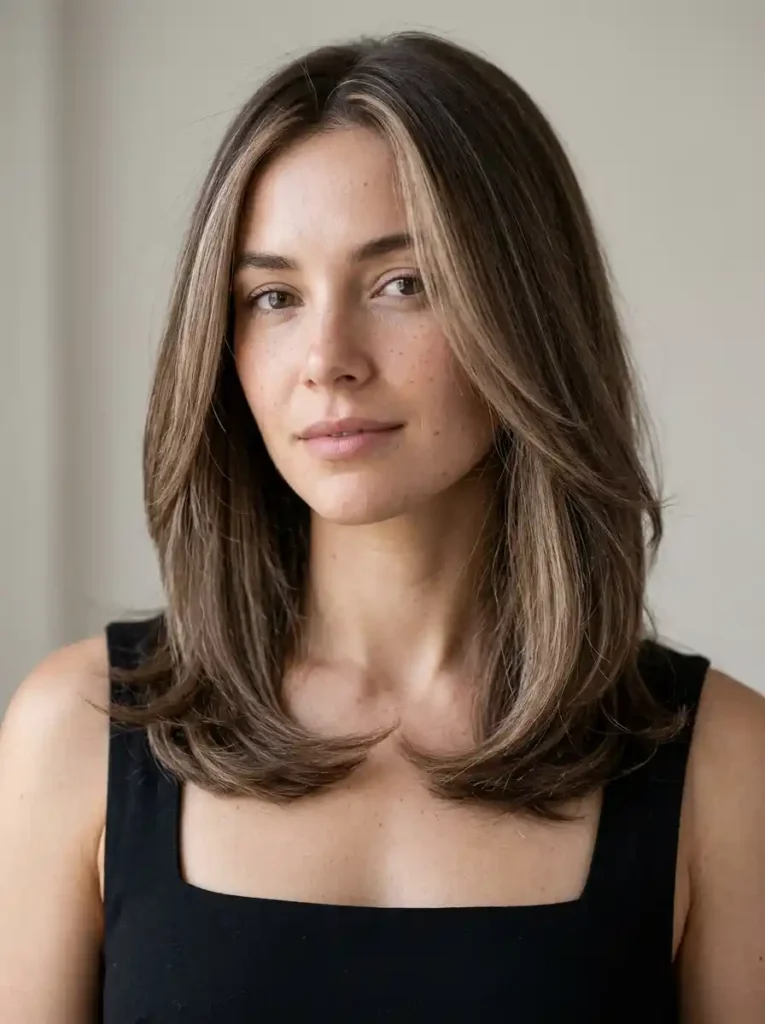
Face-framing highlights offer a focused way to refresh mushroom brown hair without lightening every section. Slightly lighter taupe or beige pieces around the front create visual interest and help the haircut feel more customized. The contrast can be delicate or more pronounced depending on how light the highlights are compared with your base. This placement is particularly appealing for people who usually wear their hair down, in a ponytail, or tucked behind the ears.
For a seamless result, ask your colorist to blend the lighter sections into the surrounding brunette rather than creating two obvious contrasting strips. The starting point, width, and brightness should reflect your natural hairline and preferred level of maintenance. If you want a softer effect, choose fine ribbons of color instead of a broad, high-contrast money piece. Because the front sections are frequently exposed to styling tools and sunlight, protect them with heat protectant and appropriate UV-conscious hair care when outdoors.
9. Mushroom Brown Balayage on Long Hair
Long hair provides plenty of space for mushroom brown balayage to develop gradually. The darker root area creates a grounded base, while the taupe and beige tones become more visible along the lengths. This arrangement works particularly well when you want movement and dimension without a sharply defined highlight pattern. Long layers can further emphasize the color transition, allowing individual sections to catch the light as the hair moves.
The key is to avoid making the ends dramatically lighter unless that contrast is intentional. Ask your stylist to consider the existing condition of your hair, particularly if the lower lengths have already been colored or lightened. A gradual approach can help preserve the overall appearance of healthy, cohesive hair. Use a nourishing conditioner after washing, minimize unnecessary heat, and book trims when the ends begin to split. Long balayage looks best when the transition remains blended and the lighter sections retain their softness.
10. Mushroom Brown Hair With a Glossy Finish
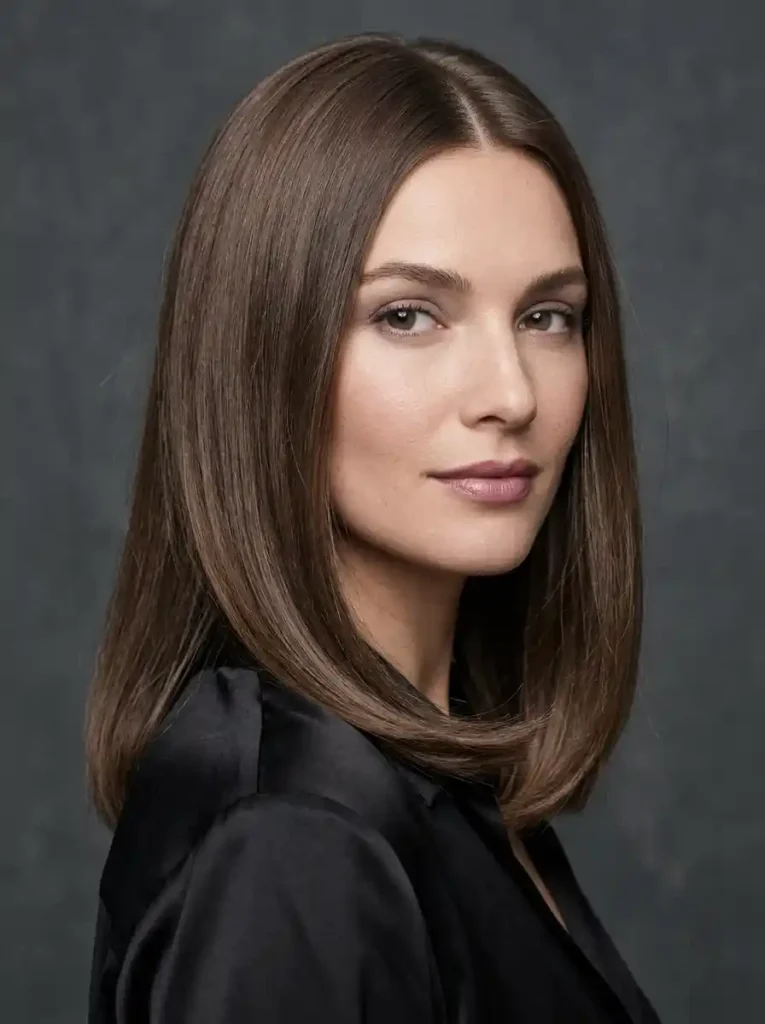
A glossy finish can make even a simple mushroom brown haircut feel salon-fresh. The appeal comes from the way reflected light reveals the color’s subtle variations while giving the hair a smooth, well-maintained appearance. This look is especially effective on straight hair, blunt cuts, and softly rounded bobs, where the surface is visible enough to emphasize the finish. The color itself can remain understated while the styling creates a more elevated result.
Shine depends on hair condition as well as color choice. Use a conditioner suited to your hair type, apply a heat protectant before blow-drying, and finish with a small amount of lightweight serum if needed. A glossing treatment from your salon may refresh the tone and enhance reflectivity, but it will not repair structural damage. If your hair is naturally coarse or porous, ask for a routine that balances moisture and smoothing without leaving the roots heavy or the ends coated.
11. Mushroom Brown Hair With Subtle Babylights
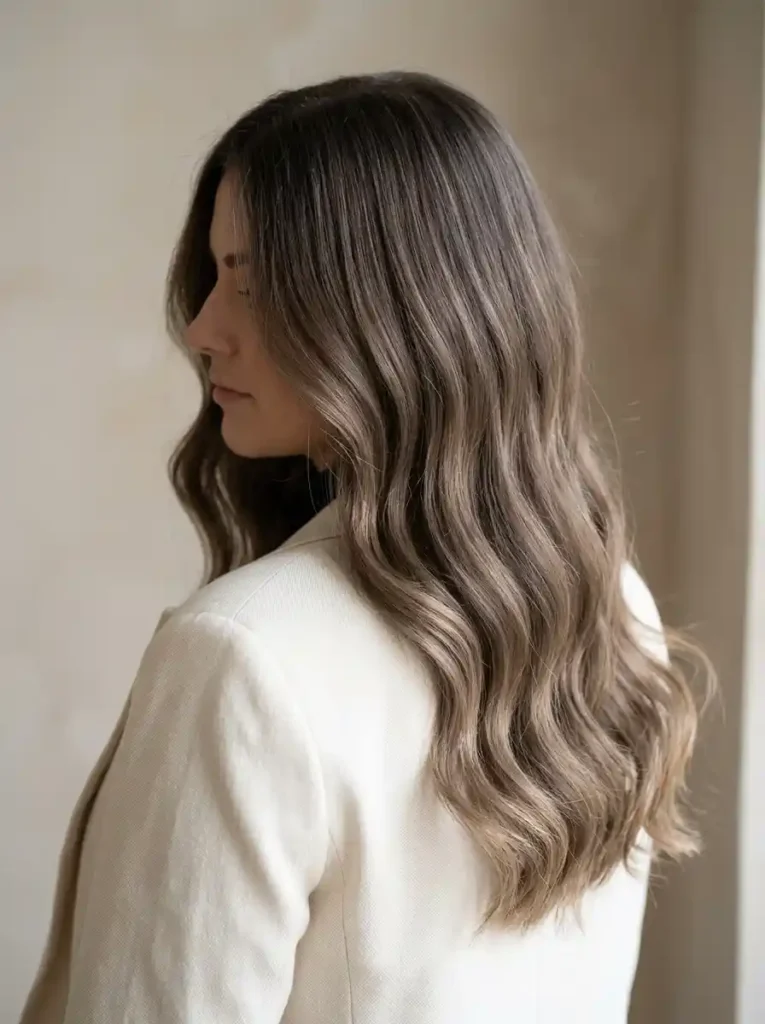
Babylights are very fine highlights designed to create delicate variation rather than bold contrast. In mushroom brown hair, they can soften a solid brunette base and introduce tiny shifts in brightness that become more apparent when the hair moves. The finished color often looks understated from a distance but reveals more detail up close. This makes babylights a useful choice for anyone who enjoys subtle color work and prefers a refined, natural-looking result.
Because the sections are so fine, achieving a balanced finish requires thoughtful placement and patience. Ask your colorist for cool beige or taupe pieces that harmonize with your base rather than an abundance of icy blonde. The right level of contrast will depend on your natural color and the condition of your hair. Fine highlights still require care, so incorporate conditioning treatments when necessary and avoid overusing purple shampoo, which may be unnecessary for brunette tones and can sometimes dull the desired finish.
12. Mushroom Brown Hair With Long Layers
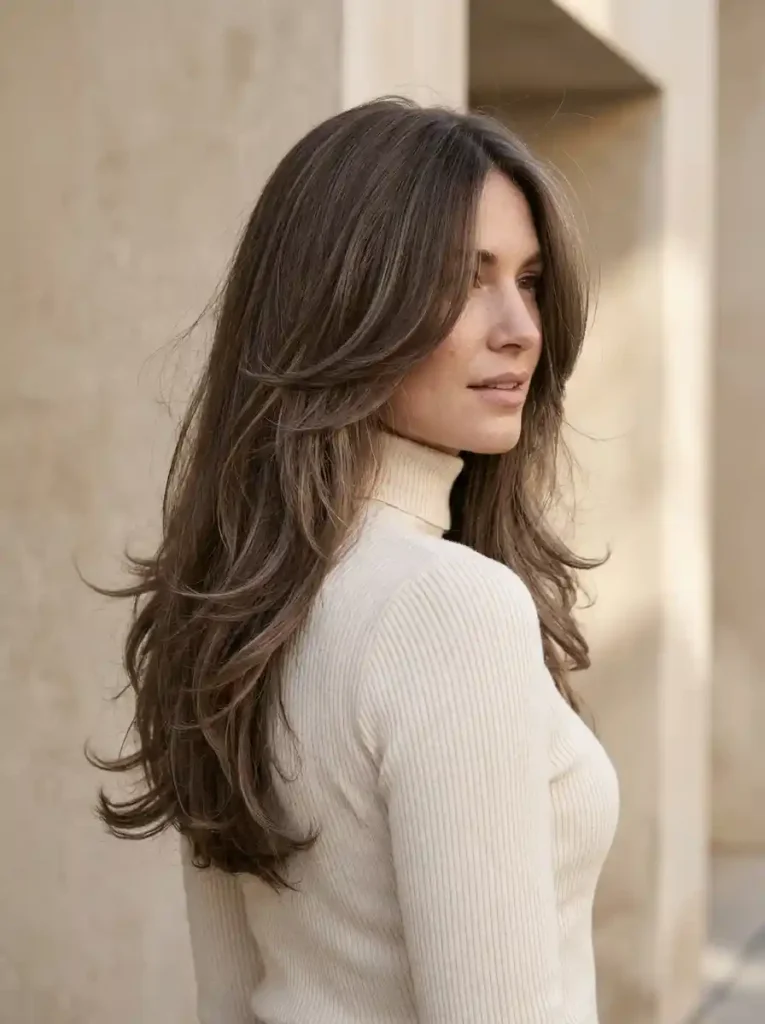
Long layers give mushroom brown hair movement while preserving the overall length. The shorter pieces around the face can soften the silhouette, and the longer sections help the hair maintain fullness through the back. When paired with subtle tonal variation, the layers create different visual planes, allowing the cool brown color to appear richer and more dimensional without depending on high-contrast highlights.
The best layering pattern depends on your hair density and natural texture. Thick hair may benefit from carefully distributed internal layers to reduce bulk, while fine hair often looks fuller with fewer, more strategic cuts. Ask your stylist to show you where the shortest pieces will fall when your hair is styled naturally. To recreate a salon blowout, direct the roots upward with a round brush and turn the ends away from the face. A lightweight finishing spray can preserve movement without making the layers stiff.
13. Mushroom Brown Hair With a Money Piece

A money piece creates a brighter frame around the face by emphasizing the front sections of the hair. Against a mushroom brown base, muted beige or taupe highlights offer a more sophisticated alternative to strongly golden blonde. The effect can range from a subtle lift to a noticeable statement, depending on the width and brightness of the lighter sections. It is a good choice if you want your brunette color to feel more expressive without changing the entire head.
Placement should be personalized rather than copied directly from a reference photo. Wider sections produce greater contrast, while finer highlights create a softer transition into the surrounding brown. Tell your stylist whether you usually wear a middle part, side part, or pulled-back hairstyle, since these choices affect how the lighter pieces appear. Maintain the brightness with occasional salon toning and use conditioning products on lightened sections. If your hair is already fragile, discuss a less intensive color approach before adding further lightener.
14. Mushroom Brown Hair on a Textured Bob
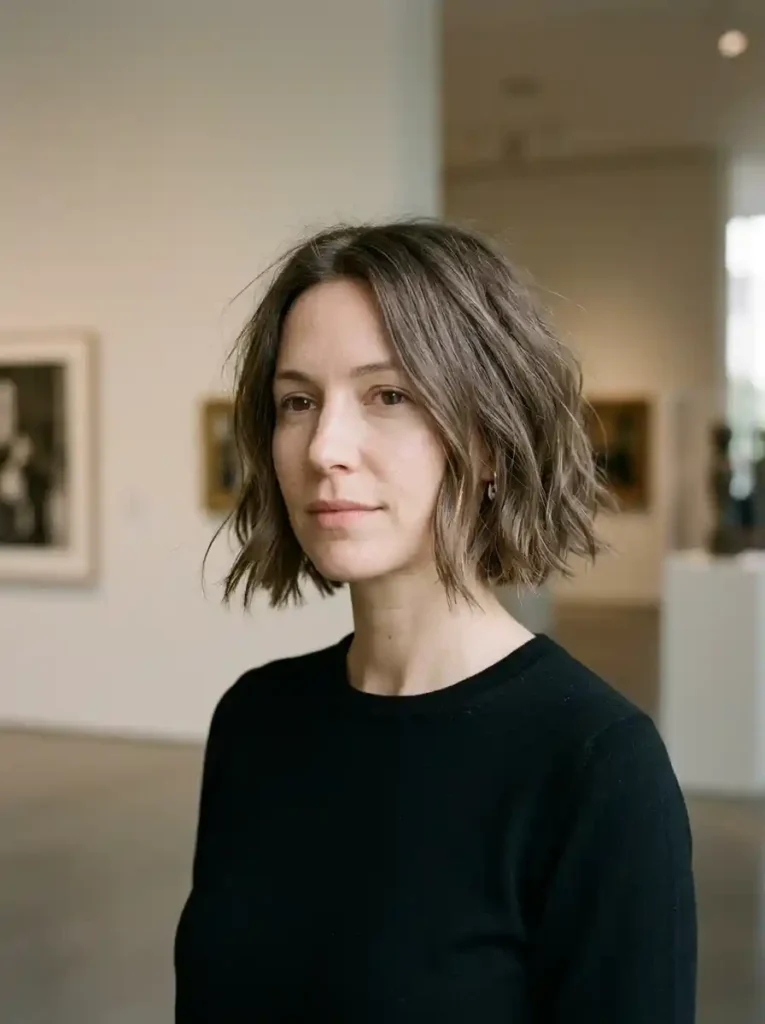
A textured bob brings personality to mushroom brown hair by combining a compact silhouette with movement at the ends. The shorter length makes the haircut feel fresh, while the cool brunette shade keeps it understated and versatile. Small variations in tone can emphasize the uneven texture without making the style look heavily highlighted. This pairing suits people who prefer a fashionable haircut that can be worn casually rather than requiring a perfectly polished finish every day.
Ask your stylist to determine whether your hair needs subtle layering, point-cut ends, or a more structured outline. Fine hair may lose fullness if too much weight is removed, while thick hair can benefit from thoughtful texturizing. At home, use a small amount of lightweight styling cream and scrunch or twist selected sections as they dry. If you use a flat iron to create bends, keep the movements relaxed instead of making identical curls. The result should feel touchable and intentionally imperfect.
15. Mushroom Brown Hair With Smoky Ash Undertones
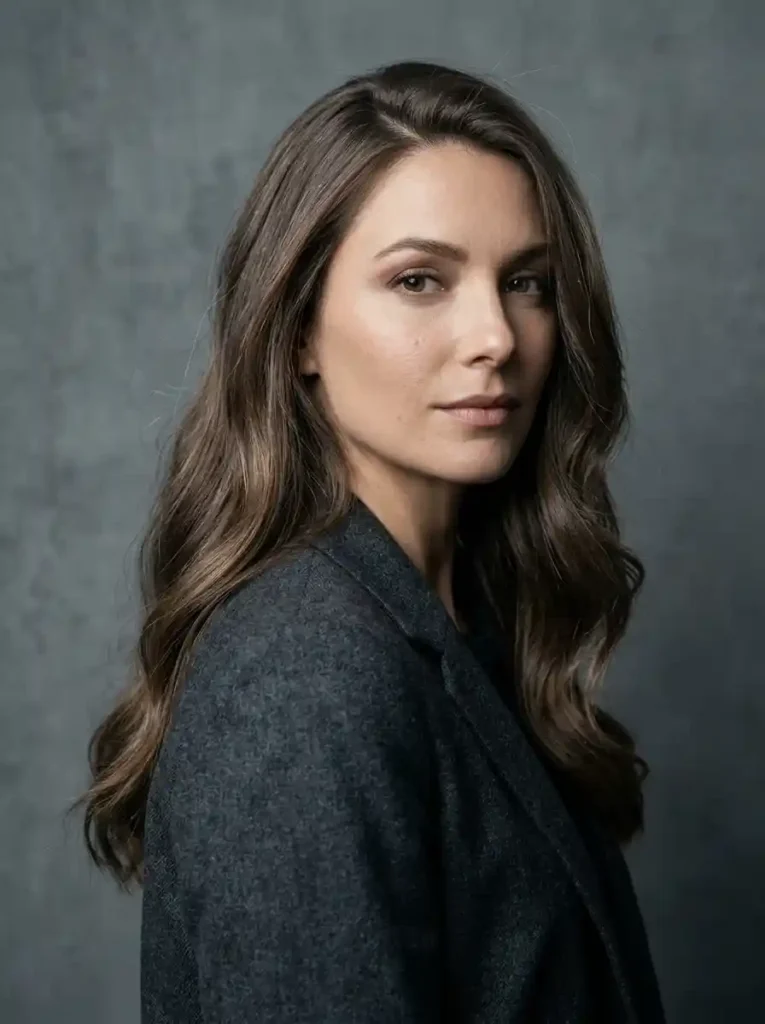
Smoky ash mushroom brown is a strong option for anyone who prefers cool brunette colors over coppery or golden shades. Its gray-brown undertones give the hair a muted finish that feels modern without becoming an obvious silver color. The effect is particularly appealing on medium-length cuts and long waves, where changes in light reveal the difference between the darker base and the softer, smoky surface tones.
Cool undertones require careful formulation because the final result depends on your natural pigment and previous color treatments. Ask your stylist for a smoky brunette shade that complements your starting level rather than simply requesting the coolest possible formula. Too much ash can sometimes make hair look dull or overly gray, especially when the base is very dark. Maintain the intended tone with color-safe products and periodic professional adjustments, and avoid repeatedly toning the hair without assessing its actual needs.
16. Mushroom Brown Hair With Caramel-Taupe Dimension
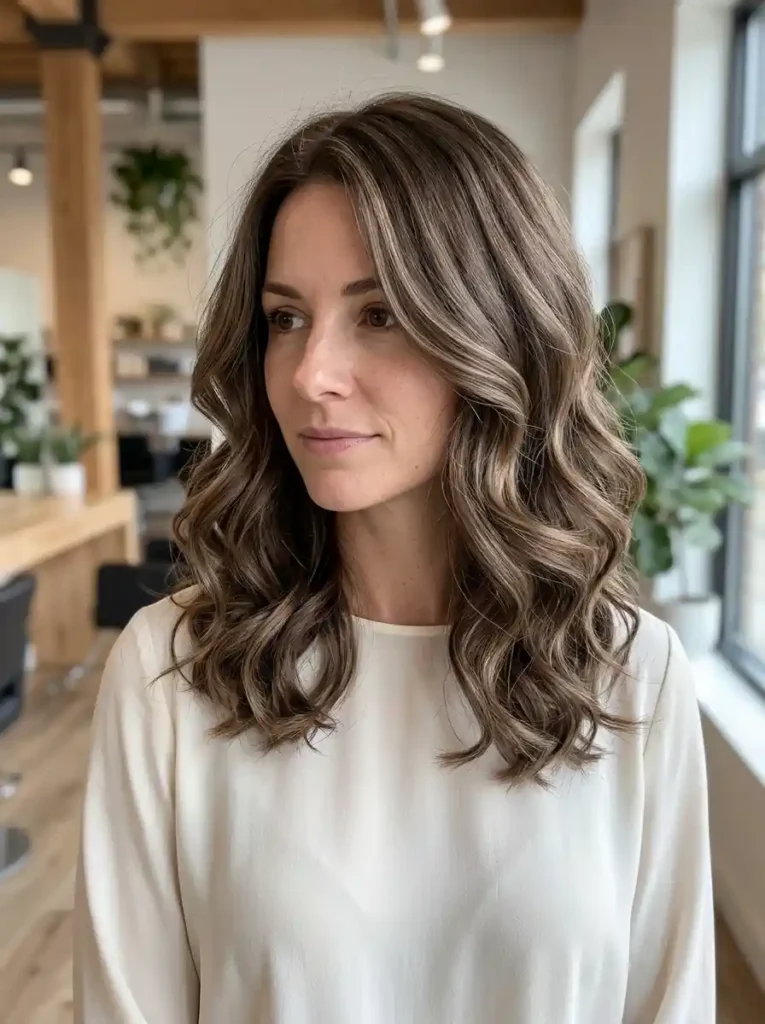
If a purely cool brunette feels too muted, caramel-taupe dimension can introduce a little warmth without abandoning the mushroom brown aesthetic. The combination relies on restrained neutral caramel and beige-brown pieces that sit comfortably alongside the cooler base. Rather than creating a classic golden brunette, the goal is a balanced color with enough variation to make the hair look lively and dimensional.
This shade is especially useful when you want a transitional color that feels softer than a strongly ashy brunette. Ask your colorist to keep the lighter sections neutral rather than intensely copper or honey-colored. The right balance will depend on your natural base and the amount of contrast you prefer. Loose curls can help reveal the variation, but the color should still look cohesive when worn straight. If the lighter pieces begin to look too warm, a professionally selected gloss can help bring them back toward the intended neutral finish.
17. Mushroom Brown Hair With a Middle Part
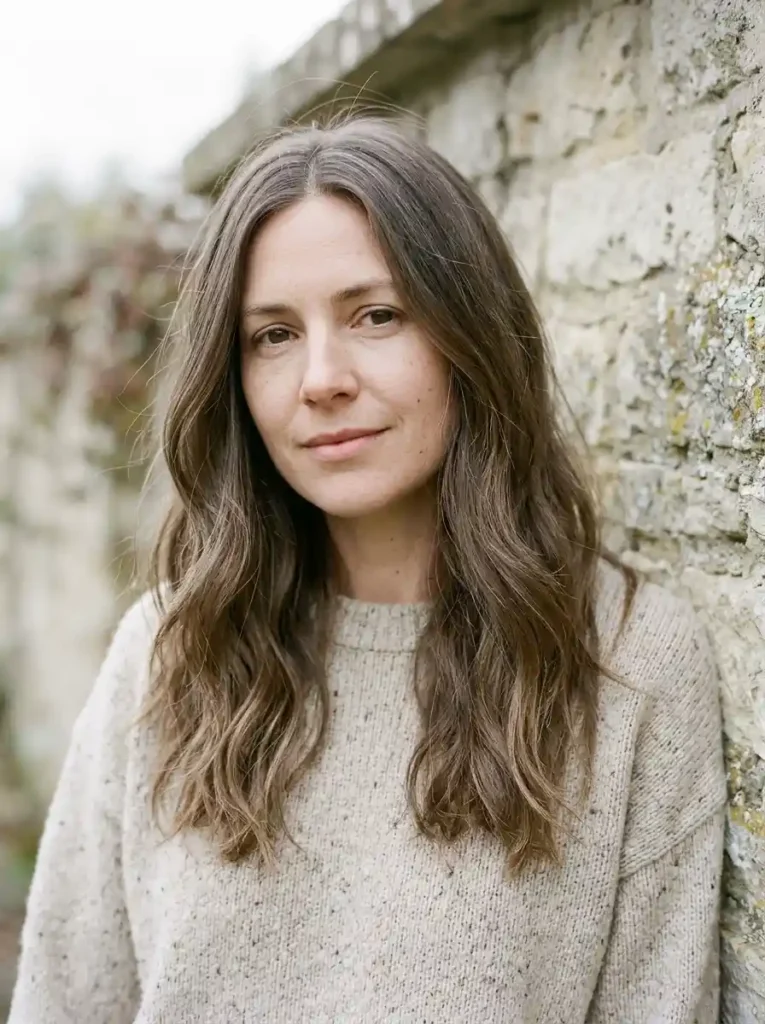
A middle part gives mushroom brown hair a clean, balanced appearance that feels especially modern on long layers, sleek lobs, and straight hairstyles. The symmetrical shape allows the color to remain the main focus, while the cool brunette tones create an understated finish. If your hair has subtle balayage or babylights, the center part also provides a useful way to show how the lighter pieces blend across both sides.
The key to this style is working with your natural growth pattern rather than forcing a part that refuses to stay in place. If your hair naturally falls to one side, try moving the part gradually after washing while the roots are still damp. A blow dryer and flat brush can help set the direction without creating excessive volume. Use a smoothing product sparingly along the surface, and keep the ends flexible. The final result should look sleek and deliberate rather than flat or overly rigid.
18. Mushroom Brown Hair With a Side Part

A side part changes the shape of mushroom brown hair without requiring a new cut or color service. By shifting the hair’s weight toward one side, it can create a fuller-looking crown and introduce a more dramatic sweep across the forehead. The effect pairs well with medium-length layers, shoulder-length hair, and soft waves. Muted brunette dimension adds detail to the curved sections, helping the hairstyle look polished without appearing overly formal.
For lasting volume, apply a lightweight root-lifting product to damp hair and blow-dry in the direction opposite to your preferred final part before switching it back. This can help create lift without relying on heavy styling products. If you have a natural cowlick, ask your stylist to adjust the part slightly so the hair falls more easily. A flexible finishing spray can hold the shape while preserving movement, making the look practical for workdays and evening plans alike.
19. Mushroom Brown Hair With Loose Curls
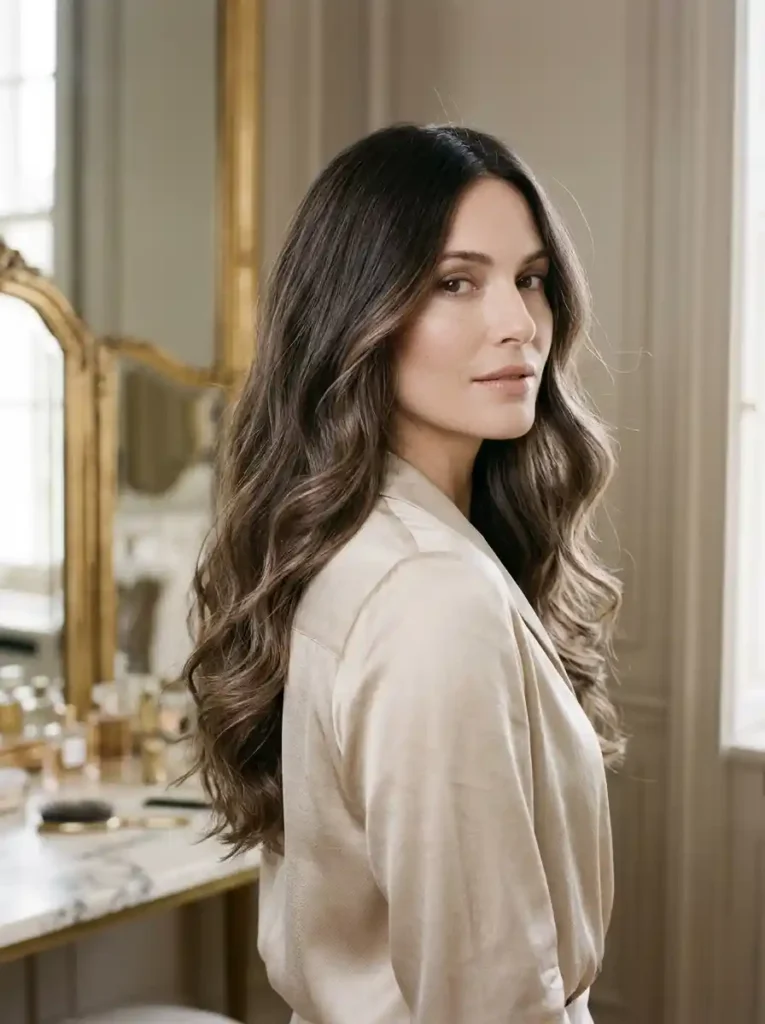
Loose curls bring out the dimensional quality of mushroom brown hair by creating alternating highlights and shadows across the lengths. This styling option is especially attractive when the color includes balayage or fine tonal ribbons, since the curved sections reveal subtle differences that may be less visible on straight hair. The overall result feels romantic but remains contemporary when the curls are soft rather than tightly formed.
To create a natural finish, curl medium-sized sections away from the face near the front, then vary the direction through the back. Allow the curls to cool completely before separating them with your fingers or a wide-tooth comb. A flexible styling spray helps preserve the shape without turning the hair stiff. If your hair is prone to dryness, apply a small amount of suitable smoothing product to the ends, but avoid overloading the roots. The goal is definition with movement, not a heavily lacquered finish.
20. Mushroom Brown Hair With Shoulder-Length Layers
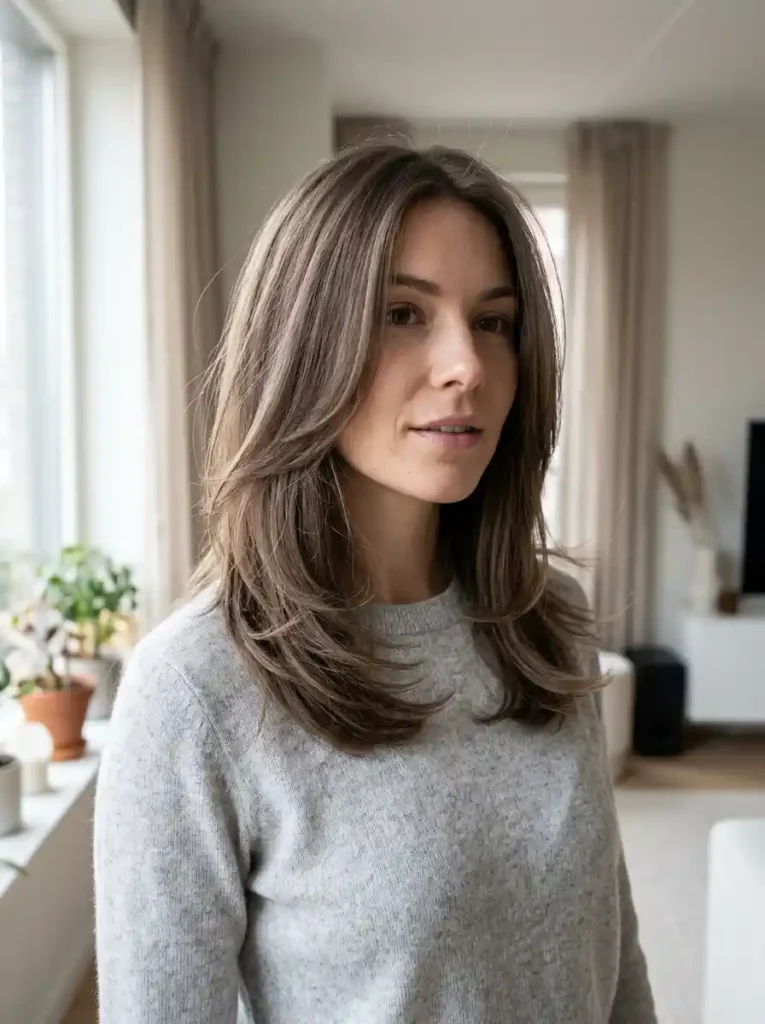
Shoulder-length layers offer a practical middle ground between a short haircut and long hair. The length is manageable, while the layers prevent the shape from feeling too heavy or blunt. Mushroom brown enhances this versatile cut with a refined color that works well with both smooth blowouts and natural waves. The face-framing sections can also help customize the silhouette, making the haircut adaptable to different preferences and hair textures.
When choosing this cut, consider where the ends will sit against your shoulders, since that position can affect how the hair flips or bends. Ask your stylist to create layers that support your usual styling routine instead of requiring daily heat work. A round brush can add movement during blow-drying, while a texturizing spray can encourage a more casual finish. For fine hair, avoid removing too much density from the ends. For thick hair, strategic layering can reduce bulk without sacrificing the overall shape.
21. Mushroom Brown Hair With Subtle Root Shadow
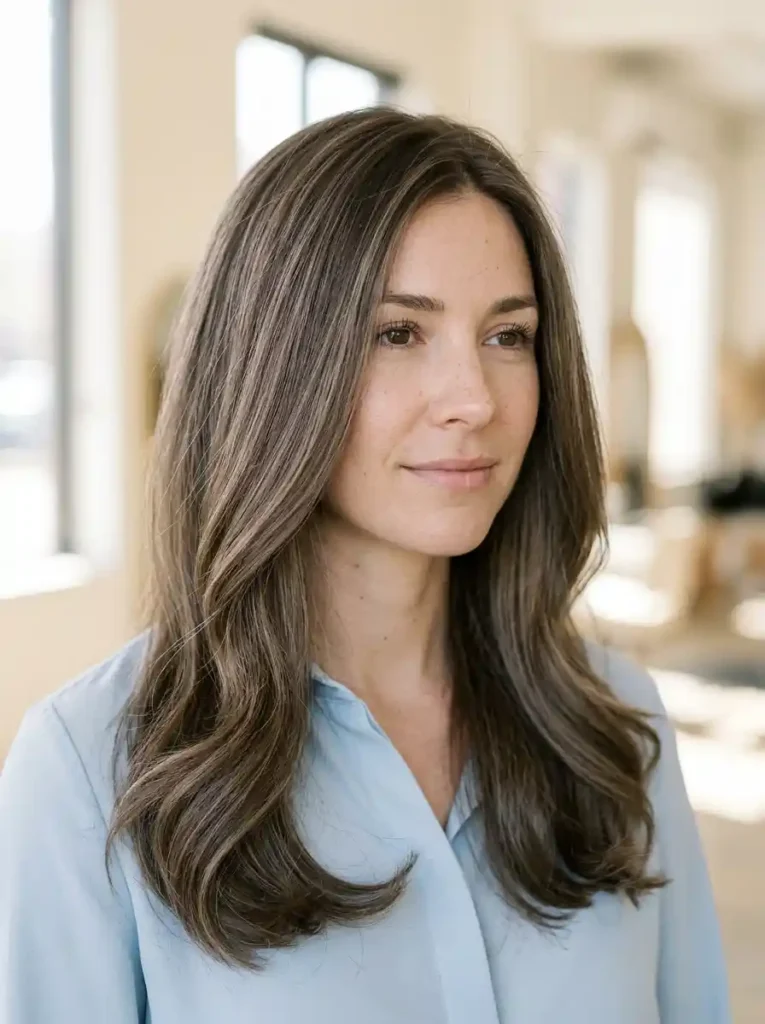
A root shadow creates a gentle transition between darker roots and lighter mushroom brown lengths. Instead of beginning the lighter color directly at the scalp, your colorist blends the deeper shade into the rest of the hair for a softer overall effect. This technique is especially useful when you want balayage or highlights to look integrated rather than freshly separated. It can also make the hairstyle feel more natural as the roots grow.
The ideal depth of the shadow depends on your natural color and the brightness of the lengths. Ask for a gradual blend rather than a sharply defined dark band, which can make the color look disconnected. Root shadows may reduce the visual impact of regrowth, but they do not eliminate the need for maintenance if your highlights or overall tone require refreshing. Use a color-safe routine and discuss how often the lighter sections need toning. A well-blended transition should remain attractive as your natural roots emerge.
22. Mushroom Brown Hair on a Pixie Cut
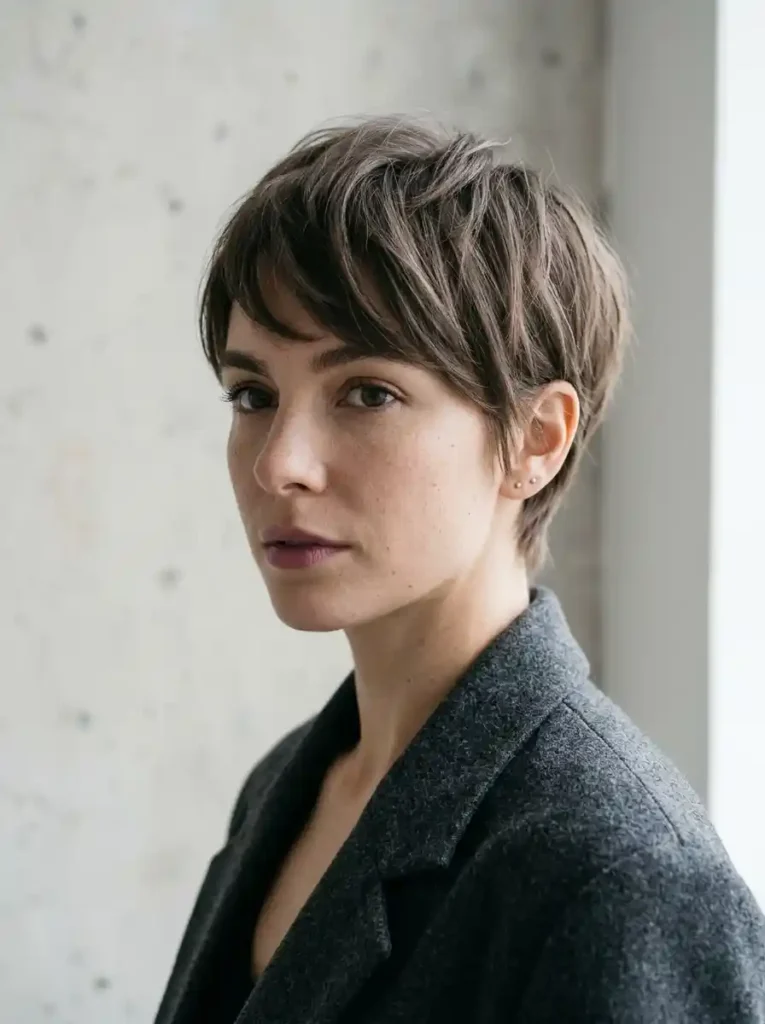
Mushroom brown works beautifully on a pixie cut because the shorter length allows the haircut’s shape to become the main feature. Cool brown and taupe undertones add subtle variation across the crown and fringe, helping textured layers look distinct without requiring obvious highlights. This is a good option if you enjoy a low-length hairstyle but still want color that feels nuanced rather than flat or overly dark.
A pixie cut usually needs more frequent trimming than longer hairstyles because small changes in length can quickly affect its silhouette. Ask your stylist to place texture where it supports your natural hair growth and preferred styling direction. A pea-sized amount of lightweight styling paste can separate the longer pieces and define the fringe. Avoid heavy creams that collapse the crown or leave the short layers greasy. Color maintenance may be straightforward, but the haircut itself will determine how often you need salon visits to preserve the shape.
23. Mushroom Brown Hair With a Soft Balayage Bob
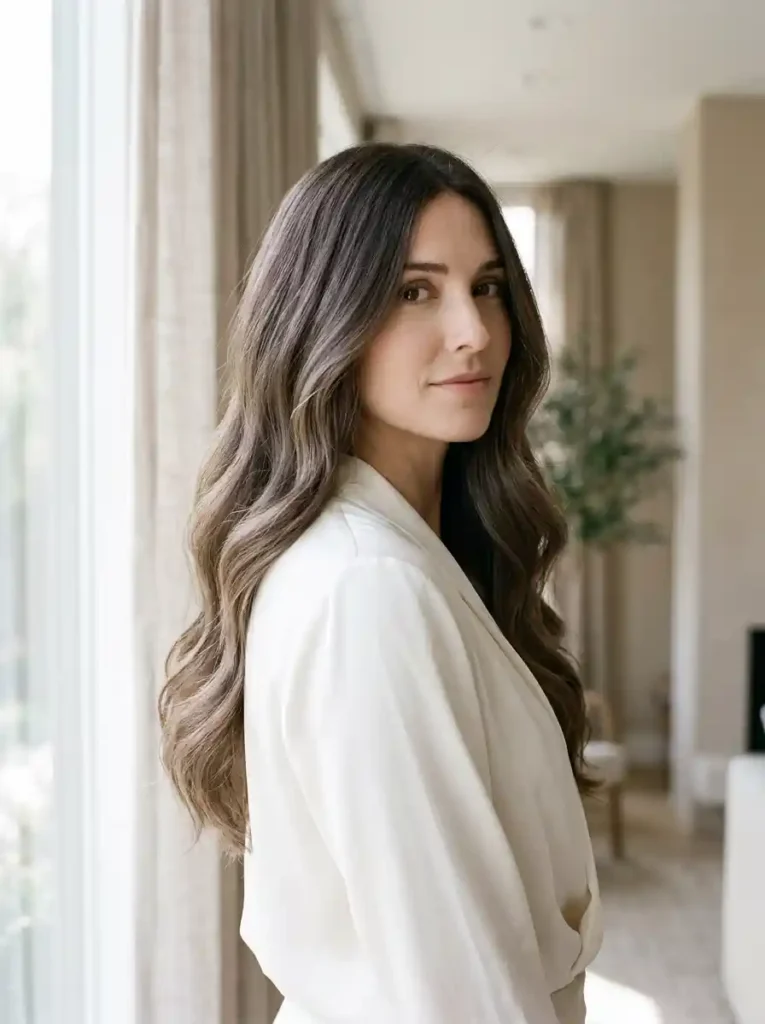
A balayage bob combines the structure of a shorter haircut with the gradual dimension of hand-painted color. Mushroom brown keeps the overall result sophisticated, while lighter taupe pieces near the ends help the shape feel less uniform. The color placement is particularly effective on a collarbone-length bob, where movement through the lower sections reveals the transition without making the roots look disconnected.
For the best result, ask your colorist to map the lighter pieces around the shape of your bob rather than applying the same placement used for long hair. The position of the highlights should complement the cut’s perimeter and the way you normally style it. If you prefer a low-maintenance routine, keep the contrast moderate and preserve depth near the scalp. Soft bends created with a flat iron or round brush can reveal the balayage beautifully, while a smooth finish showcases the clean outline of the haircut.
24. Mushroom Brown Hair With a Natural Brunette Blend
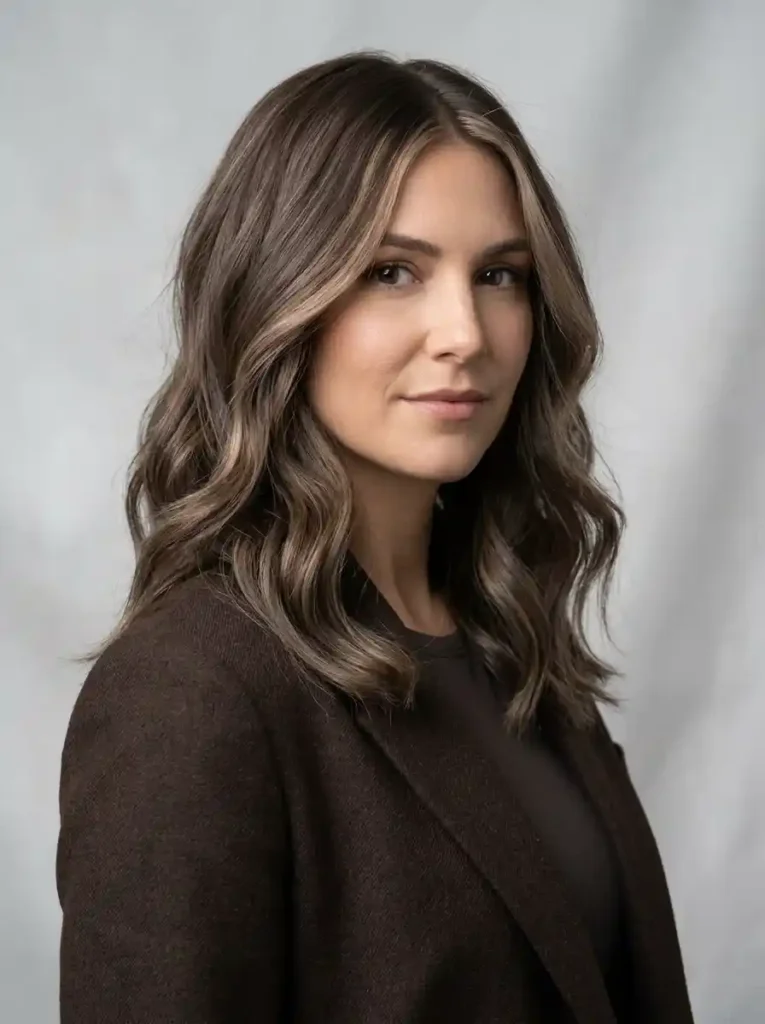
A natural brunette blend is ideal if you want mushroom brown hair to look understated rather than obviously colored. Instead of emphasizing individual highlights, the shade combines closely related cool brown and taupe tones to create a cohesive finish. The subtle variation becomes more visible in changing light, giving the hair depth without a dramatic contrast between roots, mid-lengths, and ends. It is a versatile choice for everyday styling and a range of personal aesthetics.
To personalize this look, ask your colorist to work with your natural base rather than aiming for a reference photo that requires substantial lightening. A carefully chosen gloss or blended color service may be enough to refine an existing brunette shade, depending on your starting point. Keep the routine simple with gentle cleansing, regular conditioning, and heat protection when styling. If you want to experiment later, this balanced foundation can also accommodate finer highlights or a softly brighter face frame without completely changing the overall mood.
Conclusion
Mushroom brown hair offers plenty of ways to refresh your look, whether you prefer a sleek dark brunette, delicate beige highlights, dimensional balayage, or a textured short haircut. The beauty of this color family lies in its balance of cool brown, smoky taupe, and soft beige tones, which can be adapted to different lengths, textures, and personal styles.
Before booking your appointment, save two or three reference photos that show both your preferred color and haircut. Pay attention to the root depth, highlight placement, and overall contrast rather than choosing a shade based on its name alone. Your natural hair color, previous treatments, and maintenance preferences will all influence the result.
Most importantly, ask your stylist which version of mushroom brown is realistic for your hair’s current condition. A personalized approach can help you achieve a sophisticated brunette shade that feels fresh, suits your everyday routine, and remains beautiful as it grows out.


