Rose gold hair is the perfect blend of pink, peach, and warm golden tones, creating a romantic color that feels playful without being overwhelming. Whether you prefer a barely-there blush, shimmering metallic highlights, or a bold pastel transformation, there’s a rose gold shade to suit your personal style. These 20 pretty rose gold hair ideas explore different shades, techniques, and hairstyles, along with practical tips to help you choose a look that feels beautiful, wearable, and uniquely yours.
1. Classic Rose Gold Hair
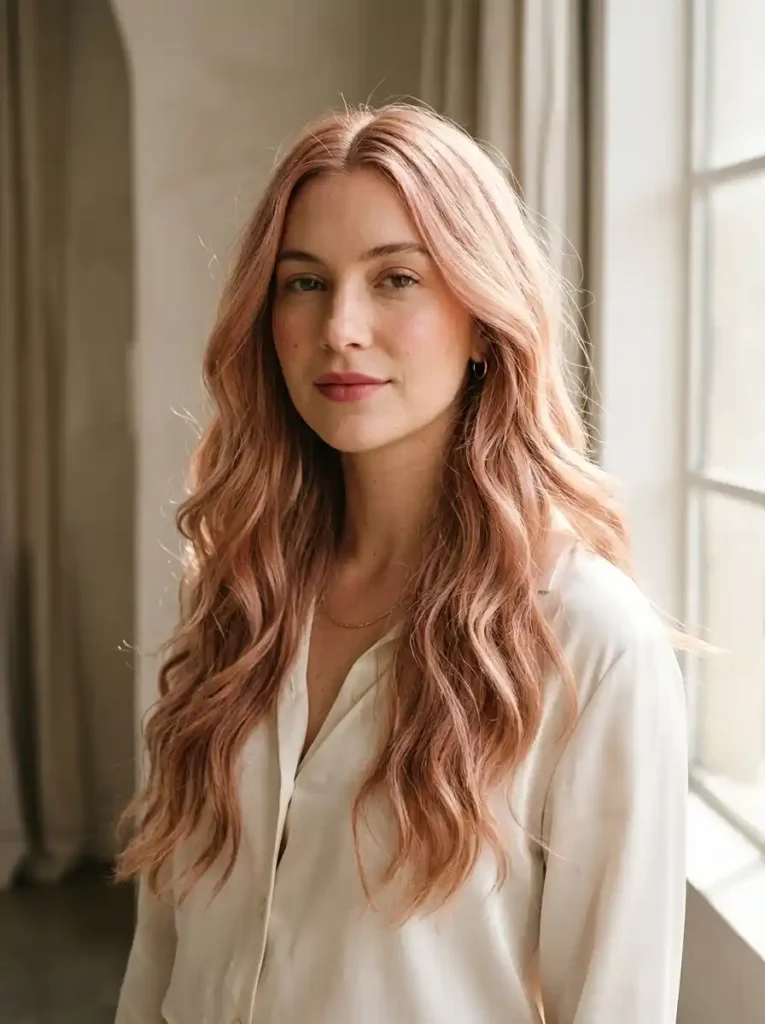
Classic rose gold hair combines pink, peach, and golden tones for a balanced color that feels feminine without looking overly bright. The shade works particularly well on people who enjoy warm, luminous hair colors with a subtle fashion-forward twist. Ask your colorist to customize the ratio of pink and gold to complement your starting color, skin undertone, and desired intensity. A softer formula creates a delicate blush effect, while richer copper undertones deliver a warmer, more noticeable transformation.
Loose waves help reveal the different shades woven throughout classic rose gold hair, making the color appear dimensional rather than flat. To preserve its shine, choose a color-safe shampoo and wash with lukewarm water when possible. Heat protection is important if you regularly curl or straighten your hair. Because rose gold pigments can fade with repeated washing, ask your stylist whether a tinted conditioner or occasional glossing appointment would help maintain your preferred balance of pink and gold.
2. Pastel Rose Gold Hair
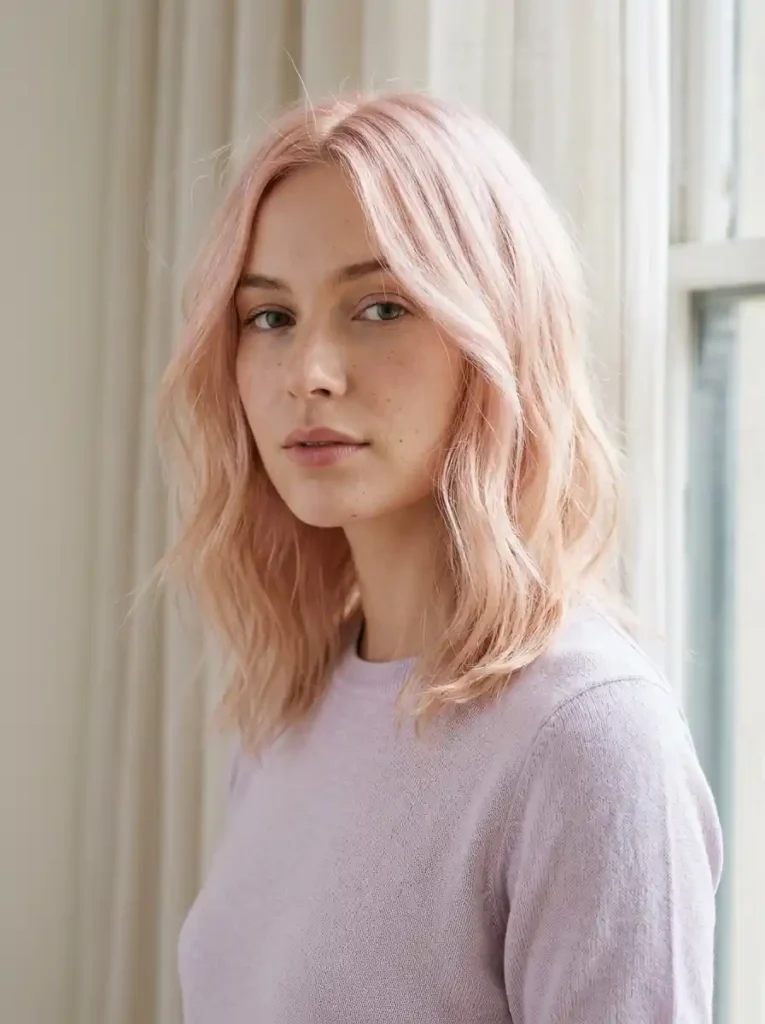
Pastel rose gold hair offers a dreamy, understated take on pink hair, especially for anyone who prefers delicate color over bold saturation. Its pale pink and champagne tones create an airy finish that pairs beautifully with shoulder-length cuts, soft layers, and wispy bangs. Achieving this look usually requires a sufficiently light blonde base, so the amount of pre-lightening depends on your current color and hair condition. If your hair is naturally dark, discuss a gradual lightening plan rather than rushing toward the palest shade.
The secret to keeping pastel rose gold attractive is gentle maintenance. Very light pink pigments can lose their intensity quickly, especially on porous or frequently washed hair. Use a color-safe cleansing routine and ask your stylist about a customized pastel depositing conditioner. Avoid applying strong pink products without guidance, since uneven porosity can cause patchy results. For everyday styling, a lightweight leave-in conditioner and low-heat blow-drying can keep delicate ends smooth while allowing the soft color to remain the main attraction.
3. Rose Gold Balayage

Rose gold balayage is a lovely option if you want pink-toned dimension without committing to an entirely new hair color. The technique places lighter rose gold ribbons through selected sections, creating a blended transition from natural roots to brighter ends. It can be customized for brunettes, dark blondes, and lighter bases, although darker hair may need pre-lightening to reveal the desired pink-gold shade. Ask your stylist to concentrate the brightest pieces around the face and through the lower lengths for a personalized finish.
One advantage of balayage is that the softer root transition can make regrowth less obvious than a solid, all-over color. That doesn’t eliminate maintenance, however, because rose pigments may fade before your natural roots become noticeable. Use a nourishing mask when needed, and schedule a toner refresh according to how quickly your shade loses warmth or pinkness. Styling your balayage in loose waves helps separate the color ribbons, while a smooth blowout creates a more subtle effect that looks polished for work or special occasions.
4. Rose Gold Highlights on Brunette Hair

Rose gold highlights add warmth and personality to brunette hair without hiding the depth of your natural base. Fine pink-copper ribbons can soften a very dark shade, while slightly wider highlights create a more noticeable contrast. This is an especially appealing choice if you want to experiment with fashion color while keeping most of your hair brown. Your colorist may need to lighten selected strands first, depending on your starting shade, and should choose a rose gold formula that remains visible against your brunette base.
For a natural-looking result, ask for highlights in different widths rather than perfectly uniform stripes. Face-framing pieces can brighten your overall appearance, while scattered highlights through the crown and mid-lengths provide movement. A gloss can help unify the finished color and add shine after lightening. Remember that pink tones may fade into a softer copper or blonde, so discuss your preferred fading pattern with your stylist. This approach is particularly useful if you enjoy changing your hair color gradually rather than making a dramatic all-over commitment.
5. Rose Gold Ombre Hair
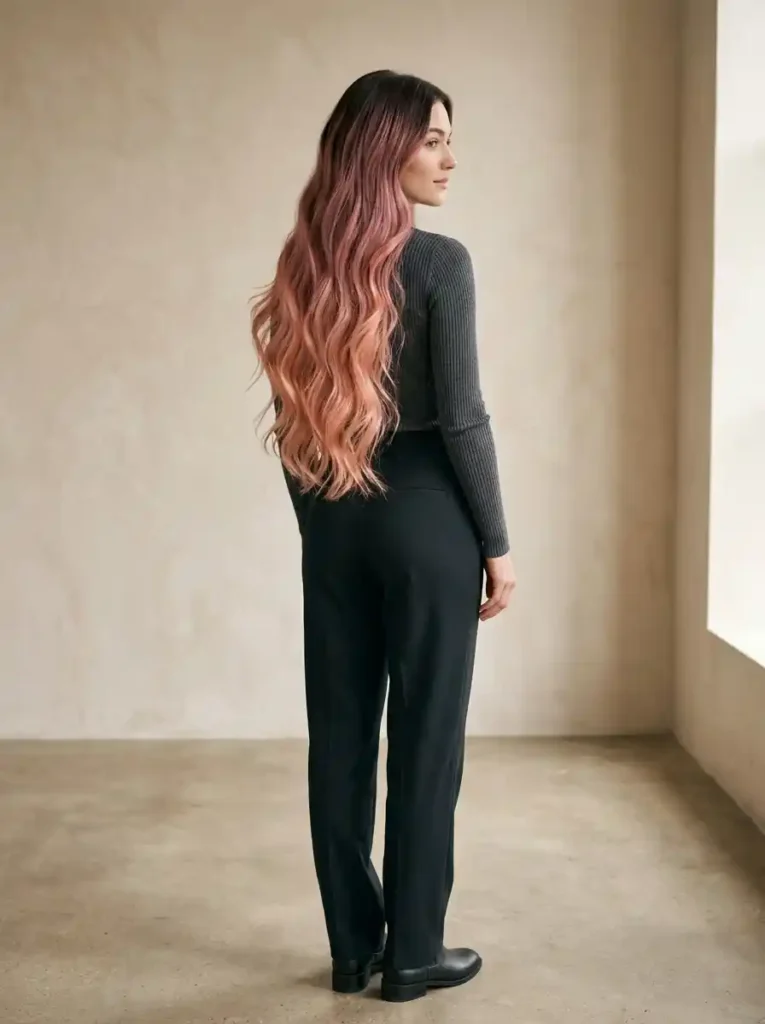
Rose gold ombre is ideal for anyone who loves a dramatic color transition but wants to retain a darker natural-looking root area. The shade gradually shifts from brunette or dark blonde into pink, peach, and golden tones, with the brightest color concentrated toward the ends. This placement creates a striking effect on long hair and can also work beautifully on medium-length cuts. Your stylist should tailor the transition to your haircut so the color doesn’t begin abruptly or leave an obvious horizontal line.
Because ombre places much of the fashion color on the lower lengths, the condition of your ends matters. If they are dry or split, consider trimming them before lightening and coloring. A weekly moisturizing treatment can help improve softness, although it cannot repair severely damaged hair completely. You can wear ombre straight to showcase the gradient or curl it to create blended ribbons of color. For a more understated version, choose dusty rose and muted gold rather than vivid pink, especially if this is your first fashion-color experiment.
6. Rose Gold Hair with Copper Undertones
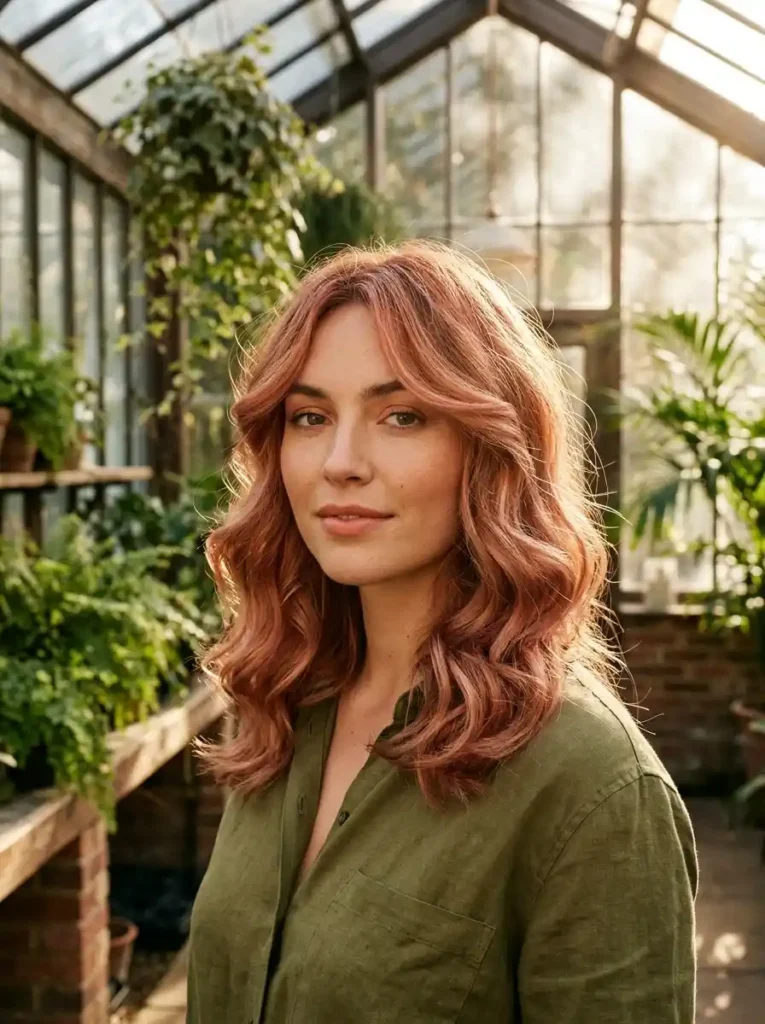
Copper-infused rose gold hair creates a warmer, richer interpretation of the classic pink-gold blend. The added apricot and reddish tones can make the color look especially radiant in natural sunlight, while the rose element keeps it distinct from conventional copper hair. This variation suits people who enjoy warm shades and want a color that feels more autumnal or earthy. Ask your colorist to balance the copper carefully, because too much orange can overwhelm the pink undertone and change the overall appearance.
This shade looks beautiful with textured bobs, layered cuts, and large curls that reflect light across different sections. If you prefer a lower-maintenance routine, discuss using a warm rose copper gloss over a suitable base rather than pursuing an extremely light pastel finish. Glossing can help refresh faded warmth, but the exact formula should depend on your existing color. To prevent unnecessary dryness, limit repeated lightening and use a heat protectant before styling. The result should feel luminous and dimensional rather than overly orange or artificially metallic.
7. Dusty Rose Gold Hair
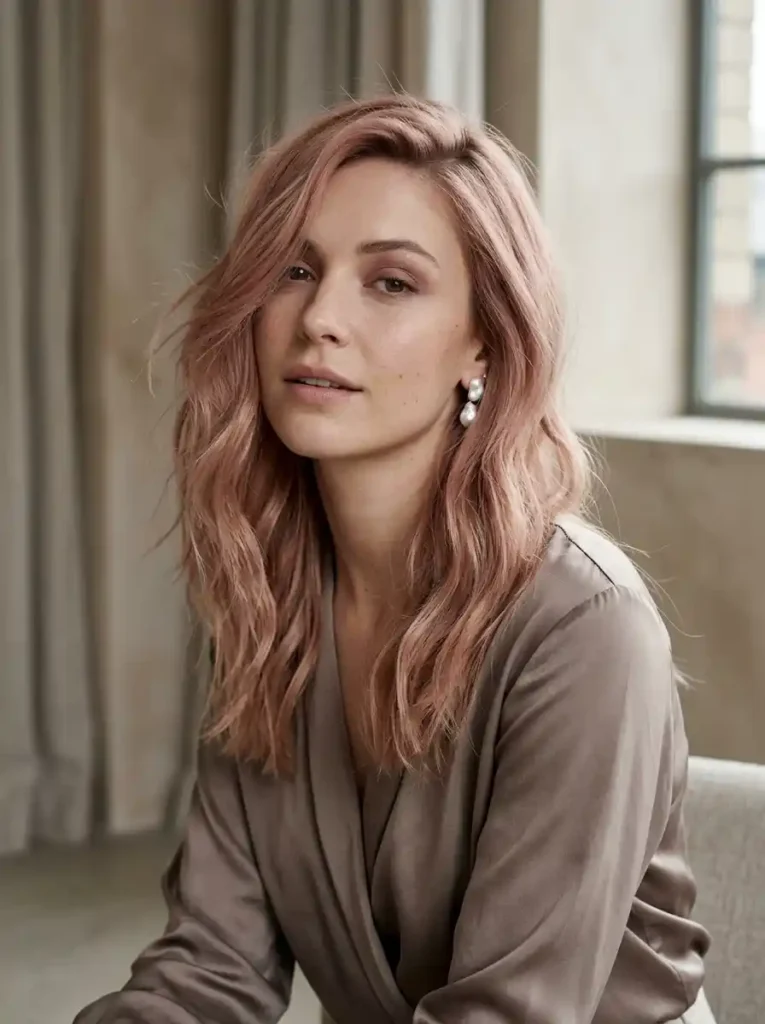
Dusty rose gold offers a subdued alternative to brighter pink hair. Its muted pink, beige, and champagne tones create a slightly smoky appearance that feels sophisticated without losing the charm of rose gold. This shade is worth considering if vivid pastels feel too playful for your wardrobe or workplace. It can work on different base colors, but the final result depends on how much lightening is necessary and whether your stylist can create enough contrast between the rosy pigment and the underlying hair.
To maintain the muted finish, avoid layering highly saturated pink products onto your hair without testing them first. Strong pigments can shift a delicate dusty shade toward a much brighter pink. Ask your stylist for a custom gloss or color-depositing conditioner designed for your specific formula. A smooth, loose-wave hairstyle highlights the understated color variation, while a sleek low ponytail gives it a more minimalist appearance. Neutral clothing, soft makeup, and simple accessories complement the subdued tones without competing with the hair.
8. Rose Gold Money Piece
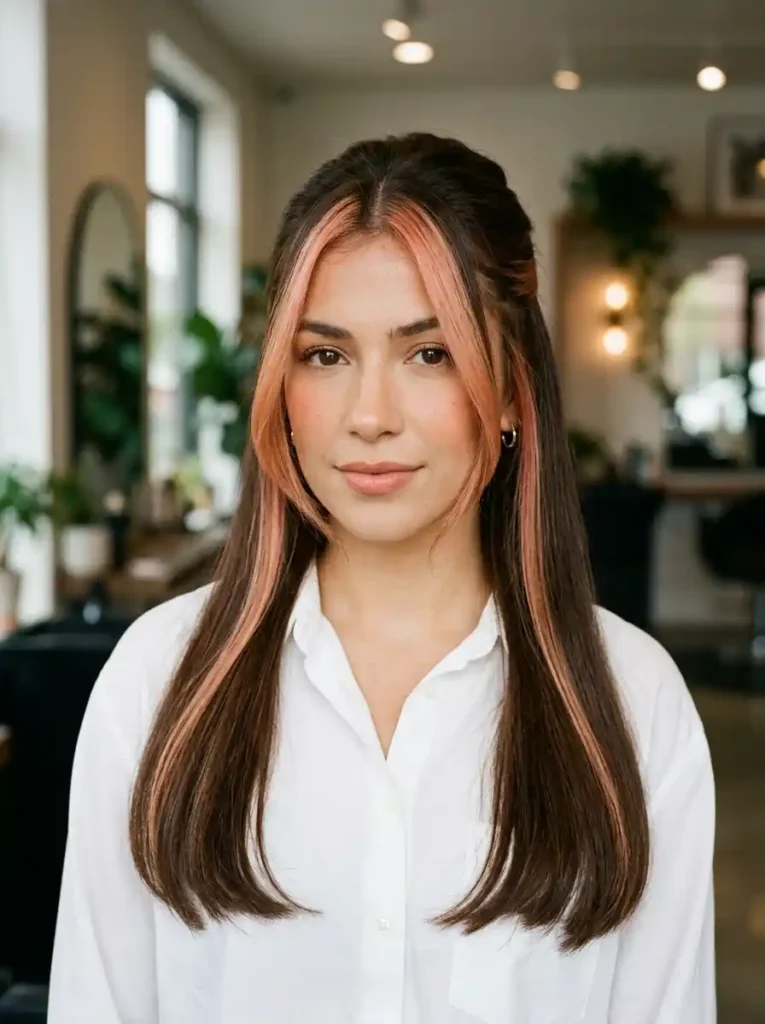
A rose gold money piece brings the color directly to the front of your hairstyle, making it a strong choice if you want a noticeable change without coloring every strand. The technique focuses lighter, pink-gold sections around the face while leaving most of the remaining hair untouched. It can look striking against brunette hair or blend softly into a blonde base. Ask your stylist how wide the front sections should be, because thick panels create a bolder statement than fine, delicate ribbons.
The placement matters just as much as the color. Well-positioned pieces can brighten the front of a haircut, but overly light sections may create harsh contrast if the rest of the hair is very dark. Your colorist can soften the transition with additional fine highlights or a carefully blended toner. This look is easy to show off in ponytails, half-up styles, and face-framing waves. Since the front sections receive frequent heat styling and sun exposure, protect them with heat protectant and refresh the rose tone when fading becomes noticeable.
9. Rose Gold Bob Haircut
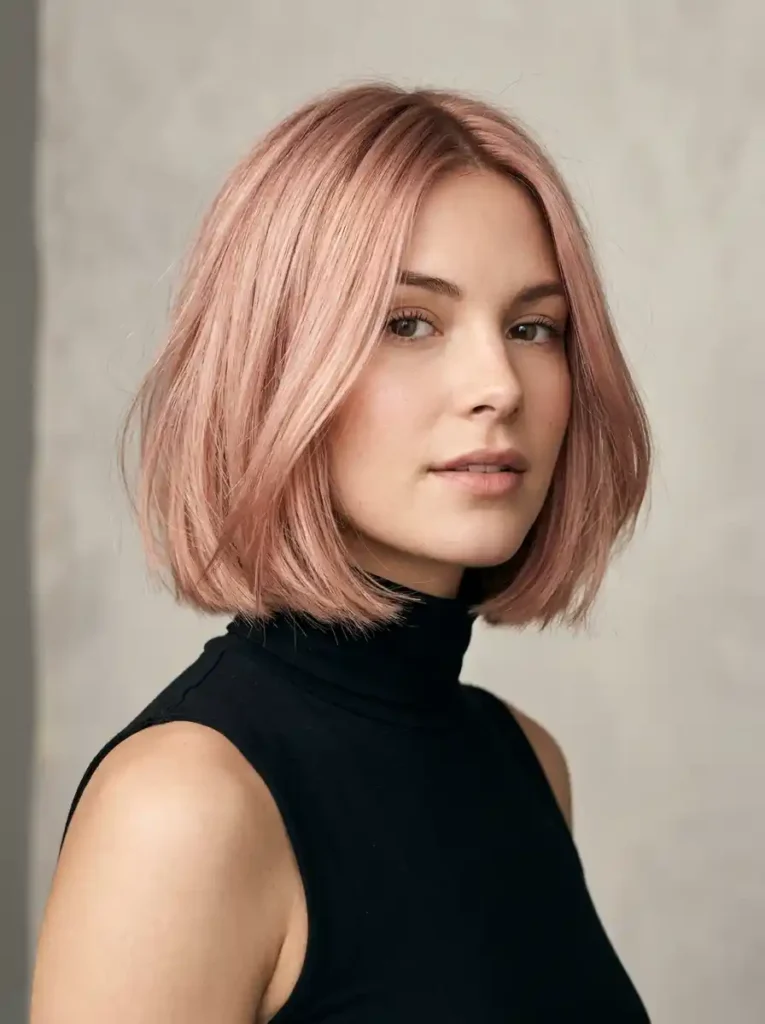
A rose gold bob combines a fresh haircut with a color that adds warmth and dimension to shorter lengths. A chin-length or jaw-skimming shape gives the shade a clear outline, while lightly textured ends prevent the style from appearing too rigid. If you want a refined result, choose a balanced champagne-pink formula instead of an extremely bright pastel. Your stylist can also adjust the placement of lighter pieces around the front to emphasize the shape of the bob without overwhelming its clean lines.
Shorter hair can be easier to style, but maintaining rose gold color still requires care. Regular trims help keep the bob’s outline crisp, especially if the ends have been lightened. A lightweight styling cream can smooth flyaways, while a round brush creates a gentle curve at the jawline. Avoid using too much oil or heavy serum, which may weigh down fine hair and reduce movement. If you’re unsure about an all-over fashion shade, try rose gold glossing over a suitable blonde base before committing to a stronger transformation.
10. Rose Gold Lob with Soft Waves
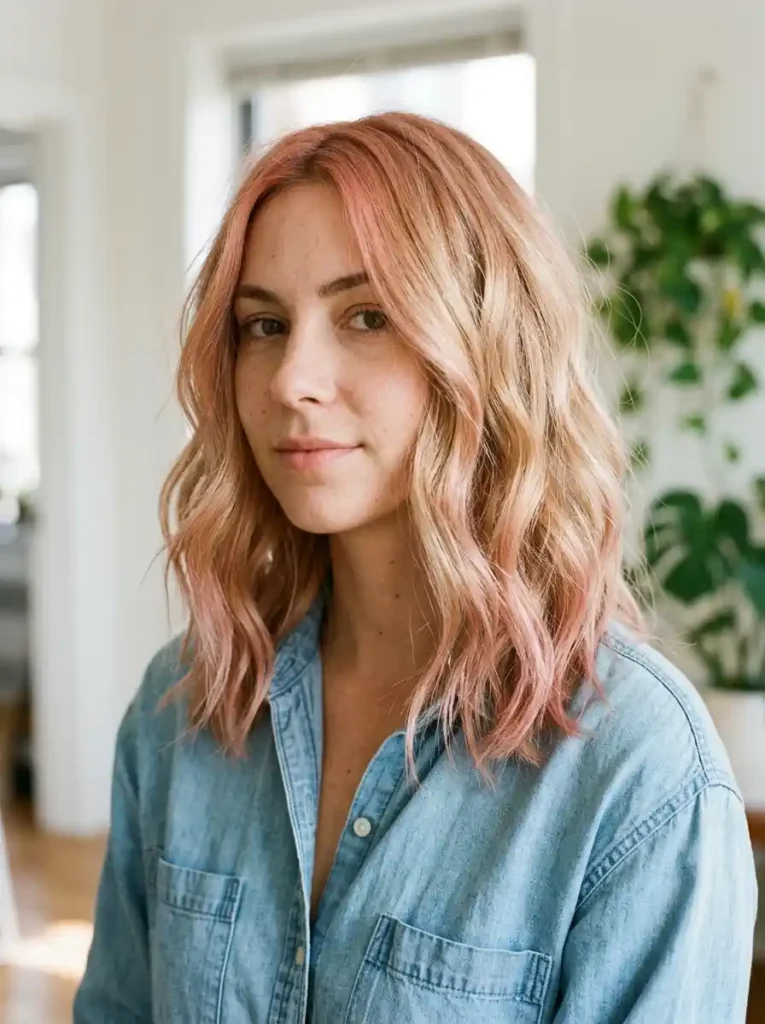
A long bob, often called a lob, offers a versatile length for showcasing rose gold without the styling demands of very long hair. The cut typically falls around the shoulders or collarbone, giving waves enough room to move while keeping the silhouette manageable. Soft peach and pink-gold tones add interest to the shape, particularly when the color is distributed throughout the layers. This is a useful option if you want a fashionable change that still works with everyday outfits and straightforward styling routines.
To recreate the relaxed finish, use a curling iron or wand with a barrel suited to your preferred wave size, leaving the ends slightly straighter for a modern effect. Always apply heat protection first, and avoid repeatedly curling the same sections. A texturizing spray can create movement, but use a light hand so the hair doesn’t become rough or dull. If you prefer a more polished appearance, brush the waves gently into a smooth bend. The lob’s balanced proportions work with casual clothing as easily as they do with dressier outfits.
11. Rose Gold Hair with Shadow Roots

Shadow roots provide a softer transition between your natural hair color and rose gold lengths. Instead of coloring the roots to match the brighter sections, your stylist keeps them slightly darker and blends the difference through the upper lengths. This creates depth and makes the overall color feel less uniform. It’s particularly helpful if you want a lighter rose gold result but prefer not to maintain a perfectly matched root color every few weeks. The exact root depth should complement your natural shade and the lightness of your chosen ends.
Although shadow roots can make regrowth less noticeable, the pink and gold pigments still need refreshing as they fade. Ask your stylist to coordinate the root blend and the lengths so neither area looks disconnected. This combination suits long layers, soft curls, and sleek straight styles because the darker crown creates contrast against the brighter color below. At home, concentrate moisturizing products on the lengths if they have been lightened, while avoiding excessive product buildup near the roots. The result is a dimensional color with a more relaxed maintenance schedule.
12. Rose Gold Peekaboo Highlights
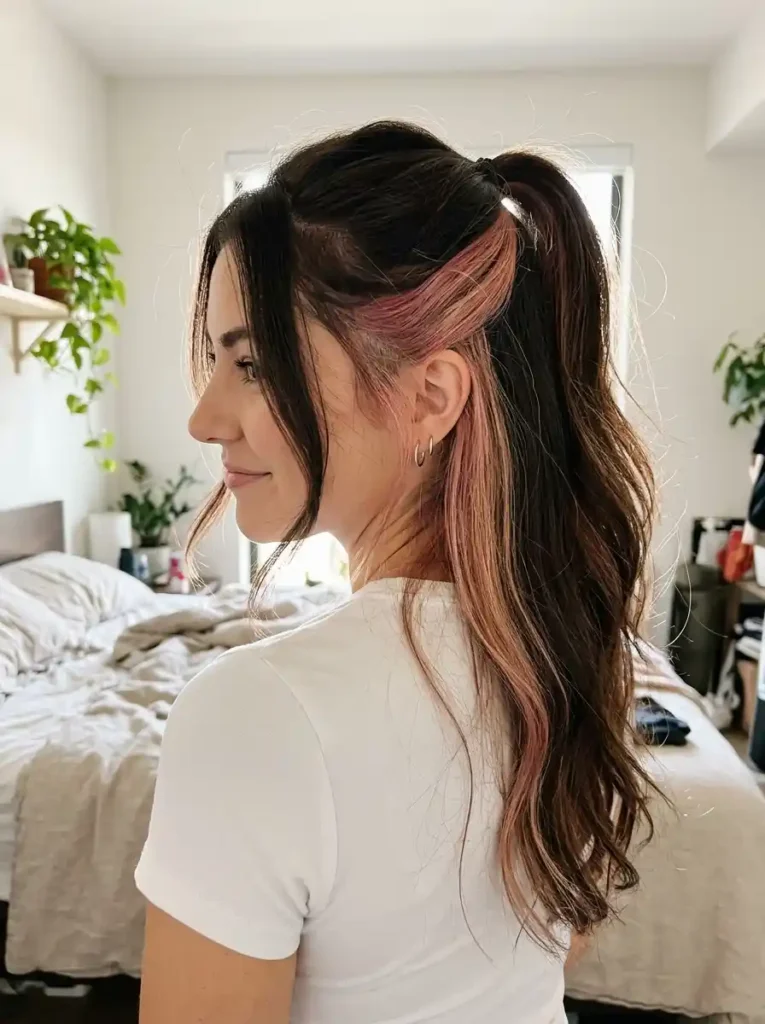
Peekaboo rose gold highlights are tucked beneath the upper layers of your hair, allowing the color to remain subtle when your hair is down. When you lift your hair into a ponytail, braid, or half-up style, the hidden pink-gold sections become visible. This makes the technique especially appealing if you want a playful fashion shade without making it the central feature of your everyday appearance. Your stylist can adjust the amount of hidden color, from a few narrow ribbons to a larger panel underneath the crown.
The placement should be planned around the hairstyles you wear most often. If you frequently tie your hair up, ask for the rose gold sections to sit where they will be visible without creating an awkward color line. On the other hand, if you prefer wearing your hair down, more concealed placement keeps the effect discreet. Like other lightened sections, peekaboo highlights may need a toner refresh as the pink fades. A color-safe routine and occasional conditioning treatment can help maintain softness while the hidden color gradually becomes more muted.
13. Rose Gold Hair with Curtain Bangs
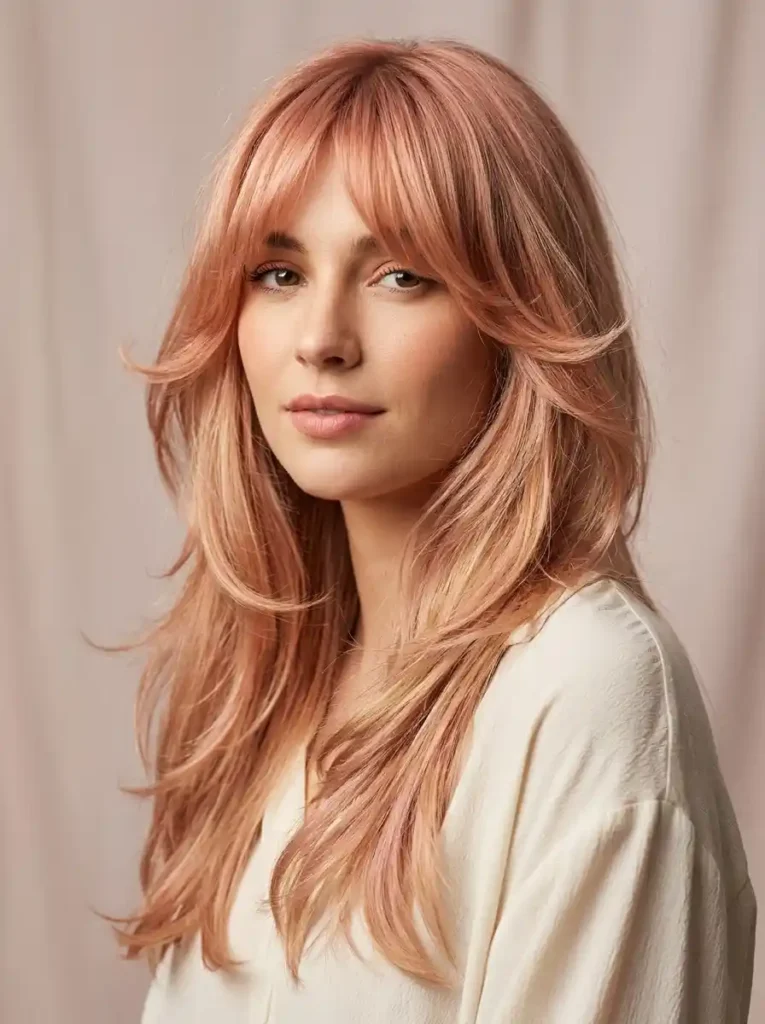
Curtain bangs bring attention to the face and create a flattering frame for rose gold hair. The parted fringe blends into longer layers on either side, while the pink-gold color adds definition to the movement. This combination works especially well if you enjoy a soft, romantic hairstyle rather than a sharp, geometric cut. Ask your stylist to customize the bang length to your face shape, hair texture, and usual parting. A subtle rose gold formula through the fringe can make the style feel cohesive without requiring every layer to be equally bright.
Bangs usually need more frequent trimming than the rest of your haircut because small changes in length can affect how they sit. For daily styling, use a round brush and direct the fringe away from your face, alternating sides to encourage a natural curtain shape. Keep the heat setting moderate to avoid drying out the shortest, most frequently styled sections. If your hair tends to separate at the roots, a small amount of lightweight styling product can provide control. The finished look pairs beautifully with loose waves, a smooth blowout, or a relaxed half-up hairstyle.
14. Rose Gold on Naturally Blonde Hair
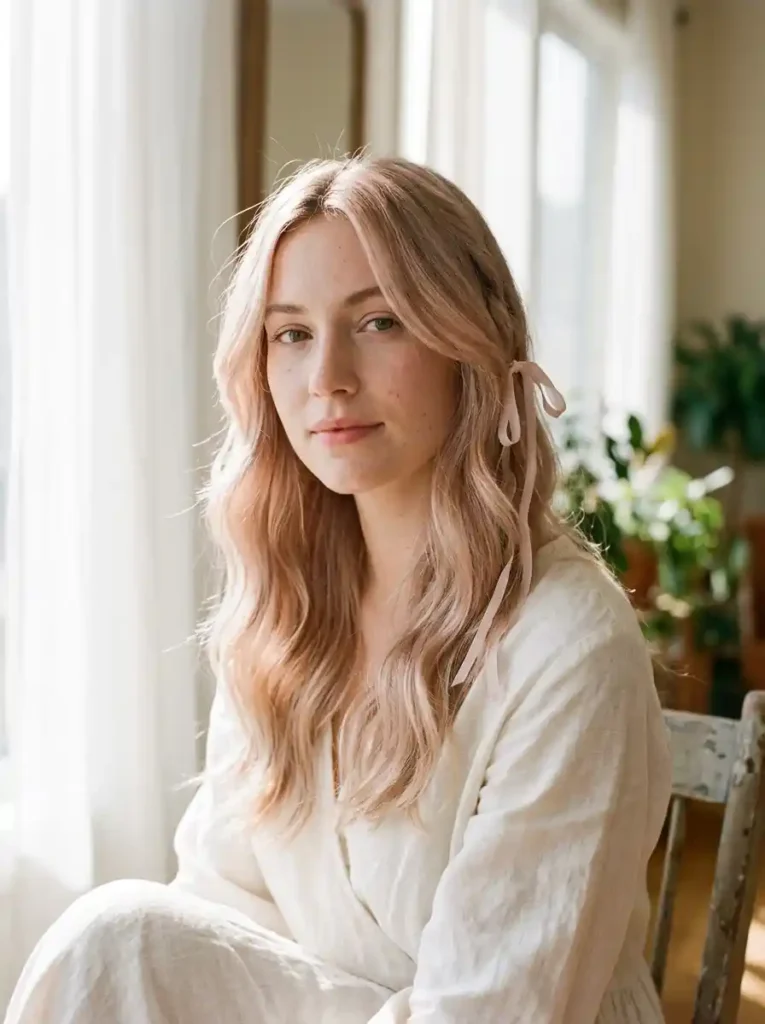
Naturally blonde hair can be a convenient starting point for a soft rose gold transformation because lighter strands often allow pink and golden pigments to show without extensive pre-lightening. The final result depends on your existing blonde shade, previous color treatments, and hair porosity. Pale blonde hair may take on a delicate blush tint, while warmer blonde hair can produce a peachier rose gold. A strand test is useful when you want to understand how your specific hair will absorb the chosen formula before coloring everything.
This option is particularly attractive if you enjoy changing your look seasonally. A temporary color mask or salon gloss can introduce a subtle pink cast without the same commitment as a permanent color service, although results vary by product and hair condition. Start with a lighter application if you’re unsure how intense you want the shade to appear. Keep in mind that porous blonde ends may absorb pigment more strongly than newer growth. A colorist can adjust application timing and formula to help create a more even, softly blended finish.
15. Rose Gold Pixie Cut
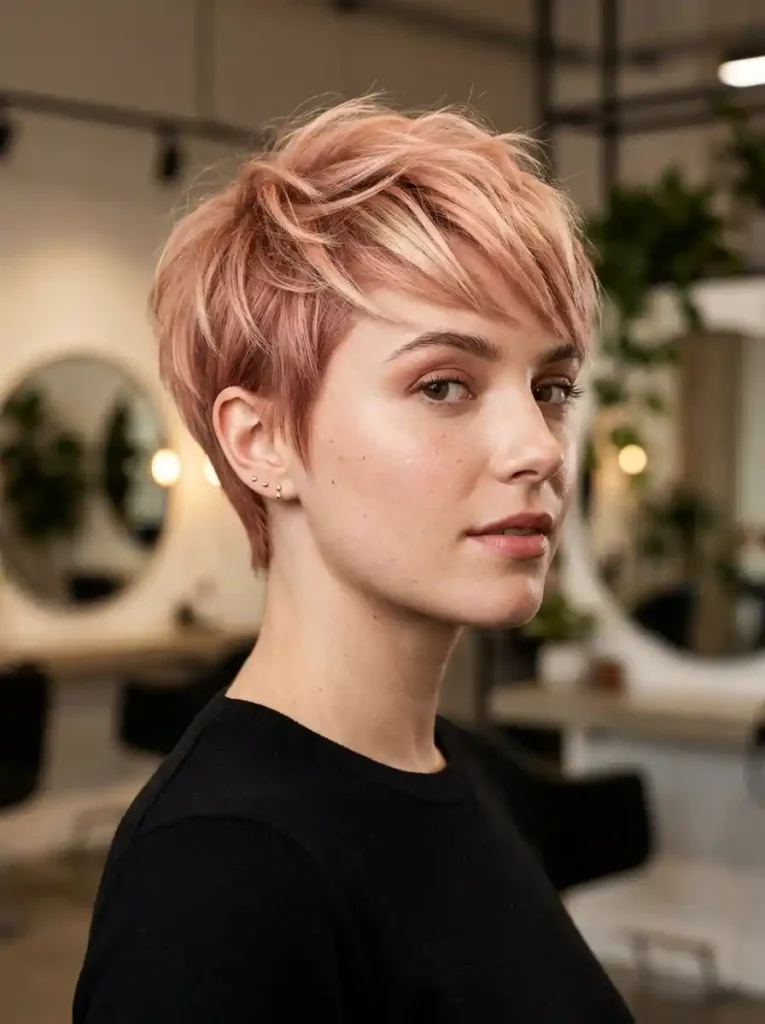
A rose gold pixie cut offers a bold way to wear fashion color while keeping the haircut short and expressive. The contrast between tapered sides and a longer, textured crown gives the pink-gold tones different surfaces to catch the light. If you prefer a softer appearance, choose muted rose and champagne rather than a highly saturated pink. Your stylist can place lighter pieces through the crown to emphasize texture, while a deeper root shade helps the cut maintain definition as the color gradually fades.
Short hair is not automatically maintenance-free. A pixie typically needs regular shaping to preserve the silhouette, and a vivid rose gold shade may require refreshing between cuts. Styling is often straightforward: work a small amount of lightweight paste through dry hair, lifting selected sections to reveal the color variation. Avoid heavy products that flatten the crown or make the strands look greasy. If you have never tried fashion color before, a short haircut can make the transformation feel manageable, provided you’re comfortable with the frequent trims that keep the shape intentional.
16. Metallic Rose Gold Hair
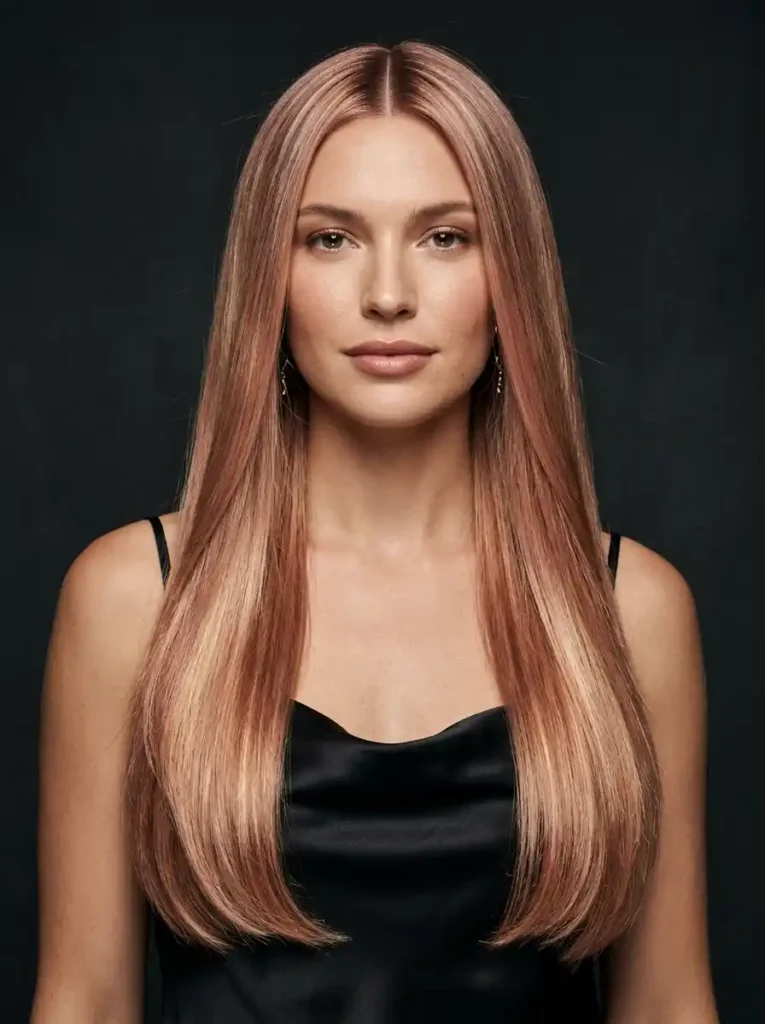
Metallic rose gold hair emphasizes reflective warmth, giving the color a polished, almost jewel-like appearance. The effect comes from carefully balanced rosy, copper, and golden tones rather than glitter or an artificially shiny coating. It tends to look most striking on smooth hair, where the light can travel across the surface and reveal the color’s dimension. Ask your stylist to select a formula appropriate for your base color, since the result may look more coppery on darker blonde hair and paler on a light blonde foundation.
A smooth blowout or carefully straightened style showcases the reflective finish, but excessive heat can compromise the condition of color-treated hair. Apply a heat protectant and choose a moderate temperature suitable for your hair texture. A lightweight finishing serum can help control flyaways, although using too much may make the hair look oily. To preserve the metallic effect, maintain the underlying tone with color-safe products and schedule a gloss refresh when needed. If your hair is naturally wavy or curly, a polished finish is optional; the same color can look dimensional when styled with soft, defined bends.
17. Rose Gold Curls on Natural Texture
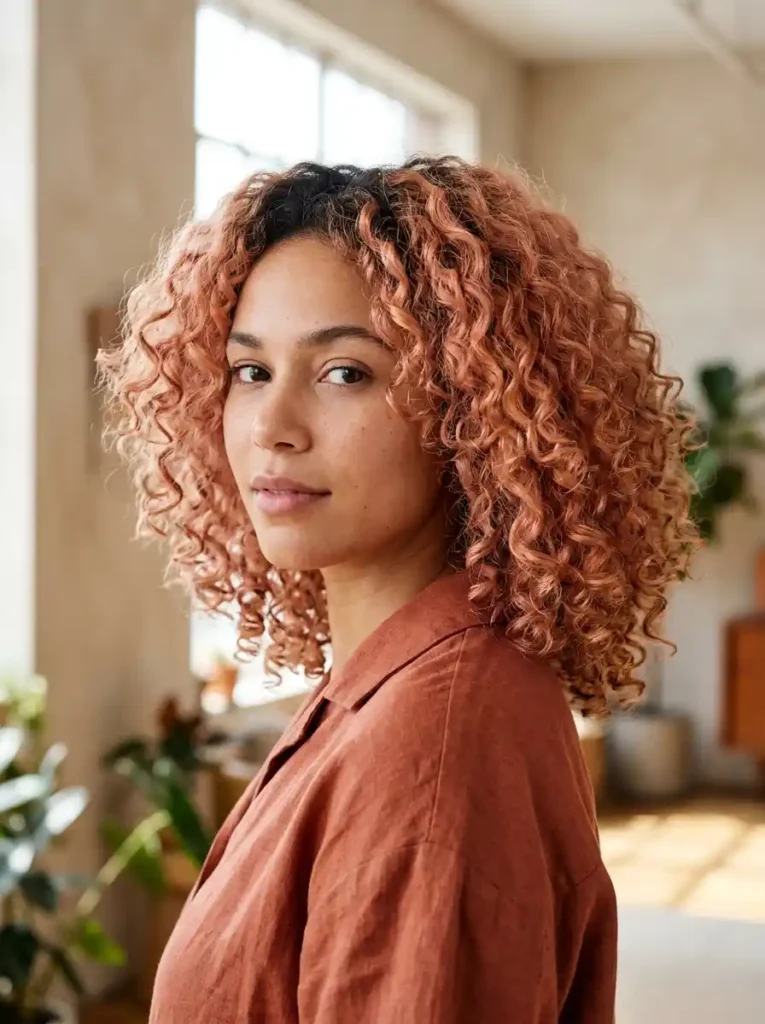
Rose gold can look beautiful on naturally curly hair because the varied curl shapes create natural light and shadow. Rather than applying one flat shade, your colorist can use carefully placed lighter pieces to emphasize the curl pattern and preserve depth near the roots. The best technique depends on your existing color, curl condition, and desired intensity. If your curls are dark, achieving a light pink-gold finish may require multiple stages of lightening, so prioritize hair health over reaching the palest shade in a single appointment.
After coloring, focus on keeping your curls moisturized and defined. Choose a gentle cleanser, a conditioner suited to your texture, and a leave-in product that doesn’t leave heavy residue. Detangle while the hair is conditioned, using your fingers or a wide-tooth comb, and avoid rough towel drying that can disturb the curl pattern. When styling, apply curl cream or gel to damp hair and let it air-dry or use a diffuser on a low setting. Rose gold highlights will appear differently across each curl, giving the finished look natural dimension rather than uniform color.
18. Rose Gold Braided Hairstyle

Braids provide an elegant way to display the different tones in rose gold hair. A Dutch braid, French braid, or loose side plait can reveal pink, peach, and champagne strands that might blend together when the hair is worn loose. This is especially effective when your color includes highlights or balayage rather than a single all-over shade. For a softer finish, leave a few face-framing pieces free and gently loosen the braid after securing it. The result can suit casual outings, weddings, festivals, and everyday styling.
Color-treated hair may be more fragile, particularly around lightened ends, so avoid pulling the braid tightly or repeatedly stretching the same sections. A lightweight detangling spray can make the hair easier to work with before styling. Secure the braid with a snag-free elastic, and use your fingers to loosen the edges instead of tugging aggressively. If you braid your hair overnight, start with dry or nearly dry strands and use a soft fabric tie. These small habits help protect the color and reduce breakage while keeping the style comfortable.
19. Rose Gold Hair with Blonde Balayage
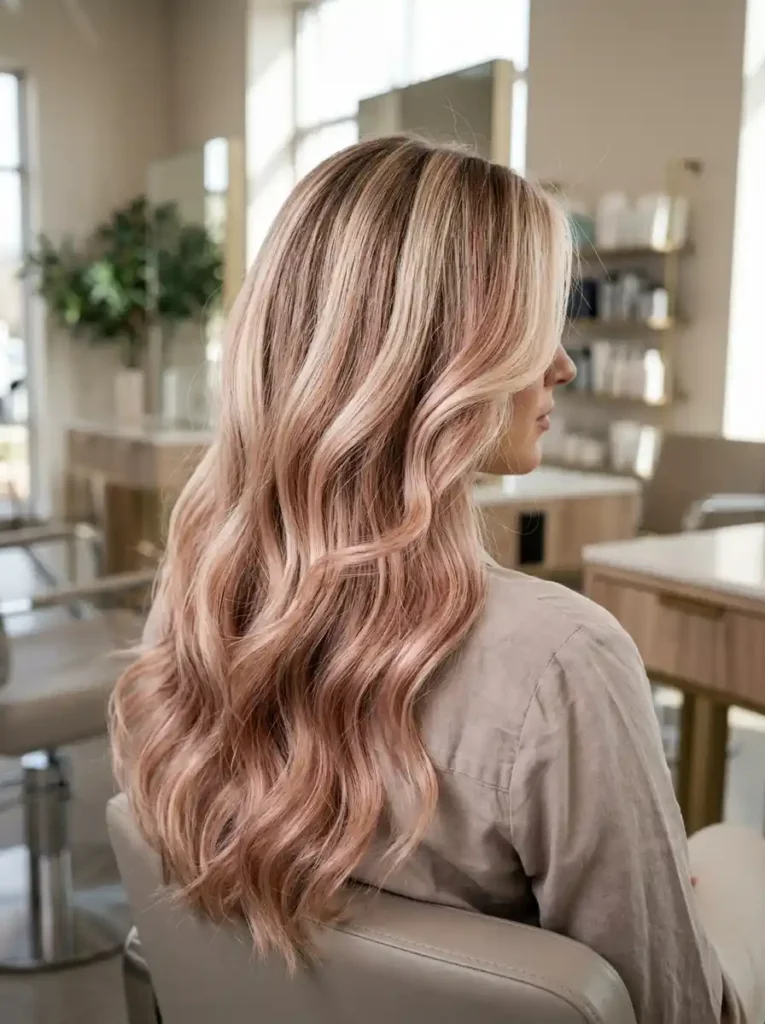
Combining rose gold with blonde balayage creates a lighter, more dimensional finish than using pink-gold color alone. Champagne blonde sections reflect light, while the rosy ribbons add warmth and personality. This technique is ideal if you want a bright overall appearance without losing the character of a fashion shade. Your stylist can place blonde pieces around the face and crown, then blend rose gold through selected lengths. The balance should suit your natural base, because too many pale sections can dilute the pink effect.
This combination may need a little more planning than a single color, particularly if you want both the blonde and rose tones to remain distinct. Ask about a maintenance plan that accounts for the different pigments and your preferred level of brightness. A color-safe shampoo and occasional gloss can help refresh the overall appearance, although the blonde sections may reveal warmth differently as they fade. Loose waves are especially effective at separating the ribbons, while a sleek blowout makes the blend look more subtle. Either way, the goal is a soft transition rather than obvious blocks of contrasting color.
20. Soft Rose Gold Hair with Face-Framing Layers

Face-framing layers bring movement to rose gold hair while directing attention toward the front of the hairstyle. The shortest pieces can begin around the cheekbones or jaw, depending on your preferred cut, and gradually blend into longer lengths. Adding slightly brighter rose gold ribbons near these layers creates a gentle focal point without requiring an all-over fashion shade. This is a versatile option for people who want a noticeable change but prefer to keep the majority of their natural color or a more neutral blonde base.
Ask your stylist to cut the layers according to how you normally wear your hair. Straight styling can make the front pieces look more defined, while loose waves create a softer, blended effect. If you regularly tie your hair back, ensure the shortest sections remain long enough to sit comfortably around your face. For color maintenance, use gentle cleansing products and protect the front strands from frequent heat styling. These sections are often handled more than the rest of the hair, so a little extra care can help preserve their smoothness and rosy shine.
Conclusion
Rose gold hair offers plenty of ways to express your personal style, from soft pastel shades and dusty pink tones to copper-infused color, metallic finishes, and dimensional balayage. The best choice depends on your starting hair color, preferred level of upkeep, haircut, and how noticeable you want the transformation to be. If you’re new to fashion colors, consider starting with peekaboo highlights, a face-framing money piece, or a rose gold gloss before committing to a full-color change.
Before booking your appointment, save a few reference photos and discuss the realistic results your current hair can achieve. Ask about pre-lightening, color fading, conditioning treatments, and the maintenance schedule required for your chosen shade. Remember that healthy-looking hair and a well-blended color often make a greater difference than choosing the lightest or brightest pink. With the right formula, thoughtful styling, and a manageable care routine, rose gold can be a beautiful, personalized update to your look this year.


