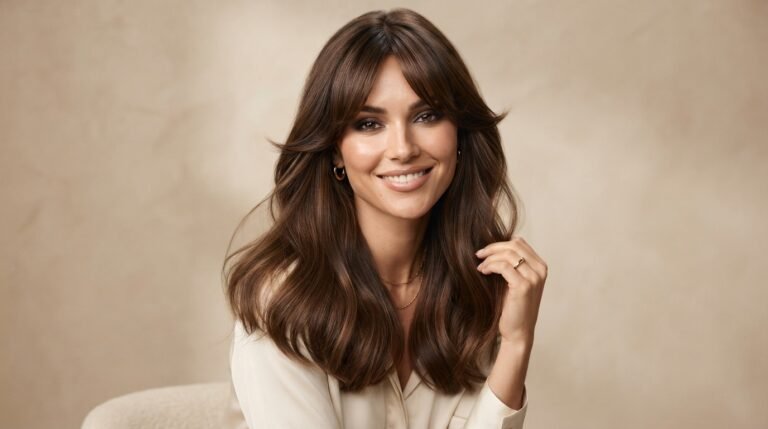
If your hair is naturally fine or thin, the right haircut can make an incredible difference in how full, polished, and effortless it looks. The trick is not simply adding more layers or choosing the shortest possible style. Instead, a flattering thin-hair haircut should work with your natural density, create visual movement, and make everyday styling easier. From sleek bobs with blunt edges to softly textured pixies and strategically shaped lobs, there are plenty of modern options worth considering this year.
These 25 haircut ideas are designed to give you inspiration without ignoring the practical side of having fine hair. You’ll find styles for different lengths, face shapes, textures, and levels of styling commitment. Along the way, you’ll also discover small details—such as where to place layers, how much weight to remove, and which finishes preserve fullness—that can make a major difference. Save your favorites, then use the details to have a more specific conversation with your stylist.
1. Blunt Chin-Length Bob
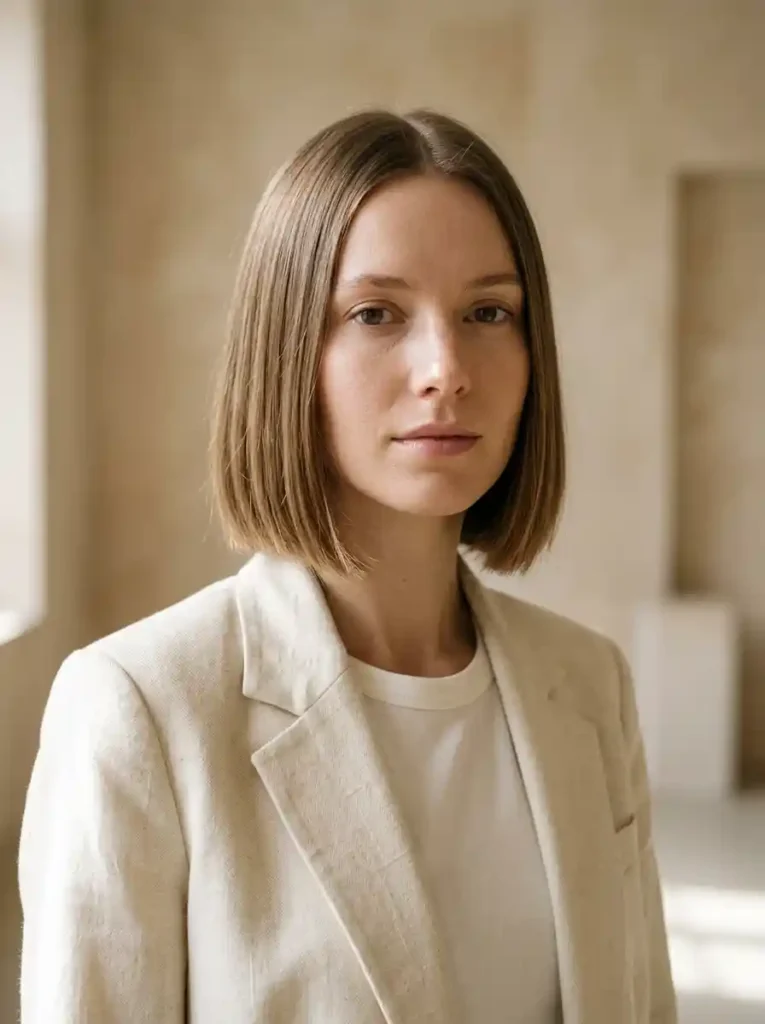
A chin-length blunt bob is one of the easiest ways to make fine hair appear visually denser. Keeping the perimeter strong instead of heavily layered gives the ends a substantial outline, while the shorter length prevents wispy strands from becoming obvious. This cut works particularly well for straight or slightly wavy textures. Ask your stylist to keep the bottom line clean and avoid excessive thinning shears, especially if your ends already feel delicate or sparse.
For styling, a lightweight volumizing mousse at the roots can provide lift without making the bob stiff. Blow-dry with a medium round brush, directing the hair slightly inward at the ends for a polished shape. A subtle middle part creates a contemporary finish, while a soft side part adds asymmetry around the face. If your hair tends to fall flat, changing the part occasionally can also create natural-looking movement without adding unnecessary product.
2. Soft Collarbone Lob

A collarbone lob gives thin hair a little more length while keeping the shape controlled enough to avoid stringy ends. The ideal version sits around the collarbone, with the front slightly longer than the back for a subtle elongated silhouette. Rather than removing lots of weight, your stylist can use very restrained internal shaping. This keeps movement through the hair while preserving enough density around the perimeter to maintain a fuller-looking outline.
This haircut is especially versatile if you enjoy switching between straight and wavy styling. For waves, wrap medium-sized sections around a wand and leave the final inch untouched so the ends remain relaxed. For a straighter finish, use a heat protectant and a flat iron sparingly. A lightweight texture spray can add separation, but avoid coating the entire head heavily because fine strands can quickly become weighed down.
3. French Bob with Micro Bangs

A French bob can give fine hair a remarkably intentional appearance because its compact shape relies on clean structure rather than bulk. Cutting the ends around the jaw or slightly above it makes the hairstyle feel dense and graphic. Micro bangs add personality while visually framing the eyes. This version suits people who enjoy a fashion-forward look and are comfortable with regular trims because short fringe can lose its intended shape quickly.
Keep styling simple so the haircut remains the star. Apply a tiny amount of smoothing cream to damp hair, then use a small round brush or your fingers to direct the ends into place. Avoid creating excessive height at the crown, which can make the proportions feel disconnected from the compact bob. If your hair has a natural wave, allowing a little texture to remain can make the French-inspired finish look softer and less overly polished.
4. Layered Pixie with Side-Swept Fringe
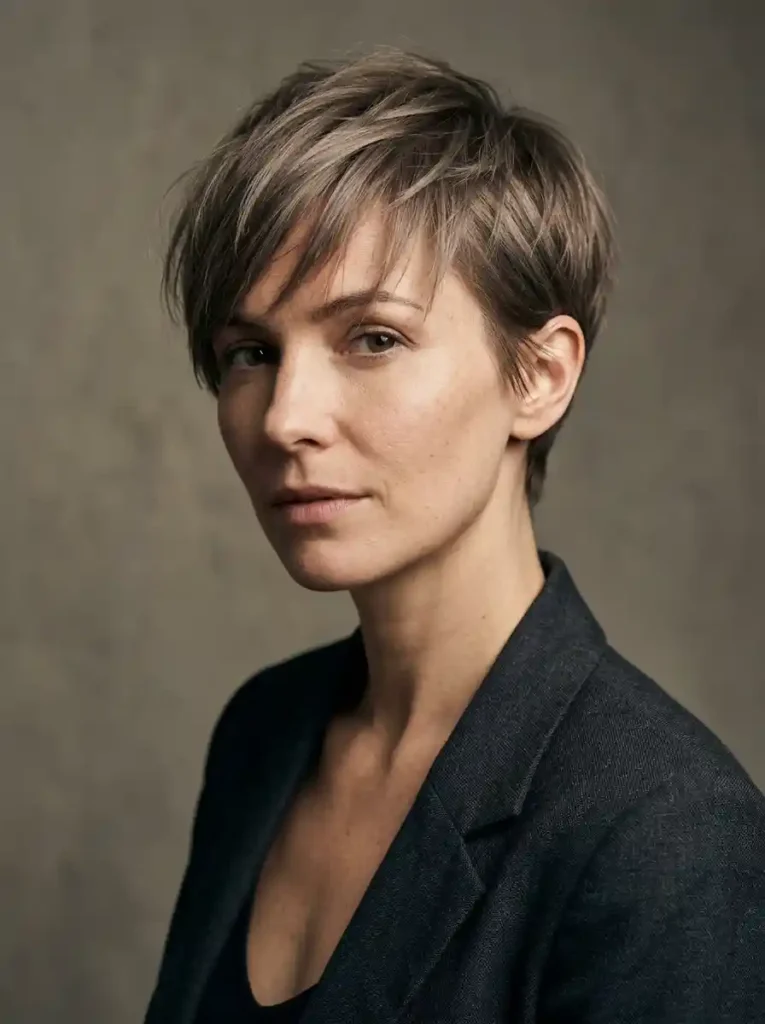
A layered pixie is a strong option when fine hair struggles to hold shape at longer lengths. Removing excess length can allow the remaining hair to sit closer to the head while strategically longer pieces on top create texture. The important distinction is controlled layering rather than aggressive thinning. Tell your stylist whether you want softness or definition, because overly choppy cutting can make already-fine ends look fragmented instead of fuller.
The side-swept fringe gives you several styling possibilities without requiring much hair. Work a pea-sized amount of lightweight styling cream through damp strands, then use your fingers to direct the top diagonally. For extra lift, blow-dry the roots against their natural direction before sweeping them into place. Regular trims every few weeks help maintain the tapered silhouette, particularly around the ears and neckline where a pixie can quickly lose its polished shape.
5. One-Length Shoulder Cut
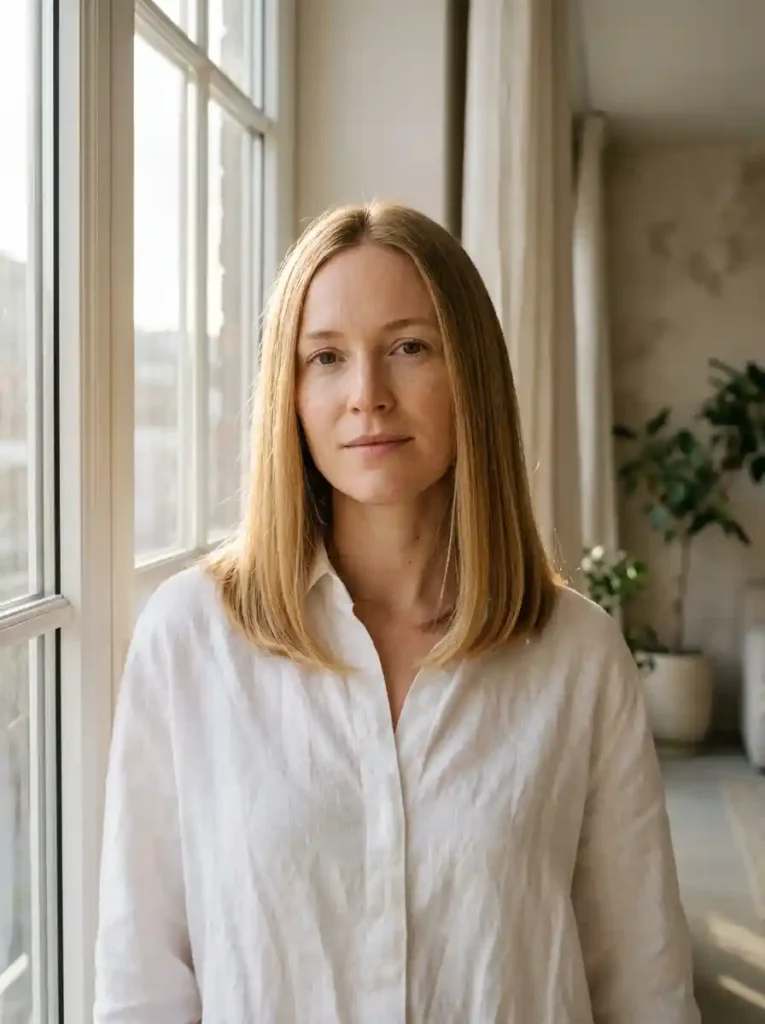
A shoulder-length one-length cut is ideal for someone who wants simplicity without sacrificing the appearance of fullness. Because the hair ends at a single strong line, there are fewer visibly thin layers competing for attention. It can also make fine hair easier to grow longer without the ends becoming excessively uneven. If your hair is naturally straight, this cut can look especially sleek with minimal daily effort.
The main styling goal is to protect the clean perimeter. Use a lightweight smoothing product from mid-lengths to ends and avoid applying rich oils near the roots. When blow-drying, lift the roots briefly with your fingers while keeping the lower lengths relatively smooth. If you prefer waves, create loose bends rather than tight curls, and brush them gently afterward. The result should feel softly dimensional while retaining the haircut’s strong, uncomplicated outline.
6. Textured Short Shag
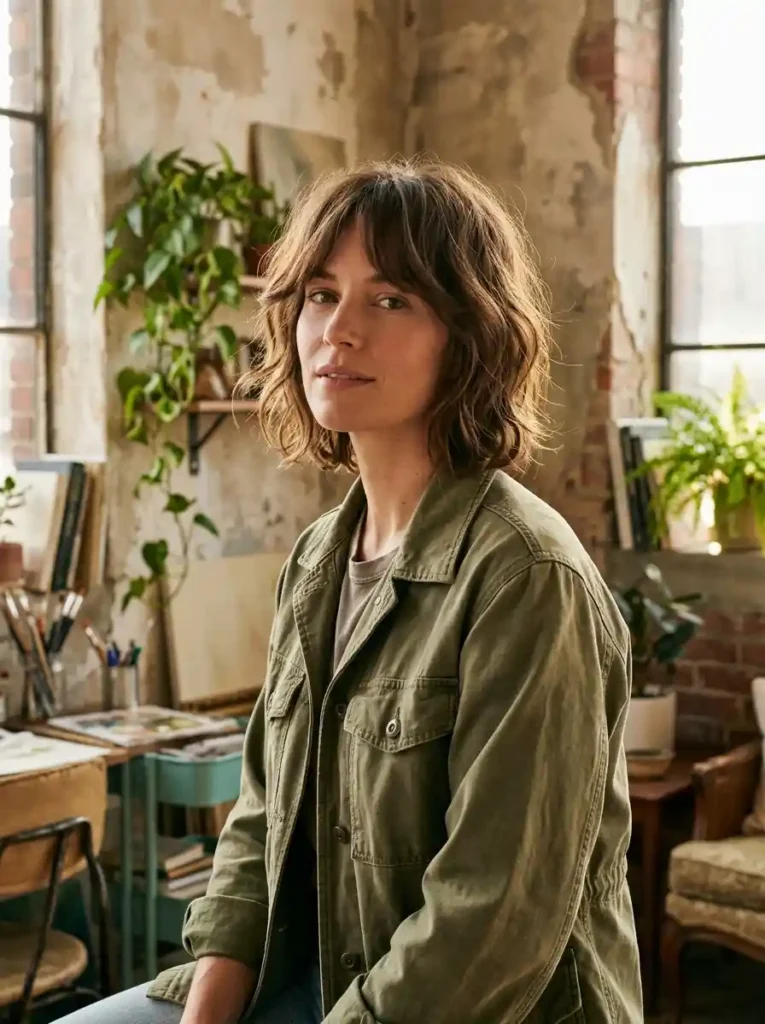
A short shag can work beautifully for fine hair when the layers are thoughtfully concentrated rather than scattered everywhere. The goal is to create separation around the crown and face while keeping enough length through the lower sections. This style is particularly appealing for naturally wavy hair because the existing texture helps create the airy, lived-in shape. Very straight hair can also wear it, although styling may require more deliberate texture.
Ask for soft, purposeful layers instead of heavy razor work throughout the ends. After washing, apply a lightweight mousse and scrunch gently while the hair is damp. Air-drying can emphasize natural waves, while diffusing on low heat gives additional lift. Avoid brushing the finished style aggressively, since separating every strand can make the hair appear less dense. A little controlled imperfection is part of what makes this haircut so appealing.
7. Sleek Angled Bob
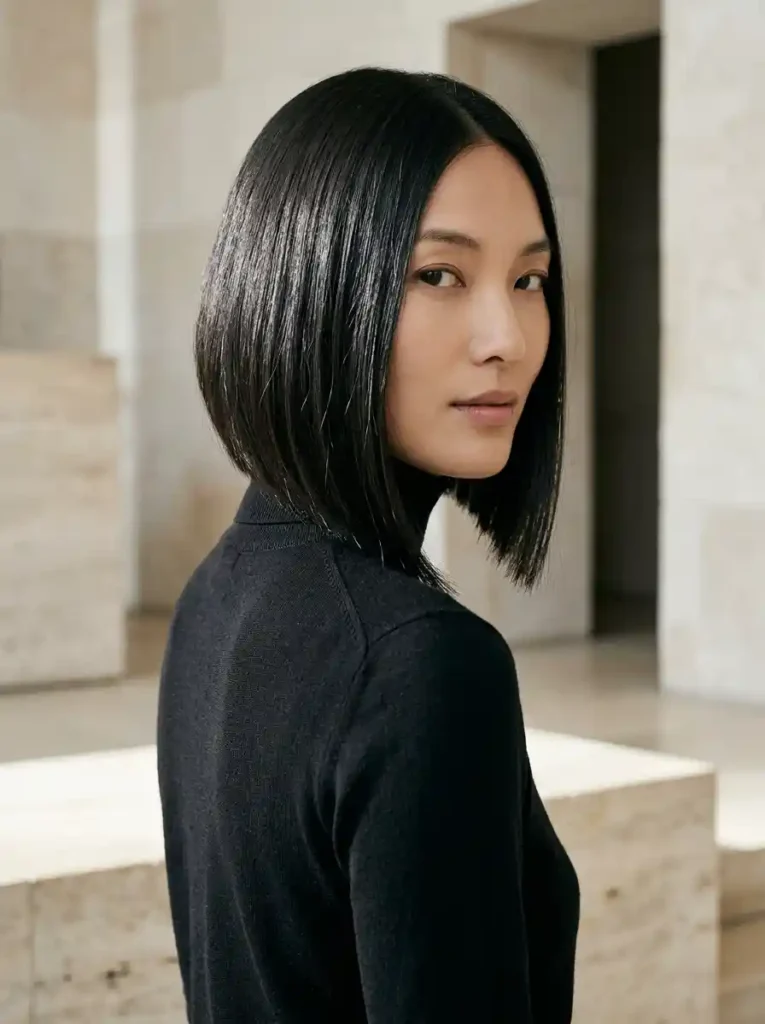
An angled bob creates visual structure without requiring heavy layers. The slightly shorter back and gradually longer front draw attention toward the face, while the clean perimeter keeps fine ends looking intentional. It is especially effective for straight hair that naturally lies close to the head. If your hair is very fine around the nape, ask your stylist to assess the natural growth pattern before deciding how dramatically to graduate the back.
This haircut looks polished with a simple blowout, but it does not need elaborate styling. Use a heat protectant and direct the airflow downward to encourage smoothness. A small round brush can create gentle movement at the front without turning the style into a large blowout. For everyday wear, a side part can add volume at the roots, while a center part gives the angled silhouette a sharper, more modern character.
8. Soft Pixie Bob
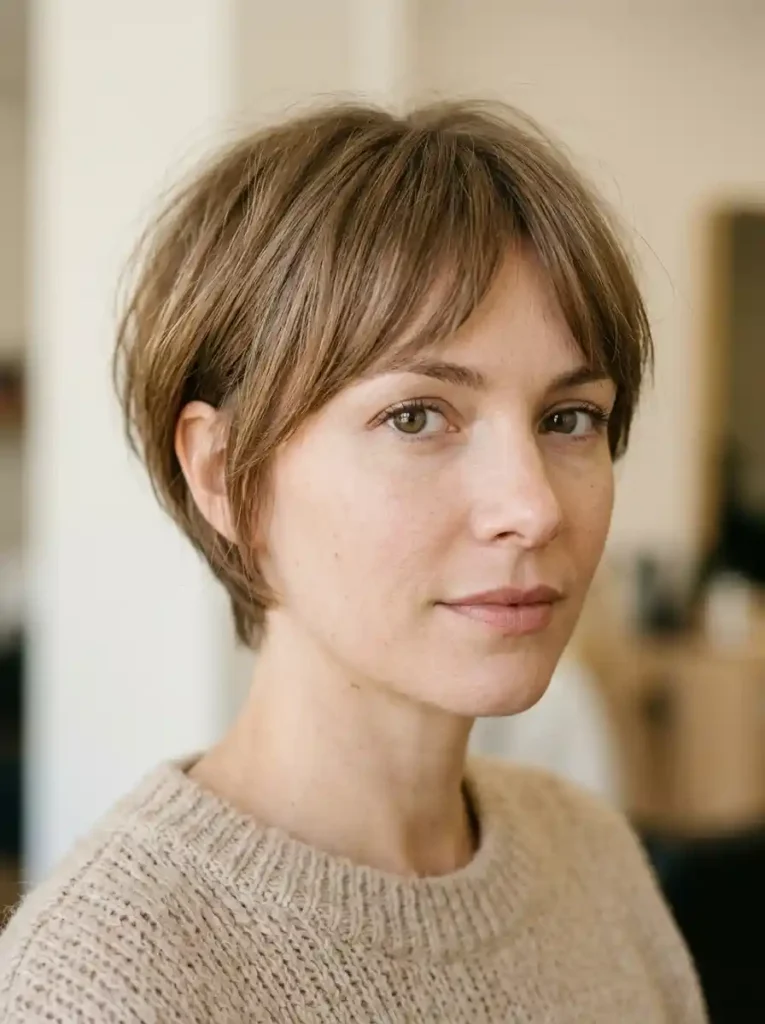
The pixie bob sits between a traditional pixie and a short bob, making it a useful choice if you want noticeable shape without committing to an ultra-short cut. Longer top pieces provide styling flexibility, while the shorter lower section keeps the silhouette neat. For fine hair, this balance can create the impression of movement without requiring enough length to drag the roots downward.
Its versatility is one of the biggest advantages. Wear the fringe forward for a softer, youthful effect, sweep it sideways for more openness around the face, or tousle the crown for a casual finish. A lightweight styling paste works well when you need separation, but start with very little. Heavy waxes can clump fine strands together and make the scalp more visible, so build texture gradually rather than applying a large amount at once.
9. Chin-Length Bob with Side Part

A side part can make a chin-length bob feel fuller without changing the haircut itself. Shifting the part moves more hair toward one side of the head, creating visual asymmetry and a little extra lift at the roots. The short length keeps the ends substantial, while the side-swept section gives the face a flattering frame. This combination is particularly useful if a center part tends to make your fine hair look flat.
For a naturally soft finish, dry the roots in the opposite direction from where you plan to wear the part, then switch them back once they are dry. This simple technique encourages lift without teasing. Keep the ends smooth and slightly curved rather than heavily curled. If your hair is prone to oiliness, choose a lightweight volumizing shampoo and keep conditioner primarily on the mid-lengths and ends.
10. Wispy Layered Lob
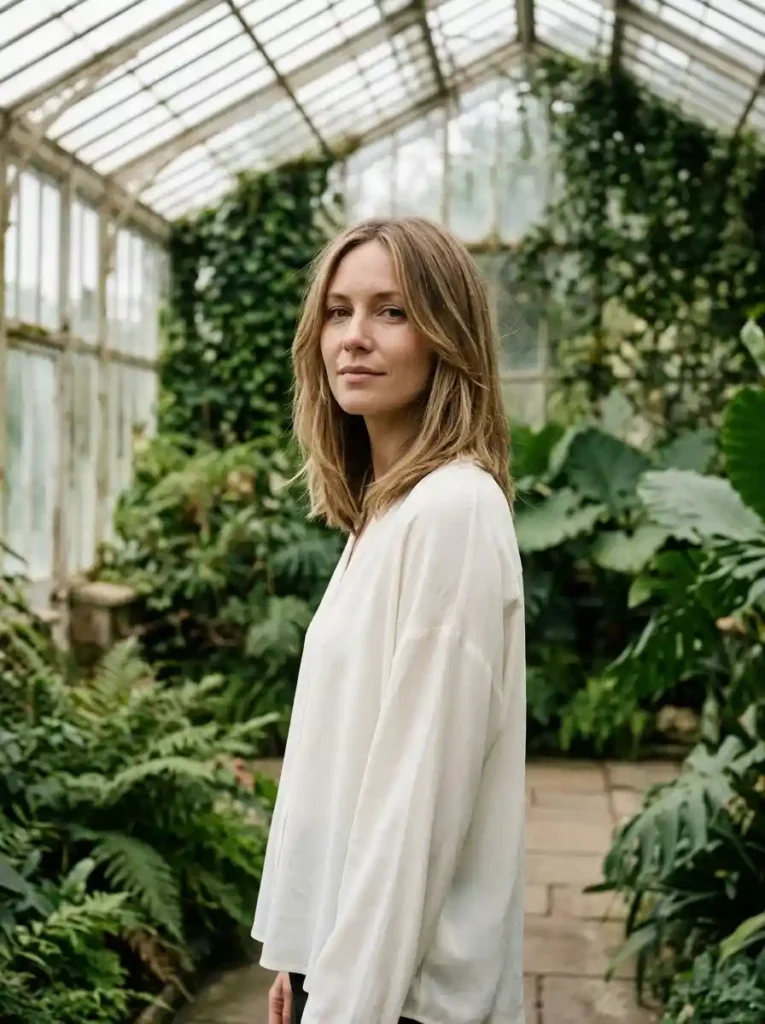
A wispy layered lob adds movement while keeping the overall shape long enough to feel substantial. The key is where the layers begin. Starting them below the cheekbones or around the lower mid-lengths preserves fullness near the crown and upper sides. This makes the style more suitable for fine hair than a heavily layered cut that removes volume throughout the entire head.
Styling is easiest when the layers are encouraged to bend rather than dramatically curl. Apply a lightweight heat protectant, then use a large barrel or large round brush to create loose movement. Let the hair cool before gently separating it with your fingers. If your ends are delicate, schedule regular dusting appointments instead of repeatedly cutting in more layers. Maintaining healthy-looking ends is especially important when the haircut depends on soft, flowing movement.
11. Modern Bixie with Piecey Texture

The bixie is a smart choice if you like short hair but want more softness than a traditional pixie provides. Its shape combines a short bob-like outline with cropped layers around the crown and sides. For fine hair, this creates several styling directions while keeping the silhouette compact. Ask your stylist to preserve some weight around the perimeter rather than thinning every section.
Texture is where this haircut becomes especially expressive. After washing, use a lightweight volumizing foam and dry the crown with your fingers. Once completely dry, pinch a few pieces between your fingertips with a small amount of styling cream to create definition. Avoid making every strand equally piecey; selective texture looks fuller and more natural. Because the shape depends on precise proportions, regular maintenance helps keep the bob-and-pixie balance intact.
12. Long Bob with Curtain Bangs

Curtain bangs can add shape around the face without requiring a large amount of hair to be removed from the main body of a long bob. The bangs should gradually blend into longer face-framing pieces so the transition feels seamless. For fine hair, ask for a light, airy fringe rather than an overly thick one. This preserves density through the rest of the haircut while still giving the face definition.
The styling routine can be surprisingly simple. Blow-dry the bangs forward first, moving them from side to side, then separate them gently at the center and direct each side away from the face. Keep the lob itself softly textured rather than heavily curled. If the bangs become oily quickly, refresh only that section instead of applying dry shampoo throughout the hairstyle. This keeps the lengths fresh and prevents unnecessary product buildup.
13. Jawline Bob with Soft Waves

A jawline bob paired with soft waves creates a fuller-looking silhouette without relying on excessive product. The shorter length prevents the waves from stretching downward, while the curved shape gives the sides a little more visual width. This can be particularly flattering for people who want their haircut to feel romantic rather than sharply geometric.
To keep fine waves from collapsing, start with damp hair and a lightweight mousse rather than a rich cream. Twist or wrap sections loosely while drying, then allow them to cool before separating them. Do not overload the ends with oil or serum afterward; one tiny drop is usually enough for shine. If your natural texture is inconsistent, alternating the direction of a few waves can produce a relaxed finish that does not look overly styled.
14. Textured French-Inspired Lob

A French-inspired lob offers a softer alternative to a perfectly polished blunt bob. The ends can remain slightly imperfect, giving fine hair a sense of movement without requiring aggressive layering. A lightly broken-up perimeter works particularly well when paired with natural bends. The haircut feels effortless, but the shape still needs structure; otherwise, thin hair can quickly appear shapeless.
For an easy finish, apply a small amount of styling foam through damp hair and twist a few sections away from the face. Let the hair air-dry or use a diffuser on low heat. Once dry, loosen the waves with your fingertips instead of brushing them out completely. If you have very straight hair, a few strategically placed bends around the cheekbones and ends can recreate the relaxed effect without requiring a full head of curls.
15. Sleek Side-Parted Pixie
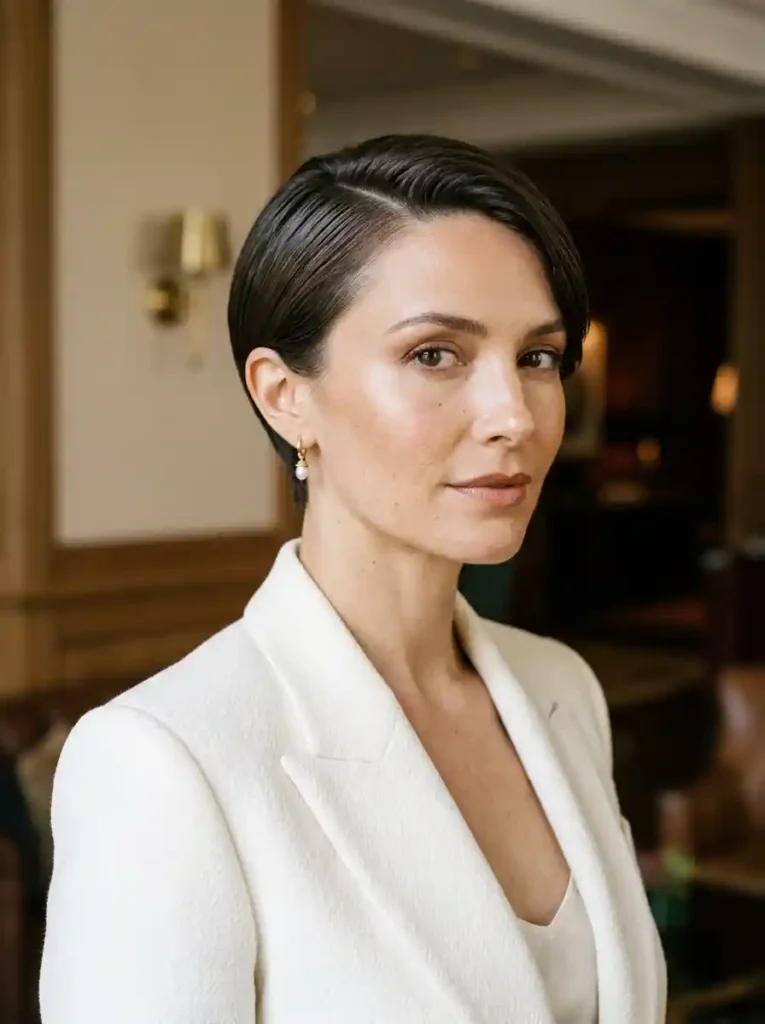
A sleek side-parted pixie is ideal if you prefer an elegant, controlled hairstyle over a tousled one. The short sides remove bulk while the longer top creates a smooth focal point. Fine hair can actually suit this shape well because the haircut does not depend on thick layers to create volume. Instead, its appeal comes from precise direction and a clean silhouette.
Use a lightweight smoothing cream on damp hair, then create the side part while drying. A narrow brush can help guide the top across the forehead, while a small amount of flexible hairspray keeps the shape in place. Avoid stiff gels that make every strand appear separated. If you want a softer daytime version, loosen the front slightly with your fingers after the product has set.
16. Shoulder-Length Cut with Face-Framing Layers

Face-framing layers can make a shoulder-length haircut feel more customized without removing too much density from the rest of the hair. For fine strands, the first layer should generally be placed thoughtfully rather than beginning very high. Keeping most of the body intact helps the haircut retain weight, while the shorter front pieces provide movement around the cheeks and jaw.
This cut is easy to adapt for different face shapes. A longer first layer can visually elongate a rounder face, while shorter cheekbone-level framing can emphasize angular features. When styling, direct the front pieces away from the face with a round brush or large roller. Keep the remaining hair relatively smooth to prevent the overall shape from becoming too diffuse. Regular trims help maintain the distinction between the framing pieces and the main length.
17. Cropped Pixie with Long Crown

A cropped pixie with a longer crown gives fine hair an opportunity to look deliberately textured rather than simply short. The sides and nape stay close to the head, while the top retains enough length to create direction and personality. This style is particularly practical for someone who dislikes spending much time blow-drying but still wants several ways to change the finish.
The crown can be styled upward for a little height, forward for a softer fringe, or slightly backward for a more polished appearance. Work a small amount of lightweight matte paste between your fingertips before touching the hair. Apply it only where definition is needed, especially at the crown and fringe. Too much product can make fine hair look darker, flatter, and separated, so start with an amount smaller than you think you need.
18. Blunt Lob with Subtle Beach Waves

A blunt lob paired with relaxed waves offers the best of two contrasting qualities: a dense-looking perimeter and casual movement through the lengths. The strong bottom line prevents the waves from making the ends appear overly wispy. Meanwhile, loose bends add dimension and can make fine hair look less flat than a completely straight finish.
Keep the waves large and irregular rather than tightly curled. After applying heat protectant, wrap broad sections around a medium-to-large barrel, leaving the very ends slightly straighter. Once everything cools, gently shake the hair loose with your fingers. A dry texture spray can add separation, but use it selectively. If the product leaves your hair feeling rough or sticky, switch to a lighter formula designed specifically for fine strands.
19. Soft Rounded Bob

A softly rounded bob adds gentle shape without creating the dramatic angles of a graduated cut. The ends curve inward toward the jaw, giving the silhouette a neat, contained appearance. This can be especially attractive for fine hair because the rounded perimeter makes the ends look intentional rather than thin or uneven.
For the smoothest result, use a lightweight blow-dry lotion followed by a medium round brush. Roll the ends inward just enough to create a curve, avoiding excessive volume. If your hair is naturally wavy, you can embrace some texture instead of forcing perfect smoothness. The haircut should remain recognizable even when it is not freshly styled, so ask your stylist to create a shape that works with your natural movement.
20. Long Pixie with Wispy Fringe
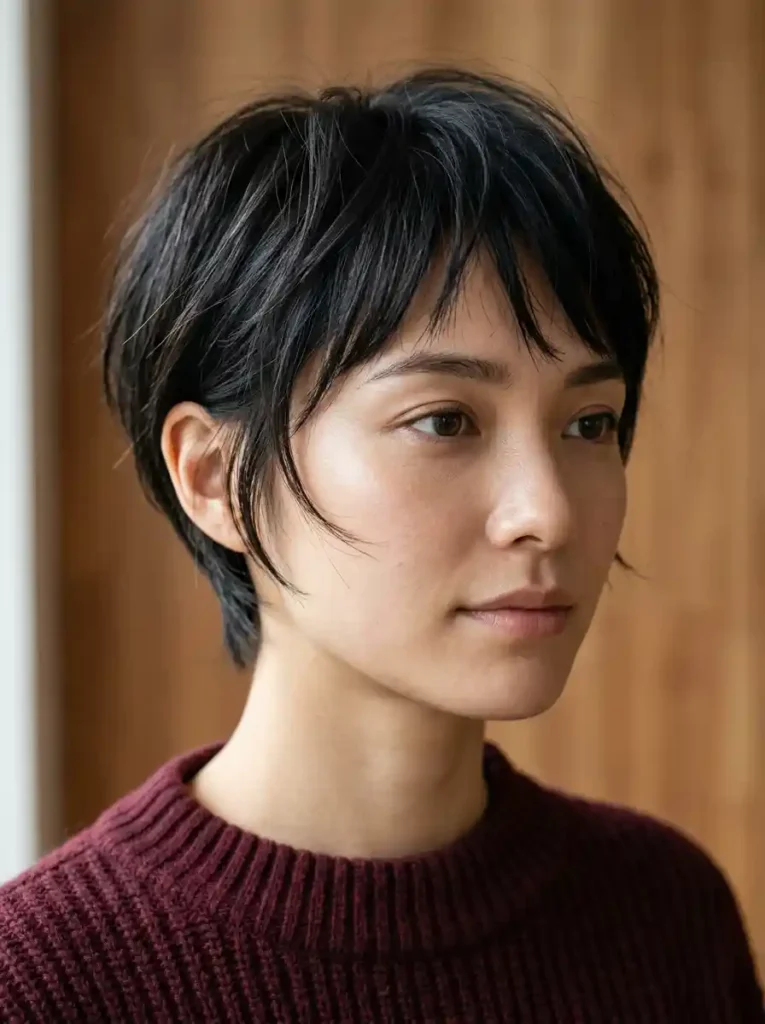
A long pixie gives you the convenience of short hair while retaining enough length around the top and fringe to soften the overall appearance. It works well for fine hair because the shorter silhouette reduces the weight pulling on the roots. At the same time, longer top pieces can be directed in different ways depending on your mood or outfit.
For everyday styling, use damp fingers to arrange the fringe and crown before the hair completely dries. A small amount of flexible styling cream can keep the pieces separated without making them stiff. If you want more volume, blow-dry the crown upward for a few seconds, then let it settle naturally. Keep the neckline neatly trimmed, as a clean nape helps the longer top layers look intentional.
21. A-Line Bob with Minimal Layers
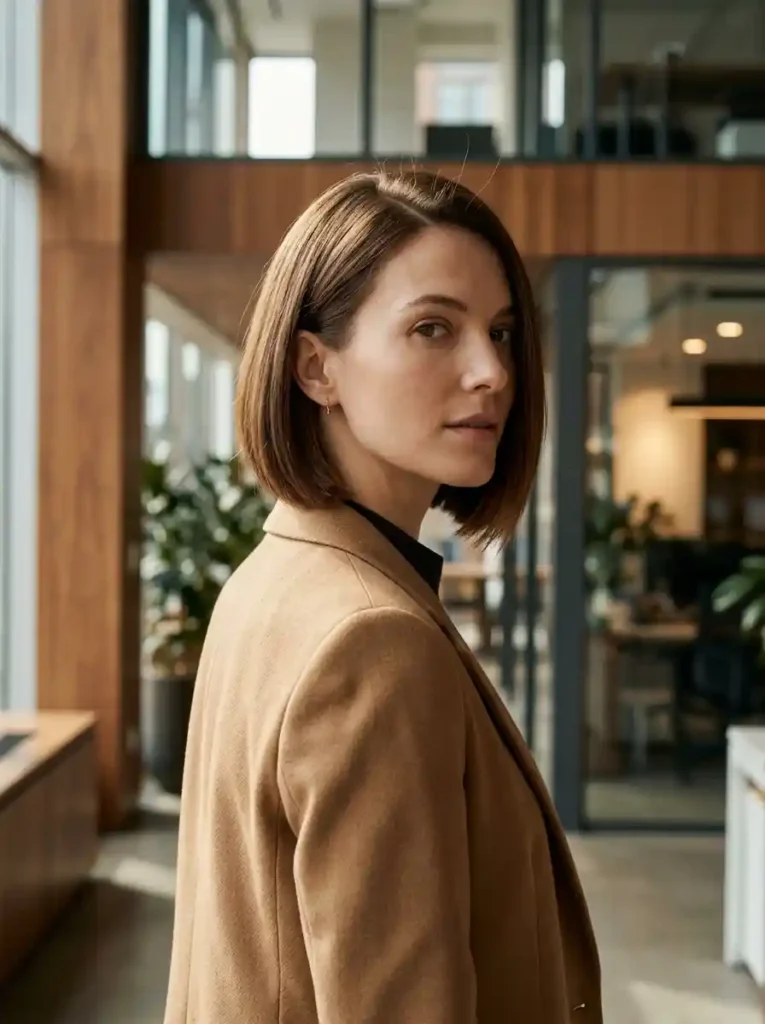
An A-line bob gives fine hair a structured shape while adding subtle directional movement toward the face. Because the back is shorter, the hairstyle avoids carrying unnecessary length at the nape, while the front sections create an elegant frame. Keeping the layers minimal is important; the graduated outline itself provides enough shape without sacrificing density.
This cut is particularly easy to style straight. Apply heat protectant, blow-dry the roots smoothly, and finish the ends with a flat iron only if necessary. A tiny amount of shine serum can polish the perimeter, but keep it away from the scalp. If you prefer texture, create just a few bends through the front pieces. The contrast between a clean shape and relaxed movement makes the haircut feel modern rather than overly formal.
22. Wispy Shaggy Pixie
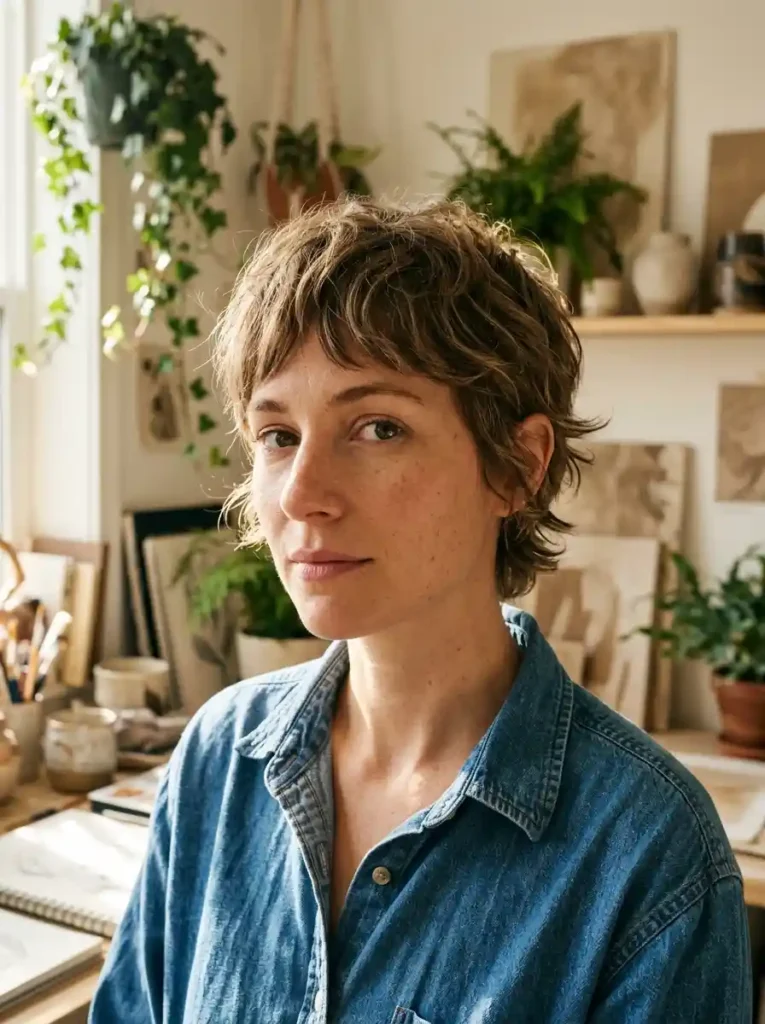
A shaggy pixie is a good fit for someone who wants short hair to feel relaxed rather than perfectly sculpted. The haircut uses irregular lengths around the crown and fringe to create movement, while the sides remain relatively controlled. Fine hair can benefit from this approach when the texture is subtle and deliberate rather than excessively thinned.
The easiest styling method is often the least complicated. Apply a lightweight mousse to damp hair, scrunch the top, and allow it to dry naturally or diffuse on low heat. Once dry, use your fingertips to separate only a few pieces. If your hair is straight, a small flat iron can add bends to selected strands. Avoid creating uniform waves throughout the head; varied texture gives this haircut its naturally casual character.
23. Center-Parted Sleek Bob
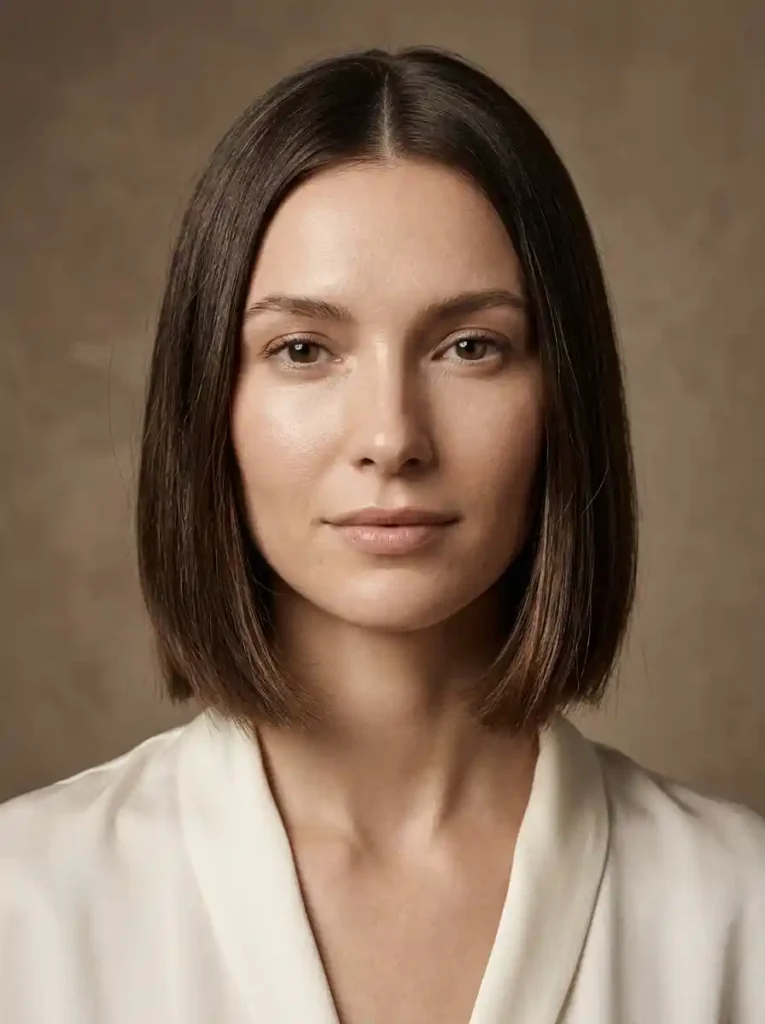
A center-parted sleek bob creates a clean, symmetrical look that feels especially polished on fine straight hair. The important feature is the strong perimeter: when the ends are cut evenly, the hairstyle can appear more substantial than a heavily layered alternative. This style also makes a useful low-maintenance foundation because the haircut itself provides most of the visual structure.
For a smooth finish, detangle gently and apply a heat protectant before blow-drying. Use a paddle brush to guide the hair downward, then touch up only the areas that need additional polish. A small amount of lightweight serum on the ends can enhance shine. If your roots flatten easily, create the center part after rough-drying the roots rather than pressing the hair directly against the scalp from the beginning.
24. Shoulder-Length Shag with Curtain Fringe

A shoulder-length shag with curtain fringe is ideal when you want movement but do not want to lose the versatility of medium-length hair. The layers should be placed strategically to encourage lift around the crown and shape around the face, while the lower lengths retain enough weight to prevent the style from looking sparse. Fine wavy hair can particularly benefit from this balanced approach.
Style the haircut according to your natural texture instead of fighting it. Apply mousse through damp hair, then scrunch from the ends upward. Encourage the curtain fringe to separate naturally as it dries, using your fingers to redirect it if necessary. For straighter hair, large rollers can add gentle bend at the crown and front. Keep the finish touchable; overly rigid products can destroy the airy quality that makes this haircut appealing.
25. Tapered Bob with Feathered Ends

A tapered bob offers a refined shape while allowing the front to remain slightly longer and softer. For fine hair, feathering should be limited to the outermost ends rather than carved throughout the haircut. This preserves density near the interior while giving the perimeter enough movement to avoid looking rigid. The result is particularly attractive when you want a polished haircut that still feels feminine and lightweight.
Styling can range from smooth to gently tousled. For a professional finish, blow-dry the back close to the head and curve the front pieces slightly toward the face. For a softer everyday version, let the hair dry naturally and use a small amount of texture cream on the ends. Keep an eye on split ends, since feathered tips can become noticeably uneven when they are dry or damaged. Regular light trims will keep the shape fresh.
Choosing the Right Thin Haircut for You
The best haircut for thin hair is not necessarily the shortest, bluntest, or most layered option. It is the one that works with your natural texture, density, face shape, lifestyle, and willingness to style it. Before your appointment, save two or three photographs that show the overall shape you like, then explain what you want to preserve—such as fullness at the ends, movement around the face, or easy morning styling.
It also helps to tell your stylist what your hair actually does between appointments. If your roots become flat, your ends tangle, or your natural wave disappears under too much weight, those details can guide the cut. Whether you choose a sleek bob, airy lob, expressive pixie, or textured shag, thoughtful placement of length and layers can make the finished style feel intentional and wearable. The goal is not to disguise fine hair, but to give it a shape that makes the most of what you naturally have.