Medium-length hair continues to be one of the easiest lengths to make feel fresh because it leaves enough room for waves, layers, ponytails, polished blowouts, and playful details without the weight of very long hair. Current 2026 hair inspiration is leaning toward movement, softer shapes, natural texture, face-framing layers, and wearable finishes rather than styles that look overly constructed.
If you’re saving hairstyle ideas for your next salon appointment, this collection gives you plenty of directions to consider. From softly layered lobs and curtain bangs to flippy ends, glossy straight styles, curly layers, and relaxed shags, each look has its own personality. You’ll also find practical styling advice so you can choose a cut based on your hair texture, maintenance preferences, and everyday routine—not simply because it looks beautiful in a photo.
1. Soft Layered Lob With Natural Movement
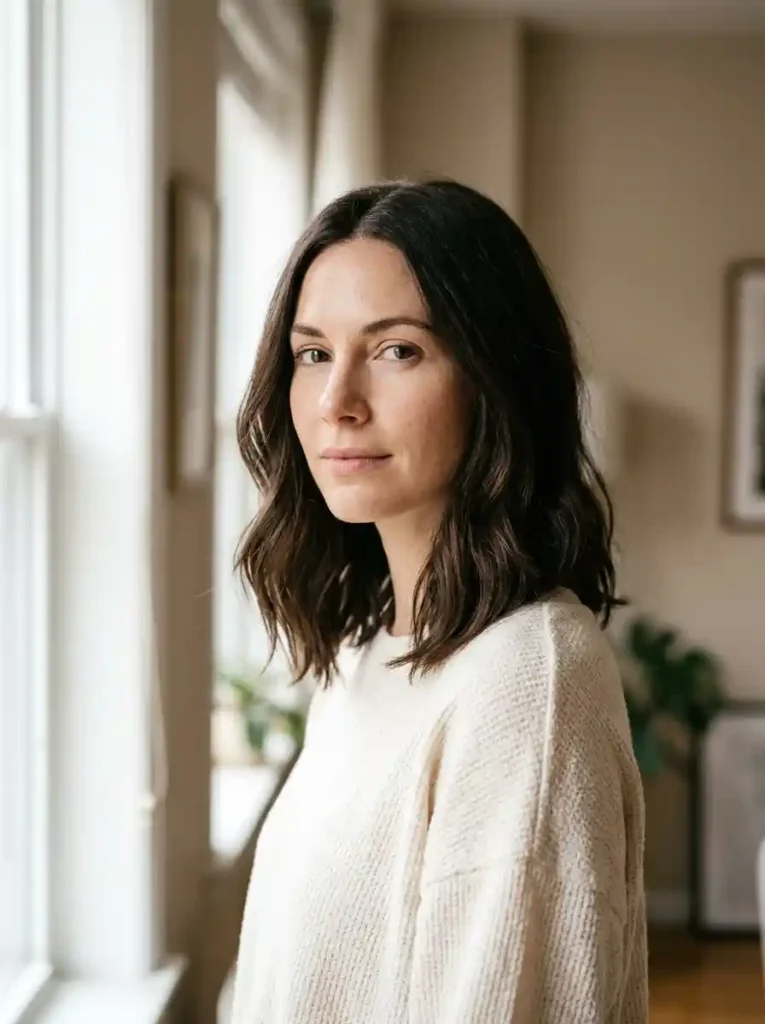
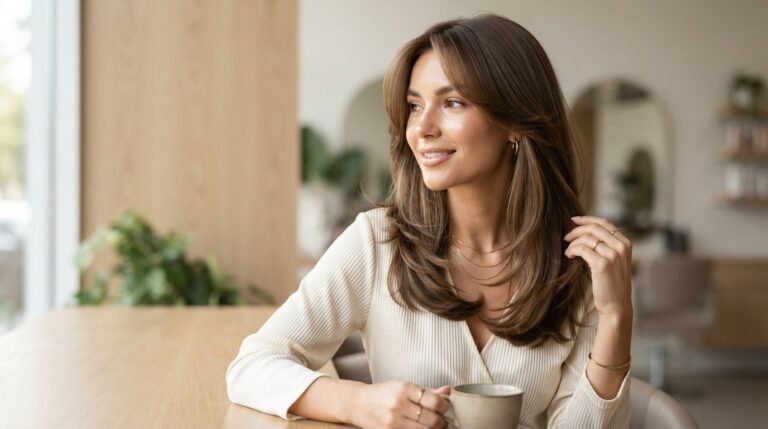
A soft layered lob is ideal when you want noticeable shape without sacrificing the flexibility of medium hair. Ask your stylist for subtle layers that begin below the cheekbones and continue gently toward the ends. This keeps the outline substantial while allowing the hair to move instead of sitting like one heavy block. The cut works particularly well on straight or slightly wavy hair, and a center or softly offset part can change the overall effect.
For everyday styling, let your natural texture do some of the work. Apply lightweight mousse to damp roots and mids, then blow-dry with your fingers or a large round brush. If your hair is naturally wavy, enhance a few sections with a curling wand rather than curling every strand. Finish with a small amount of smoothing cream on the ends. The goal is movement that still looks touchable, rather than perfectly arranged waves.
2. Curtain Bangs With Face-Framing Layers
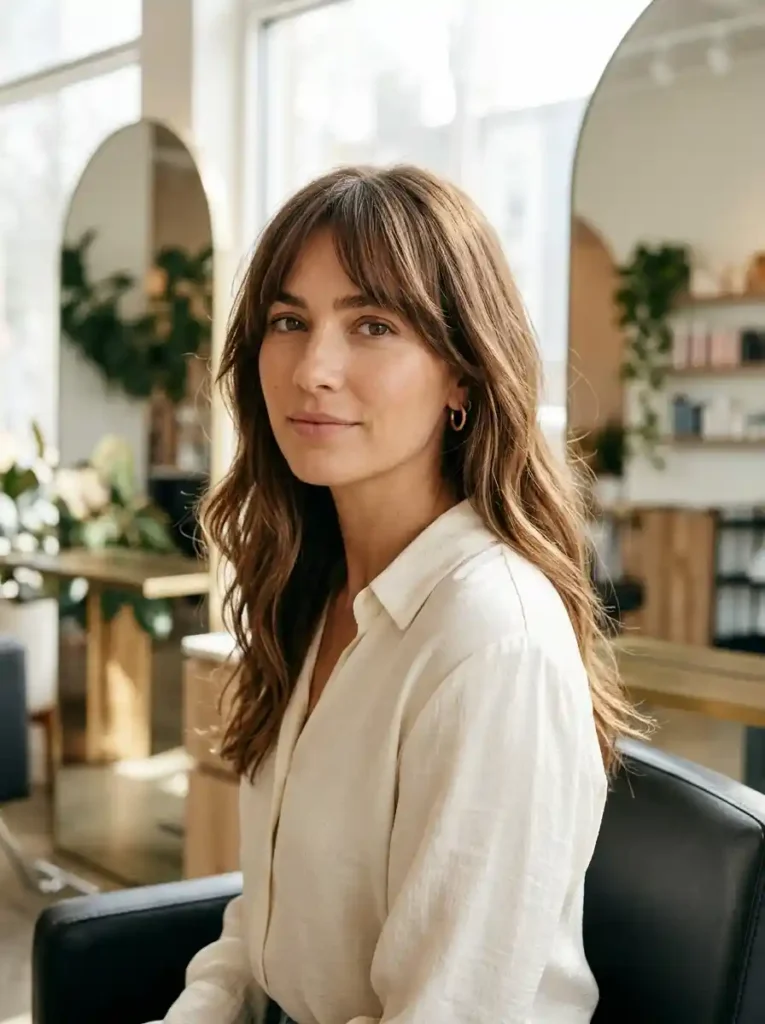
Curtain bangs can completely change the personality of medium-length hair without requiring a dramatic cut. The most wearable version gradually opens around the forehead and blends into longer pieces near the cheekbones. Ask your stylist to connect the bangs with your existing face-framing layers instead of creating an isolated fringe. That connection helps the hairstyle feel intentional and gives you more options when you part your hair differently or eventually grow the bangs longer.
This style is especially useful if you like switching between polished and relaxed looks. Round-brush the bangs away from your face while drying, directing each side slightly backward before allowing it to fall naturally. Avoid using too much hairspray, because stiff fringe can lose the soft shape that makes curtain bangs appealing. If your hair is very fine, a lightweight volumizing mousse at the roots can create enough lift without making the front greasy.
3. Beachy Wavy Lob
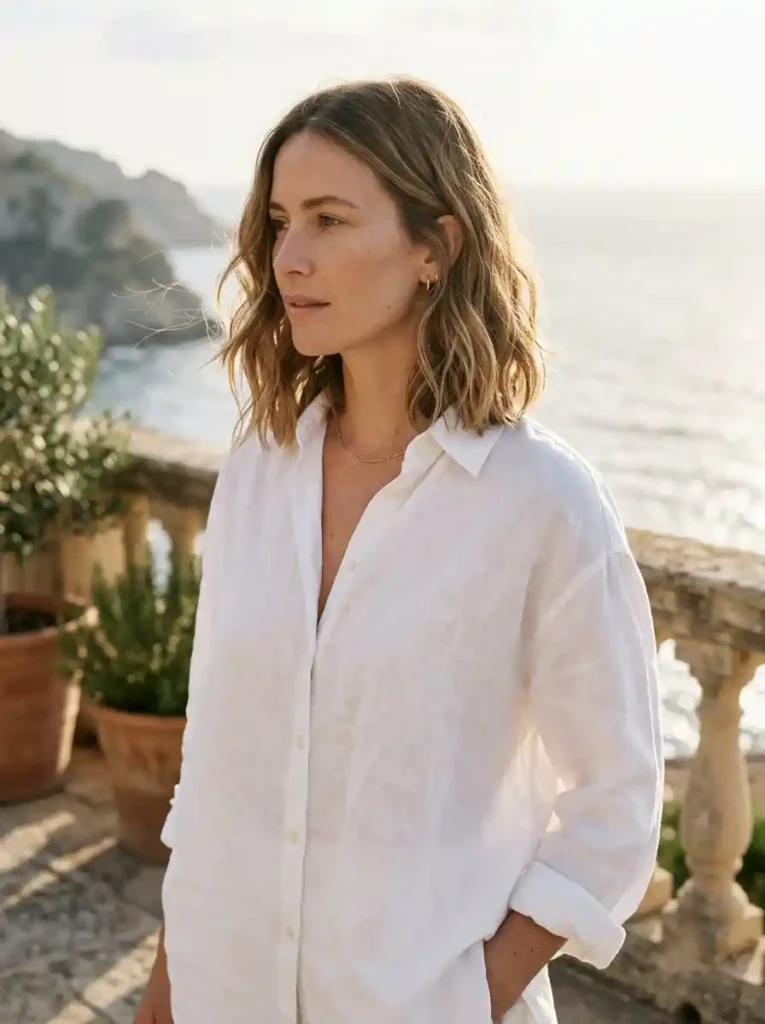
The beachy lob gives medium hair an easygoing shape while keeping enough length for ponytails and half-up styles. Instead of uniform curls, the texture should look irregular, with some sections bending more strongly than others. A stylist can create this effect through subtle layers and slightly textured ends. It suits naturally wavy hair particularly well, but straight hair can achieve the look with loose bends rather than tight curls.
To recreate the texture, work a small amount of wave-enhancing cream through damp hair and allow it to air-dry or diffuse gently. For straighter hair, use a medium curling iron and alternate the direction of each section, leaving the last inch relatively straight. Once everything cools, loosen the waves with your fingers. A light texturizing spray can add separation, but avoid saturating the hair because heavy product can flatten the movement.
4. Sleek Blunt Shoulder-Length Cut

A blunt shoulder-length cut is the choice for anyone who loves clean lines more than visible layering. The ends sit at approximately the same length, creating a strong perimeter that can make medium hair appear denser. This approach is particularly attractive on straight or gently textured hair because the shape remains clearly visible. Before committing, consider your natural volume: very thick hair may need discreet internal weight removal so the outline does not become excessively bulky.
The beauty of this haircut is that styling can remain remarkably simple. Apply heat protectant, then blow-dry downward with a paddle brush before using a flat iron only where necessary. Finish with a lightweight shine serum on the ends, keeping oil away from the roots. A center part emphasizes the symmetry, while a deep side part creates a softer, more dramatic silhouette. Regular trims help preserve the crisp edge as the haircut grows.
5. Medium Shag With Soft Curtain Fringe

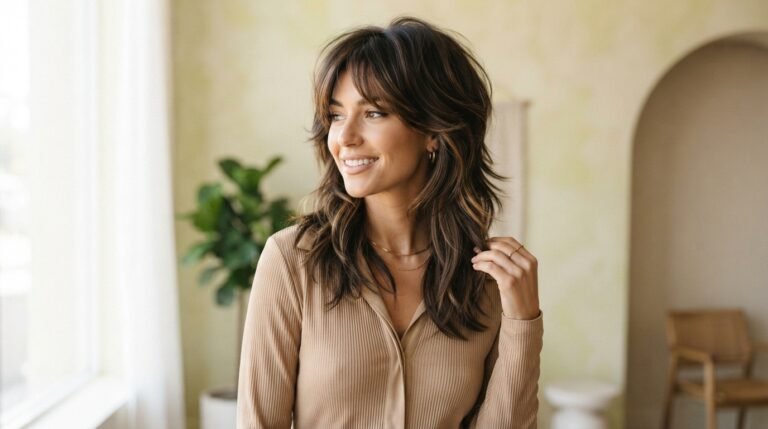
A modern medium shag is perfect when you want texture, personality, and movement rather than a perfectly controlled silhouette. Its defining feature is layering through the crown and mid-lengths, which helps remove excess weight and encourages natural movement. Softer versions are easier to wear than heavily chopped shags, especially if you need to tie your hair back for work. Curtain fringe can further connect the shorter layers to the face.
Styling should emphasize texture rather than trying to make every layer behave identically. Scrunch a lightweight curl cream or mousse into damp hair, then diffuse on low heat or let it dry naturally. If your hair is straight, use a small iron to create a few loose bends around the face and crown. Resist brushing once the style is dry, because excessive brushing can erase the separated texture that gives a shag its relaxed character.
6. Feathered Medium Hair With Flipped Ends
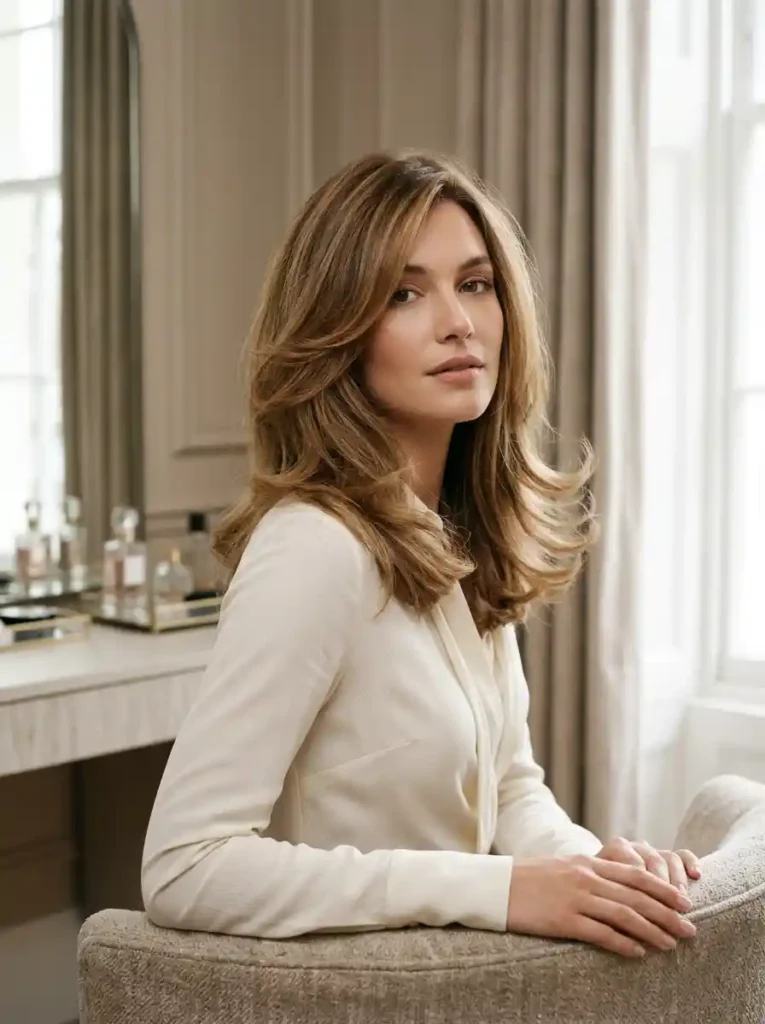
Feathered layers are a lovely middle ground between a heavily layered cut and a one-length style. The shorter pieces gradually blend into the rest of the hair, creating airy movement around the face and ends. They are especially useful if thick hair feels heavy at medium length. If your hair is fine, ask for restrained feathering so the stylist preserves enough density at the perimeter rather than thinning the ends excessively.
The signature finish comes from directing the ends outward with a round brush. Dry each section while rotating the brush away from your face, then allow the hair to cool before gently separating it with your fingers. You do not need a dramatic flip; a subtle outward curve feels more modern and works with everyday clothing. A flexible hairspray can hold the shape while still allowing the ends to move naturally.
7. Medium Curly Layers With Defined Shape
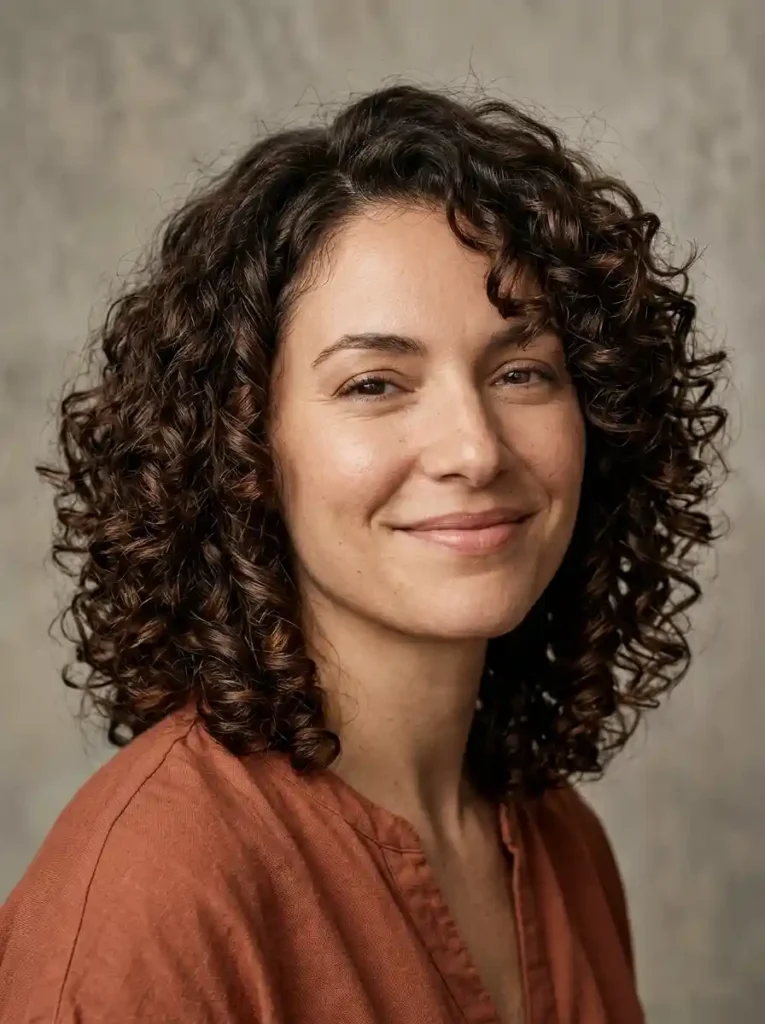
Medium curls benefit from strategic layering because removing the right amount of weight can help individual curls form instead of collapsing into a heavy shape. A rounded layered cut can create balanced volume around the head while keeping enough length for versatility. When discussing the haircut, show your stylist how you normally wear your curls and explain whether you prefer definition, volume, or a combination of both.
Styling begins with moisture rather than excessive hold. Apply leave-in conditioner to wet hair, followed by a curl cream or lightweight gel suited to your texture. Scrunch upward, then diffuse with low heat or allow the curls to dry naturally. Avoid repeatedly touching them while they dry, because manipulation can create frizz. Once completely dry, gently shake the roots and separate only the curls that need extra definition.
8. Glossy Medium Hair With a Deep Side Part
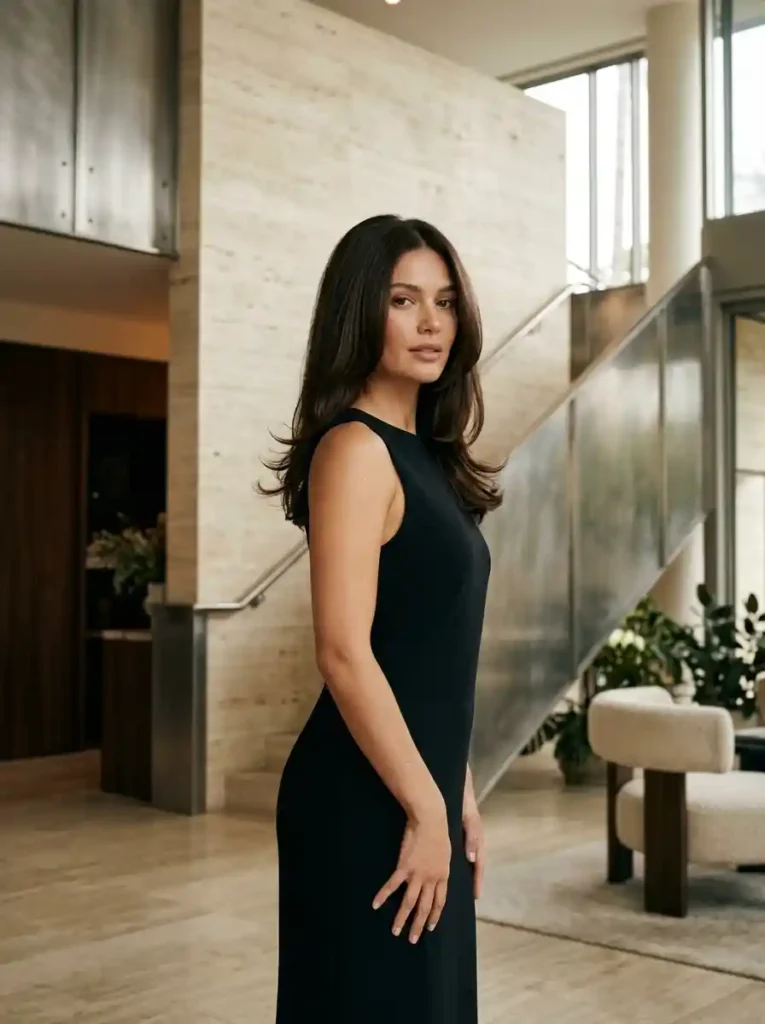
A deep side part can make an otherwise simple medium haircut feel dramatically different. It creates asymmetry at the top while allowing the lengths to remain clean and uncomplicated. This option works beautifully with a smooth lob or shoulder-length cut, particularly when you want a polished hairstyle for dinners, celebrations, or professional settings. If your natural part resists the change, training it gradually with a blow-dryer can make styling easier.
For the sleekest finish, begin with damp hair and apply heat protectant plus a small amount of smoothing product. Blow-dry the roots in the direction of the new part, then polish the lengths with a paddle brush. Use a flat iron sparingly rather than repeatedly passing over every section. Finish with a tiny drop of lightweight serum through the ends. The result should look glossy and fluid, not stiff or coated.
9. Flippy ’90s-Inspired Medium Layers

Flippy layers bring playful energy to medium hair without requiring a complicated haircut. The style relies on strategically placed layers that can be directed outward at the ends, particularly around the face and shoulders. It works best when the cut has enough internal movement to support the flip. section, rolling the ends outward instead of underneath. Let the sections cool briefly before releasing them so the shape has time to settle. If your hair tends to fall flat, use a lightweight root-lifting Straight and moderately wavy hair usually responds well, while very curly hair may require a different layering strategy to achieve the same silhouette.
Use a medium round brush to dry each section, rolling the ends outward instead of underneath. Let the sections cool briefly before releasing them so the shape has time to settle. If your hair tends to fall flat, use a lightweight root-lifting mousse before blow-drying. Keep the finishing product flexible; a soft hairspray is preferable to a heavy gel because the appeal comes from bounce and movement.
10. Wispy Bangs With Shoulder-Length Waves

Wispy bangs offer a lighter alternative to a dense fringe, making them appealing if you want a noticeable change without visually overwhelming your face. They pair naturally with shoulder-length waves because the softness of the fringe matches the movement through the rest of the haircut. Ask for the bangs to remain slightly longer and piecey if you are uncertain about the commitment. That gives you more flexibility as they grow.
The easiest routine is to dry the fringe first because it usually has a mind of its own once completely dry. Use a small round brush or simply direct the hair from side to side with your fingers while blow-drying. Leave the rest of the waves relatively relaxed. A tiny amount of styling cream can separate the fringe, while dry shampoo at the roots can provide texture on second-day hair.
11. Collarbone Cut With Long Face-Framing Pieces

A collarbone cut is an excellent option if you are nervous about going significantly shorter. The length remains long enough for many updos while feeling lighter and more purposeful than hair extending far down the back. Long face-framing pieces add movement without dramatically changing the overall perimeter. For a particularly adaptable shape, ask your stylist to blend those pieces gradually into the back rather than creating abrupt steps.
This haircut can be styled in several directions depending on your schedule. Wear it straight for a clean appearance, add loose waves for softness, or pull it into a low ponytail when you need convenience. When blow-drying, direct the front pieces slightly away from your face so they naturally open around the cheekbones. If you have thick hair, subtle internal layering can reduce weight without making the visible ends look sparse.
12. Soft Butterfly Layers At Medium Length
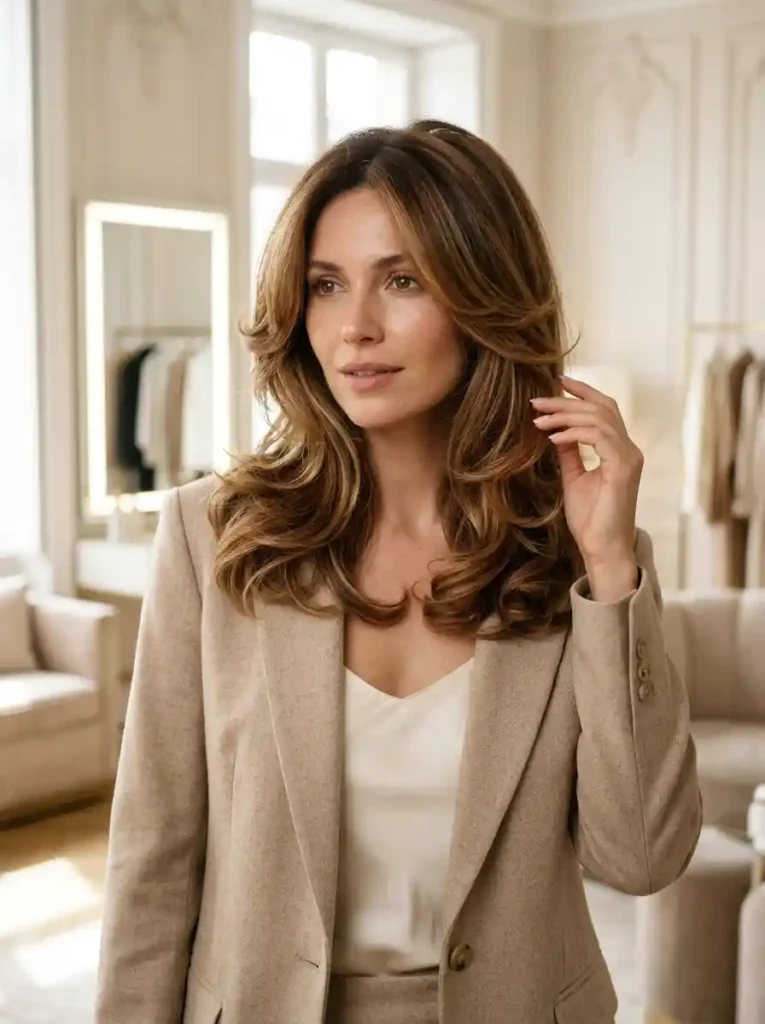
Butterfly-inspired layers can bring a fuller, more voluminous effect to medium hair without turning the haircut into a short layered style. The key is having shorter pieces around the face that blend into longer lengths, creating a cascading shape. This option is particularly attractive if you enjoy blowouts and want visible movement. It can also make a simple medium cut feel more elaborate without changing its basic length.
For the classic finish, divide damp hair into sections and use a large round brush to lift the roots while curving the front pieces away from the face. Velcro rollers can help the shape cool into place if your hair struggles to hold volume. Avoid loading the roots with oil or heavy conditioner. Once dry, separate the layers gently with your fingers so the hairstyle remains airy instead of becoming stiff.
13. Textured Lob For Fine Hair
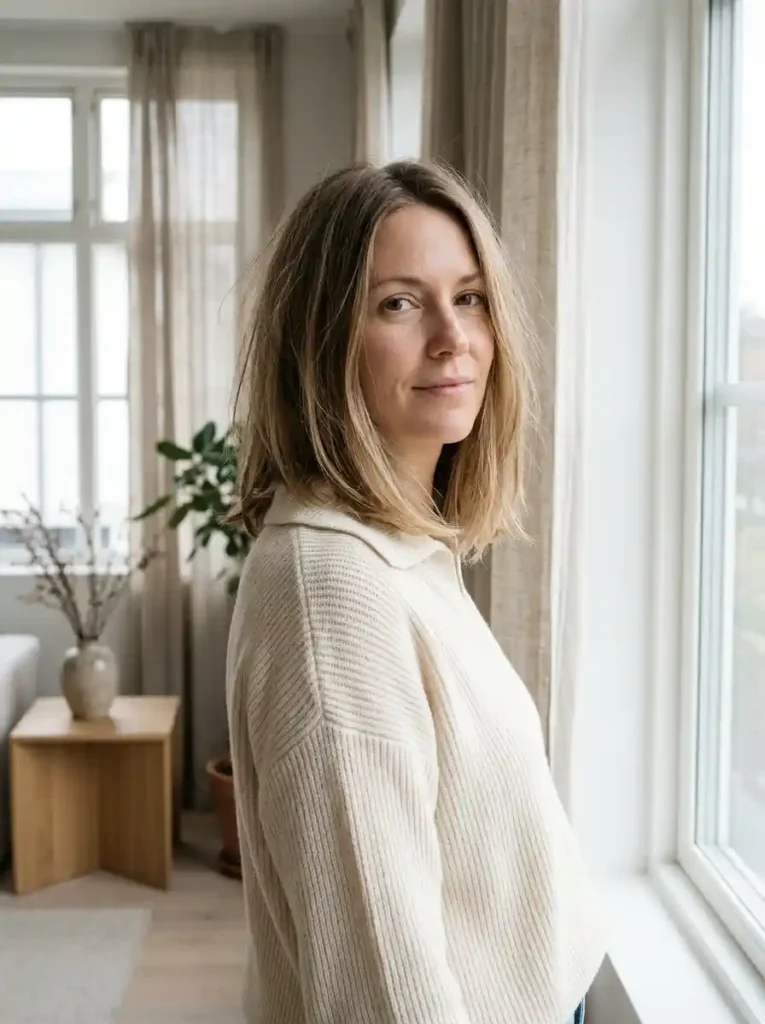
Fine hair can look fuller when the haircut creates movement without removing too much density. A textured lob works well because its medium length prevents the ends from becoming weighed down by excessive length. Ask for subtle layers or texture concentrated where movement is needed, while keeping the perimeter relatively strong. Avoid requesting aggressive thinning throughout the entire haircut, since overly reduced ends can make fine hair appear less substantial.
For styling, begin with a volumizing mousse at the roots and a lightweight conditioner on the ends. Blow-dry the hair while lifting sections upward, then create loose bends with a flat iron or curling wand if desired. Once finished, gently loosen the shape with your fingers. Dry texture spray can provide separation, but use a light hand. Too much powder or spray can make fine strands feel rough and visually smaller.
14. Medium Hair With Face-Framing Balayage
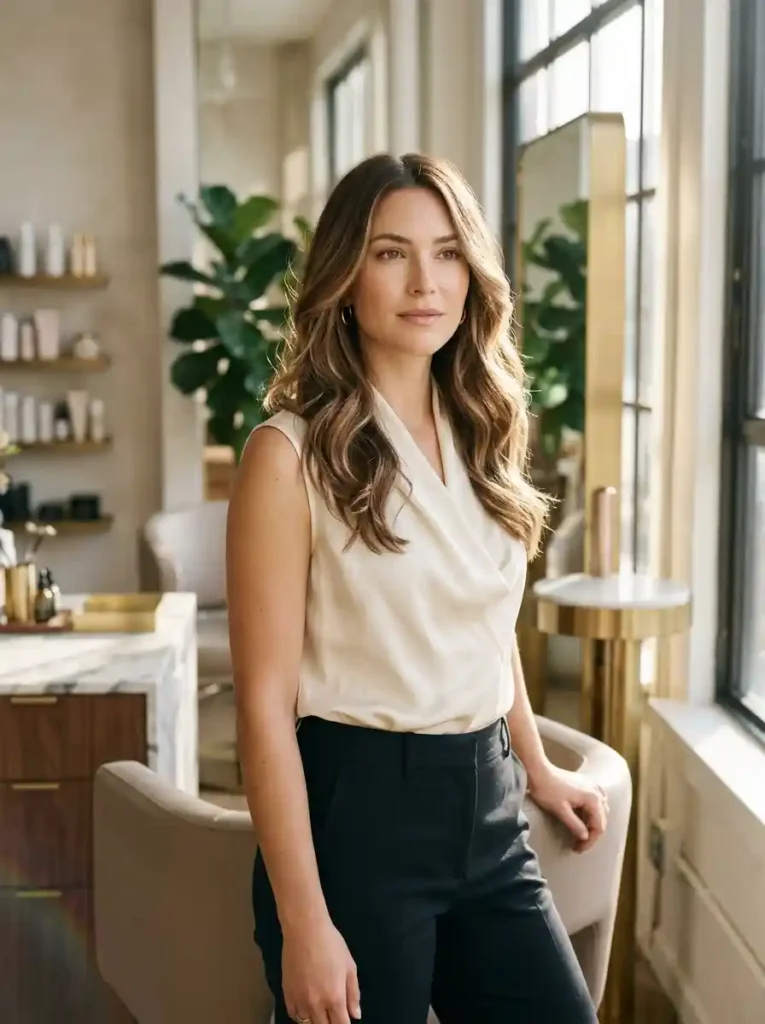
Medium layers and dimensional color can complement each other because movement reveals different tones throughout the haircut. Instead of dramatically contrasting highlights, consider soft balayage or strategically placed lighter pieces around the face. Honey, caramel, or beige tones can create brightness while keeping the overall color believable. Your colorist should consider your natural base and maintenance preferences before choosing how light the highlights should become.
The advantage of subtle dimension is that the hairstyle remains attractive even when you wear it differently. Waves will emphasize the tonal variation, while straight hair shows a smoother, more understated result. Use a color-safe shampoo and avoid excessive heat when possible to protect shine. If the front pieces are noticeably lighter, apply styling products sparingly so the color remains luminous rather than appearing coated or dull.
15. Medium Wolf-Inspired Cut With Softer Layers
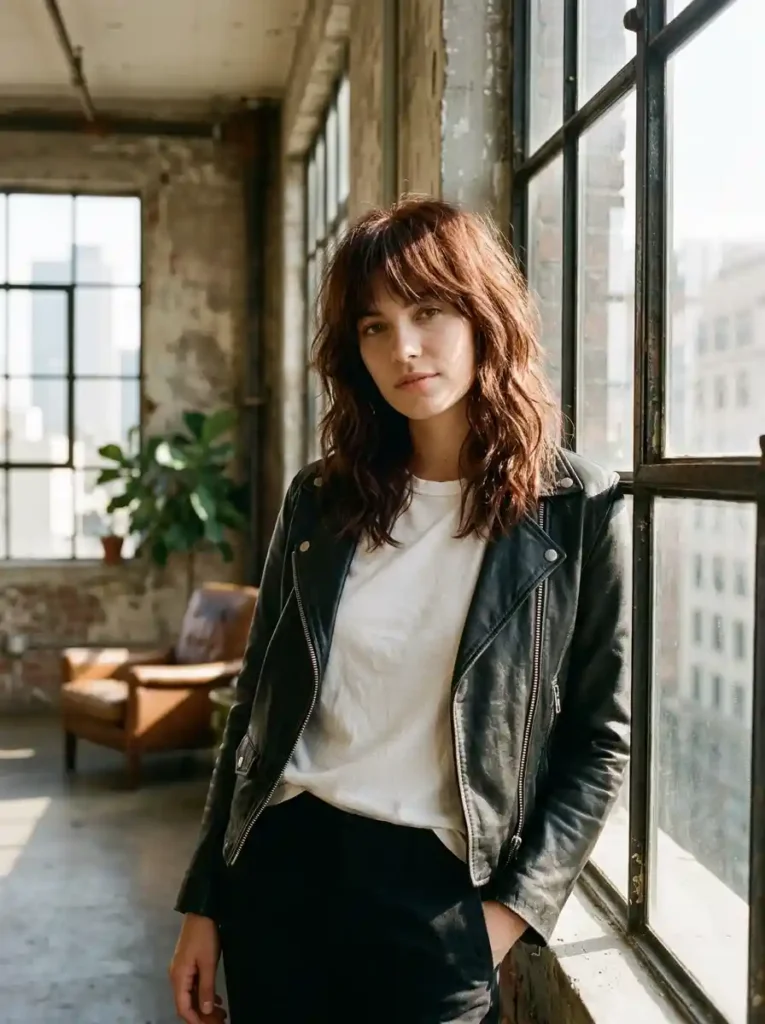
A softened wolf-inspired haircut is for anyone who wants more attitude than a classic layered lob provides. Rather than creating extremely short crown layers, a wearable version keeps the transition blended and preserves enough length around the shoulders. This makes it easier to tie back and less demanding than a heavily exaggerated cut. It suits naturally wavy or textured hair especially well, although straight hair can be styled into the shape.
The styling should look deliberately imperfect. Work mousse or a light texturizing cream through damp hair, concentrating on the roots and mid-lengths. Scrunch or twist selected sections, then let them dry naturally or use a diffuser. Once dry, separate the layers with your fingertips instead of brushing. If the crown becomes too puffy, smooth only the surface rather than flattening the entire style; preserving some volume keeps the haircut balanced.
16. Polished Medium Blowout

A polished blowout turns an uncomplicated medium haircut into something instantly elevated. The shape works particularly well when the cut includes long layers or a softly rounded perimeter, because the hair can be lifted without appearing excessively curled. This is a useful style for occasions when you want more refinement but do not want an elaborate updo. It also gives medium-length hair that classic salon-finished appearance.
Start with heat protectant and a small amount of volumizing mousse at the roots. Work in sections using a large round brush, lifting upward before curving the ends away or slightly under depending on your preference. Let each section cool before brushing through the finished hair. Finish with a flexible hairspray and a small amount of shine serum on the ends. Avoid heavy oil at the crown, which can quickly flatten the volume.
17. Medium Hair With a Soft Inward Bend
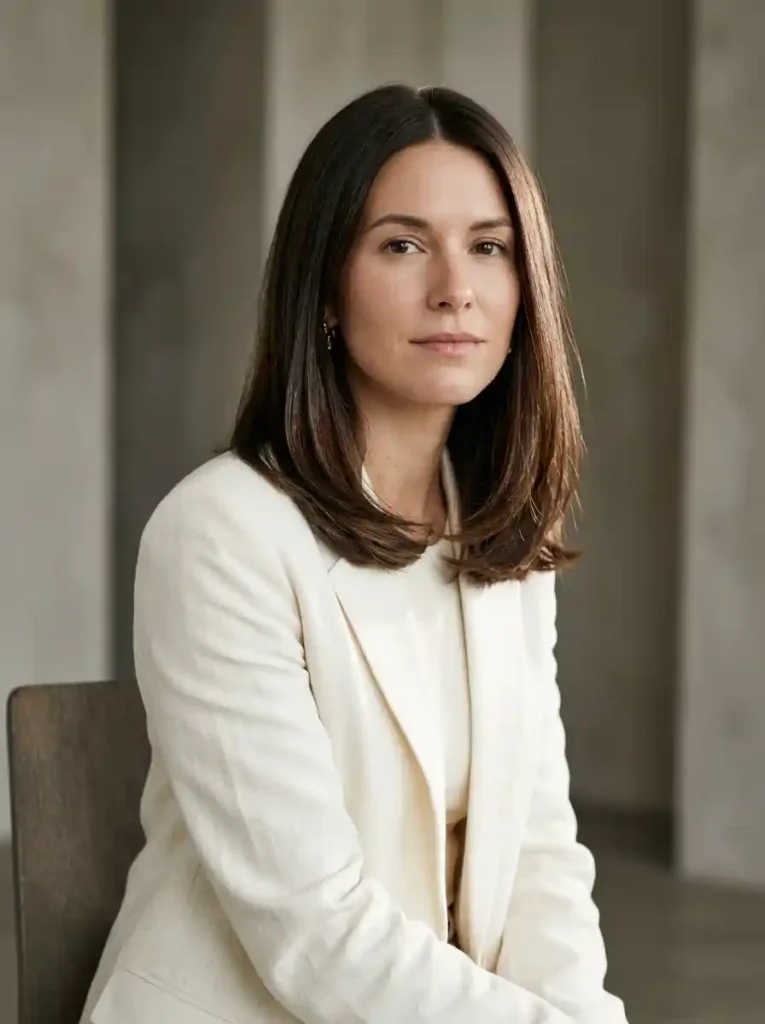
An inward bend is a simple styling detail that can make medium hair look deliberately shaped without creating obvious curls. It works beautifully with a shoulder-length bob or lightly layered lob, especially when you prefer a polished silhouette. The ends curve toward the neck rather than dramatically flipping outward, giving the hairstyle a soft finish. This shape is particularly easy to adapt for office settings or occasions where understated elegance feels appropriate.
Use a large round brush and direct each section inward while drying. If your hair is very straight, a flat iron can reinforce the bend with one smooth pass near the ends. Do not clamp the tool too tightly or hold it in place, because that can create a visible crease. A lightweight smoothing spray will help control flyaways while preserving the natural swing of the hair.
18. Medium Hair With Bottleneck-Inspired Fringe
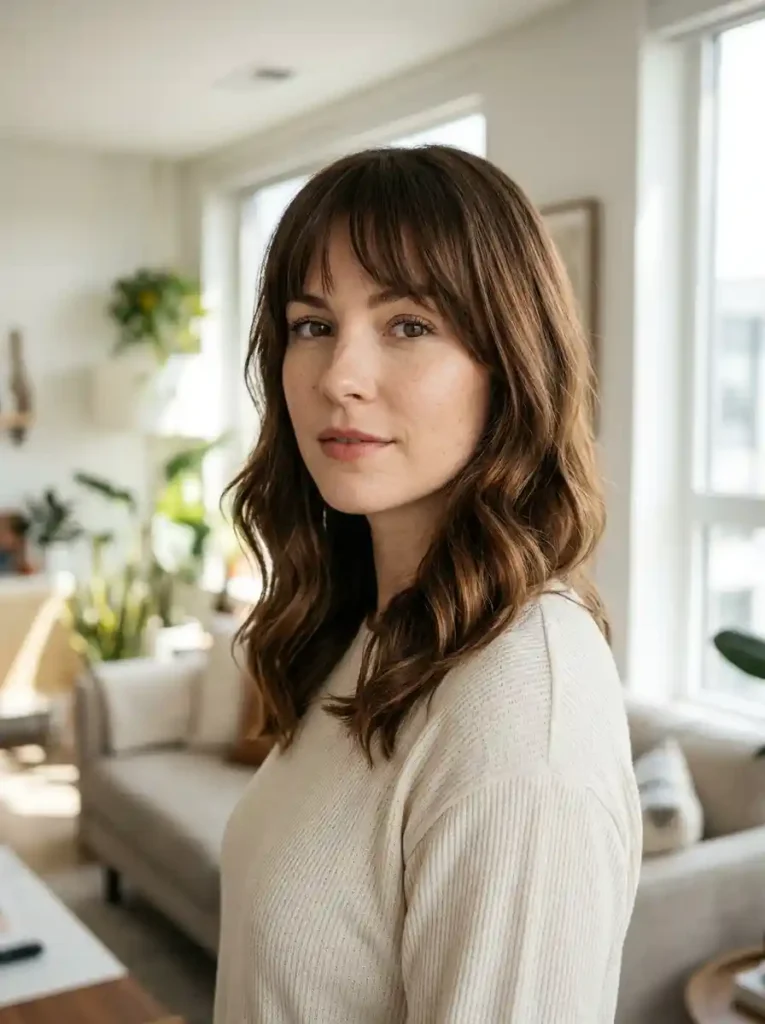
A bottleneck-inspired fringe gives you the framing effect of bangs while keeping the sides longer and more integrated with medium hair. The center can sit slightly shorter, with the outer pieces extending toward the cheekbones. This creates a gentle transition rather than a heavy horizontal line. It is a good choice if traditional blunt bangs feel too severe, but you still want the front of your hairstyle to look noticeably different.
The styling technique is surprisingly simple once the shape is established. Blow-dry the fringe from side to side first, then use a small round brush to create a slight curve away from the face. Allow the longer side pieces to merge into your existing layers. Keep product light around the forehead, since creams and oils can make fringe separate too much. A small amount of dry shampoo can restore airy texture later in the day.
19. Medium Hair With Romantic Loose Waves

Loose waves are one of the most adaptable ways to style medium hair because they add shape without making the haircut look dramatically different. The most natural result comes from alternating curl directions and leaving the ends slightly straighter. This approach creates movement throughout the hair instead of a row of identical curls. It works particularly well for dates, dinners, celebrations, or days when you want your everyday haircut to feel more special.
Use a medium or large barrel depending on how relaxed you want the wave to appear. Curl sections away from your face around the front, then alternate directions through the back. Allow everything to cool before gently loosening the curls with your fingers. Finish with flexible hairspray rather than brushing aggressively. If your hair is fine, avoid adding heavy oils afterward because they can make the waves collapse.
20. Medium Cut With Side-Swept Fringe
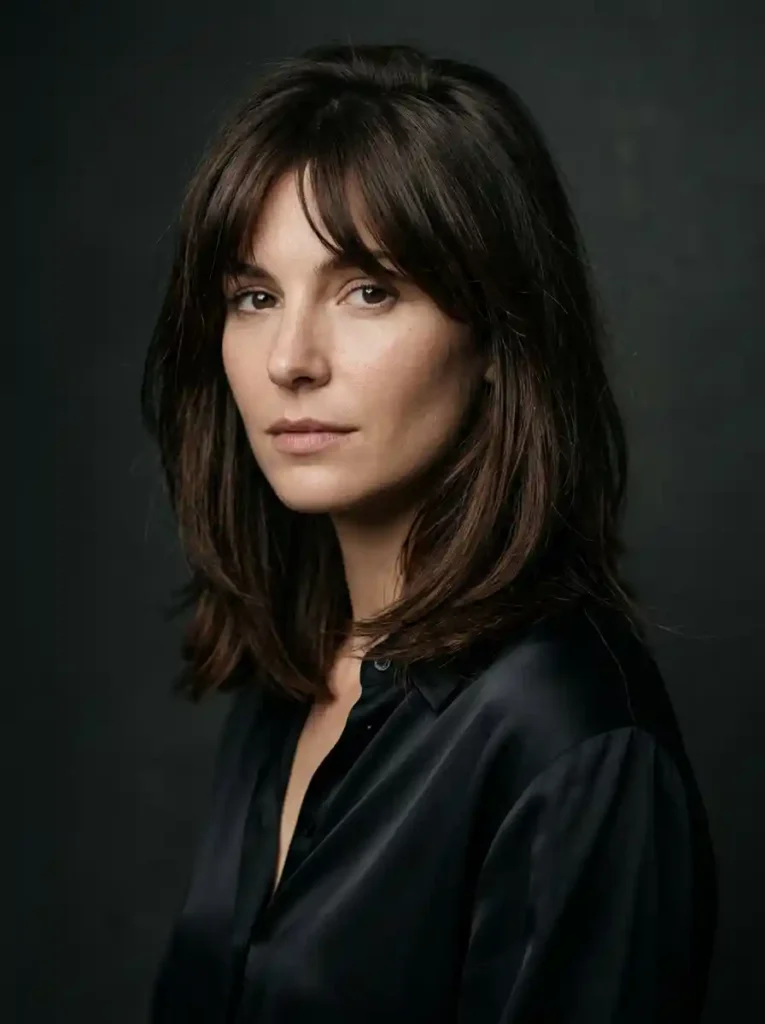
A side-swept fringe gives medium hair an elegant asymmetrical detail while remaining easier to grow out than a very short straight-across bang. It can soften the forehead area and pair beautifully with a side part or gently shifted center part. Ask your stylist to blend the longest edge into the surrounding face-framing pieces. That connection prevents the fringe from looking disconnected when you wear the hair behind your ears.
For daily styling, blow-dry the fringe in the direction you want it to fall while using a small round brush to create a gentle curve. If your hair naturally separates, start with the roots damp so you can reset the direction. Finish with flexible hairspray applied from a distance. Tucking the fringe behind one ear creates another variation, while leaving it loose blonde hair, soft air-dried waves and slightly imperfect ends, minimal makeup, relaxed oatmeal-colored sweater, standing in a bright home near an open window, casual natural pose, gentle daylight illuminating the texture, eye-level camera angle, realistic frizz, flyaways and individual strands, warm neutral surroundings, candid editorial photography that feels believable rather than overly ret gives the hairstyle a softer, more romantic finish.
21. Air-Dried Medium Waves With Natural Texture
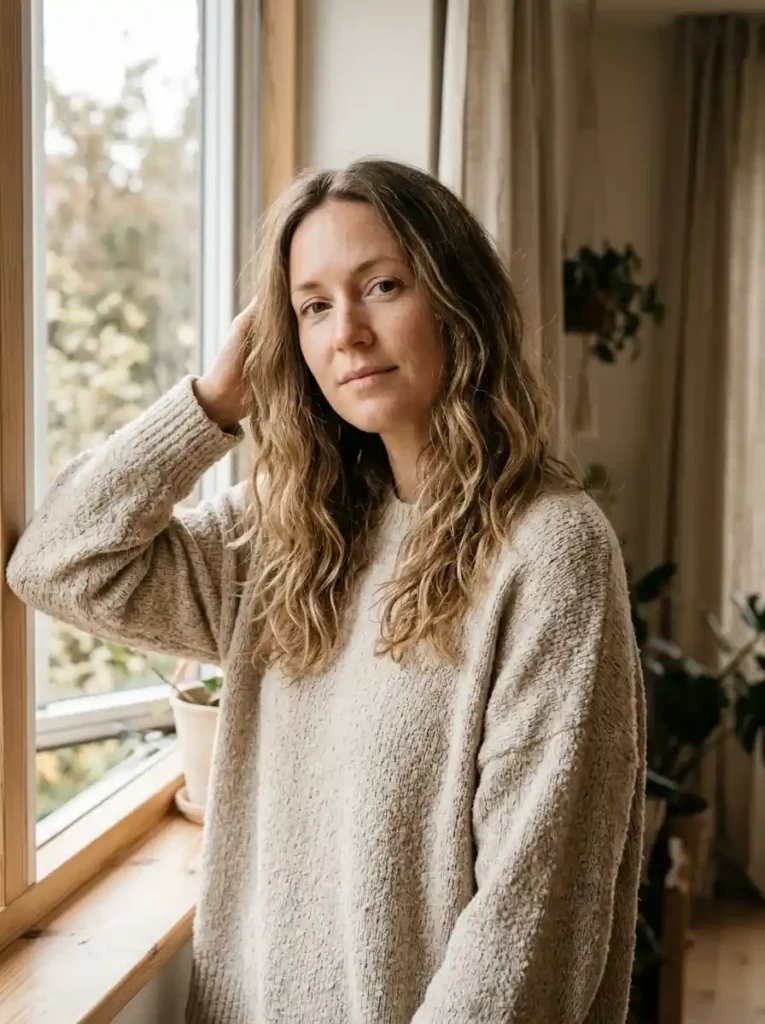
Air-dried medium hair is perfect when your priority is low-effort styling that still looks intentional. Instead of fighting every bend, this approach uses your natural texture as part of the finished hairstyle. A softly layered cut can make this especially attractive because the different lengths encourage movement. It is worth discussing your normal air than rough-drying it with a towel. Apply leave-in conditioner or a lightweight curl cream, then arrange your part and scrunch the lengths. Allow the hair to dry without repeatedly touching it. Once completely dry-dried shape with your stylist, since a haircut should be designed around how you realistically wear your hair.
After washing, gently squeeze excess water from the hair rather than rough-drying it with a towel. Apply leave-in conditioner or a lightweight curl cream, then arrange your part and scrunch the lengths. Allow the hair to dry without repeatedly touching it. Once completely dry, gently loosen the roots with your fingertips. If a few sections look uneven, refresh them with damp fingers rather than adding another heavy layer of product.
22. Medium-Length Hair With a Glossy ’90s Finish
A glossy ’90s-inspired finish brings together several flattering elements: medium length, controlled layers, smooth texture, and restrained volume. Unlike a heavily styled retro look, this version feels wearable because the shape remains clean and the movement is subtle. It is especially effective on straight or naturally smooth hair, although wavy hair can achieve the appearance with with a round brush, then shape the ends into a slight curve. A flat iron can polish individual sections if necessary, but careful blow-drying and selective smoothing rather than completely flattening every strand.
Begin with a smoothing heat protectant and blow-dry the hair using a paddle brush. Add gentle lift at the roots with a round brush, then shape the ends into a slight curve. A flat iron can polish individual sections if necessary, but avoid overworking the hair. Finish with a lightweight glossing product through the mid-lengths and ends. Keep the root area product-free so the hairstyle retains its soft volume and movement.
Final Thoughts
The best medium hairstyle is rarely the one that simply looks beautiful in a saved photo. It is the one that fits your natural texture, styling habits, preferred maintenance level, and the amount of change you actually want. Current 2026 inspiration strongly favors softer movement, natural texture, dimensional color, and wearable shapes, which makes medium hair particularly easy to personalize.
Before your next appointment, save two or three of these ideas and compare the details rather than only the overall appearance. Notice where the shortest layers sit, whether the ends are blunt or feathered, how much volume appears at the crown, and whether the fringe requires daily styling. Bring those observations to your stylist and explain how you normally wear your hair. A thoughtful adaptation will usually serve you better than copying a haircut exactly.



One Comment