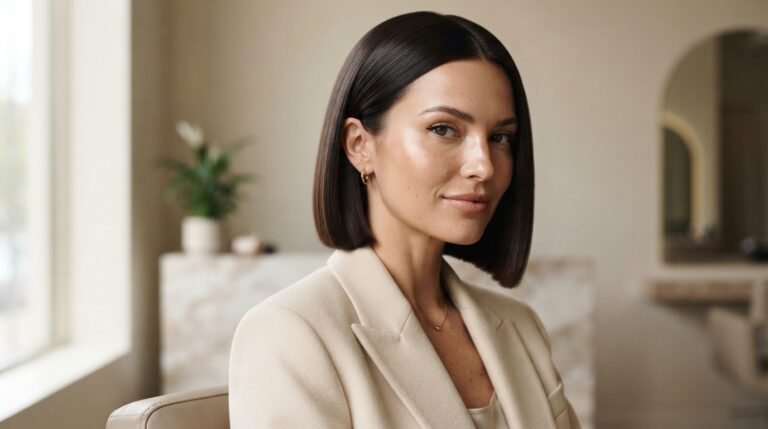
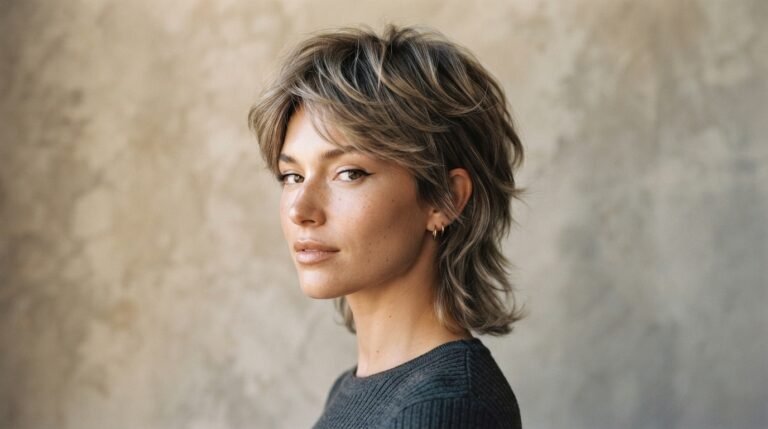
A great pixie cut can completely refresh your look without sacrificing personality, versatility, or style. From soft, feminine layers to bold, textured crops, today’s pixie hairstyles offer something for nearly every hair type, face shape, and personal aesthetic. Whether you’re considering your first short haircut or searching for a fresh way to update your current style, these 25 chic pixie cut ideas will help you discover flattering shapes, wearable styling techniques, and beautiful details worth showing your hairstylist.
1. Classic Chic Pixie Cut

The classic pixie cut remains a beautiful choice for women who appreciate clean lines and effortless sophistication. Its short sides and back create a neat silhouette, while a slightly longer crown keeps the hairstyle soft rather than severe. This shape works particularly well for women who want their cheekbones, eyes, and jawline to stand out. Ask your stylist to customize the fringe and sideburns to complement your facial features instead of copying a single reference photograph.
Styling this timeless short haircut usually takes just a few minutes. Work a pea-sized amount of lightweight styling cream through damp hair, then use your fingers or a small brush to guide the top into place. A tiny amount of matte paste can define individual pieces without creating stiffness. Schedule trims approximately every four to six weeks to preserve the shape, especially around the ears and neckline. For a softer finish, allow a little natural movement rather than making every section perfectly smooth.
2. Textured Pixie with Piecey Layers
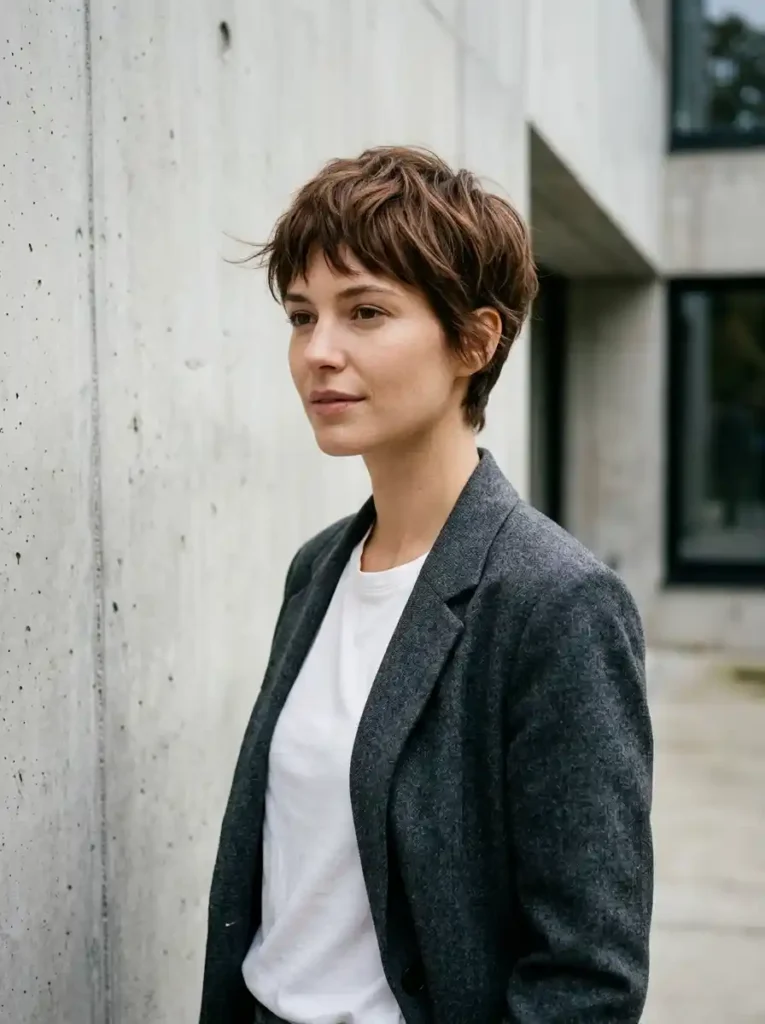
If you love hairstyles that look relaxed rather than overly polished, a textured pixie with piecey layers deserves a place on your inspiration board. The varied lengths give the crown dimension and help prevent short hair from looking flat. This cut is especially appealing for fine to medium hair because thoughtful layering can create the impression of fullness. Women with naturally wavy hair may also find that their existing texture adds movement without requiring extensive daily styling.
The secret to making this pixie look intentional is choosing products that separate strands without weighing them down. After blow-drying, rub a small amount of texturizing paste between your fingertips and pinch selected sections near the crown. Avoid applying too much product at the roots, where buildup can make the hairstyle look greasy. Ask your stylist to keep enough length on top for styling flexibility. Between appointments, refresh the shape with damp fingers and a quick pass of a blow-dryer.
3. Soft Side-Swept Pixie
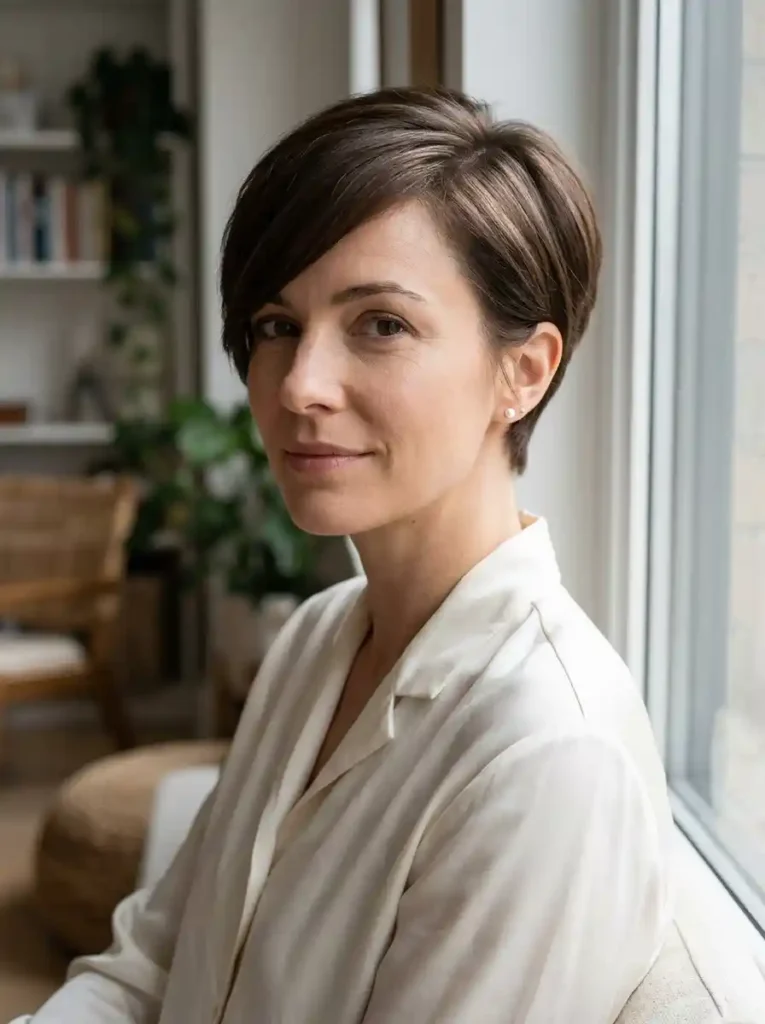
A side-swept pixie offers an elegant way to wear short hair without committing to a dramatically exposed forehead. Its angled fringe introduces movement, softens the overall outline, and creates an attractive diagonal line across the face. This option can suit oval, heart-shaped, and square faces, although the ideal fringe length depends on individual proportions. If you prefer hairstyles that feel feminine and adaptable, ask for a longer front section that can be directed across the forehead or tucked behind one ear.
For everyday styling, create your part while the hair is damp and direct the fringe toward your preferred side using a small round brush. A lightweight blow-dry lotion can help control flyaways while preserving natural movement. If your hair tends to fall forward, finish with a light mist of flexible-hold hairspray rather than a heavy gel. The beauty of this haircut lies in its versatility: you can wear the fringe smooth for work or loosen it with your fingers for a more casual weekend appearance.
4. Platinum Blonde Pixie
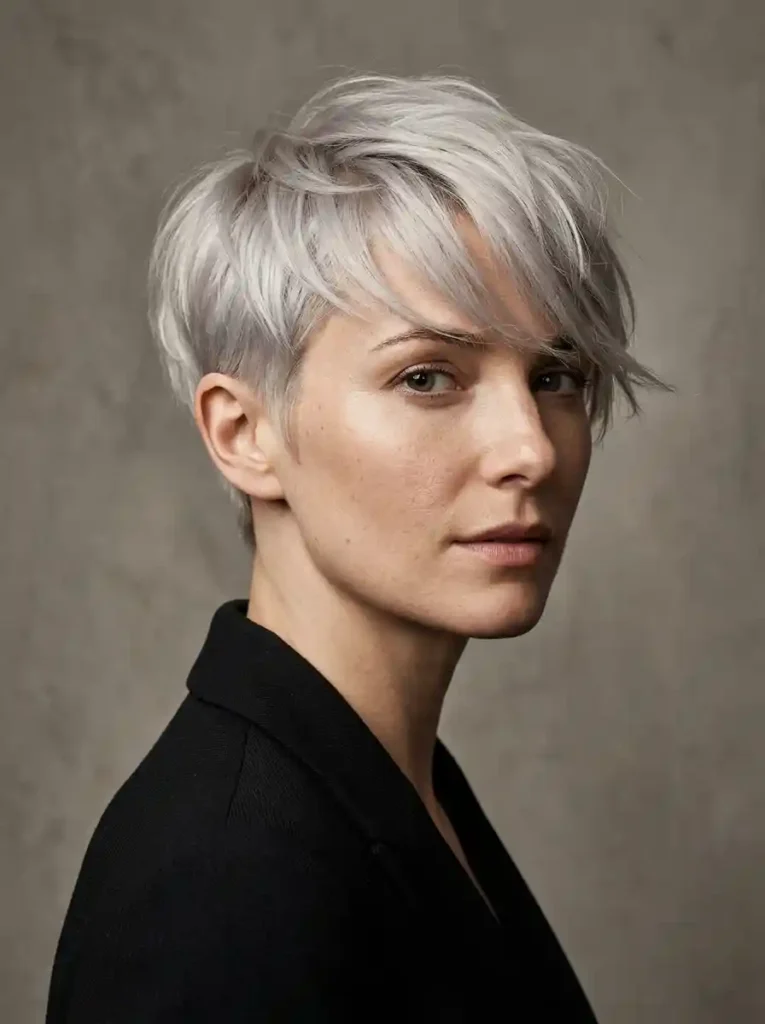
A platinum blonde pixie makes a striking statement through color rather than complicated styling. The cool, pale shade highlights the haircut’s texture and can give a simple silhouette a distinctly modern finish. It works across a range of skin tones when the undertone is chosen carefully; some women look best in icy platinum, while others benefit from a softer champagne or neutral blonde. Discuss your hair’s current color, previous chemical treatments, and condition with your colorist before planning a dramatic lightening session.
Maintaining platinum hair requires more attention than maintaining a natural brunette crop. Purple shampoo can help reduce unwanted yellow tones, but using it too frequently may leave hair dull or dry. A moisturizing conditioner and a weekly bond-building treatment can support softness, while heat protection helps minimize additional damage. Root maintenance depends on your natural color and preferred contrast, so arrange a realistic salon schedule before committing. For styling, use a lightweight cream or paste that adds definition without hiding the delicate texture of the blonde layers.
5. Curly Pixie Cut with Natural Volume
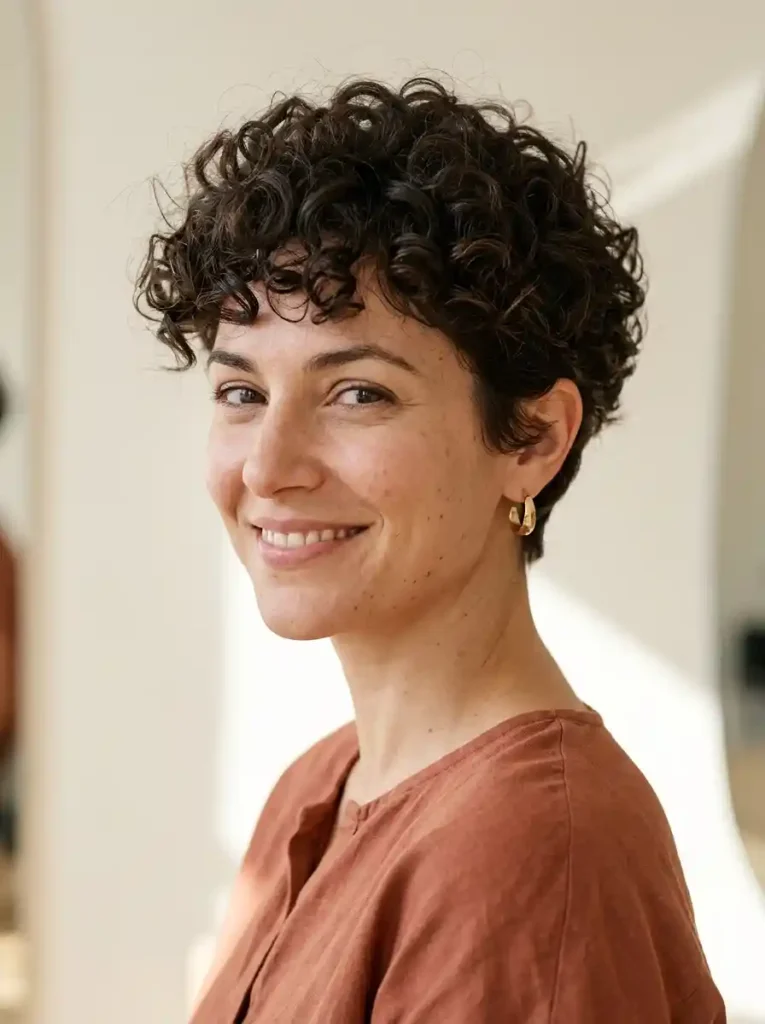
A curly pixie celebrates natural texture while keeping the overall length manageable. Instead of flattening the curls, the cut allows them to form a lively silhouette with volume around the crown. The shape can be adjusted to create a rounded outline, a slightly elongated top, or a more closely cropped finish. Women with tighter coils and looser curls can both explore this style, but the cutting technique should reflect their individual curl pattern, density, shrinkage, and preferred level of fullness.
For the best result, choose a stylist experienced in cutting curly hair, ideally someone who understands how your curls behave when dry. Apply a small amount of leave-in conditioner or curl cream to damp hair, then scrunch gently and allow it to air-dry or use a diffuser on low heat. Avoid brushing dry curls, which can disrupt their definition and increase frizz. Regular moisturizing treatments and careful nighttime protection help preserve softness, while occasional shaping appointments keep the outline balanced as the curls grow.
6. Pixie Cut with Long Side Bangs
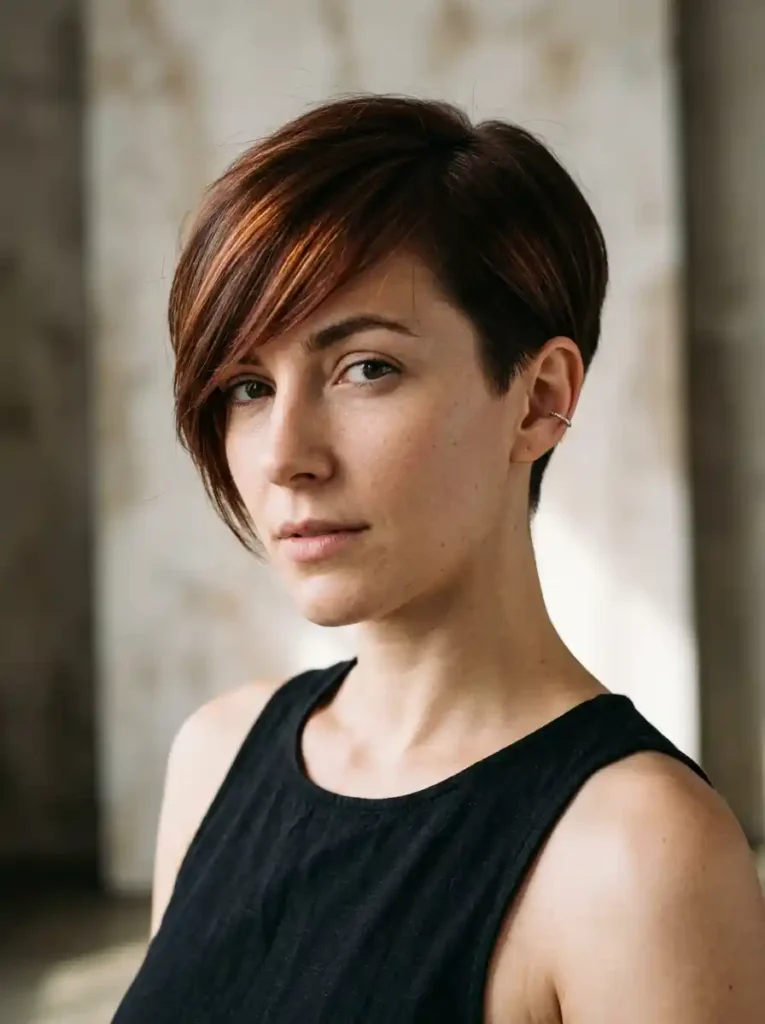
Long side bangs give a short pixie an appealing balance between boldness and softness. The extended fringe draws attention toward the eyes and cheekbones while providing more styling coverage around the forehead. This makes the haircut attractive for women who are curious about short hair but still want a familiar, face-framing element. The fringe can be customized to blend into one side or remain more distinct, depending on whether you prefer a seamless silhouette or a stronger asymmetrical effect.
The extra length creates several styling opportunities, although it needs a little direction to sit properly. Blow-dry the fringe from side to side while it is damp, then guide it into your desired part as it begins to dry. A lightweight smoothing lotion can help control stubborn sections without making the hair limp. If your fringe separates too much, try using less product and drying the roots more thoroughly. Ask your stylist to maintain the front separately from the shorter back, since the fringe may need trimming sooner.
7. Edgy Undercut Pixie
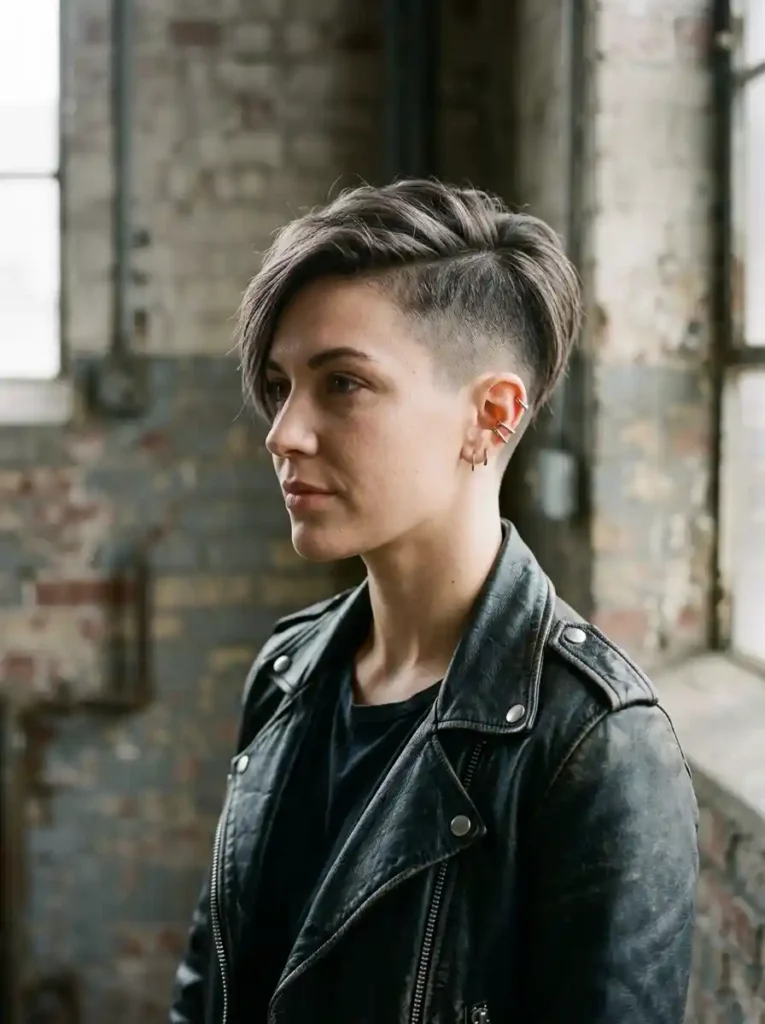
An undercut pixie is ideal for women who enjoy a sharper, more expressive hairstyle. Closely clipped sides contrast with a longer top, producing a defined shape that can look sleek, spiky, or softly tousled depending on how it is styled. The reduced bulk around the sides may also appeal to women with thick hair who want a lighter, less crowded silhouette. Before choosing this cut, discuss the clipper length and placement with your stylist, because those details determine how dramatic the result will appear.
Styling an undercut pixie is often straightforward, but maintaining the contrast requires regular attention. Use matte clay for a piecey finish, or choose a lightweight gel if you prefer a sculpted, glossy look. A trim every three to five weeks may help keep the sides crisp, particularly when the undercut is very short. Consider how you want the haircut to grow out before removing substantial length. If you later prefer a softer style, leaving extra length at the crown can make the transition easier and offer more options between appointments.
8. Feathered Pixie for Fine Hair
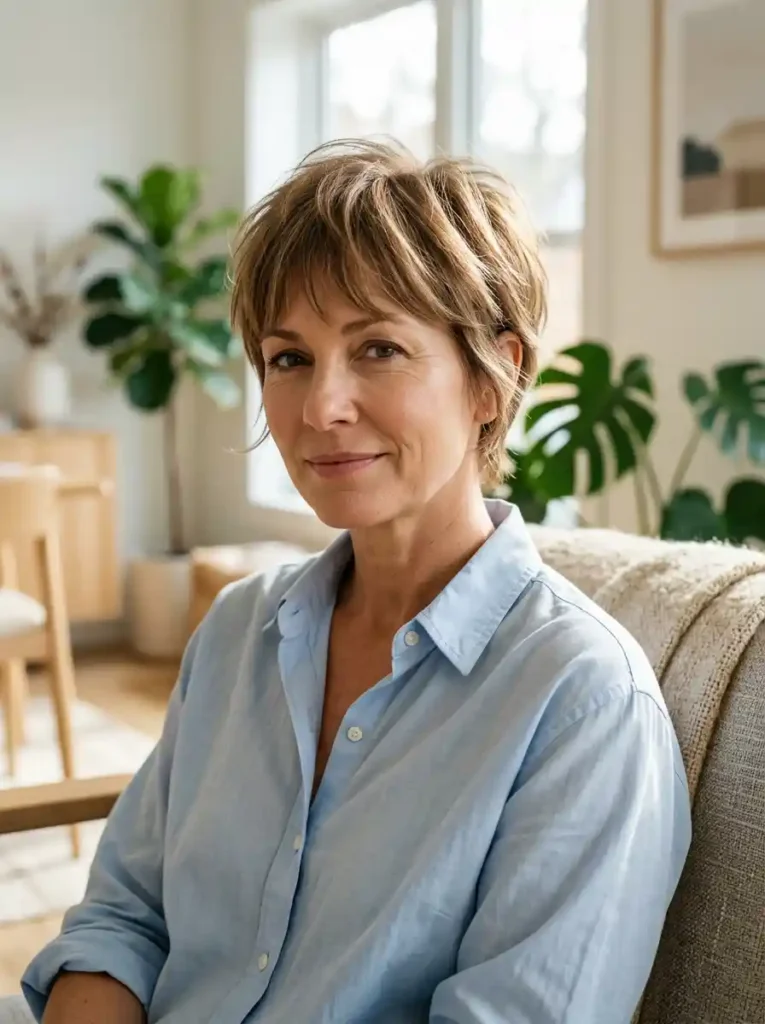
Fine hair can sometimes struggle to hold volume in longer styles, which makes a carefully shaped feathered pixie worth considering. Shorter lengths reduce the weight pulling hair downward, while delicate layers create separation and an airy appearance. The goal is not to remove as much hair as possible, but to place layers strategically so the silhouette remains full. This distinction matters because excessive thinning can make fine hair look sparse, especially around the temples and ends.
For everyday volume, begin with a lightweight root-lifting product applied sparingly to damp hair. Use a small brush to lift the crown while blow-drying, directing the airflow toward the roots instead of flattening them against the scalp. Finish with a flexible texture spray rather than heavy wax or rich oils. When discussing the cut, ask your stylist to preserve density around the perimeter and avoid over-layering. A slightly longer fringe can also help the hairstyle feel soft and balanced without sacrificing the lift that makes this pixie appealing.
9. Silver Gray Pixie Cut
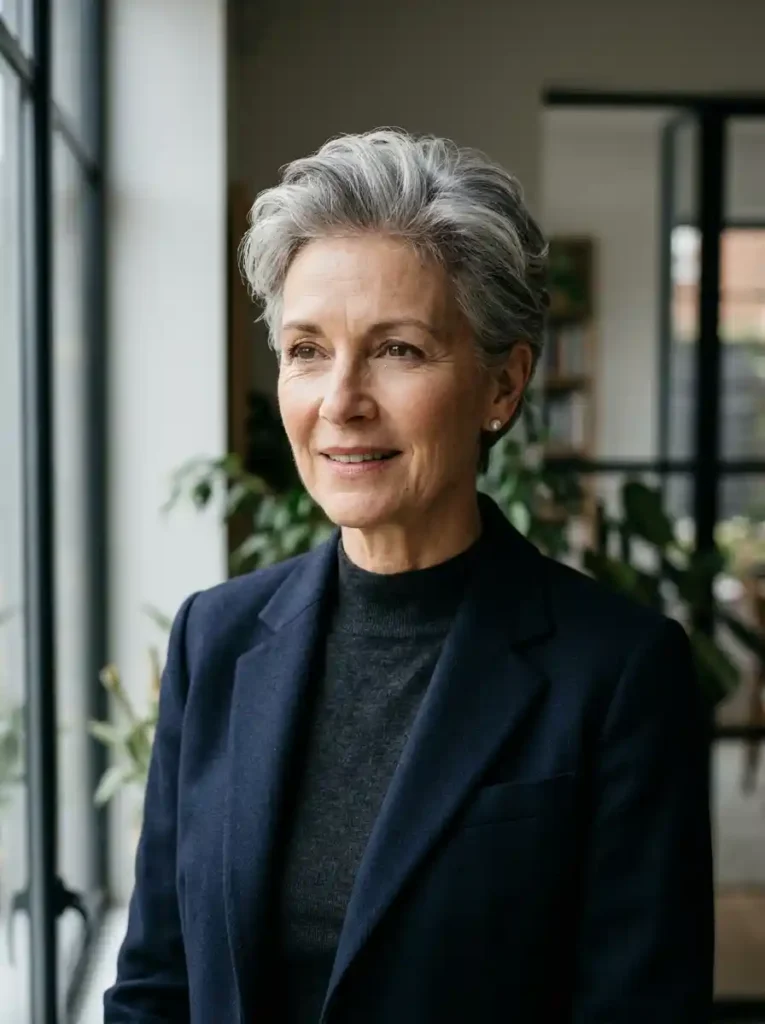
A silver-gray pixie can make natural gray hair feel intentional, polished, and contemporary. The short shape allows the texture and tonal variation of silver strands to become part of the overall design. Rather than hiding every darker section, a skilled stylist can work with your natural color pattern to create depth around the crown and temples. This haircut suits women who want a low-fuss silhouette that still feels distinctive, whether their gray hair is fully silver or a mixture of darker and lighter strands.
Care depends on the hair’s texture and color rather than age alone. Gray hair can sometimes feel coarser or drier, so a moisturizing shampoo and conditioner may improve softness and manageability. If your silver looks yellowed, an occasional purple-toning product can help, but follow the instructions to avoid an overly violet cast. A small amount of smoothing cream can tame flyaways without hiding the hair’s natural dimension. Regular trims maintain the clean outline, while a subtle side part or brushed-back finish offers easy variation from day to day.
10. Asymmetrical Pixie Cut
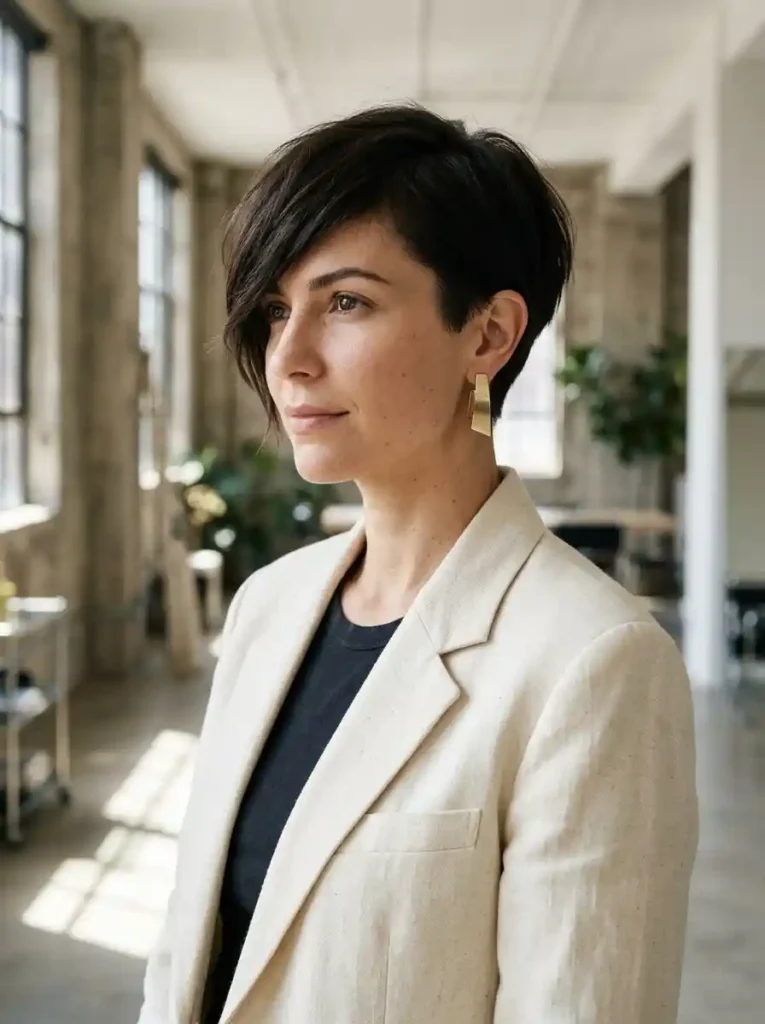
An asymmetrical pixie introduces visual interest by allowing one side to remain longer than the other. That contrast can make a short haircut feel artistic without relying on vivid color or extreme styling. A longer section near the cheekbone draws the eye diagonally across the face, while the shorter side creates a clean, contemporary outline. This cut is especially appealing if you enjoy a hairstyle with a clear point of difference, although the proportions should be customized to your hair density and natural growth patterns.
To style the longer side, direct the hair across the forehead or toward the cheek using a blow-dryer and a flat brush. A light styling cream helps the section remain flexible, while a little texture paste can emphasize the contrast between the two sides. Keep in mind that an asymmetrical shape can become less obvious as the shorter side grows. Regular trims preserve its design, but you can also experiment with different partings while it grows. Bring side-view reference photographs to your appointment so your stylist understands the exact angle you prefer.
11. Tousled Bedhead Pixie
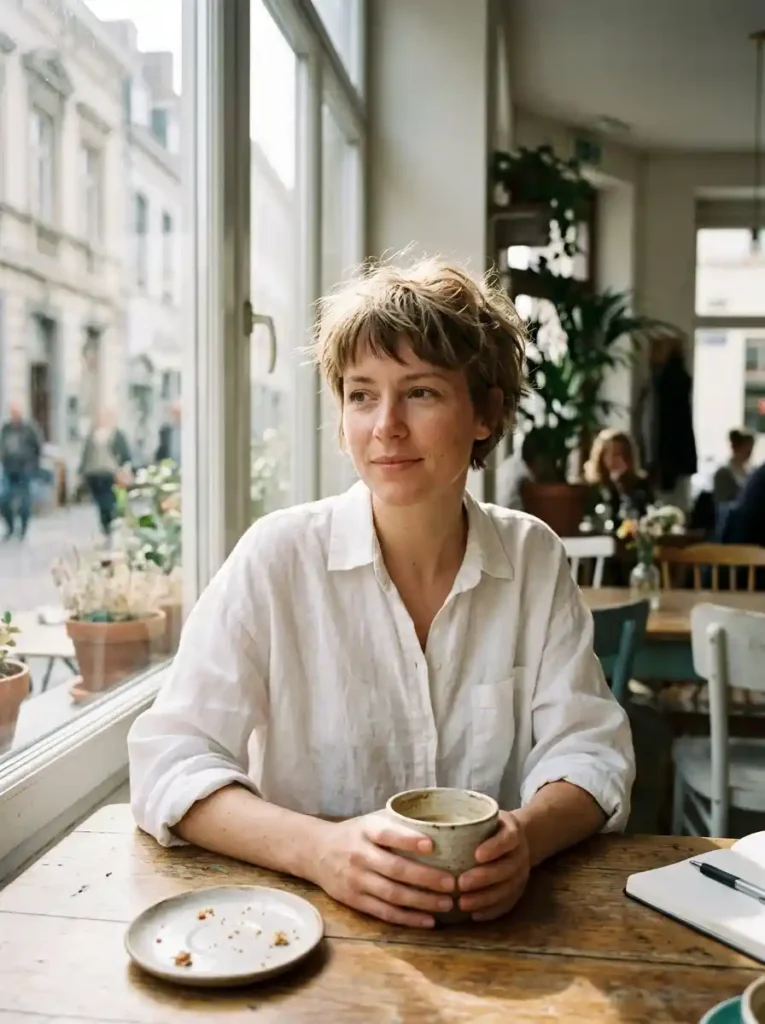
The tousled bedhead pixie is perfect for anyone who prefers relaxed texture over carefully arranged strands. Its uneven finish gives short hair personality and makes the hairstyle feel modern without appearing overly styled. The best version starts with a cut that has enough internal layering to move naturally; simply ruffling a blunt haircut will not always produce the same effect. This option can work particularly well for women with a slight natural wave, although straight hair can also achieve the look with a little product.
For a quick morning routine, apply a small amount of lightweight texturizing cream to nearly dry hair and scrunch the crown with your fingertips. If your hair is straight, use a blow-dryer to lift selected sections before adding texture paste. Avoid coating the entire head in heavy wax, which can make a deliberately airy hairstyle appear greasy. The finish should remain touchable, with some strands falling naturally into place. Between washes, refresh the roots with a small amount of dry shampoo and reshape the top using damp fingers.
12. Tapered Pixie with a Clean Nape
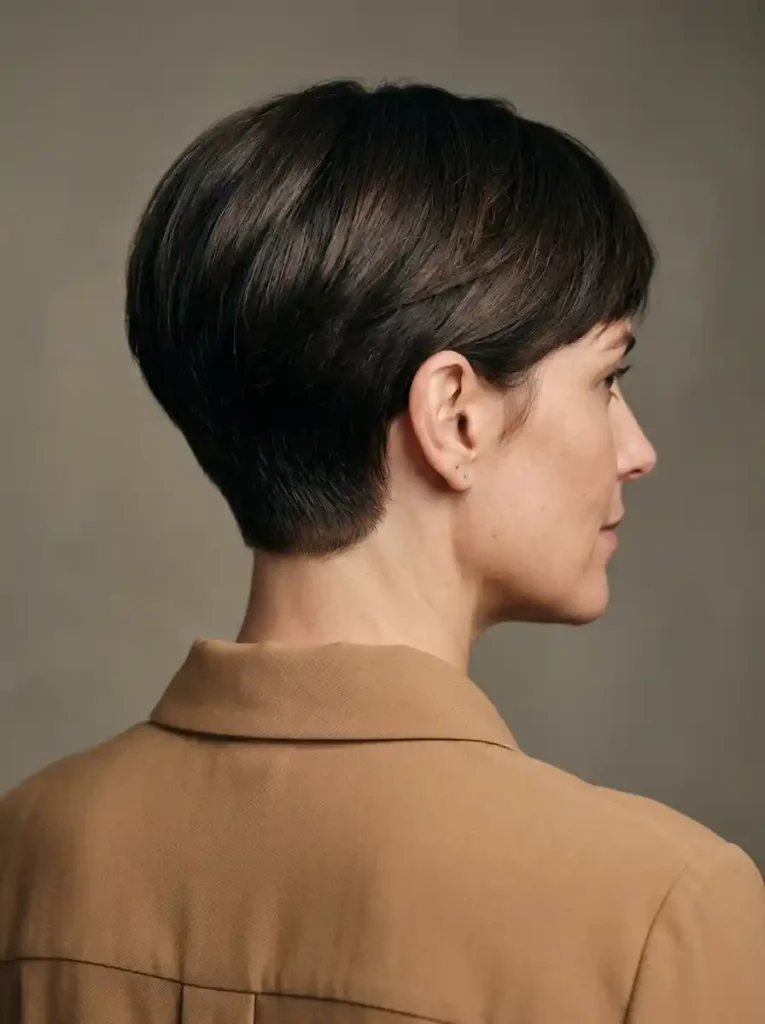
A tapered pixie offers a neat, structured finish without requiring an extremely short crop across the entire head. The back and sides gradually shorten toward the neckline, while the crown retains enough length to create shape and movement. This design can be especially appealing to women who like polished haircuts that look intentional from every angle. It also works well as a starting point for personalized variations, since the taper can be subtle and soft or more sharply defined around the ears.
The clean neckline is one of the haircut’s main features, so maintenance matters. If your hair grows quickly at the nape, you may notice the outline losing definition before the crown needs attention. A short cleanup appointment can restore the shape without requiring a full haircut every time. For styling, smooth a small amount of cream through damp hair and direct the crown according to your preferred finish. Avoid applying too much product at the back, where the tapered sections should remain light and naturally close to the head.
13. Wavy Pixie with Soft Texture
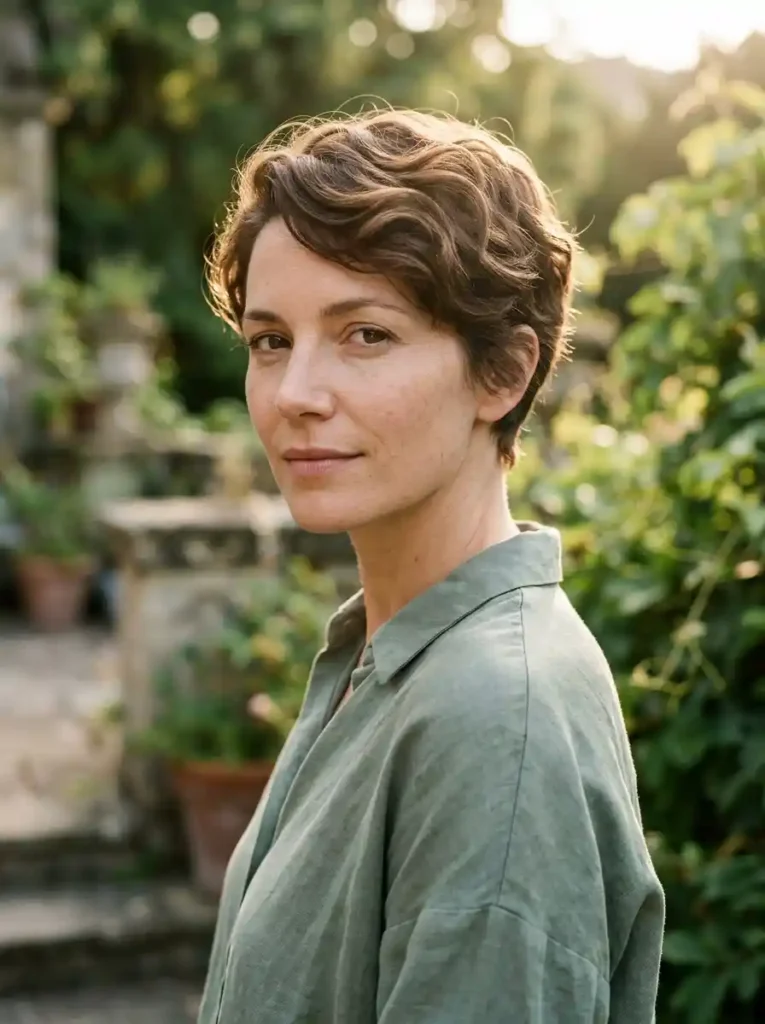
A wavy pixie works with natural bends in the hair instead of trying to eliminate them. The result is a soft, dimensional crop that can look romantic, casual, or polished depending on how the waves are arranged. Women with naturally wavy hair may appreciate that their texture creates movement without extensive curling. If your hair is mostly straight, a stylist can still design a suitable version, but the finished appearance will depend more heavily on layering and optional styling tools.
To encourage definition, apply a lightweight curl-enhancing lotion to damp hair and twist a few sections loosely around your fingers. Let the hair air-dry when possible, or use a diffuser to preserve the wave pattern. A flat iron is not necessary for everyday styling and can flatten the texture that makes this haircut appealing. Ask your stylist to consider how your waves spring upward after drying, especially around the crown and fringe. Small adjustments to length can prevent the silhouette from becoming too wide or uneven.
14. Short Pixie with Micro Bangs
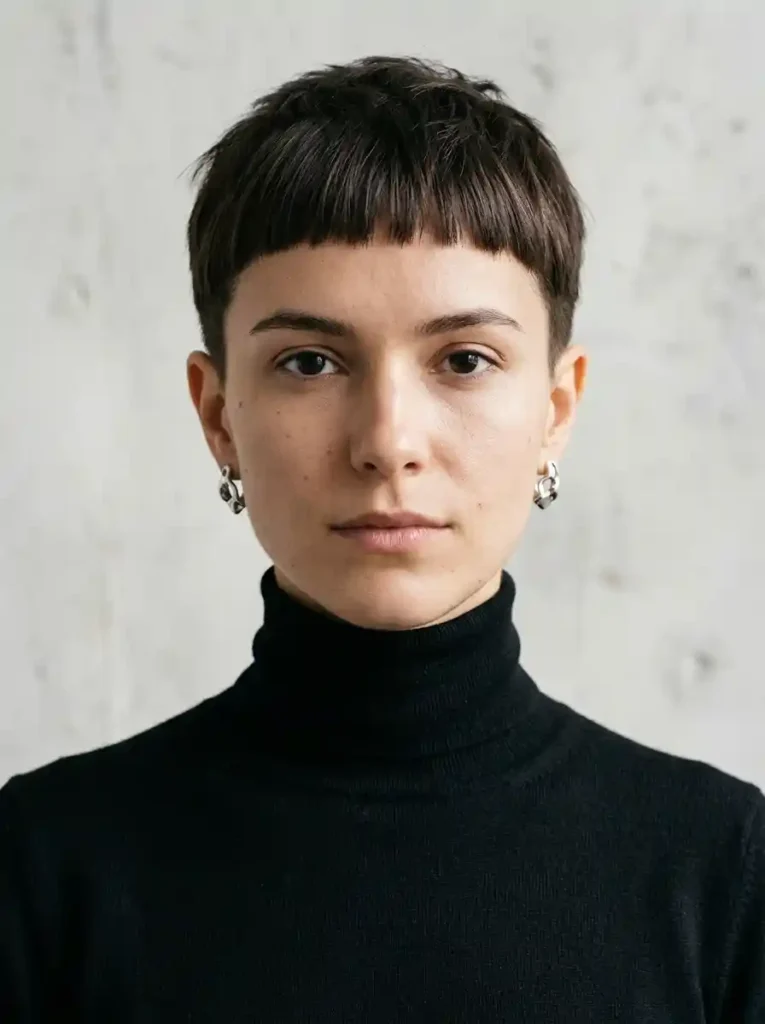
Micro bangs bring an artistic edge to a short pixie and make the fringe a central feature rather than a soft frame. Because the forehead remains visible, the haircut feels open, graphic, and deliberately modern. It can suit women who enjoy distinctive styling and want to emphasize their eyes or brows. However, the short fringe is less forgiving if you prefer frequent changes in length, so discuss the exact position of the bangs before cutting them dramatically above the eyebrows.
Keeping micro bangs neat requires occasional maintenance, particularly if your hair grows quickly or develops a natural cowlick at the front. Use a small flat brush and low heat to direct the fringe into position, then finish with minimal styling product. Heavy creams can separate the short hairs and make the fringe appear uneven. If you are unsure about committing to an extremely short line, begin with a slightly longer version and shorten it gradually. This approach gives you time to see how the fringe interacts with your forehead and natural hairline.
15. Layered Pixie for Thick Hair
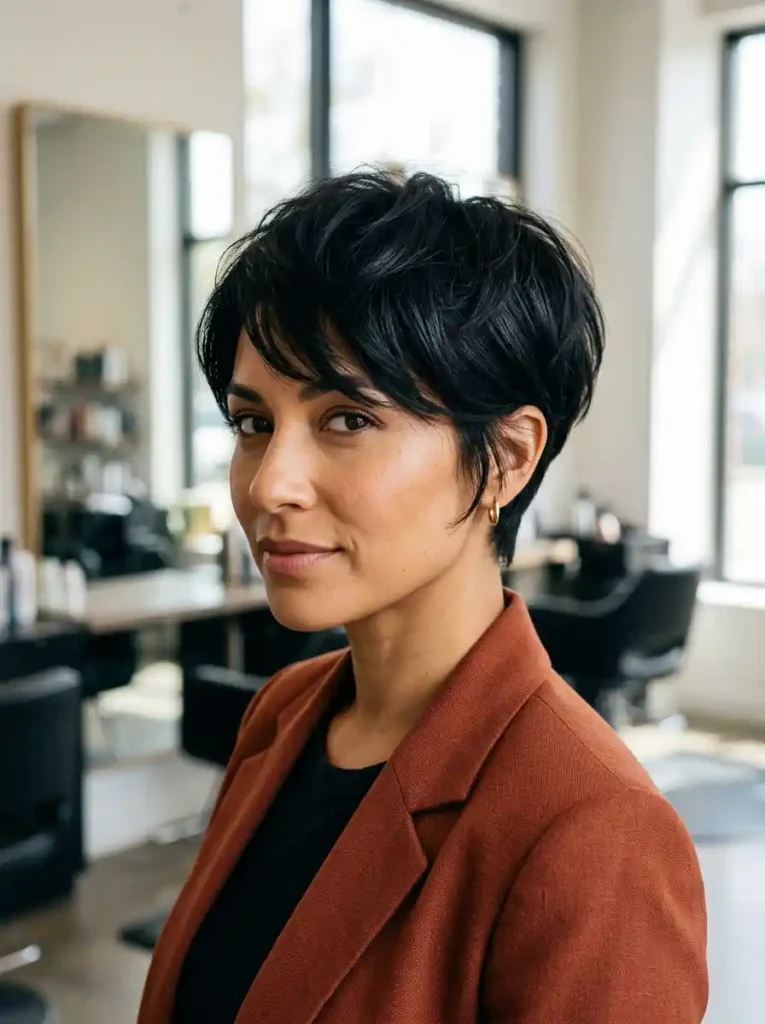
Thick hair can make short hairstyles feel bulky if the shape is not carefully planned. A layered pixie distributes weight throughout the crown and sides, creating a more balanced outline while preserving the fullness that gives dense hair its richness. The aim is to remove unnecessary weight strategically rather than thinning every section. This distinction is important because overly aggressive thinning can create frizz or leave the ends looking uneven, especially if your hair has a coarse texture or a strong natural growth pattern.
Styling becomes easier when the haircut follows your hair’s natural direction. Apply a lightweight smoothing cream to damp lengths and use your fingers to lift the crown while drying. If your hair tends to puff outward near the temples, ask your stylist to adjust the side shape instead of relying on daily heavy products. A regular trim helps prevent the silhouette from expanding too much as it grows. Women with very dense hair may also benefit from discussing the balance between a close nape and a fuller top before their appointment.
16. Pixie Cut with Subtle Highlights
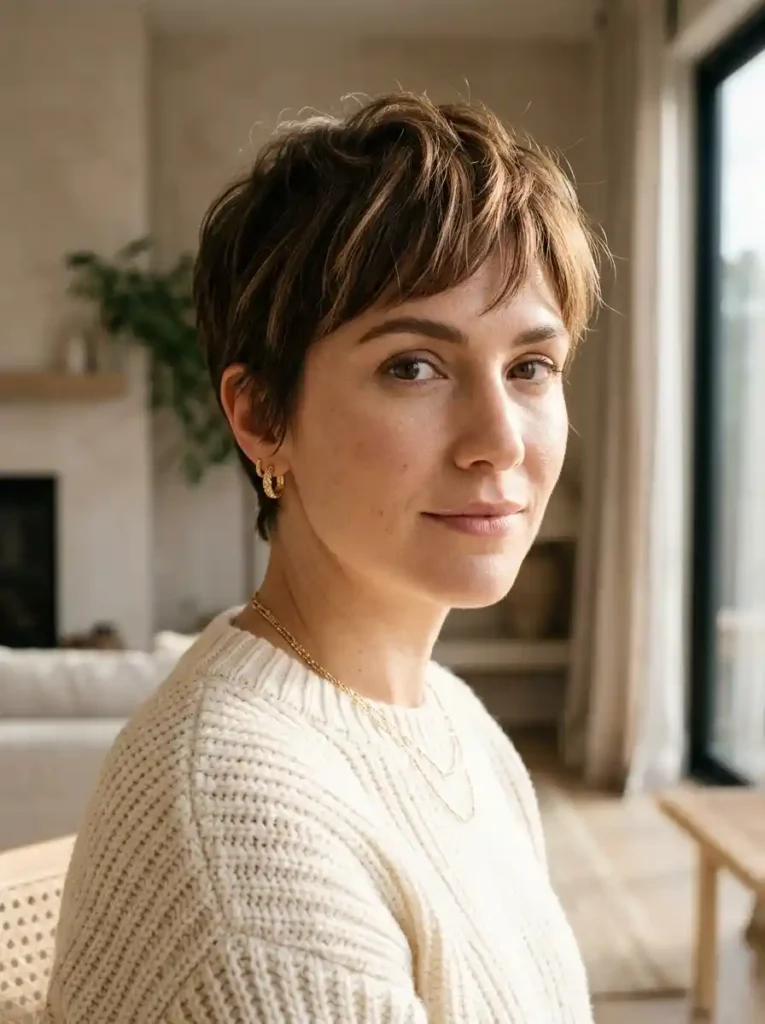
Subtle highlights can give a pixie extra depth without changing its overall shape. Fine caramel, honey, or beige strands catch the light as the hair moves, making short layers appear more dimensional. This technique is particularly attractive for brunettes who want a visible refresh but prefer a natural-looking result. The placement matters more than the quantity: concentrating a few lighter pieces near the crown and fringe can create movement while leaving the sides and nape relatively understated.
Color maintenance depends on the contrast between your base shade and the highlights. Soft, blended tones usually create a gentler grow-out than thick, high-contrast streaks, although every coloring technique requires appropriate care. Use a color-safe shampoo and conditioner, and limit excessive heat to preserve shine. When consulting your colorist, explain whether you want warmth, brightness, or a sunlit effect rather than asking for highlights alone. That conversation helps establish the right tone and placement for your skin undertone, natural color, and chosen pixie silhouette.
17. Boyish Pixie with Soft Edges
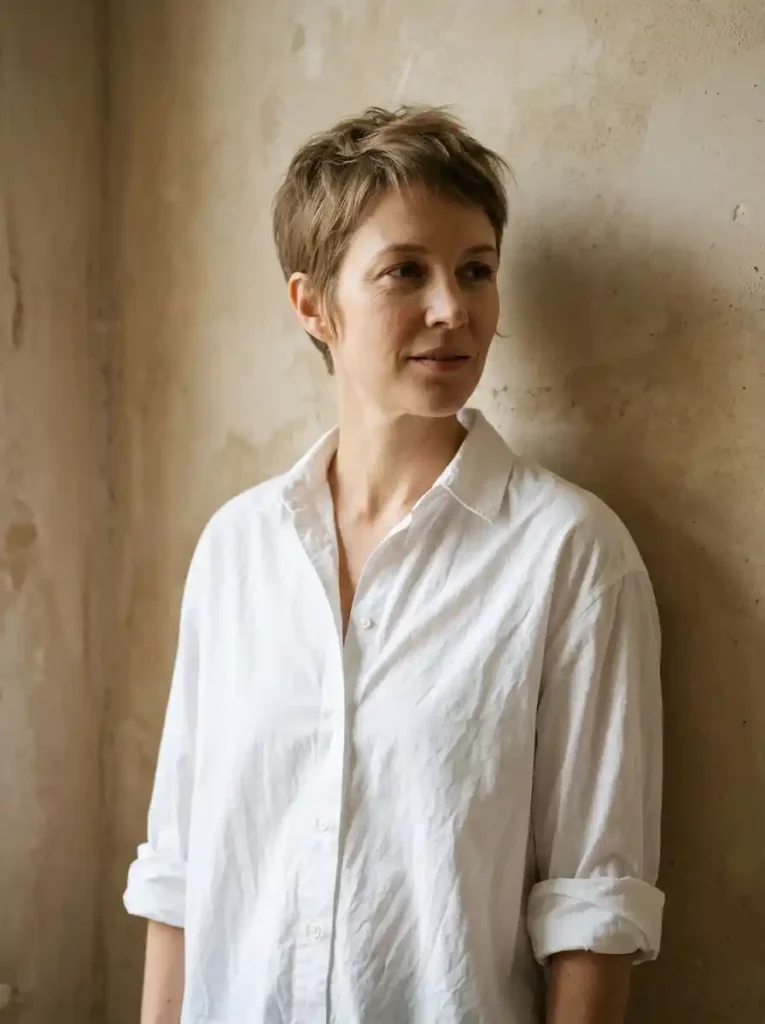
A boyish pixie offers a clean, unfussy silhouette with just enough softness to avoid looking overly severe. Short sides and a tidy neckline keep the cut practical, while a slightly longer top introduces movement and prevents the hair from appearing completely flat. The style can be appealing for women who prefer minimal daily maintenance or enjoy a slightly androgynous aesthetic. Small details, such as the sideburn shape and fringe length, help personalize the haircut and make it feel balanced with your features.
This cut is easy to style when the proportions suit your natural hair growth. A little lightweight cream can smooth the top, while a touch of matte paste adds separation for a more relaxed finish. If your hair sticks up at the crown, ask your stylist to account for the growth pattern rather than cutting every section to the same length. Soft edges around the ears and forehead can also make the overall shape feel less rigid. For a polished result, keep the neckline tidy and avoid overloading the short layers with product.
18. Voluminous Pixie with a Lifted Crown
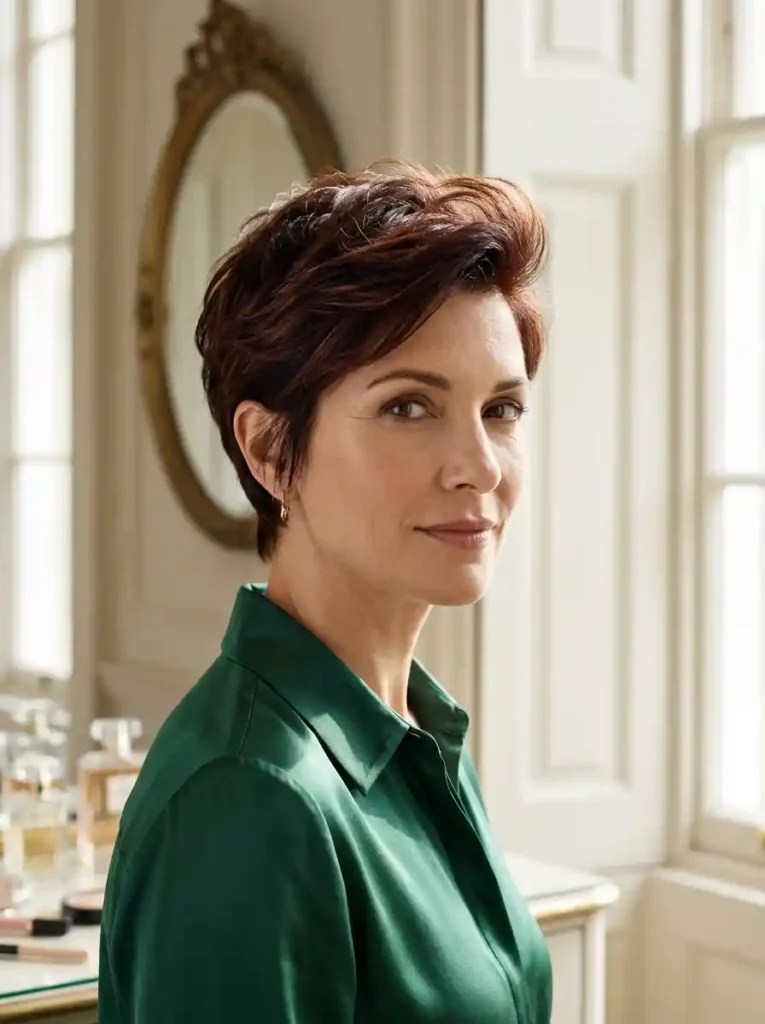
A lifted-crown pixie creates height at the top of the head while keeping the sides relatively close and controlled. This vertical shape can make the haircut feel elegant and energetic, especially for women whose hair tends to fall flat around the crown. It works best when the cut leaves enough length at the top to create lift without making the silhouette unstable. Your stylist can adjust the amount of height to complement your proportions and the natural density of your hair.
To achieve the look, apply root-lifting mousse to damp hair and blow-dry the crown upward using a small round brush. Allow the section to cool before gently loosening it with your fingers, which helps preserve movement. Finish with flexible hairspray instead of a stiff product that leaves the hair looking helmet-like. If your hair is particularly fine, keep the product application light so the roots do not collapse under their own weight. A little extra length at the front can also help create a graceful sweep rather than a rigid spike.
19. Pixie Cut with a Deep Side Part
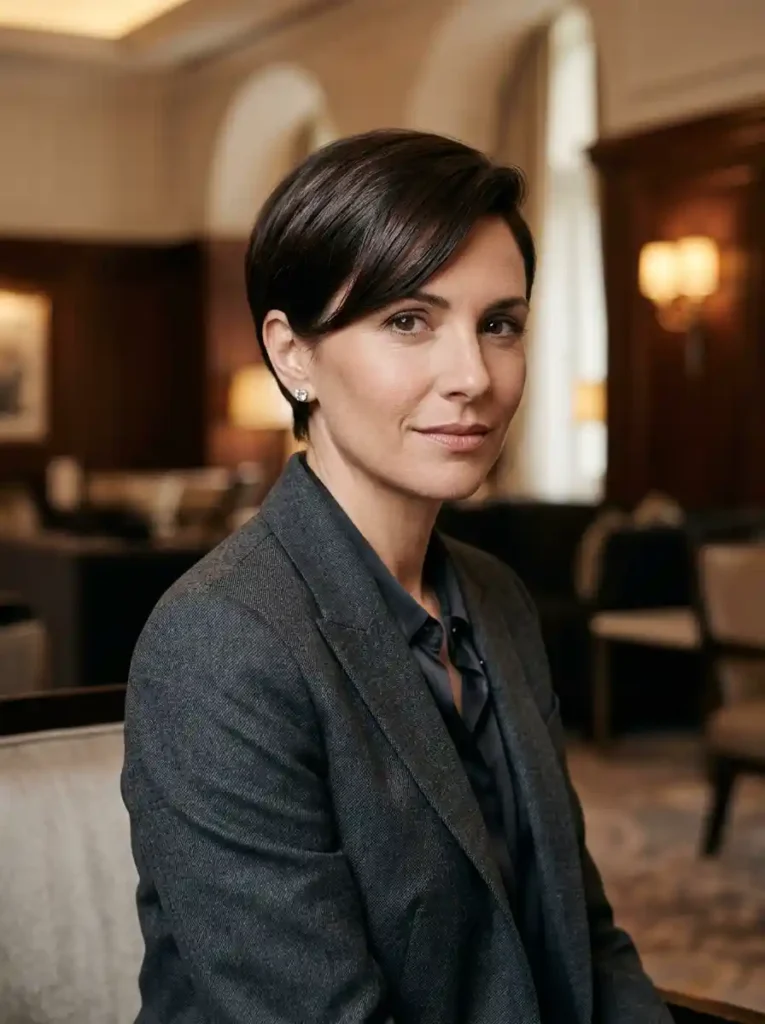
A deep side part can transform a simple pixie into a more refined hairstyle without changing the haircut itself. The pronounced part creates asymmetry, adds visual direction, and allows the top to sweep across the forehead. This makes it an appealing choice for work events, evening occasions, or days when you want a more polished finish. The look can be adapted to many hair types, although very short layers may need additional length to maintain a smooth, continuous sweep.
For a sleek result, create the part while your hair is damp and use a fine-tooth comb to establish a clean line. Blow-dry the longer section in the direction you want it to fall, using a small brush to guide the ends. A lightweight shine serum can add polish, but apply it sparingly to avoid flattening the roots. If your hair naturally resists a deep part, work with its growth pattern rather than forcing the hair into an uncomfortable position. A stylist can also adjust the crown length to improve how the sweep holds.
20. Shaggy Pixie with Choppy Layers
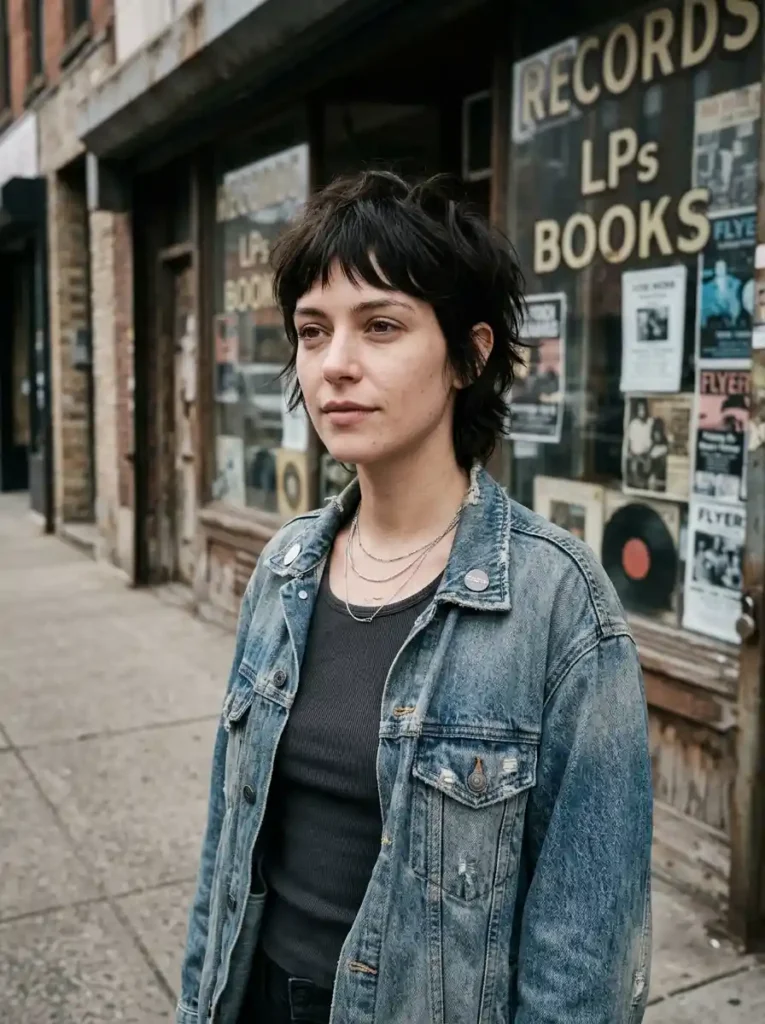
A shaggy pixie blends the freedom of a short crop with the movement of a miniature shag haircut. Choppy layers create separation throughout the crown and fringe, giving the style an expressive, slightly rebellious appearance. This is a strong option for women who dislike overly precise hair shapes and want a cut that feels comfortable with natural movement. It can work particularly well on fine or medium hair, while thicker hair may need thoughtful weight removal to prevent the layers from spreading outward.
The best styling approach keeps the texture loose rather than overly defined. Work a small amount of lightweight texturizing cream through damp hair, then dry it with your fingers, lifting and separating sections as you go. A few carefully placed pieces of matte paste can emphasize the choppy finish, but avoid applying product uniformly from roots to ends. Ask your stylist to preserve enough variation around the fringe and crown to create the shaggy effect. Regular trims maintain the balance while allowing the hairstyle to remain intentionally relaxed.
21. Rose Brown Pixie Cut

Rose brown offers a subtle way to experiment with color while keeping a pixie grounded in a wearable brunette base. The muted rosy undertone can make the haircut feel fresh and distinctive without the intensity of vivid pink. Depending on your natural hair color and the desired result, your colorist may create the effect through glossing, carefully placed highlights, or a customized color formula. The most flattering version should harmonize with your complexion rather than relying on a trendy shade alone.
Colored hair benefits from gentle cleansing and consistent moisture, particularly when lightening is needed to reveal the rosy tone. Use products formulated for color-treated hair, wash with lukewarm rather than very hot water, and apply heat protection before blow-drying. Because rose tones can gradually fade, ask your colorist how the shade will change between appointments and whether a suitable gloss can refresh it. Keep the haircut itself relatively simple if you want the color to remain the main attraction. Soft texture through the crown helps the different tones catch the light naturally.
22. Pixie Cut for a Round Face
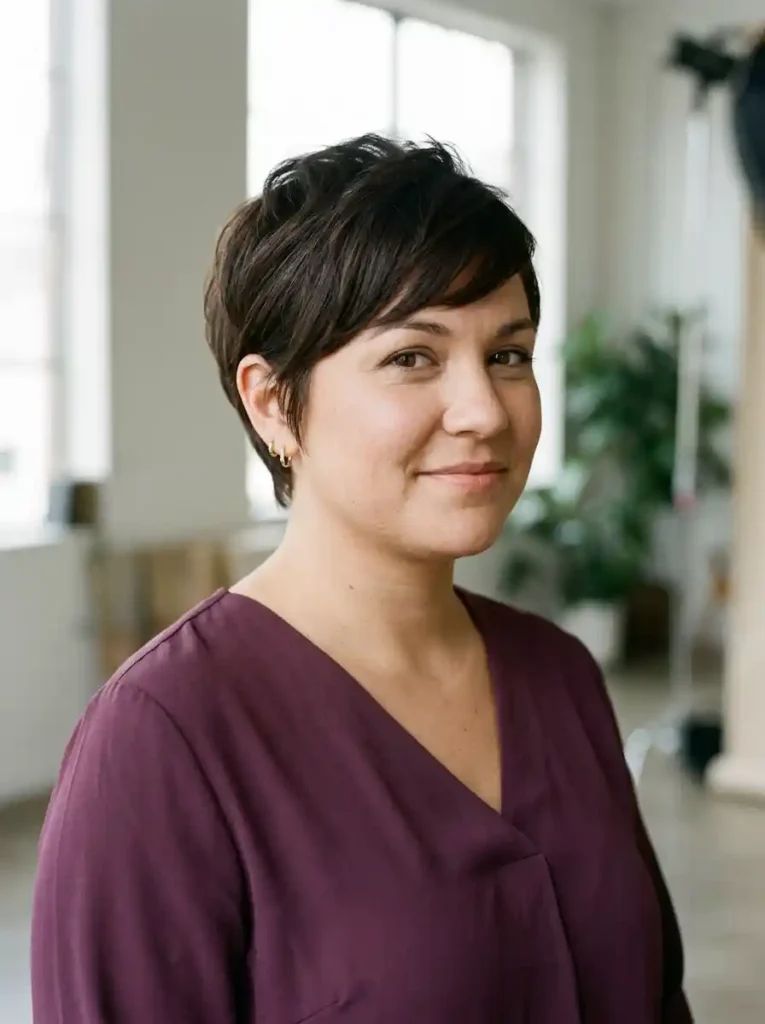
A pixie can look beautiful on a round face when its proportions are designed thoughtfully. A little height through the crown and an angled fringe may create a more elongated visual line, while controlled volume near the cheeks helps maintain a balanced outline. This does not mean every round face needs to appear slimmer; the goal is to choose a silhouette that feels harmonious with your features and personal style. Face shape is only one consideration, alongside hair texture, density, and the way your hair naturally falls.
When discussing the haircut, bring reference photographs showing the front, sides, and back so your stylist can evaluate the complete shape. If you prefer softness, keep some length around the fringe rather than choosing a very blunt horizontal line. For daily styling, lift the crown with a small brush and direct the front diagonally across the forehead. Avoid excessive side volume if you want a narrower outline, but do not flatten the hair completely. A little natural movement often makes the final result more flattering and individual.
23. Pixie Cut for a Square Face
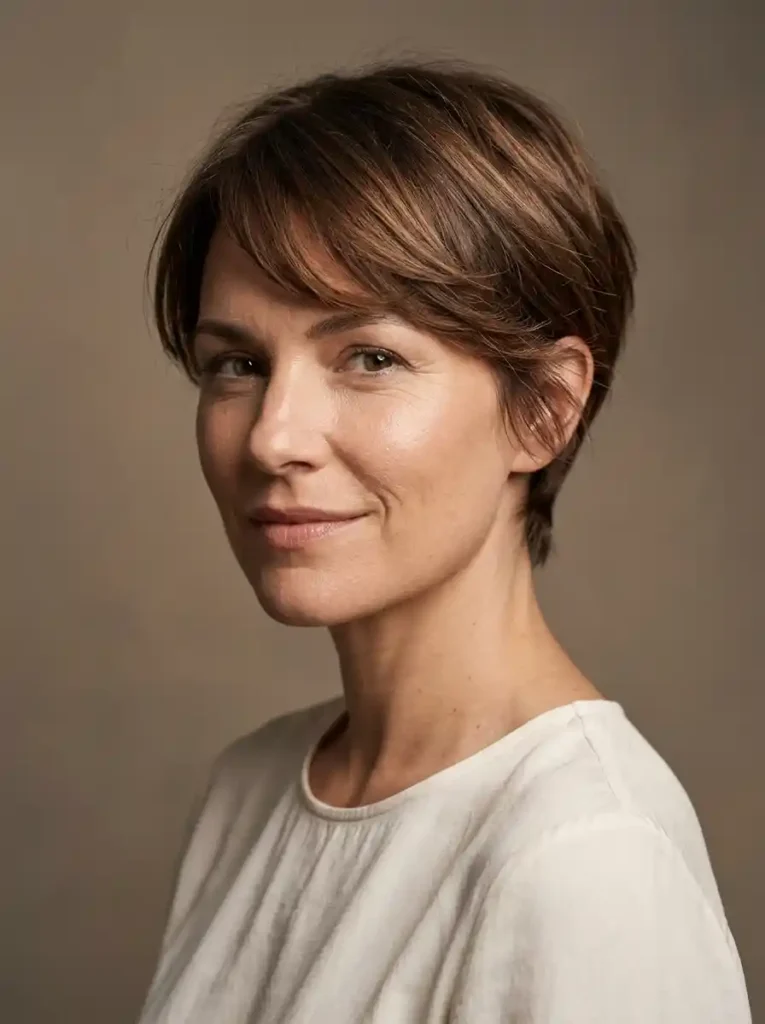
Women with square faces often appreciate pixie cuts that balance a defined jawline with soft movement around the forehead and temples. Feathered layers and a curved fringe can create a gentle outline without hiding the face’s natural structure. However, a square face does not automatically require a soft haircut; sharper, more geometric pixies can also look striking if you prefer a bold aesthetic. The best approach is to decide whether you want to emphasize your angles or introduce a more rounded contrast.
If softness is your goal, ask for lightly textured layers rather than a rigid, blunt edge around the forehead. A side-swept fringe can help break up strong horizontal lines, while a neatly tapered neckline keeps the haircut from feeling heavy. Use a small amount of styling cream to encourage natural movement and avoid creating a stiff, helmet-like finish. Your stylist should also consider your jawline from the side, not just the front. A few carefully placed longer pieces can help connect the fringe with the rest of the cut.
24. Elegant Pixie for Women Over 50

An elegant pixie can be an appealing option for women over 50 who want a hairstyle that feels polished without demanding an elaborate routine. Soft layers, a flattering fringe, and a carefully shaped neckline create definition while allowing natural texture to remain visible. The right haircut depends on personal preference rather than age, so there is no need to choose a shorter style simply because it is considered practical. Some women prefer a neat crop, while others feel most comfortable with longer layers around the forehead and ears.
To keep the hairstyle looking fresh, focus on a cut that works with your everyday habits. If you prefer air-drying, ask for a shape that sits naturally without extensive blow-drying. For a more polished finish, use a lightweight styling cream and a small brush to direct the fringe. Gray, silver, blonde, and brunette shades can all complement a pixie, so choose a color that suits your preferences and maintenance routine. Regular shaping appointments help preserve the silhouette, while moisturizing products can improve softness when hair feels dry or coarse.
25. Modern French-Inspired Pixie
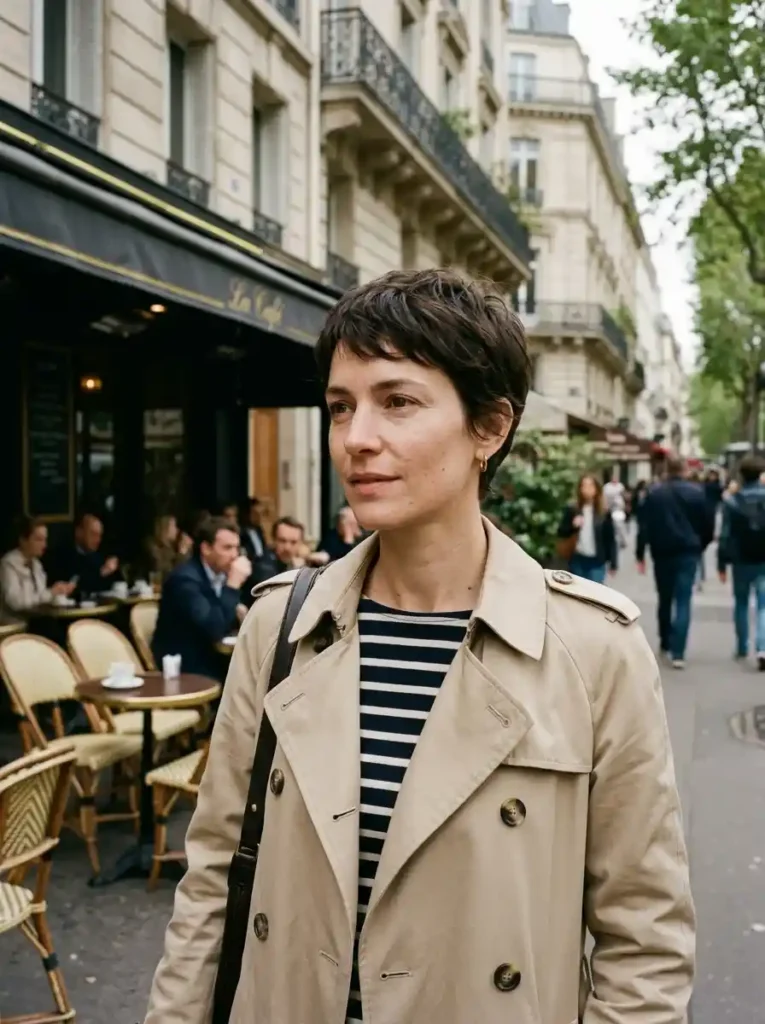
A French-inspired pixie captures the appeal of understated style: the haircut looks deliberate but never overly arranged. A softly imperfect fringe, subtle layers, and a natural brunette tone create a relaxed silhouette that works with everyday clothing rather than competing with it. This version is ideal for women who appreciate timeless fashion and want short hair that transitions easily between casual errands, professional settings, and evening plans. Its charm comes from the balance of thoughtful shaping and a finish that still looks natural.
Keep styling simple to preserve that effortless quality. After washing, apply a small amount of lightweight cream and let the hair dry naturally whenever possible. Use your fingertips to arrange the fringe rather than creating a perfectly rigid part, and allow a few soft pieces to fall into place. If your hair is very straight, a little texturizing spray can encourage movement; if it is wavy, embrace the natural bends instead of smoothing them away. Ask your stylist for a shape that grows out gracefully so the haircut remains wearable between appointments.
Conclusion
The best pixie cut is not simply the shortest hairstyle or the trendiest option. It is the one that works with your natural texture, complements your features, and fits comfortably into your daily routine. From classic tapered crops and soft side-swept fringes to curly pixies, modern undercuts, and dimensional brunette shades, these 25 ideas offer plenty of inspiration for finding a short hairstyle that feels genuinely yours.
Before booking your appointment, save two or three reference photos that show the details you like most. Consider how much time you want to spend styling your hair, how often you can visit the salon, and whether you prefer a polished or relaxed finish. Share these preferences with your hairstylist so you can adapt your favorite look to your hair’s density, growth pattern, and face shape.
Most importantly, remember that a pixie cut can evolve with you. Small changes to your fringe, texture, color, or parting can create an entirely different mood without requiring a completely new haircut. Choose a style that makes you feel confident, comfortable, and excited to wear your hair every day.