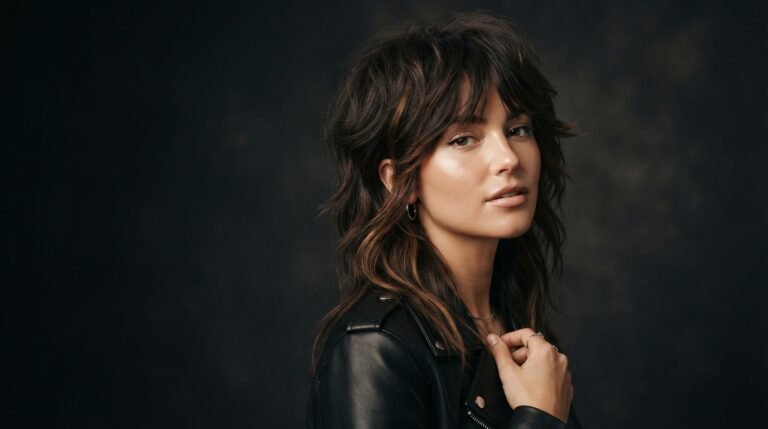
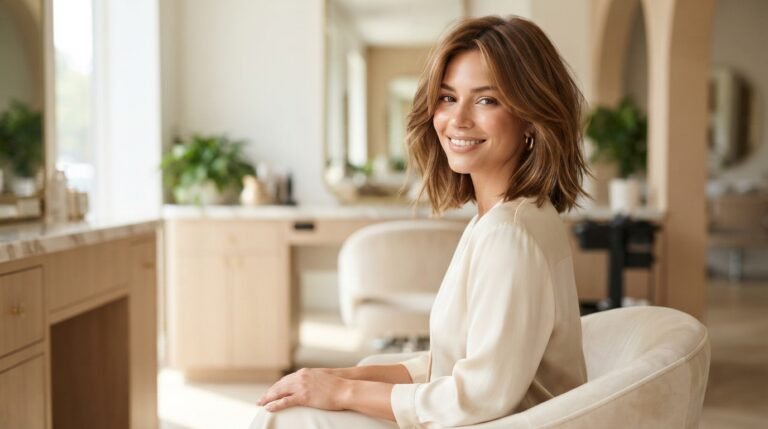
A short pixie cut can feel fresh, playful, elegant, or effortlessly edgy, depending on the shape and styling you choose. Whether you’re ready for a dramatic chop or simply want a softer, more manageable hairstyle, the right pixie can highlight your features and fit your everyday routine. From textured crops and wispy bangs to chic side-swept layers, these 21 cute short pixie cut ideas will help you discover a look that feels stylish, flattering, and uniquely yours.
1. Classic Short Pixie Cut
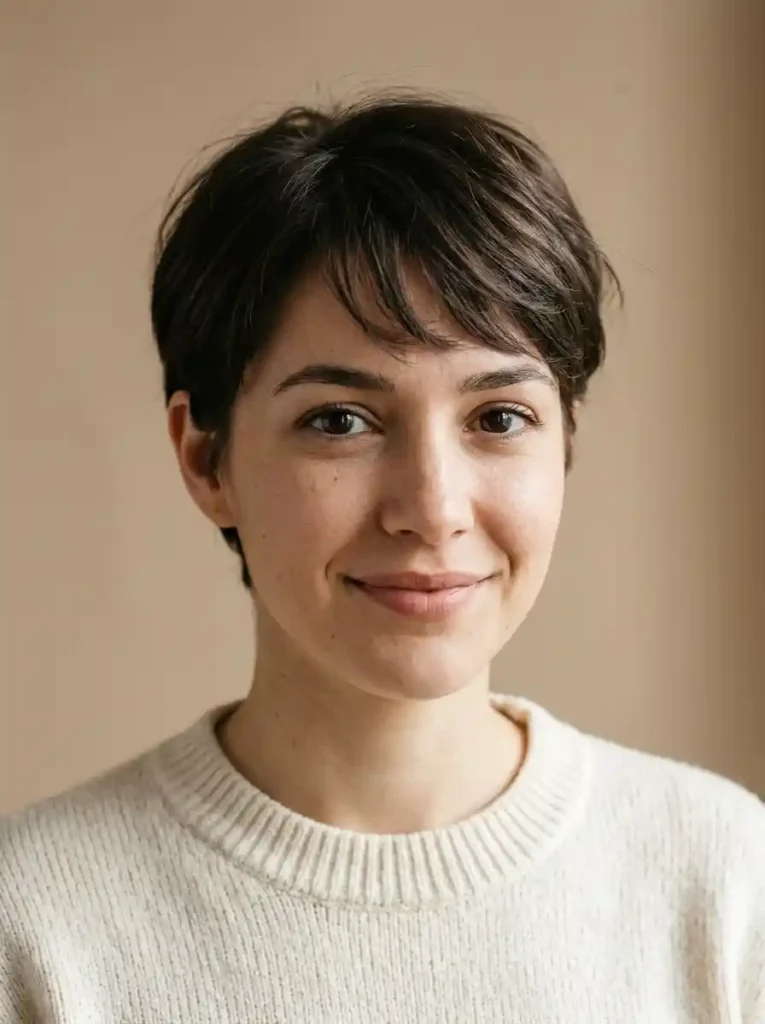
A classic short pixie cut is an excellent choice if you love timeless hairstyles that look polished without demanding a complicated routine. The hair sits close around the ears and neckline, while slightly longer layers on top create a soft, feminine shape. This balanced silhouette works beautifully for anyone seeking a noticeable change without sacrificing versatility. Ask your stylist to customize the fringe and crown length according to your hairline, natural texture, and preferred amount of volume.
Styling takes just a few minutes on most mornings. Work a small amount of lightweight styling cream through damp hair, then use your fingers to guide the top layers into place as you blow-dry. A tiny dab of matte paste can define individual pieces for a more contemporary finish. Schedule trims approximately every four to six weeks to maintain the shape, especially around the ears and nape. For a softer appearance, request a gently feathered perimeter rather than sharply defined edges.
2. Textured Pixie with Choppy Layers
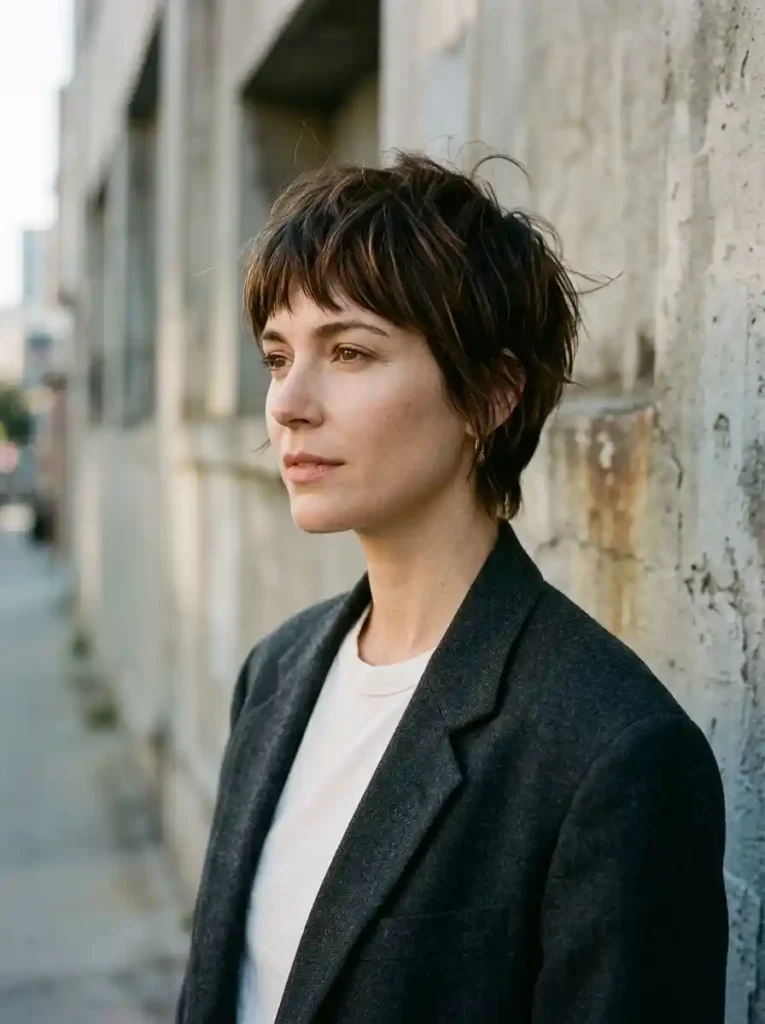
Choppy layers give a short pixie haircut movement and personality without requiring additional length. The stylist cuts small sections at varying lengths to create separation, making this style particularly appealing if you prefer an undone, modern appearance. It can be especially effective for straight or slightly wavy hair that needs more visual texture. If your hair is very fine, ask for strategically placed layers rather than excessive thinning, which may leave the ends looking sparse instead of deliberately piecey.
To recreate the textured finish, begin with dry or slightly damp hair and apply a lightweight volumizing product at the roots. Blow-dry in different directions using your fingers, then pinch a little matte wax onto selected pieces for definition. Avoid coating the entire head with heavy pomade because it can flatten the crown and make short strands look greasy. The beauty of this haircut lies in its imperfect finish, so let a few pieces fall naturally instead of trying to make every section symmetrical.
3. Pixie Cut with Side-Swept Bangs
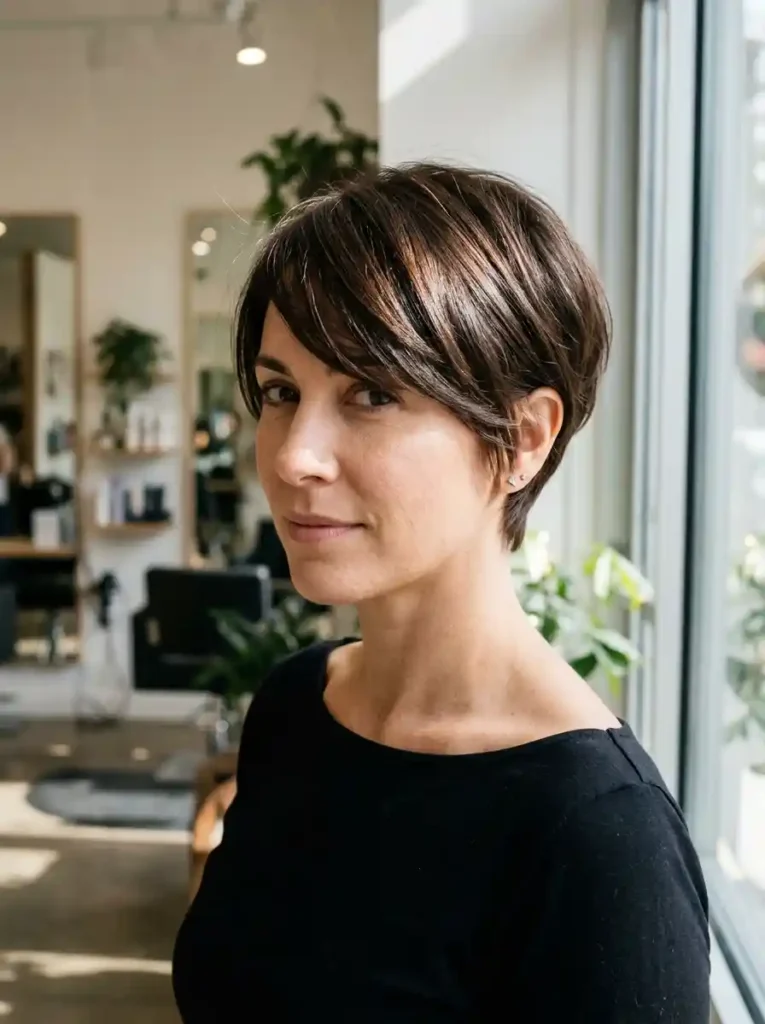
Side-swept bangs bring softness to a short pixie and provide a useful styling option if you are nervous about exposing your forehead completely. The diagonal fringe draws attention toward the eyes while creating an asymmetrical detail that feels elegant rather than overly structured. This cut can be tailored to many face shapes by adjusting where the bangs begin and end. Tell your stylist whether you prefer the fringe to skim your eyebrow, reach your cheekbone, or blend gradually into the side layers.
The longer front section offers several styling possibilities as it grows. Blow-dry the bangs across your forehead using a small brush, directing the airflow downward to encourage a smooth finish. For a more relaxed look, sweep them away from your face with your fingers and a touch of flexible styling cream. If your hair naturally parts strongly in the opposite direction, allow extra time for training the fringe. Regular bang trims can keep the shape intentional without requiring a complete haircut every visit.
4. Soft Pixie Cut with Wispy Bangs
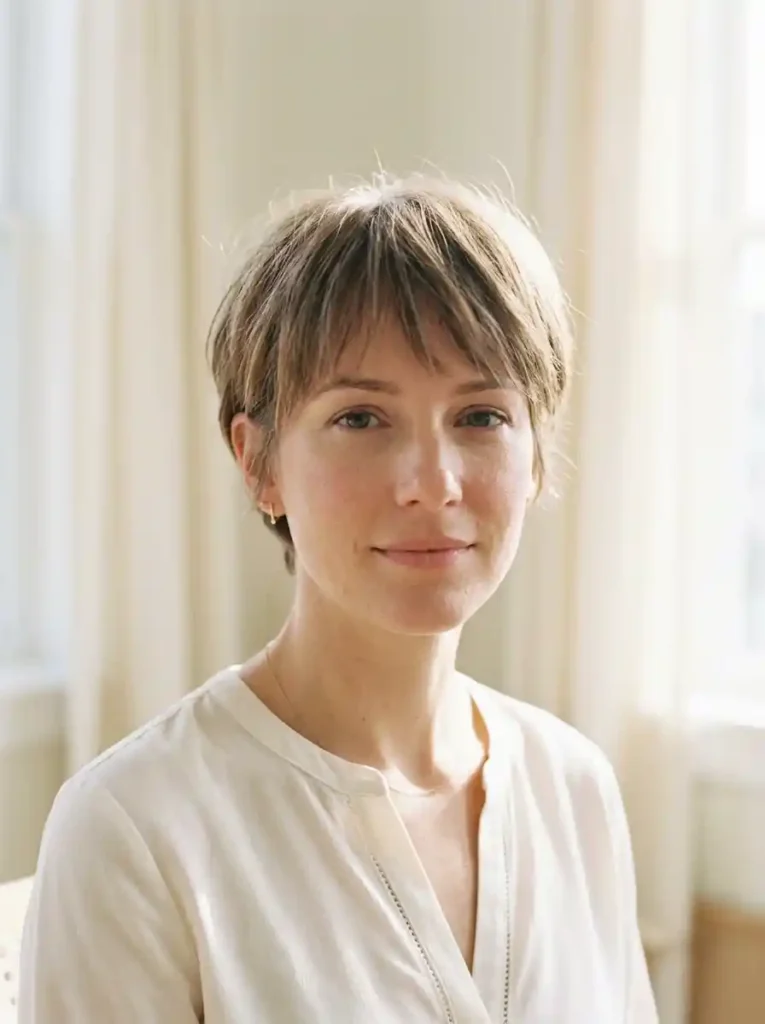
Wispy bangs offer a lighter alternative to a thick, blunt fringe. Their separated ends reveal small glimpses of the forehead, creating a delicate appearance that pairs beautifully with softly tapered sides. This variation suits people who want their pixie to feel feminine and relaxed rather than sharply cropped. It can also be a useful option for fine hair because a carefully designed fringe creates movement without requiring a heavy section of hair across the front.
Ask your stylist to preserve enough length at the front for the wispy pieces to move independently. At home, use a small round brush or your fingers to direct the fringe into place while blow-drying on a low setting. Finish with a light mist of flexible hairspray if the strands separate too much throughout the day. Avoid applying thick oils directly to the bangs, as they can quickly lose their airy texture. A soft, natural finish is more flattering here than excessive shine or stiffness.
5. Short Curly Pixie Cut
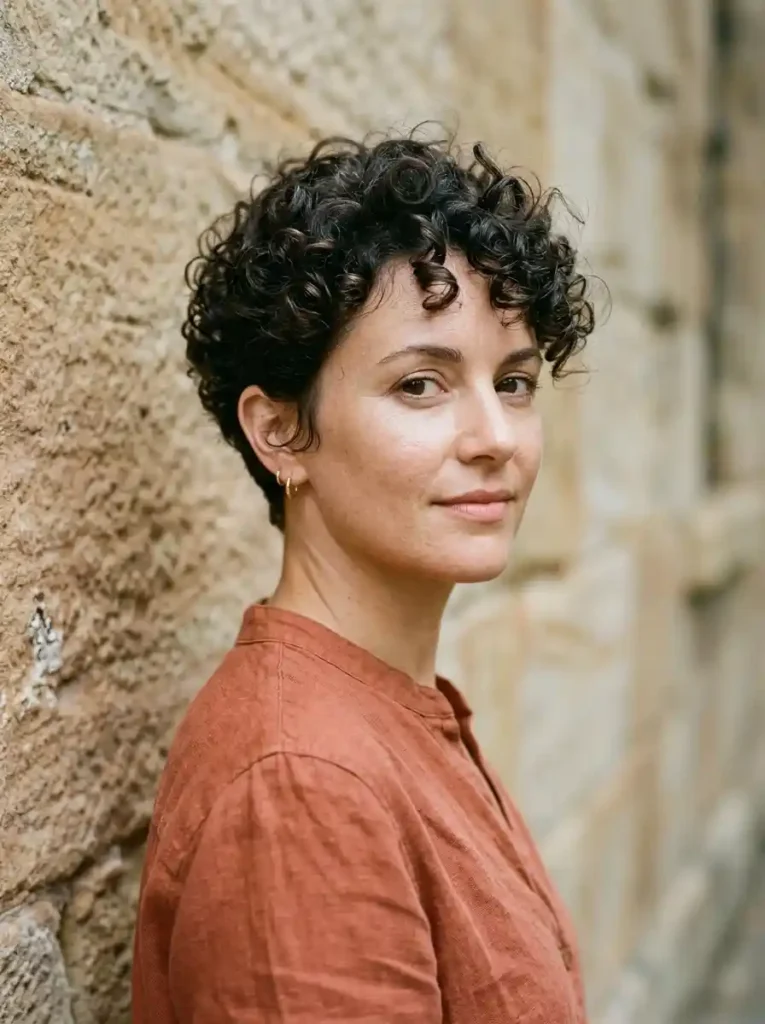
A short curly pixie celebrates natural curl patterns instead of forcing them into a straight hairstyle. The key is shaping the haircut around the way your curls shrink and spring back when dry. A skilled stylist can remove excess bulk from the sides while preserving enough length on top for attractive definition. This look works across different curl types, although tighter curls may need a slightly longer cutting length to achieve the desired finished shape.
Keep curls hydrated with a lightweight leave-in conditioner or curl cream suited to your hair’s density. Apply the product to wet hair, gently scrunch, and let it air-dry or use a diffuser on low heat. Avoid brushing the curls once they are dry, since this can create unwanted frizz and disrupt their natural pattern. Your stylist should also explain how the shape will change as your curls grow. Routine trims help maintain the silhouette, while occasional deep conditioning can keep the ends feeling soft.
6. Edgy Undercut Pixie
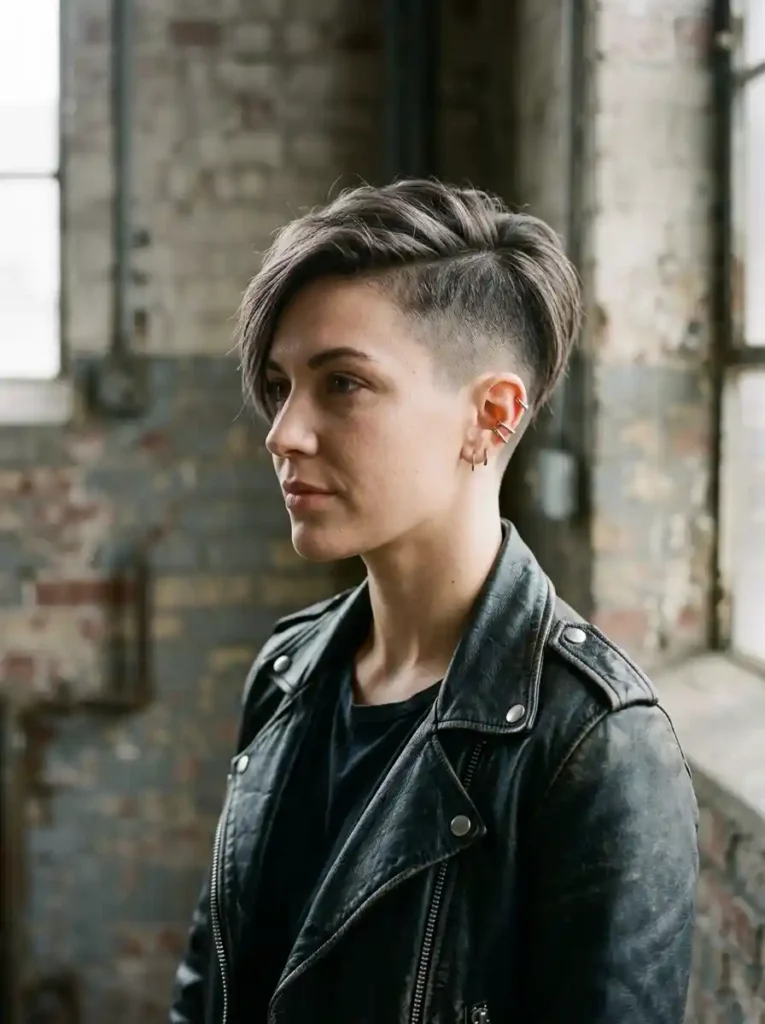
An undercut pixie makes a bold statement by contrasting closely cropped sides with longer hair on top. The difference in length creates a striking outline while keeping the overall hairstyle relatively compact. It is a good option if you enjoy contemporary fashion, appreciate a clean neckline, or want a haircut that can look sleek one day and deliberately messy the next. The undercut can be subtle around the temples or more dramatic at the back, depending on your comfort level.
Styling flexibility comes from the longer upper section. Smooth it across the forehead for a sophisticated finish, push it upward for height, or direct it backward with a small amount of styling paste. Keep in mind that the clipped areas usually need more frequent maintenance than the top, so discuss your preferred salon schedule before committing. If you want the option to grow your hair out later, request a less extreme undercut that will blend more easily as the shorter sections gain length.
7. Tapered Pixie with a Neat Nape

A tapered pixie is defined by its gradual transition from shorter hair at the neckline to slightly longer layers above. This creates a tidy silhouette without necessarily making the entire haircut look severe. It is particularly appealing if you dislike hair curling outward at the nape or want a clean shape that works with professional clothing. Your stylist can keep the crown soft and rounded to balance the precise lower section, producing a finish that feels modern rather than overly masculine.
The neckline is the feature that requires the most attention as the cut grows. Short hairs can begin to look uneven or bulky within a few weeks, so regular cleanup appointments may be useful. At home, a small amount of smoothing cream helps control stray strands without flattening the crown. When discussing the cut, bring a reference photo showing the back as well as the front. A pixie can look beautiful from the face-on angle, but its success also depends on how the neckline follows your natural head shape.
8. Long-Top Short Pixie
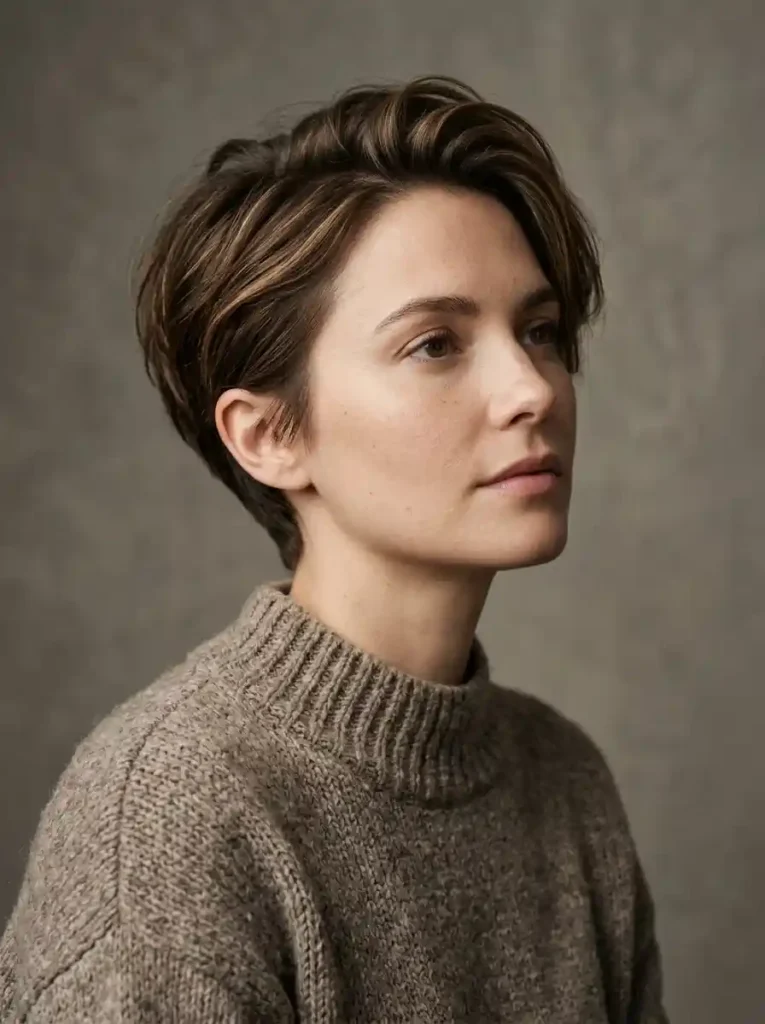
A long-top pixie is ideal if you want the convenience of short sides without losing the ability to change your hairstyle. The extra length through the crown allows you to create height, sweep the hair sideways, or wear it forward as a soft fringe. This variation works particularly well for people who enjoy experimenting with styling products or want a haircut that looks different with only a small adjustment to the parting.
The most useful technique is to focus on the roots before styling the ends. Apply a lightweight volumizing mousse to damp hair, lift the crown with your fingers, and direct warm airflow toward the roots. Once dry, use a flexible paste to define the top without making it rigid. If your hair is thick, ask for internal weight removal so the longer section does not become bulky. For finer hair, preserve enough density at the ends to prevent the top from looking stringy or uneven.
9. Asymmetrical Pixie Cut
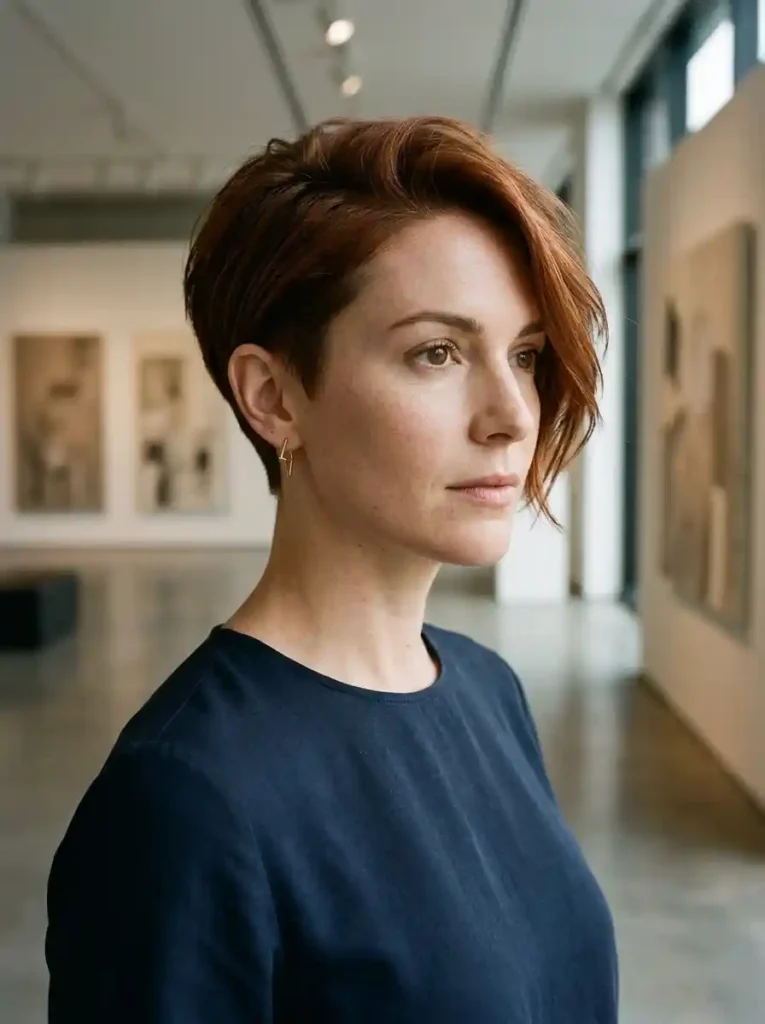
An asymmetrical pixie creates visual interest through an intentional difference in length from one side to the other. The longer section can soften the cheek area, while the shorter side exposes the ear and gives the haircut a more sculptural feel. It is a compelling choice if you enjoy modern, distinctive hairstyles but still want something that can be worn casually. The degree of contrast is entirely adjustable, from a subtle side-length difference to a pronounced sweeping fringe.
Before your appointment, consider which side you usually part your hair on and whether you prefer to show one ear. These small preferences help your stylist design an asymmetry that feels natural rather than awkward. For everyday styling, direct the longer section diagonally across the head with a blow-dryer and a small amount of smoothing lotion. A flat iron can refine stubborn sections when necessary, but use heat protection and avoid repeatedly pressing the same strands. Maintain the shorter side regularly so the original contrast remains visible.
10. Shaggy Pixie Cut

The shaggy pixie combines the compact shape of a short crop with the relaxed movement of a shag haircut. Its feathered layers prevent the style from looking too precise, making it a natural fit for people who prefer a casual, slightly rebellious appearance. It can work on straight, wavy, or loosely curled hair, provided the layers are adapted to the texture. Ask for a soft outline and broken-up fringe if you want a lived-in look instead of a rounded, uniform shape.
One advantage of this haircut is that it does not need to look perfectly arranged to feel intentional. Apply texturizing spray to damp hair, scrunch the crown, and let it dry naturally or use a diffuser. Once dry, separate a few sections with your fingertips to bring out the layers. Resist the temptation to overbrush or smooth everything into place, because that can remove the movement that makes the cut distinctive. Fine hair usually benefits from lightweight products, while thicker hair may need a flexible cream for extra control.
11. Pixie Cut with Baby Bangs
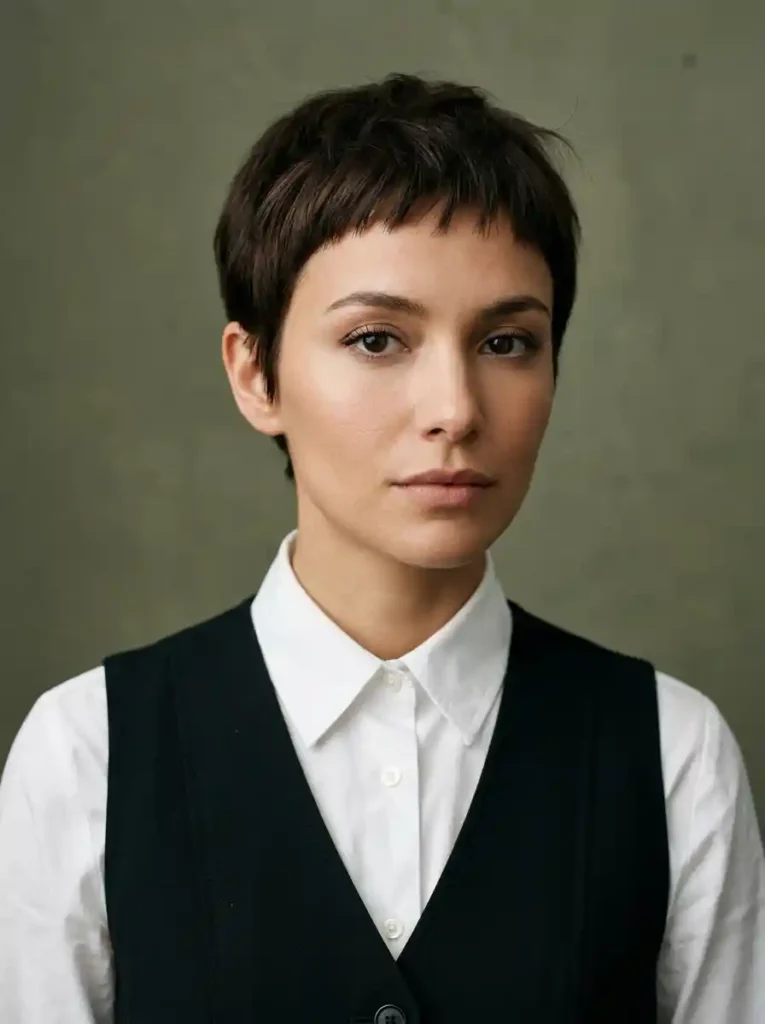
Baby bangs introduce a fashion-forward element to a short pixie by exposing more of the forehead than a traditional fringe. Their compact length can make the eyes and brows stand out, creating a distinctive appearance that feels artistic and confident. This option is especially suitable for someone who enjoys a strong haircut silhouette and is comfortable with visible facial features. Because the fringe is such a defining element, it is worth trying a shorter-looking side-swept style before deciding how high you want the final cut.
Baby bangs are less forgiving when it comes to everyday styling because their short length offers fewer ways to disguise an awkward growth stage. Ask your stylist to consider your natural hairline, cowlicks, and how your fringe behaves after washing. A small round brush and low heat can help direct the hair downward, while a lightweight styling lotion controls flyaways. Keep products away from the roots if your fringe becomes oily quickly. Frequent small trims preserve the clean line and prevent the bangs from losing their intended proportions.
12. Blonde Pixie with Dark Roots
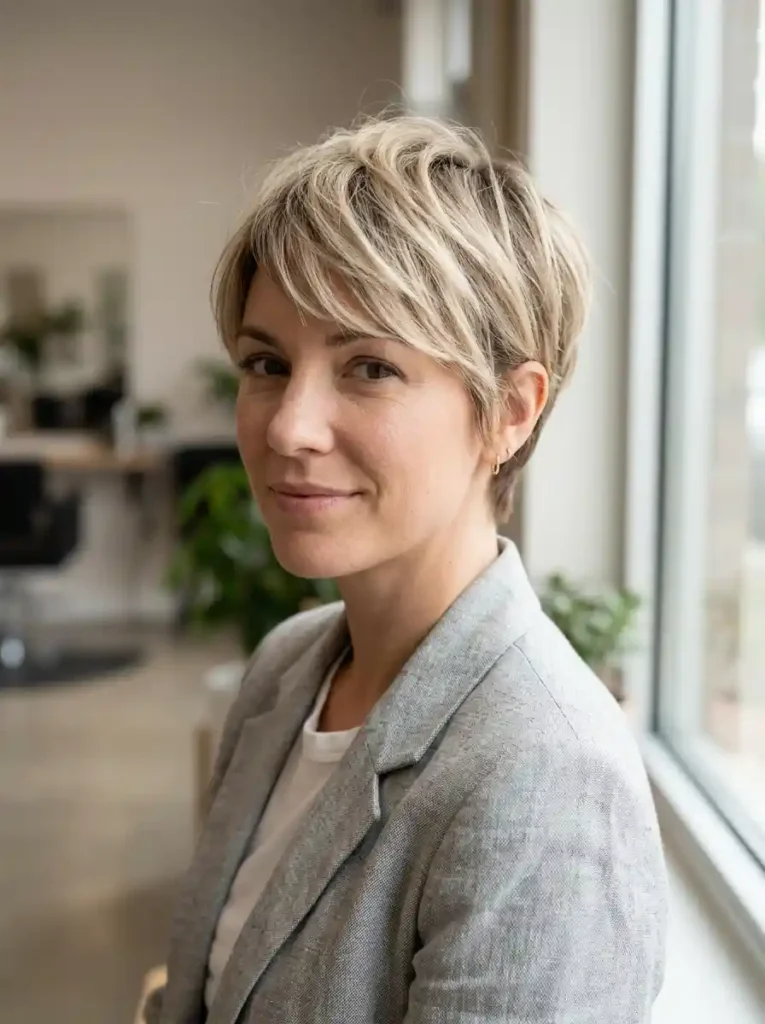
A blonde pixie with darker roots offers dimension without requiring a perfectly uniform color from scalp to ends. The contrast creates depth around the crown and can make individual layers easier to see. Depending on your natural base, you might choose beige blonde, honey blonde, or a cooler champagne shade. The most flattering version considers your skin’s undertones, eyebrow color, and willingness to maintain the lighter sections rather than choosing a shade based solely on a photograph.
Blonde hair often benefits from a care routine designed to protect both color and condition. Use a color-safe shampoo, a nourishing conditioner, and heat protection before blow-drying. Purple shampoo can help manage unwanted yellow tones in some blondes, but overuse may leave the hair looking dull or overly cool. Ask your colorist how frequently you need root appointments based on the contrast you prefer. Keeping the cut textured also helps the color appear dimensional, even when the roots grow in naturally between salon visits.
13. Brunette Pixie with Glossy Finish
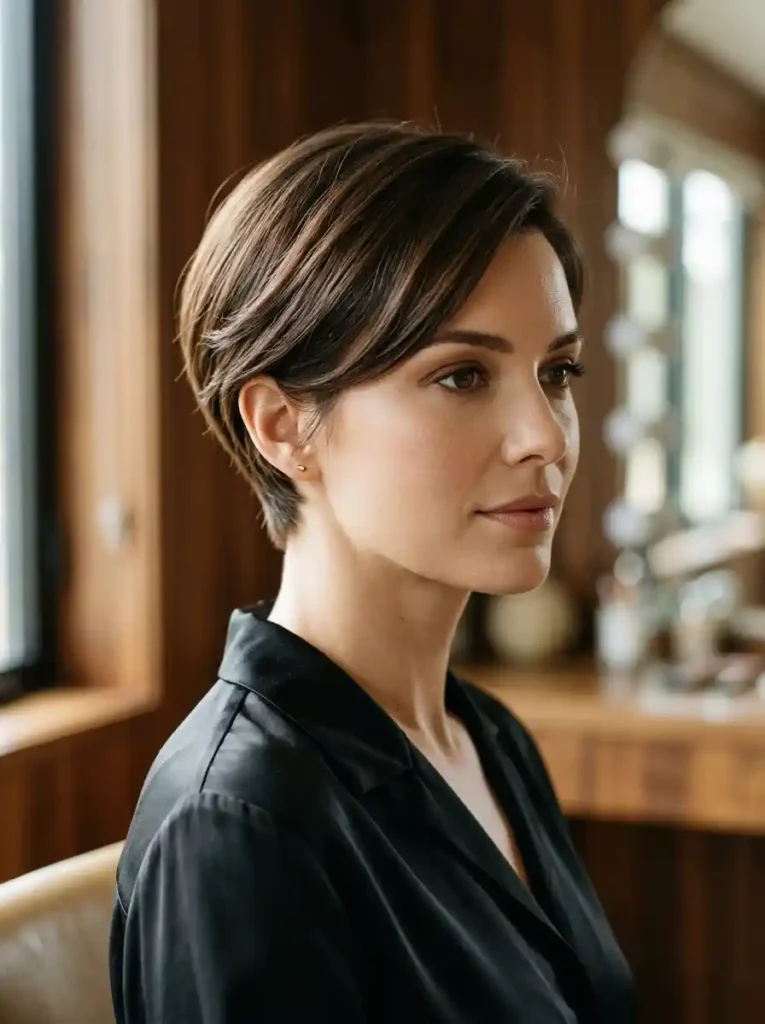
A glossy brunette pixie demonstrates how a simple haircut can feel luxurious without dramatic color changes or complicated layering. Deep brown shades make the overall silhouette appear cohesive, while subtle tonal variation keeps the hair from looking flat. This style suits anyone who enjoys a polished finish and prefers natural-looking color. Your stylist can adapt the shape with a soft fringe, a side part, or extra crown texture while retaining the elegant, understated character of the cut.
To achieve shine without making short hair greasy, focus on smooth styling and careful product placement. Blow-dry with a small brush, following the direction of the hair, and finish with a tiny amount of lightweight serum distributed through the ends. Avoid applying oil directly to the scalp or using too much product around the fringe. If your hair is naturally coarse or porous, a conditioning treatment can improve manageability. A well-maintained cut is equally important, since uneven ends can interrupt the sleek appearance even when the color looks beautiful.
14. Silver Pixie Cut

A silver pixie can be striking whether your hair has turned gray naturally or you have chosen a silver color service. The short length keeps the shape defined while allowing different tones to create dimension through the crown. A feathered fringe or slightly textured top can soften the overall look, while a clean neckline provides structure. If you are transitioning from dyed hair to natural silver, discuss a gradual plan with your stylist rather than assuming one appointment will create an even result.
Silver hair can develop unwanted yellow tones from environmental exposure, styling products, or water minerals. A suitable clarifying or purple-toning product may help, but use it according to the instructions to avoid dryness or excessive violet staining. Conditioning is particularly important if your hair has been lightened chemically. Choose a cut that works with your natural density and growth pattern, then maintain the silhouette with regular trims. Silver strands often have their own texture, so styling with your fingers instead of forcing every section into place can produce a softer, more believable finish.
15. Pixie Cut with a Deep Side Part
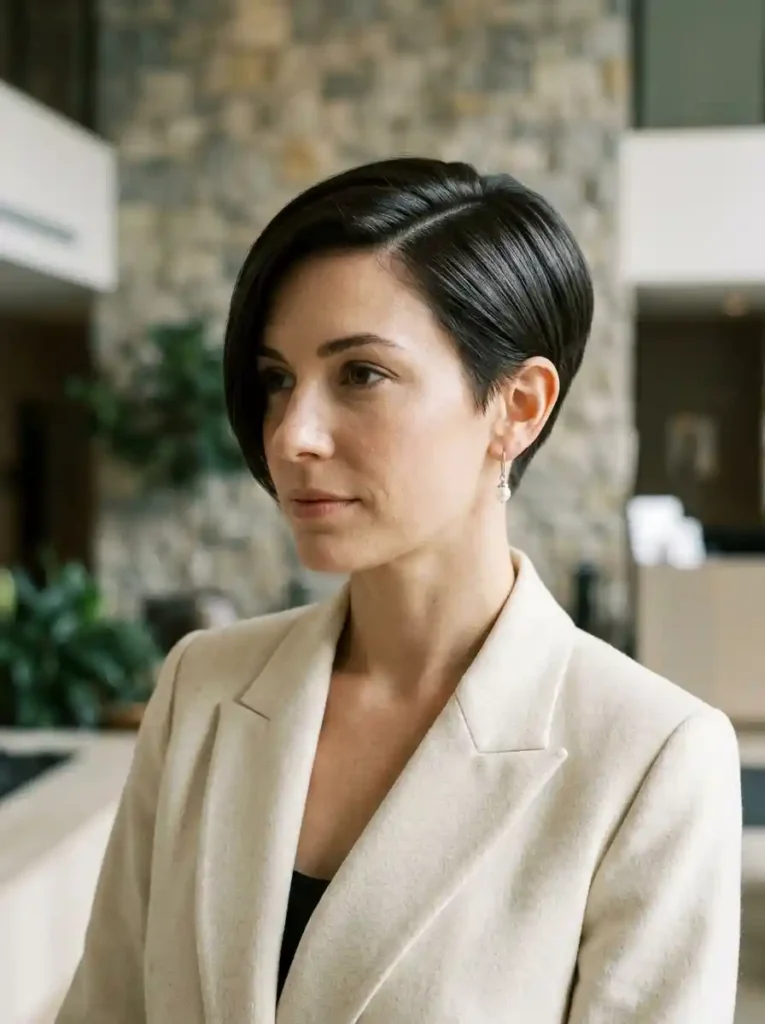
A deep side part changes the appearance of a short pixie without requiring a new haircut. The strong diagonal line creates a sense of movement, while the fuller side offers a softer alternative to evenly distributed volume. This approach is useful if you want your pixie to look more dressed up for work, dinner, or an event. It can also help customize the haircut around your preferred facial framing, particularly when the longer section falls toward your cheekbone.
Start with damp hair and establish the part using a fine-tooth comb before blow-drying. Direct the fuller section across the head and use a small brush to smooth the roots without flattening the crown completely. A flexible styling cream can keep the hair controlled while preserving movement. If your natural part resists the new direction, a little patience and low-heat styling may help, although a strong cowlick can limit how dramatically the hair can be redirected. Keep the sides trimmed so the contrast remains intentional.
16. Piecey Pixie with a Feathered Fringe
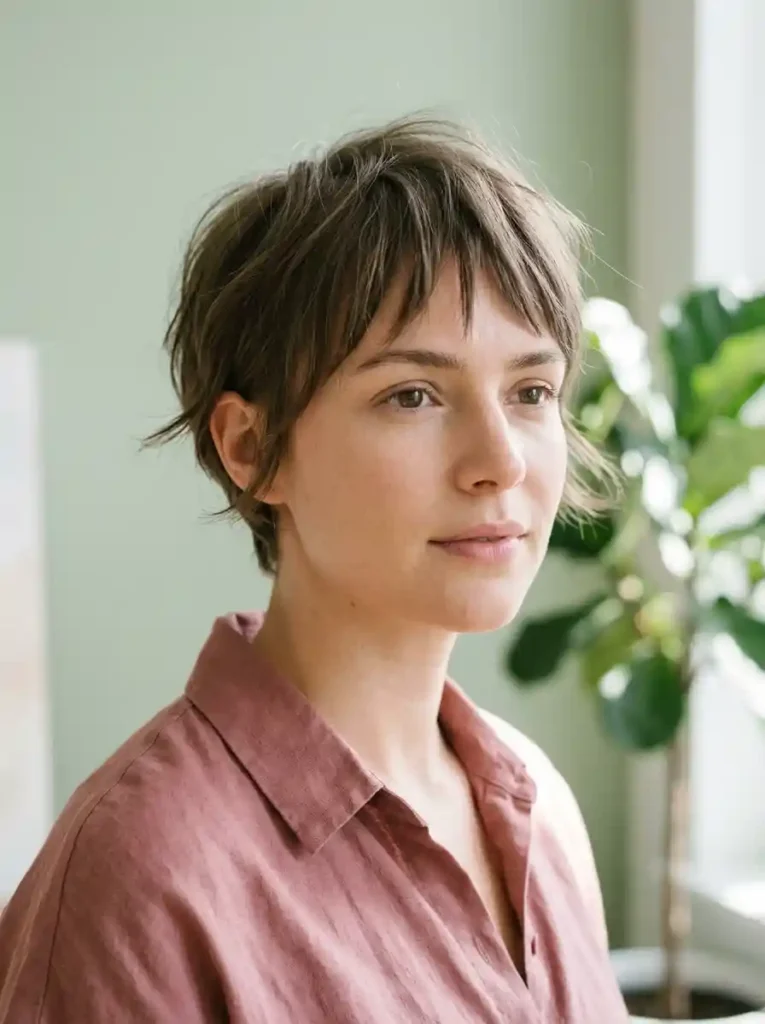
A piecey pixie with a feathered fringe strikes a balance between structured and relaxed. The individual strands create movement across the forehead, while the tapered ends prevent the fringe from looking heavy. This cut is worth considering if you want your hair to feel styled but not overly formal. It can be tailored for different densities: finer hair may need a lighter, more connected fringe, while thicker hair can support additional separation and more pronounced texture.
The finish depends more on product placement than on using a large number of styling tools. After drying, warm a small amount of texture paste between your fingertips and gently define a few sections of the fringe. Keep the roots relatively product-free so the front does not collapse. If your hair tends to separate into too many thin strands, switch to a lighter cream or use less product. Ask your stylist to demonstrate the exact finishing technique during your appointment so you can recreate the same movement at home.
17. Rounded Pixie for Fine Hair
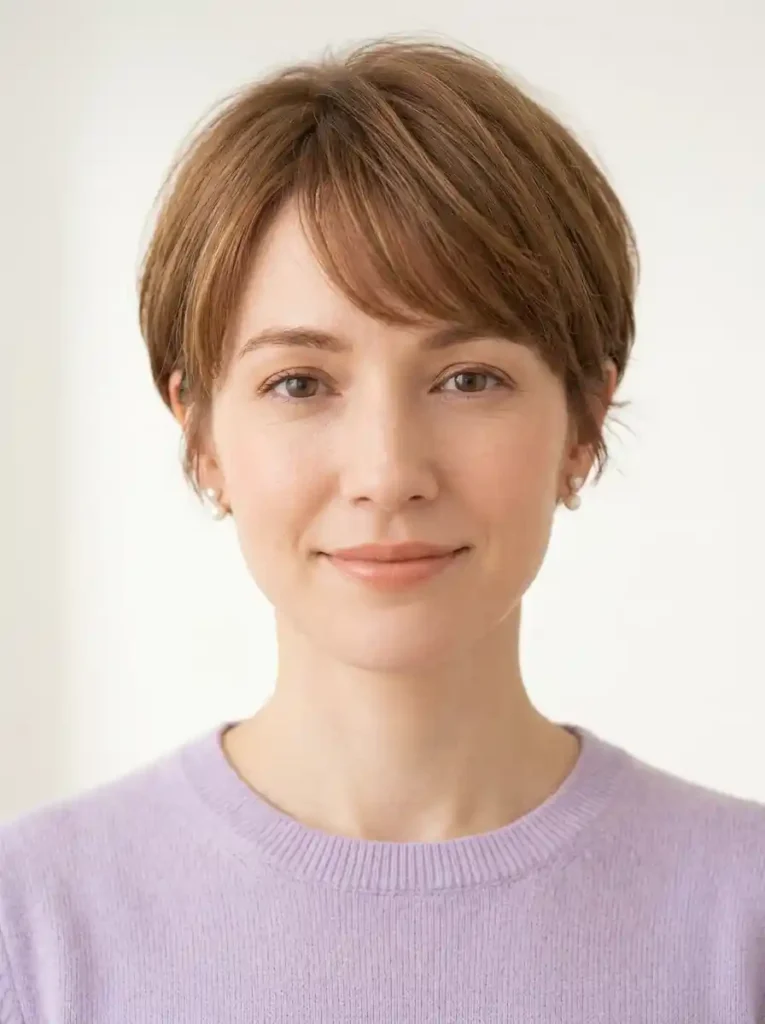
A rounded pixie can be a practical choice for fine hair because its carefully connected layers create a fuller-looking outline without depending on excessive length. Rather than removing too much weight, the stylist shapes the crown and sides so the hair sits together naturally. A soft fringe adds another layer of visual density around the forehead. If your hair is particularly delicate, explain that you want movement while preserving fullness at the ends, not aggressive texturizing throughout the cut.
Styling products should support the shape instead of weighing it down. Apply a small amount of root-lifting mousse to damp hair and blow-dry while gently lifting the crown with your fingertips. A lightweight dry shampoo can refresh the roots between washes, but avoid applying so much that the hair becomes chalky or stiff. You may find that a slightly off-center part gives the top more lift than a precise middle part. Regular trims keep the rounded outline balanced as the sides and nape grow.
18. Wavy Pixie with Natural Movement
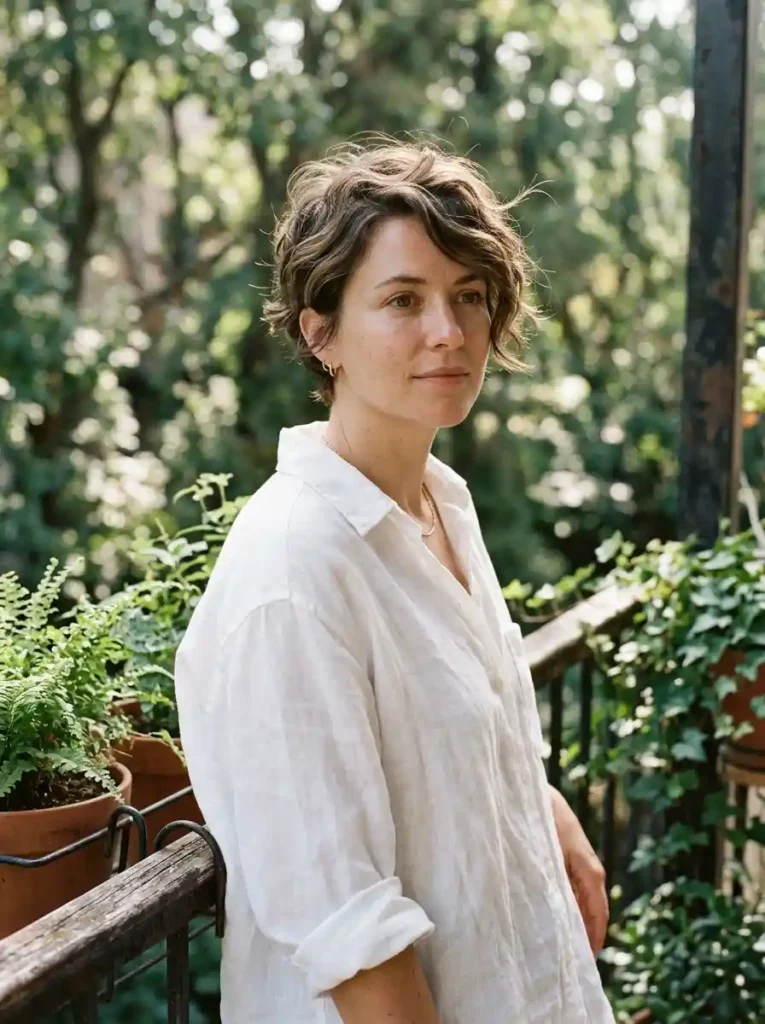
A wavy pixie works with the natural bends in your hair instead of requiring you to straighten everything into place. The movement adds softness and gives the haircut a relaxed, slightly romantic quality. Ask your stylist to assess how your waves behave when dry, since the right layering depends on whether they form loose bends or tighter curves. Leaving a little extra length through the front can preserve the wave pattern and allow the hair to fall naturally around the forehead.
For everyday styling, apply a light curl cream or leave-in product to damp hair, then scrunch gently to encourage the wave pattern. Air-drying works well when time allows, while a diffuser can add lift at the roots. Avoid brushing repeatedly once the hair begins to dry, as this may disrupt the waves and create frizz. If one side bends differently from the other, use your fingers to redirect individual sections while damp. Embracing slight irregularities usually produces a more natural result than trying to make every wave identical.
19. Feminine Pixie with Soft Sideburns

Soft sideburns can make a short pixie feel more personalized by creating a gentle transition between the hairline and the cheeks. Instead of cutting everything tightly around the ears, your stylist leaves narrow sections slightly longer to frame the face. This detail is especially appealing if you prefer a softer outline or want to avoid the exposed, sharply cropped look of some pixie styles. The length can be subtle and delicate or slightly more noticeable, depending on your natural hair growth.
When discussing this cut, explain how much of your ear you want visible and whether you prefer the sideburns to taper into a point or finish more softly. At home, smooth the temple area with a tiny amount of styling cream, using your fingertips to guide the hair naturally downward. Avoid trimming these sections yourself too quickly, because small changes can alter the entire face-framing effect. If you wear glasses, bring them to your salon appointment so the stylist can check how the sideburns sit around the frames.
20. Spiky Textured Pixie
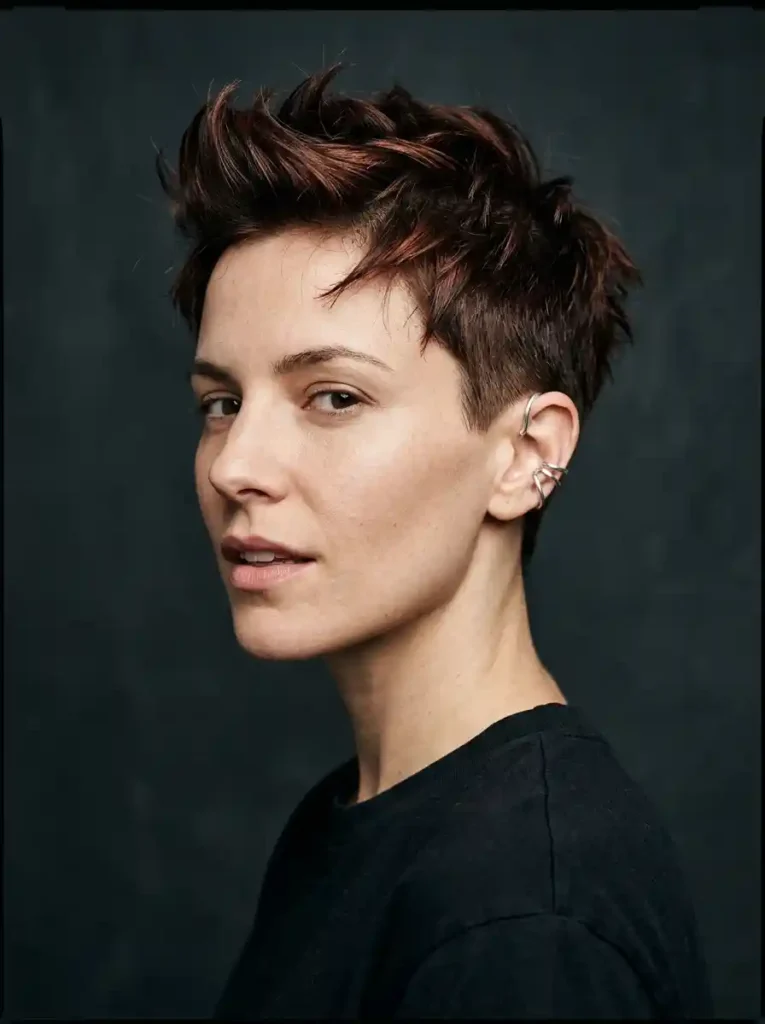
A spiky pixie is a playful option if you want your short hair to look energetic and distinctly modern. The crown is left long enough to create lift, while shorter sides help emphasize the upward movement. You can make the spikes subtle and soft for everyday wear or more defined for a night out. The final effect depends on your hair’s natural texture and how much hold you prefer, so ask your stylist to leave enough length to achieve your intended shape.
For a flexible finish, work a small amount of matte paste through dry hair, lifting selected sections between your fingers. Direct the spikes in slightly different directions rather than making every piece stand straight up, which can create a rigid, dated appearance. Fine hair usually needs a lightweight product with moderate hold, while thick hair may require a stronger formula. If you use a blow-dryer to create extra lift, keep the airflow directed toward the roots and finish with a cool setting to help the style settle.
21. Soft Pixie Bob Hybrid
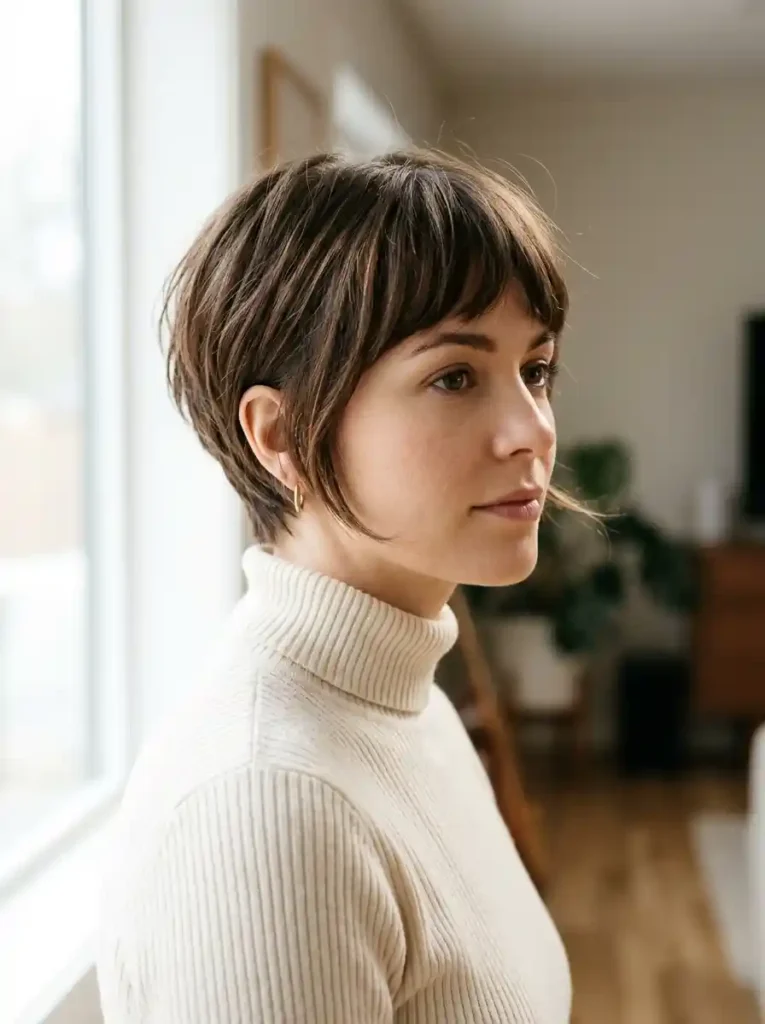
A pixie-bob hybrid is a smart option if you want the freshness of a pixie but feel hesitant about cutting everything very short. The back stays compact, while longer front sections soften the cheeks and create a more familiar outline. This shape can also be useful during a transition from a longer bob to a pixie, since it introduces shorter layers without removing all the length around the face. The exact proportions should reflect your hair density, neck length, and preferred level of face framing.
Styling is relatively straightforward because the longer front sections provide room for a side part, a gentle curve, or a tucked-behind-the-ear finish. Blow-dry the back close to the head and use a small round brush to shape the front away from your face. A lightweight smoothing cream can control the ends while keeping them movable. Tell your stylist whether you want the front to reach your cheekbones or sit closer to your jawline. That measurement makes a noticeable difference in how soft or dramatic the final haircut appears.
Conclusion
The best short pixie cut is one that complements your features, works with your natural hair texture, and fits the amount of time you want to spend styling it. A classic crop offers simplicity, choppy layers create movement, and longer or asymmetrical versions provide extra versatility. Curly, wavy, silver, blonde, and brunette pixies each bring their own personality, so there is no single version you need to follow.
Before booking your appointment, save two or three reference photos that show the front, sides, and back of your preferred haircut. Discuss your hair density, cowlicks, daily routine, and how frequently you can visit the salon. Ask your stylist which details should be customized rather than copied exactly from a photograph. Most importantly, choose a cut that makes you feel comfortable and confident, whether you prefer a soft feminine silhouette or a bold, textured finish. A little planning can help turn your next haircut into a look you genuinely enjoy wearing every day.